





Parents frequently struggle when trying to leave the house. A child often insists five minutes remains plenty of time to build a massive Lego castle. We mistake the delay for defiance. However, the brain of a child processes the passage of time differently than an adult brain. Understanding such a biological gap helps reduce daily friction and builds patience.
What Is “Time Perception” and Why It Matters for Kids
Time perception refers to how the brain measures the duration of events. Adults possess an internal clock fine-tuned through decades of experience. We know exactly how long a shower takes or how much traffic usually occurs at 8 AM. Children lack such historical data. The prefrontal cortex acts as the command center for executive functions like planning and time management. That specific part of the brain remains under heavy construction during childhood.
When you ask a child to get ready in ten minutes, you ask the child to measure an invisible concept. They cannot see time. They cannot touch time or hold time. Without external tools to render time concrete, they rely on how they feel in the moment. If an activity feels fun, time vanishes instantly. If an activity feels boring, time drags forever. That subjective experience overrides the objective ticking of a clock. Parents often assume kids ignore the clock on purpose. In reality, the child genuinely believes plenty of time remains because an internal sensor never alerted the child.
Developing a sense of time takes years. It requires the ability to estimate how long a task will take and the memory of how long it took previously. Young children do not have a catalog of past experiences to draw upon. They live purely in the present sensation.
Ages 3–5: Living in the “Now”
Preschoolers exist almost entirely in the present moment. Concepts like "yesterday" or "next week" often confuse the mind. You might hear a three-year-old say the family went to the zoo "yesterday" when the trip actually happened two months ago. The world revolves around immediate needs and sensations for a toddler.
Telling a four-year-old that fifteen minutes remain to put on shoes creates confusion. The number fifteen holds no meaning. They do not know what fifteen minutes feels like. They only know "now" and "not now." If playing with a toy occupies their attention, that activity becomes the only reality. Transitions act as the enemy because transitions require stopping the "now" to prepare for an abstract "later."
Visual cues serve as the only language young children truly understand at such an age. A standard clock provides little help because reading numbers is not yet a skill. They need to see time moving. Sand timers or color-coded charts work better. The goal during these years involves introducing the rhythm of a day rather than specific minutes. Morning follows sleep. Lunch follows play. Bedtime follows a bath. Establishing specific sequences helps a child feel the flow of time before learning to name the hours.

Ages 6–9: Starting to Read the Clock, Still Struggling with Planning
During early elementary school, children learn to read analog and digital clocks. They can tell you the time is 3:30 PM. However, reading a clock is a mechanical skill. Feeling the duration of time is a sensory skill. A seven-year-old knows school starts at 8:00 AM. They do not yet intuitively grasp the need for twenty minutes to eat and ten minutes to pack a bag to meet the deadline.
Experts call the issue "time blindness." Kids see the numbers but do not see the span of time those numbers represent. You might notice the child gets lost in tasks. A quick break to play a video game turns into an hour because the dopamine hit from the game masks the passage of time. They honestly believe only a few moments passed.
Homework introduces a new challenge. Teachers expect students to track assignments. Parents expect the child to manage after-school hours. Yet the child often underestimates the effort required. They think writing three sentences will take thirty seconds. When the task actually takes twenty minutes, frustration and a feeling of being rushed take over. Helping the student bridge the gap between "clock time" and "task time" becomes the primary parenting goal during such a stage.

Ages 10–12: More Aware of Time, But Juggling More Demands
Middle school approaches. The demands on executive function skyrocket. Kids in such an age bracket usually handle the basics of reading a watch perfectly. They understand deadlines. The problem shifts to prioritization and estimation. They have multiple teachers. They have shifting social schedules. Extracurricular activities eat up the afternoon.
Pre-teens often fall into the trap of magical thinking. They believe finishing a science project the night before it is due is possible because they overestimate focus and underestimate workload. The "present bias" is strong here. The immediate reward of chatting with friends outweighs the distant punishment of a late assignment.
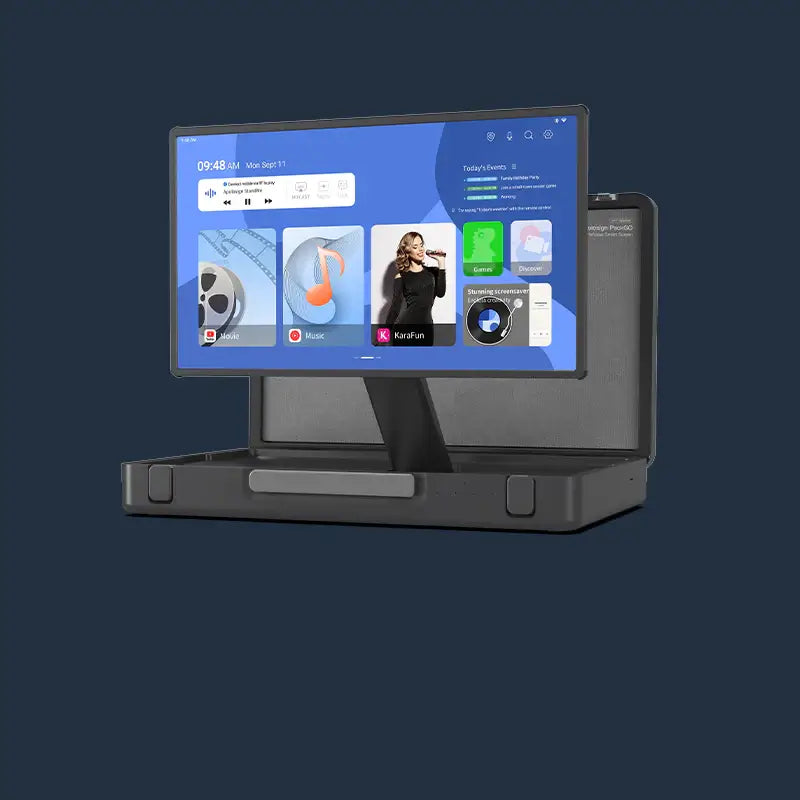
The brain is also going through massive pruning and reorganizing. While pre-teens want independence, significant scaffolding is still necessary. They might resent reminders. They view parental prompts as nagging. Yet balls drop without a system. They need a way to see the week as a whole picture. A digital calendar acts as a neutral third party. It shows the reality of the schedule without a parent needing to use a harsh tone. For families who are often on the go, the PackGo series offers the power of a smart screen in a convenient, portable briefcase.
Why Kids Honestly Believe “There’s Still Time”
The belief that "there is still time" is rarely a lie. It is a cognitive error. Several factors contribute to the phenomenon. First, optimism bias leads kids to assume everything will go smoothly. They do not factor in lost shoes. They do not expect spilled milk or traffic. In the mind of a child, the path from A to B is a straight line with no obstacles.
Second, engagement alters perception. When a child engages in high-interest activities like gaming or drawing, a "flow state" begins. In a flow state, the brain quiets the awareness of bodily needs and time passage. Coming out of that state to brush teeth feels jarring.
Finally, children lack the retrospective memory adults possess. An adult remembers the stress of being late last time and adjusts. A child forgets the stress quickly. They remember the fun they had before leaving. They do not recall the panic at the door. They do not naturally connect past lateness with current behavior. Parents must help build connections through calm reflection rather than heat-of-the-moment lectures.

Visualizing Time: Visual Timers, Routines, and Wall Calendars
Since we cannot force the brain of a child to mature faster, we must externalize the concept of time. We take the abstract and render the concept concrete. Visual timers showing a disappearing red disk help younger kids see time vanishing. Written checklists help older kids see the volume of work remaining.
Centralizing information is key. Scattering schedules across phone apps, paper notes, and school portals creates chaos. A central command center in the home allows everyone to see the same reality. When a child sees a "soccer practice" block on a shared calendar, the understanding follows that the time slot is spoken for. The time is not available for gaming or homework.
Consistency creates safety. When routines follow a visible pattern, children struggle less. They know what comes next. The argument is no longer with the parent. The argument is with the schedule itself. "The calendar says we must go" triggers less resistance than "I said we must go."
Setting Up a Kid-Friendly Digital Wall Calendar for Ages 3–12
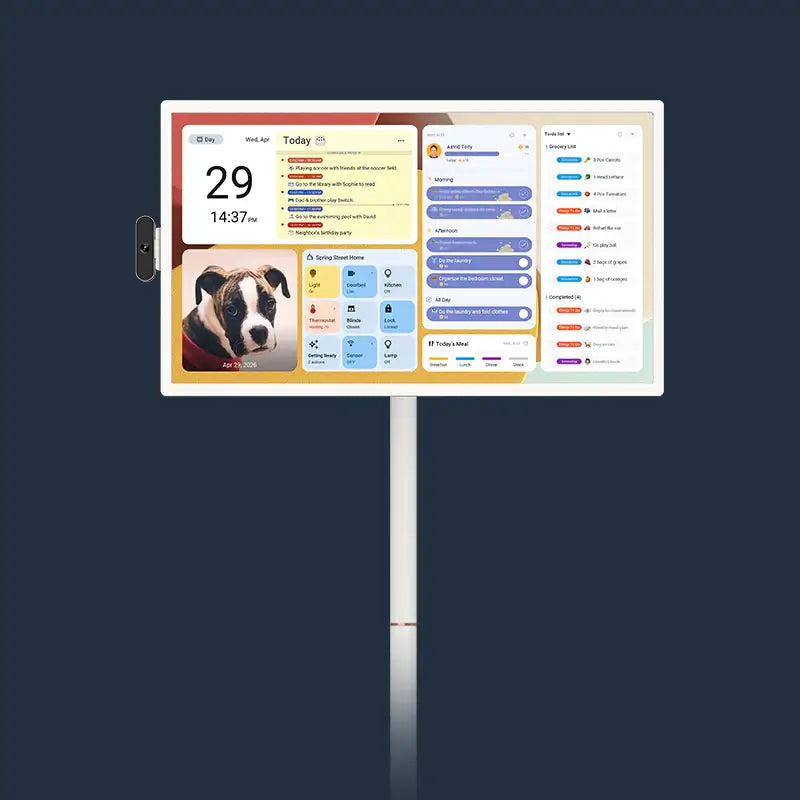
A dedicated digital wall calendar transforms how a family organizes time. The Apolosign 27" 4K Digital Calendar serves as an excellent example of how technology can bridge the gap between parental order and child-friendly visual clarity. The large 27-inch 4K anti-glare screen is easy for young eyes to read from across the room. The display remains clear even in bright sunlight.
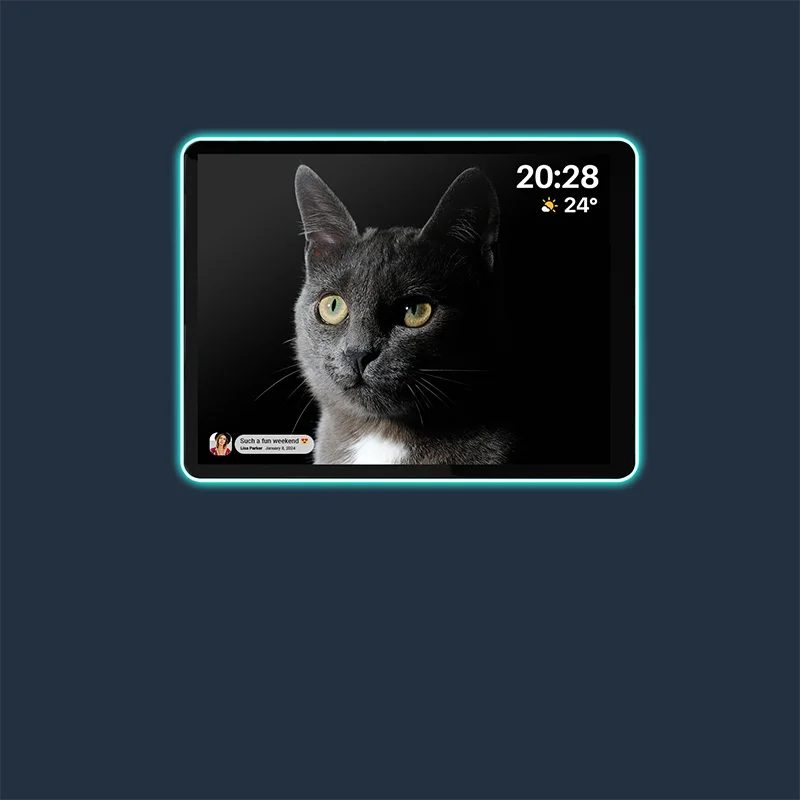
For the younger set of ages 3 to 5 the visual aspect is paramount. You can set the Apolosign to display a simple photo screensaver or use the Android Dashboard mode to show weather widgets. The child might not read "Grandma is coming." However seeing a picture of Grandma on the screen signals the event. The device becomes a predictable part of the environment.
For the elementary age group of ages 6 to 9 the device functions as a homework assignment tracker. Since the Apolosign supports family calendar syncing with Google, Apple, and Outlook, you can input school deadlines directly. The child sees the "Science Fair" date approaching day after day. The deadline stops being a surprise. The Dual Mode interface allows parents to switch between a focused calendar view and a dashboard where you can place widgets.
For pre-teens of ages 10 to 12 the family to do list becomes a critical tool for independence. The Apolosign features a routine task tracker with points. You can gamify the boring chores. Setting the table or feeding the dog earns points toward a reward. Such a feature taps into the dopamine system positively. Instead of nagging the screen offers a clear prompt. Children can check off items on the custom to-do lists. Checking off an item gives a sense of accomplishment.
The device handles digital family calendar duties with auto-sync so schedules stay up to date across all devices. If a parent adds a dentist appointment from a phone at work the appointment appears instantly on the wall at home. The pre-teen cannot say "I did not know" because the information is bright and clear in the kitchen.
The voice control feature adds extra convenience. Kids or family members can use Google Assistant to check the weather, get cooking instructions, or search for information online—without needing to navigate menus or touch the screen. The Apolosign 27” 4K Digital Calendar acts like a shared family brain, helping children gradually develop time management skills, while its core features remain subscription-free.
Scripts Parents Can Use Instead of “I Told You So”
Shifting the language we use changes how kids respond to time pressures. Instead of commands use questions that prompt thinking.
Instead of saying "Hurry up because we are late" try asking: "What is the very next thing you need to do to be ready?"
Instead of saying "You have been on the iPad for too long" try asking: "At what time did we agree the screen would turn off?"
When the child underestimates a task avoid criticizing. Instead of "I knew the task would take longer" try saying: "It looks like the task took twenty minutes. Let us write the time down so we remember for next time."
If the child asks for five more minutes try saying: "I can give you five minutes. That means we will have to skip the story at bedtime. Is that a trade you want to accept?"
Such scripts put the thinking back on the child. They stop relying on the parent to be the timekeeper and start engaging their own executive functions.
Creating a Home Where Time Makes Sense for Every Child
Time perception is a developmental skill that takes years to master. Children do not ignore time to be difficult. They simply do not feel time passing yet. External tools bridge the gap between the internal world of the child and external deadlines. Using a digital wall calendar like the Apolosign 27" 4K Digital Calendar provides the visual structure kids need. It turns abstract time into a clear and shared reality. The tool helps the whole family move from chaos to calm. Our innovative portable touch TVs also provide flexible solutions for family entertainment and organization throughout the home.