






A fair chore system does not count chores. It compares how much real effort each person puts in over a normal week, then adjusts for age, ability, and available time. Wiping a counter and deep-cleaning a bathroom are both "one chore," but they are not equal work. Once you compare effort instead of checkmarks, most chore arguments get a lot easier to solve.
Fairness Starts With Weekly Effort, Not Task Count
Fair means comparable effort across a full week, not an equal number of finished tasks. Here's why that distinction changes how you should track chores.
Why Counting Tasks Fails
A five-minute counter wipe and a forty-minute bathroom deep clean should never count as the same chore just because both earn one checkmark.
- Quick, frequent chores rack up the same "score" as one big weekly job.
- The real workload behind that score can be far from equal.
- Counting tasks hides this gap instead of revealing it.
Aim for Weekly Balance, Not a Perfect Score
Track effort in rough weekly terms, not exact minutes.
- Skip minute-by-minute measurement — precision isn't the goal.
- Watch for one person consistently carrying more real work than others.
- Adjust the plan whenever that pattern repeats week after week.
Build a Simple Effort-Band Workload Balance
You can compare unequal chores with three rough effort bands instead of a stopwatch. Here's how to set up and use that system for one week.

Use Three Broad Effort Bands
Sort every recurring chore into one of three bands. Keep the labels relative to your own household rather than tied to fixed minutes.
| Band | Examples |
|---|---|
| Light | Loading the dishwasher, folding a load of laundry |
| Medium | Vacuuming a room, cleaning one bathroom |
| Heavy | Full kitchen reset, weekly deep clean |
Rate the whole task, not just the visible part. Setup, carrying supplies, and cleanup all count toward the same band.
Lay Out One Illustrative Week
List who does what, then check whether the pattern looks reasonably even across bands. One heavy weekly job can balance several light daily ones.
| Person | Light | Medium | Heavy |
|---|---|---|---|
| Person A | 5 quick tasks | 1 medium task | — |
| Person B | 2 quick tasks | 2 medium tasks | — |
| Person C | — | — | 1 heavy task |
This is one illustrative split, not a formula or a proven score.
Try this exact split, or your own version, for one ordinary week before deciding it needs a bigger change. Revise the bands once you see how the real week goes.

Match Unequal Chores to Age, Ability, and Capacity
Siblings do not need identical chores to make a fair contribution. Here's how to match each task to what a person can realistically handle.
Fit the Chore to the Person's Week
Give each person a chore that fits their current age, ability, and available time, then hold everyone to a clear standard for finishing it.
- A ten-year-old with light homework can handle a full medium-band chore, like vacuuming the living room.
- A fifteen-year-old juggling sports and a heavier school load can cover a smaller light-band task on practice nights and pick up more on weekends.
Both are contributing in a way that fits their actual week. Adjust chore expectations based on the child's age, ability, and school workload rather than requiring identical assignments.
Capacity Split vs. Permanent Favoritism
Base task assignments on real, current capacity — not on what has simply become routine.
- Capacity split: task size shifts as age, ability, or workload changes.
- Favoritism: one sibling always gets the easy job for no reason other than habit.
If the same person always ends up with the light job regardless of circumstances, that's favoritism, not a fair capacity split.
Choose Fixed Ownership or Rotation by Task Type
Some chores work best with one steady owner. Others need to rotate so the same person does not always get stuck with the worst job.
Keep Fixed Ownership When Consistency Helps
- Use stable ownership for tasks where knowing the routine actually helps, like feeding a pet on schedule or managing a recycling pickup day.
- Recheck the weekly effort pattern occasionally so a "fixed" chore does not quietly turn into permanent overload for one person.
Rotate When the Burden Is the Problem
- Rotate any chore where the same person keeps getting the longest, dirtiest, or least popular job, like scrubbing the trash cans or cleaning the litter box.
- Keep the rotation simple, like a weekly or biweekly swap, so it is easy to remember without constant renegotiation.
Fixed ownership is meant to build routine and consistency. Rotation is meant to spread out an unpopular burden. Pick the one that matches the actual problem with that specific chore.

Rebalance a Disrupted Week Without Starting Over
A busy or difficult week does not mean your chore plan failed. It means the plan needs a temporary adjustment, then a return to normal once things settle down.
Think of an exam week, a bad flu, a new work schedule, or a sudden sports tournament. Any of these can eat into someone's available time. Changes in work and school demands can change how much time people actually have for household tasks, as the shift toward remote work arrangements illustrates.
When that happens, name the temporary constraint, then swap, shorten, or pause one specific burden instead of renegotiating the whole plan. Set a return point, such as going back to normal next Monday, and resume the regular plan once the constraint passes. Treat the disrupted week as a temporary exception, not a sign the whole system needs a redesign.
Review the Weekly Balance Without Turning It Into a Scorecard
A weekly review should end in one clear decision, not a debate about who worked harder. Ask what felt workable, then pick one outcome.
Use a Three-Outcome Weekly Review
Start by asking whether the effort pattern, including the planning and follow-up behind it, felt workable for everyone that week. Then choose one outcome: keep the current plan, change one specific assignment, or schedule a rotation for one chore. Do not rank family members or treat points as proof that the work was perfectly equal.
Before you decide, look past the finished chores. Someone still has to notice the mess, plan the schedule, remind everyone, and check the work. The way parents perceive their division of household responsibilities can differ, especially around less visible planning work. Bring that kind of hidden work into the conversation, not just the visible chore list.
Keep the Agreement Visible, Not Competitive
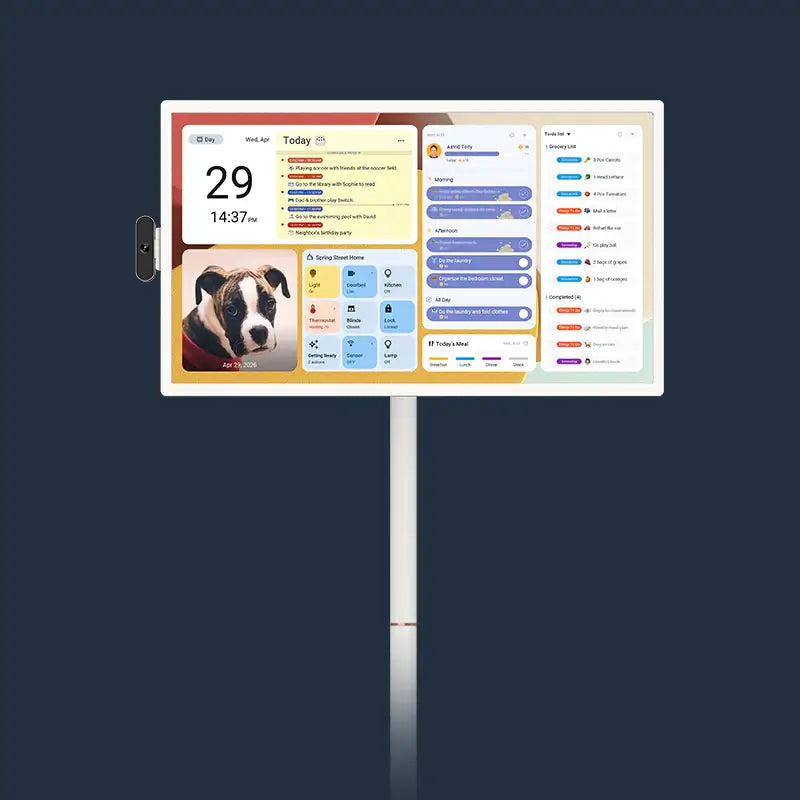
Once your plan and review method are set, a shared display can help everyone see the agreement in one place. For households that want the agreed plan visible, our Apolosign 27-inch Digital Calendar lists routine tasks with points and rewards and supports family schedule organization. It fits that visibility need, not a household looking for a screen to measure effort or settle fairness disagreements.

Choose the Smallest Rule That Fits This Week
Use effort bands in a normal week, a temporary swap when capacity changes, and rotation when one chore keeps landing on the same person. Start by listing your recurring chores and sorting them into rough bands before the next family check-in.
If visible routine support fits your household, our 27-inch digital calendar can keep agreed tasks and reminders in one place.
FAQ
How do you divide chores fairly?
Fair chores do not have to be identical tasks. Compare the reasonable effort behind each person's weekly contribution, then adjust for age, ability, available time, and less visible responsibilities like planning or reminding.
Should all chores be worth the same?
No. A quick daily task and a longer weekly job belong in different effort bands. Keep the bands broad enough to guide a conversation about balance, not exact enough to become a point system.
How do you balance chores between siblings?
Give each sibling a contribution that fits their current capacity. One child might handle a smaller task while another takes on a longer one. Revisit the split whenever school workload, ability, or free time changes.
What should you do when a busy week makes the chore plan unfair?
Make one temporary swap or reduction for that specific week. Name when you expect to return to the normal plan, then review how it went. Avoid rebuilding the whole system around a short-term problem.