


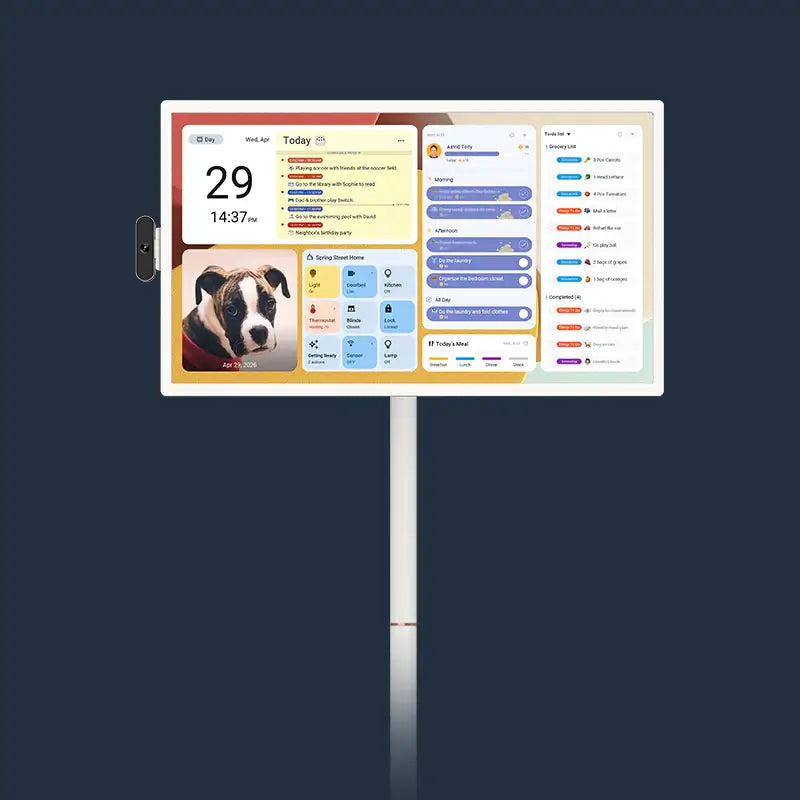
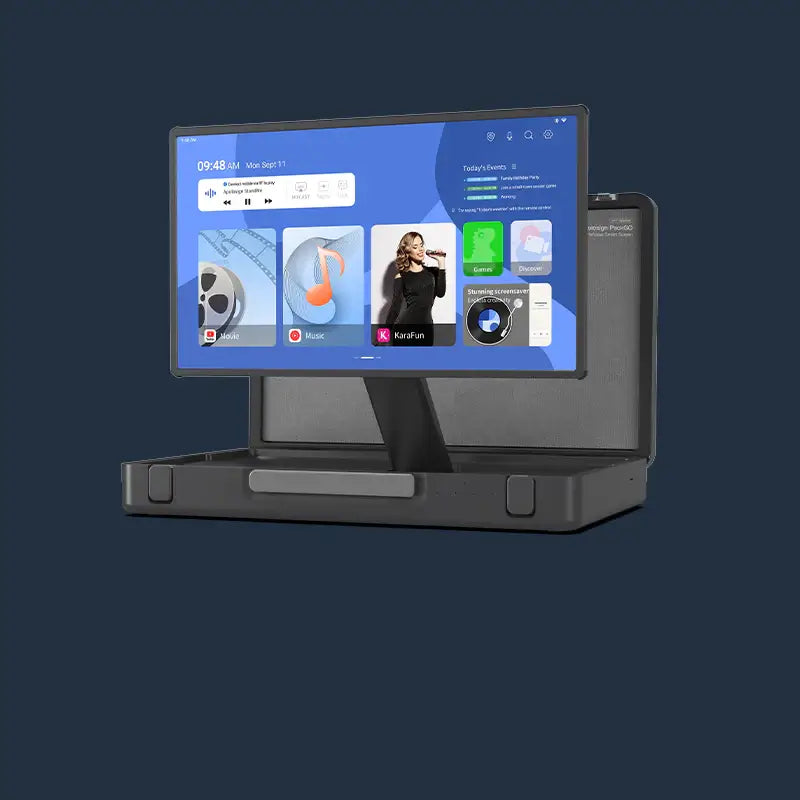
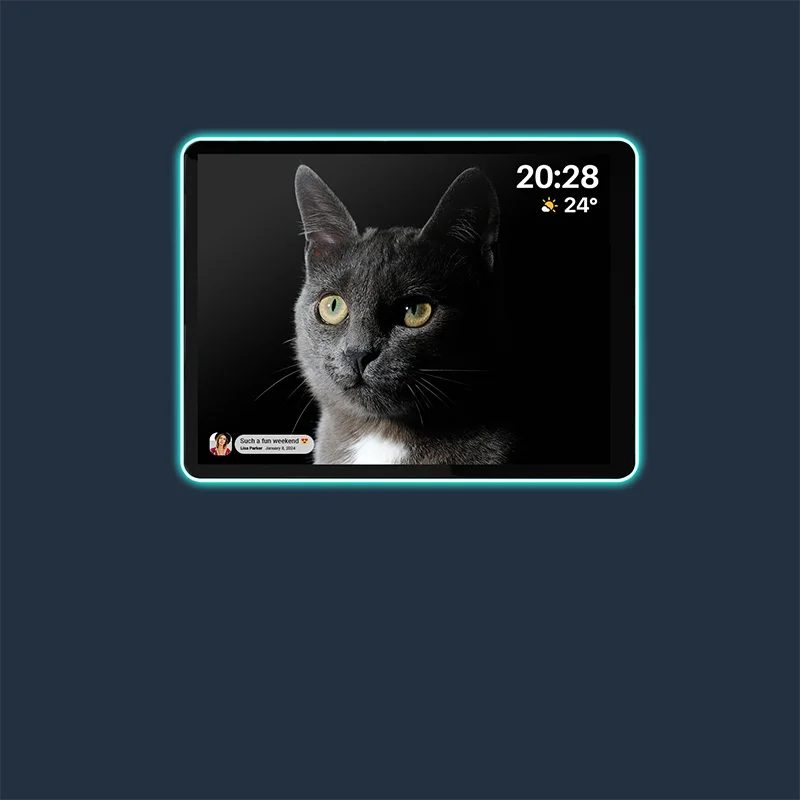


If your family needs a shared schedule, chores, or meal plans visible at a glance, deciding whether you should buy a digital photo frame or use your smart calendar for photos comes down to what you need to see most often. A smart calendar used for photos is usually the better fit when schedules lead, since photos become a secondary bonus on a screen that already earns its keep. If pictures are the main reason you want a screen at all, especially ones added by relatives from far away, a dedicated digital photo frame is worth the extra device and space.
The rest of this guide walks through specific household scenarios so you can match your routine to the right choice, then points you toward the exact setup that fits.
Start with the Screen's Primary Job
A smart calendar is built to be a shared command center first, while a dedicated photo frame keeps rotating images as the main event. Choosing between them depends on whether daily logistics or displayed memories need to claim that screen every day.
Choose the calendar when household logistics must stay visible
If your family relies on shared appointments, chore charts, or meal plans, the calendar wins. One screen becomes the household's central logistics hub, and photos simply play a supporting role in the background when nothing urgent needs attention.
Choose the photo frame when pictures are the point
If your household already has a calendar system that works, whether it is a wall planner or a phone app, and you mainly want a screen for memories, the dedicated frame wins. Remote photo additions and a display built around images make this the stronger photo-first pick.

Choose a Smart Calendar When Family Logistics Lead
Families with busy mornings and shared responsibilities usually get the most value from keeping a calendar-first screen in a high-traffic spot. Photos come along for the ride instead of driving the purchase.
The morning-rush test
Picture a household where three kids have different practice times and two parents juggle overlapping work schedules. A calendar mounted in the kitchen or entryway lets everyone check today's plan without unlocking a phone. As Wired explains, these displays pull from your existing Google, Apple, or Outlook calendar and often double as chore charts, meal planners, and photo frames. That combination is exactly what a logistics-heavy household needs on one screen.
When one screen reduces household friction
If your home only has one realistic spot for a display, whether that is a kitchen counter or a hallway wall, a calendar-first screen avoids the cost and clutter of a second device. You get a clear home base for schedules and an occasional slideshow when nothing else needs updating. The trade-off is that someone still has to keep the underlying calendar current, which is true of any shared schedule regardless of the screen you choose.

Choose a Dedicated Photo Frame When Memories Lead
Some families want a screen whose entire job is showing family pictures, not managing logistics. When that is the goal, a separate digital photo frame usually earns its space.
When relatives regularly add photos
If grandparents, cousins, or out-of-town family members regularly send new photos, a dedicated frame is designed for that job. According to Wirecutter's photo frame testing, a digital photo frame lets you display images anywhere you can find an outlet and add new ones from any location, which supports an evolving, remotely updated family album. Exact sharing steps and permissions still depend on the specific model you buy, so check that detail against your household's needs before committing to one.
When the photo spot is separate from the command center
If your calendar needs to stay in the kitchen but you also want a photo display in the living room, bedroom, or on a shelf, a second screen makes sense. The two devices serve different viewing habits: one is checked quickly for the day's plan, the other is glanced at for a slower, more personal moment. This is not about replacing your household calendar. It is about giving photos a dedicated home where they belong.
Let Space, Sharing, and Upkeep Break the Tie
When the choice still feels close, three practical factors usually settle it: where the screen will live, who adds content to it, and who is willing to keep it updated.
| Family condition | Better fit | Practical result |
|---|---|---|
| Schedule must stay visible | Smart calendar | One shared screen handles logistics, photos are secondary |
| Photos are the main content | Dedicated photo frame | Screen stays focused on images without calendar clutter |
| Relatives regularly add photos | Dedicated photo frame | Remote contributions keep the album current |
| Only one powered display location | Smart calendar | Avoids adding a second device to a tight space |
| Photo display belongs in a separate room or orientation | Dedicated photo frame | Photos get their own spot without disrupting the calendar |
Let the viewing location settle close calls
If you only have one practical outlet or wall spot, consolidating onto a calendar-first screen keeps things simple. If you have a shelf, nightstand, or living room spot that is separate from your kitchen command center, a second frame lets photos live where they are actually enjoyed, without competing for space with the schedule.
Count upkeep as part of the purchase
Any screen you add is only useful if someone keeps it current, whether that means updating the calendar or curating which photos show. Orientation matters too. If your photo library is mostly vertical phone shots, a frame with automatic portrait rotation will show them properly instead of cropping or shrinking them. Treat that kind of model-specific detail as a placement decision, not a reason to avoid either option.

Apolosign 15.6" Digital Photo Frame
Match the Apolosign Option to Your Family
Once you know which job your screen needs to do, matching it to a specific product is straightforward. We built two different displays for these two different jobs.
For calendar-first homes
If your family needs shared logistics front and center, our Apolosign 27-inch calendar auto-syncs with Apple, Google, and Outlook calendars on a 27-inch 4K display, so everyone sees the same schedule without extra setup. It also includes a Photo Frame mode that pulls from Google Photos with no subscription, which covers the occasional slideshow without asking the family to manage a second app.
For photo-first homes
If photos are the main reason you want a screen, our Apolosign 15.6-inch photo frame is built around that job. It has a 1080p touchscreen with automatic rotation for both portrait and landscape photos, and it uses the Nixplay app on Android or iOS so family members can add pictures remotely. If your library is a mix of phone portraits and wider landscape shots, that auto-rotation keeps every photo displayed correctly.
Conclusion: Choose the Display Your Family Will Actually Use
Calendar-first families should keep the schedule visible in a shared, high-traffic spot and treat photos as a welcome extra, not the main event. Photo-first families, especially those collecting pictures from relatives or wanting a dedicated spot for memories, get more value from a screen built around images. The deciding question is simple: what does your family need to see most often on that screen?
If schedules and logistics lead, take a closer look at our Apolosign 27-inch calendar. If photos are the priority, our Apolosign 15.6-inch photo frame is built for that job. Either way, match the purchase to the job the screen will actually do every day, not to the longer feature list.
FAQs
Can a smart calendar show photos while keeping the calendar useful?
Some calendar displays combine both jobs on one screen. The Apolosign 27-inch calendar lists a Photo Frame mode alongside its calendar, clock, and Google Photos support with no subscription. It is built as a secondary feature, so it works well for occasional photo display but is not designed to replace a dedicated, photo-first workflow. If photos need to be the main event, plan for a separate frame instead.
Is a dedicated photo frame better for portrait pictures?
It depends on the specific model. The Apolosign 15.6-inch photo frame lists automatic rotation for both vertical and horizontal orientations, so it displays mixed portrait and landscape libraries correctly without manual adjustment. Not every photo frame handles orientation the same way, so check that detail against your own photo library before buying.
What if our family uses more than one calendar service?
Households juggling Apple, Google, and Outlook calendars at once should treat compatibility as a deciding factor rather than assuming any display supports every account type. The Apolosign 27-inch calendar lists auto-sync with Apple, Google, and Outlook calendars, so compare that exact support against the calendar services your family already relies on before choosing a calendar-first screen.