


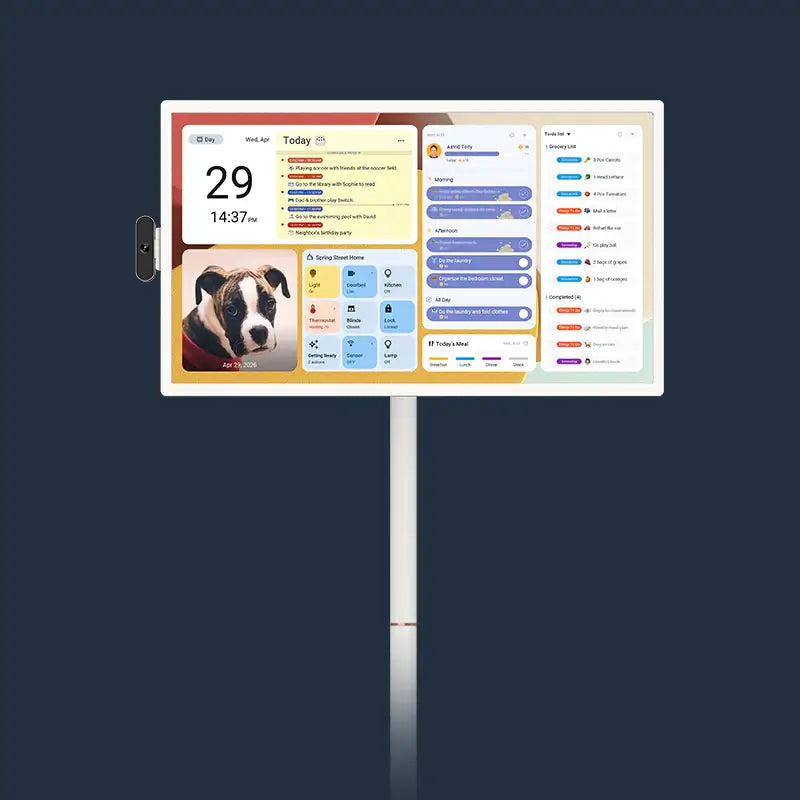
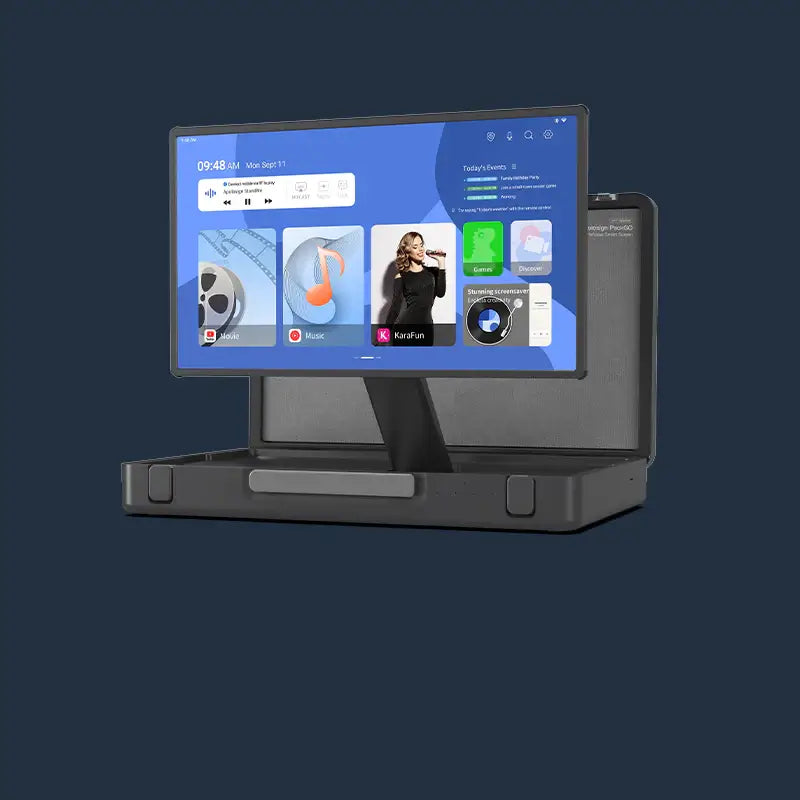
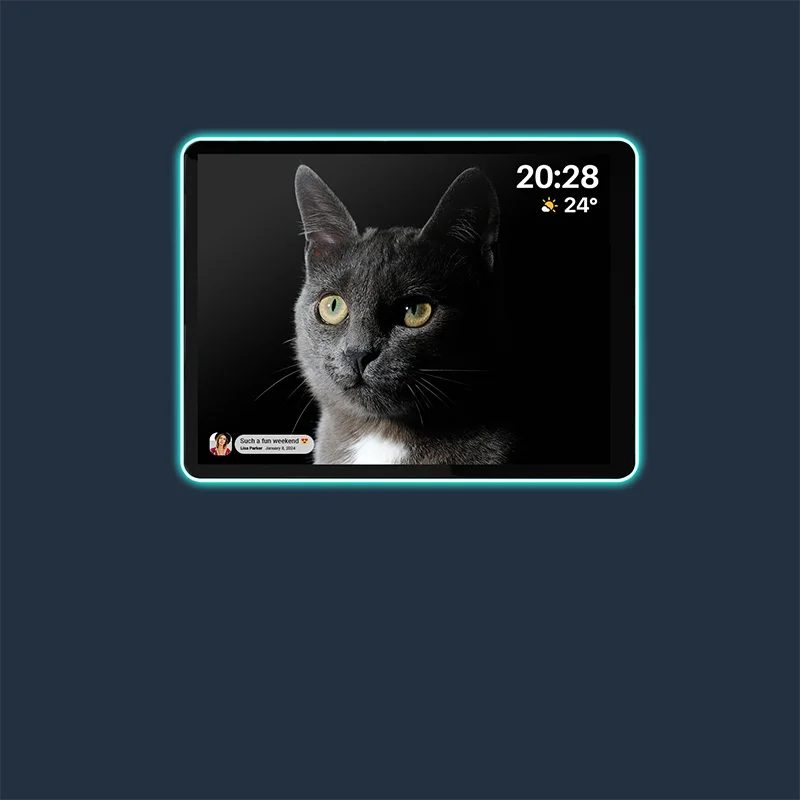


Several digital family calendars still run their core scheduling without a recurring fee in 2026, including Apolosign, Cozyla, and LOOFII, while Skylight and Hearth Display put meal planning, rewards, or setup itself behind a paid plan. The gap shows up on ordinary days: a double-booked Saturday, a permission slip nobody saw, a chore chart that quietly stops working mid-month.

Where the Subscription Line Falls in 2026
The first thing to check is not the sticker price but which everyday features keep working after the box is opened. Skylight’s own support pages list Calendar Plus at $79 a year, covering meal planning, chore rewards, the photo screensaver, and its Magic Import feature, while calendar sync, the shared family view, basic chore charts, and lists stay available on the device without it. Hearth Display goes further and states in its own documentation that a Family Membership, $9 a month or $86.40 a year after a 30-day trial, is required to finish setting the display up in the first place.
The table below compares what each option costs up front and what it charges afterward, based on prices published on each brand’s own store pages and support documentation in August 2026.
|
Calendar |
Sizes |
Device price |
Recurring fee for core features |
Where the paywall sits |
|
Apolosign Digital Calendar |
15.6-inch, 21.5-inch, 27-inch, 27-inch 4K |
$279 to $679 |
None under current pricing |
Calendar sync, meal planning, points-based chore rewards, photo album uploads, and the customizable DIY dashboard are included in the purchase today |
|
Cozyla Calendar+ 2 |
15.6-inch, 24-inch, 32-inch |
$349.99 to $764.99 (32-inch listed down from $899.99) |
None for scheduling features |
Cozyla Agent, the AI voice assistant, charges once the monthly free usage runs out |
|
LOOFII Smart Digital Calendar |
10.1-inch up to 21.5-inch |
Budget end of the category |
None required for core features |
Fewer household features overall than the larger displays |
|
Skylight Calendar |
10-inch, 15-inch, 27-inch Max |
Roughly $170 to $599.99 |
$79 a year for Calendar Plus |
Meal planning, rewards, photo screensaver, Magic Import |
|
Hearth Display |
27-inch |
$699 |
$9 a month or $86.40 a year |
Setup itself, plus routines, meal planning, and the Hearth Helper assistant |
Two patterns stand out. The no-fee group covers the scheduling and chore basics in the purchase price, and the paid group tends to gate the features families reach for in week two, not week one.

The Weekend That Gets Double-Booked
Double-booking usually happens because two adults are looking at two different calendars. A shared wall display fixes that by pulling both calendars into one always-on view, color-coded by family member, so a soccer tournament and a birthday party collide on the screen before they collide in real life.
Every calendar in this comparison syncs with Google Calendar, Apple iCloud, and Outlook without a paid plan, and Apolosign and Cozyla add Yahoo to that list. Skylight keeps sync on its free tier too, so this particular problem is not where subscriptions bite.
What differs is how much of the day you can see at once. Apolosign’s lineup runs from 15.6 inches up to a 27-inch 4K panel, and Cozyla reaches 32 inches, which matters when a household of five needs a week view legible from across a kitchen.

The 5:40 Dinner Question
Meal planning is the first feature most families hit a paywall on. Skylight’s recipe box and weekly dinner plan sit inside Calendar Plus, and Hearth’s meal planning is part of the Family Membership, so the answer to what is for dinner costs $79 to $108 a year on those two displays.
Apolosign and Cozyla both include meal planning with the device today, with the plan sitting on the same screen as the schedule so dinner and the 6 p.m. practice are visible together. Cozyla also generates a grocery list from the ingredients in a planned meal.
For a family that plans dinners weekly, this single feature can decide the comparison. The recurring cost is small in any given month and considerable across the years a wall display usually stays mounted.
The Chore Reminders Nobody Wants to Repeat
Chore nagging drops when the chart lives on a screen the whole household walks past, rather than in a parent’s head. Assign a task to a child’s profile, and the check-off happens in front of everyone instead of through a reminder repeated four times.
The line between free and paid runs straight through this feature:
- Skylight includes basic chore charts on the device, but the star-based rewards layer requires Calendar Plus.
- Hearth ties Stars and Rewards to its Routines feature, both inside the Family Membership.
- Cozyla includes points, custom rewards, and parent approval with the device.
- Apolosign includes its points-based chore rewards system in the purchase price under current pricing, with points appearing on screen the moment a task is marked done.
Rewards are the part kids actually respond to, which is why gating them changes the daily experience more than the feature list suggests.
What Happens When the Card on File Declines
A lapsed payment does not brick any of these devices, but it does thin them out. On Skylight, the calendar and lists continue while meal planning, rewards, and the photo screensaver stop. On Hearth, the documentation describes routines, rewards, and meal planning going quiet along with the membership.
That is a household habit breaking for a billing reason, usually at the worst moment, and re-subscribing is the only fix. Apolosign and Cozyla owners are not exposed to that particular failure today, because the scheduling, chore, and meal features they rely on are not conditioned on a renewal under current pricing.
Household budgets change, cards expire, and free trials convert quietly. A display whose daily functions do not depend on any of that is simply one fewer thing to maintain.

Match the Screen Size to the Wall You Have
Size drives satisfaction more than any spec sheet item once the subscription question is settled. A 15.6-inch display suits a bedroom, home office, or a narrow kitchen wall, and it is where Apolosign starts at $279 and Cozyla at $349.99.
Mid-size panels between 21 and 24 inches handle a family of four’s week view comfortably in a hallway or dining area. Screens at 27 inches and above earn their space in a kitchen or entryway where the calendar doubles as a photo frame and smart-home panel during the day.
The idle hours are worth weighing. Apolosign runs photo album uploads and a customizable DIY dashboard on the same device, plus Google Home control, so the screen stays useful between calendar checks rather than sitting dark. Skylight’s photo screensaver, by contrast, is a Calendar Plus feature.
Compare the Real Cost Before the Next Renewal
Add three years of subscription to any calendar you are considering, then compare that total against a display that includes the same features in its purchase price. For most households, that single calculation settles the choice faster than a feature-by-feature audit. Apolosign’s lineup, from the 15.6-inch model to the 27-inch 4K, is worth putting side by side with the paid-plan options before a renewal date arrives.
FAQs
Q1: Can a digital family calendar still sync with Google Calendar if I do not pay for a subscription?
Yes. Calendar sync with Google, Apple iCloud, and Outlook works without a paid plan on every display compared here, including Skylight’s free tier. Sync is one of the few features almost no brand paywalls, since a calendar that cannot import events has little reason to exist.
Q2: Do no-subscription calendars still get software updates?
Generally yes, since these displays run on Wi-Fi and receive firmware and app updates from the manufacturer the same way subscription models do. Update cadence varies by brand and is not usually published, so a household planning to keep a display for years should check how recently the maker shipped an update before buying.
Q3: What is the total five-year cost difference between a subscription and a no-subscription calendar?
Roughly $395 to $540 in fees alone, based on $79 a year for Skylight’s Calendar Plus and $86.40 a year for Hearth’s annual membership. That is on top of the device, and it often exceeds the price of an entire no-subscription display in the 15.6-inch to 21.5-inch range.
Q4: Can I cancel a calendar subscription and keep using the device?
Usually, though what remains varies. Skylight’s device keeps working as a calendar with lists and basic chore charts after Plus lapses. Hearth requires an active membership to complete setup initially, so a household that cancels loses the routines, meal planning, and assistant features that make up much of the experience.
Q5: Do free calendar apps do the same job as a dedicated wall display?
Not in the same way. Google Calendar and Apple Calendar are free and handle shared scheduling well, but they live on phones, which means a child cannot check the day without a device and a parent has to open an app to answer a question. A wall display’s advantage is passive visibility, not features.