


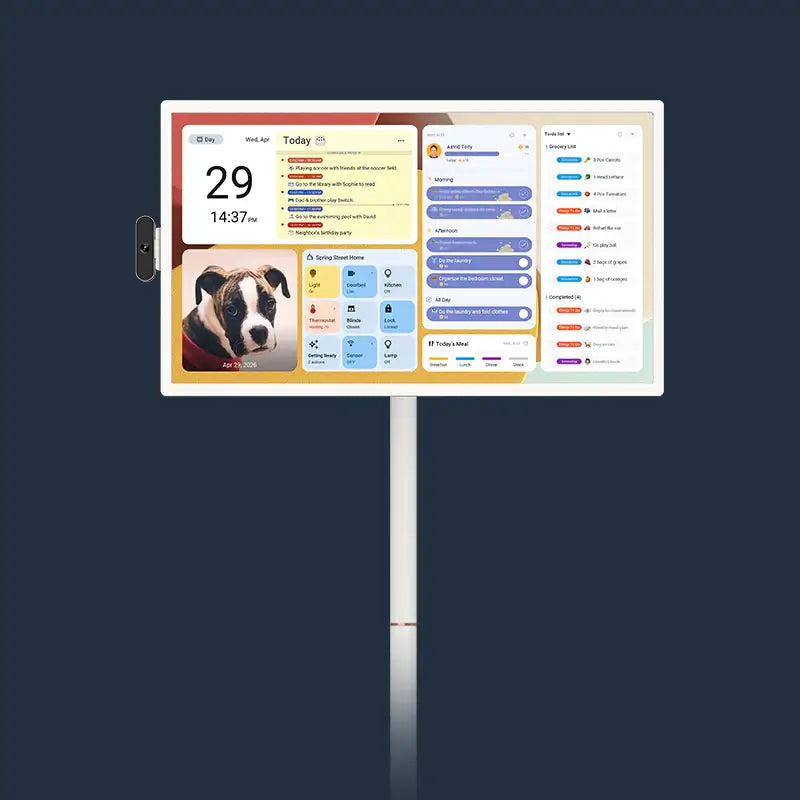
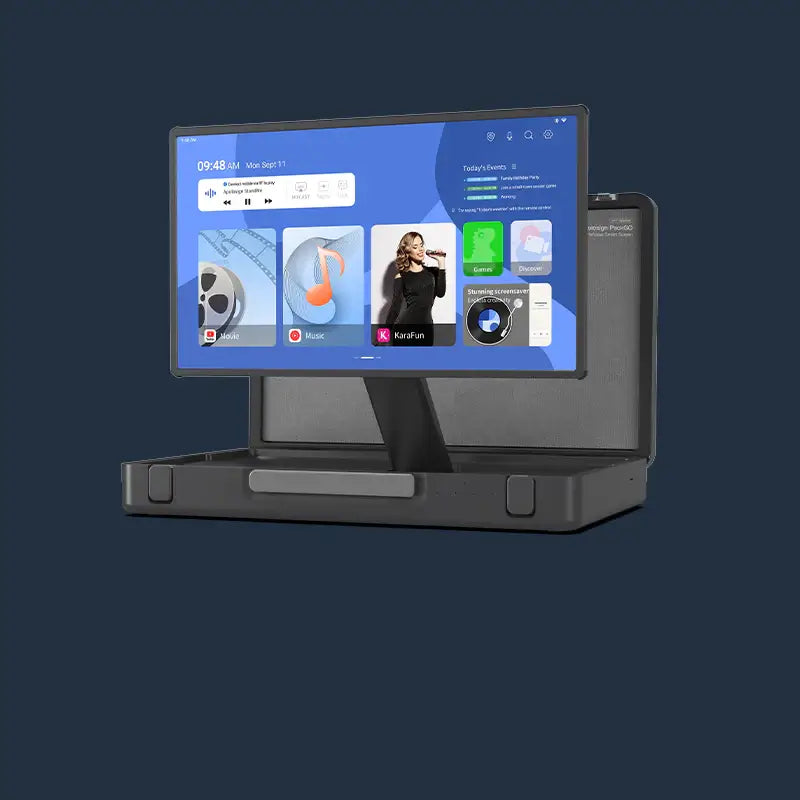
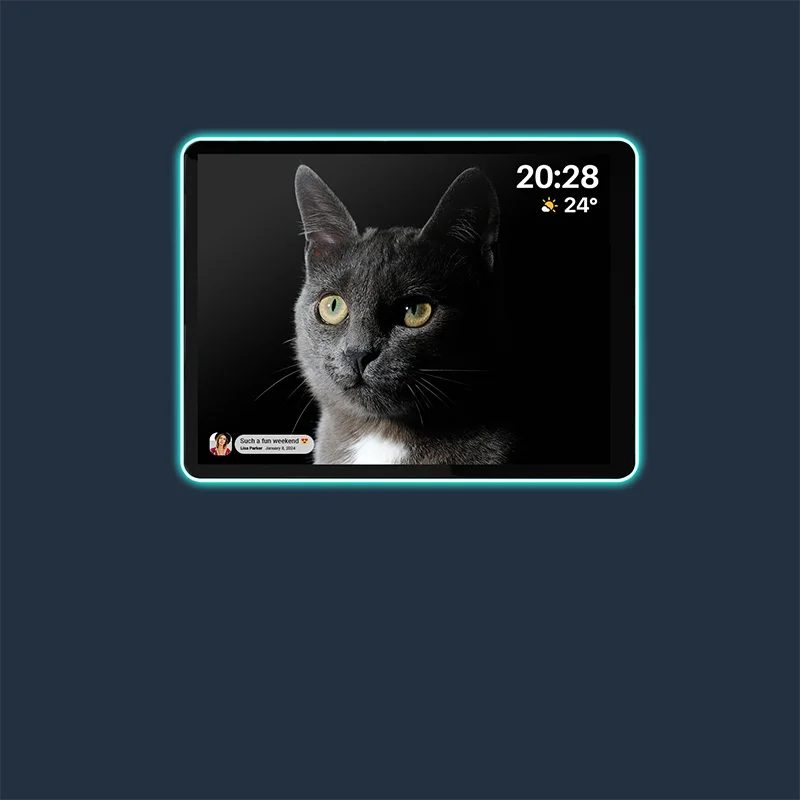



At matching screen sizes, an Apolosign digital calendar typically runs several hundred dollars cheaper than a Skylight Calendar over five years, once Skylight’s $79-a-year Plus subscription gets added to its hardware price. The gap comes almost entirely from that recurring fee, not from the upfront device cost, which sits close for both brands. The breakdown below shows exactly where the savings come from.

The Real Cost of Owning Each Digital Calendar
A five-year total ownership figure tells a more honest story than the sticker price alone. Skylight’s checkout price already bundles one free month of its Plus plan, and the subscription renews at $79 a year after that trial ends, so the real cost keeps climbing well past the day you unbox the device. Apolosign lists a single purchase price with no recurring plan attached.
| Screen Size Class | Skylight Model | Skylight Price | Apolosign Model | Apolosign Price | Approx. 5-Year Total (Skylight) | Approx. 5-Year Total (Apolosign) |
|---|---|---|---|---|---|---|
| 15 to 15.6 inch | Skylight Calendar (15") | $279.99 (includes first free month of Plus) | Apolosign 15.6" Digital Calendar | $279 (regularly $349) | ~$670 | $279 |
| 27 inch | Skylight Calendar Max (27") | $599.99 (includes first free month of Plus) | Apolosign 27" Digital Calendar | $579 (regularly $699) | ~$990 | $579 |
Those five-year Skylight totals assume the $79 renewal continues every year after the free trial month, which is how Skylight’s own pricing page describes the plan. Apolosign’s totals assume no changes to the purchase price, since there is no subscription to renew. Across both size classes, the difference lands between roughly $390 and $410 over five years, and it grows every year the Skylight subscription keeps renewing.
What Skylight’s $79-a-Year Plus Subscription Actually Unlocks
Not every Skylight feature sits behind the paywall. The base device works as a functional family calendar without ever paying for Plus, but several of the features people buy a smart calendar for specifically are gated.
Features Included at No Extra Cost
Skylight’s free tier covers the basics of running a shared calendar. According to Skylight’s own support pages, the following stay free for the life of the device:
- Task manager with interactive checklists
- Color coding for different family members
- Mobile app access and multiple calendar views (day, week, month, schedule)
- Weather forecasts and sleep mode scheduling
- Parental lock controls
- Linking multiple calendar accounts and sharing access with family or friends
- Automatic software updates
Features Locked Behind Plus
The $79-a-year plan is what unlocks the features most reviews and product pages highlight as the calendar’s main selling points:
- The rewards system for chores
- Meal planning with recipe storage
- Photo and video screensaver mode
- Magic Import, which reads school emails and PDFs to auto-add dates
- Disney Mode animations and character avatars
A buyer who skips Plus keeps a working calendar, but loses the chore rewards, meal planner, and photo screensaver that show up in most of Skylight’s own marketing.

What Comes Included with an Apolosign Purchase
An Apolosign purchase includes calendar sync, chore rewards, meal planning, photo display, and voice control at the listed price, with no separate plan to add at checkout. Apolosign’s product pages list these as standard on every model: calendar sync with Apple, Google, and Outlook accounts, a points-based chore rewards system, meal planning and recipe organization, a photo screensaver that pulls from Google Photos, a shared message board, grocery and shopping lists, voice control through Google Assistant and Gemini, and Google Home integration for connected devices. The 21.5-inch and larger models also switch between a dedicated calendar mode and an Android widget mode for further customization.
Because none of those features require a separate plan, the purchase price on the product page is close to the full five-year cost, aside from ordinary wear and eventual replacement.
How the Five-Year Math Plays Out at Matching Screen Sizes
The dollar gap is easiest to see by lining up each brand’s closest screen size. Both comparisons below use current published prices and assume the Skylight subscription renews annually at its current rate.
15-Inch Class Comparison
A 15-inch Skylight Calendar runs about $670 across five years once the $79 annual renewal is factored in, against roughly $279 for Apolosign’s 15.6-inch model. That works out to close to $391 in savings over five years for buyers who go with the one-time purchase, assuming feature access stays the priority rather than brand preference alone.
27-Inch Class Comparison
The larger screens widen the gap in raw dollars even though the percentage difference is similar. A 27-inch Skylight Calendar Max lands around $990 over five years, compared with about $579 for Apolosign’s 27-inch model, a difference of roughly $411. Apolosign also sells a 27-inch 4K variant at $679 (regularly $799), which still undercuts the Skylight Max total by a wide margin even at its higher-resolution price point.
Where Screen Size and Lineup Options Differ
Skylight’s current lineup runs smaller on the low end, with a 10-inch frame-style option below its 15-inch and 27-inch Max models. Apolosign’s range starts at 15.6 inches and adds a 21.5-inch size in between its 15.6-inch and 27-inch models, priced from $379 (regularly $449), giving buyers who want a mid-size screen for a hallway or smaller kitchen wall an extra option that Skylight’s current sizing does not cover directly.
This matters for the cost math too. Because the Skylight Plus subscription charges a flat $79 a year no matter which screen size sits on the wall, the smaller 15-inch model absorbs a larger share of its five-year total from the subscription than the 27-inch Max does in percentage terms. Apolosign’s pricing scales with hardware alone, so a family choosing the smaller 15.6-inch model keeps the same proportional savings as one buying the largest 27-inch 4K version, since neither carries an added yearly charge.

Financing and Payment Options Worth Checking Before You Compare Totals
Skylight lists a Shop Pay installment option on its 27-inch Max, splitting the device into four interest-free payments of $157.50, which lowers the amount due at checkout without changing the five-year total. Apolosign’s product pages did not list a comparable installment plan at the time of writing, so shoppers weighing monthly cash flow rather than total cost should check each brand’s checkout page directly, since financing terms change more often than hardware specs.
Calculate Your Own Five-Year Total Before You Buy
The right pick depends on how many years you plan to actually use the device and whether you would pay for Plus anyway. Add up the hardware price plus any subscription renewals across the years you expect to own it, then compare that number against a one-time purchase at the same screen size. For most households planning to keep a display for several years, the subscription-free math favors the lower long-term total.
FAQ about Skylight and Apolosign
Q1: Does canceling a Skylight Plus subscription shut down the whole calendar?
No. Skylight’s free tier still includes the task manager, checklists, mobile app access, multiple calendar views, weather, sleep mode, and parental lock controls. Canceling Plus removes the rewards system, meal planner, photo screensaver, and Magic Import, but the device keeps working as a basic calendar.
Q2: Are there any recurring fees for Apolosign beyond the one-time purchase price?
Apolosign’s product pages do not list any subscription or recurring plan for calendar sync, chores, meal planning, photo display, or voice control. Ordinary internet service and electricity to run the display are the only ongoing costs mentioned.
Q3: Does the $79 Skylight Plus renewal price ever increase after the first year?
Skylight’s pricing pages list $79 a year as the current rate but do not state whether that rate is locked in permanently for existing subscribers. Buyers relying on it for five-year math should check the current renewal terms at the time of purchase.
Q4: Is the first month of Skylight Plus actually free, or is it built into the listed price?
It is a genuine trial month bundled into checkout. Skylight’s product pages state the first month of Plus is included, then billing switches to the $79 annual rate once that trial period ends.
Q5: How much more does the larger 27-inch screen size add to the price on each brand?
Skylight’s jump from its 15-inch model to the 27-inch Max adds about $320 to the hardware price, while the subscription cost stays the same $79 a year regardless of screen size. Apolosign’s jump from 15.6 inches to 27 inches adds about $300 at current sale pricing, with no added subscription cost either way.