





Managing a modern household is less like parenting and more like running air traffic control for a small, chaotic airport. Between soccer practices, parent-teacher interviews, and the endless cycle of grocery runs, keeping everyone on the same page is a logistical art form. The old system, a crumpled paper calendar held onto the fridge by a magnet from a 2015 vacation, just fails to perform anymore. That's where a dedicated digital calendar comes in.
But how big is enough? 15.6 inches or 27 inches?
Scale & Presence: Compact Tool vs. Home Command Center
The difference between 15.6 inches and 27 inches might sound like just a few numbers, but in practice, they represent entirely different categories of devices.

The 15.6-inch
The 15.6-inch digital calendar sits in the category of personal, close-range household tools. Its scale is similar to a laptop display, which makes it feel familiar rather than intrusive. Instead of dominating a room, it blends into everyday surfaces and works best when family members naturally walk up to it. This size favors flexibility and interaction over visual impact.
- Stand included → entryway console, hallway table, kitchen counter
You can place it on furniture first and live with the layout before deciding on wall mounting. No pressure to drill on day one.
- Compact footprint → tight, high-traffic spots
Ideal for locations where people pause briefly—by the fridge, next to the door, or in a narrow hallway—rather than across a large room.
- Routines + points/rewards → mudroom or foyer habit building
Kids complete tasks like “wake up on time” or “pack backpack,” and their points or rewards show instantly on the screen, reinforcing routines without constant reminders.
- Google Assistant Voice Control – Capture Tasks on the Go
When your hands are full, use voice commands to quickly check the weather, get cooking tips, or perform online searches—keeping your workflow smooth without needing to unlock your phone.
- Designed for close interaction → lighter schedules or smaller households
Best for families who prefer stepping up to the screen to check details, rather than reading everything from a distance.
The 27-inch
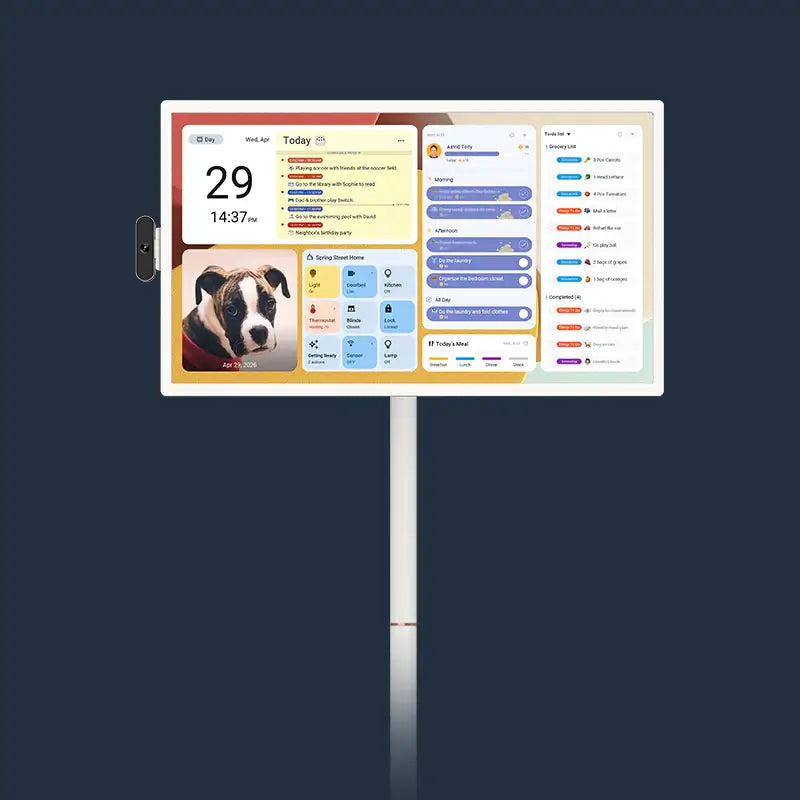
The 27-inch digital calendar operates on a completely different scale. It functions as a shared household display, closer to a wall-mounted appliance than a gadget. This size is meant to be seen from across the room and referenced passively throughout the day. Once installed, it becomes part of how the space itself works.
- Large-format display → kitchen or living room command center
Readable from across open spaces, allowing family members to check schedules while cooking, eating, or moving through the room.
- anti-glare matte glass → bright, sun-filled rooms
Maintains visibility in kitchens and open-concept living areas where reflections would normally be a problem.
- VESA 100×100 mounting → permanent, built-in look
Designed for wall installation with cleaner cable management, especially when paired with recessed outlets or in-wall routing.
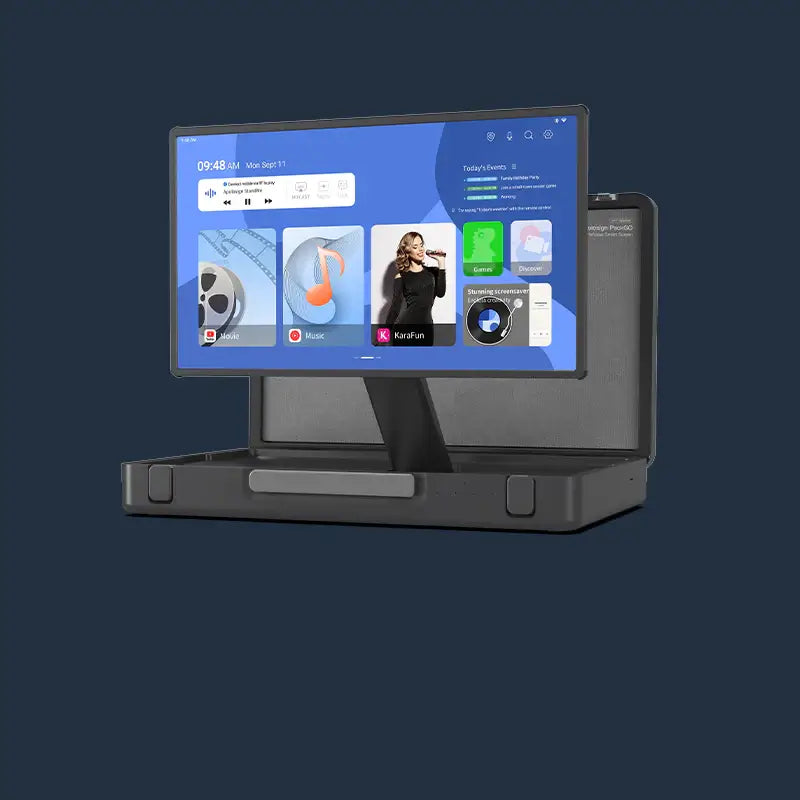
- Android mode with apps/widgets → dashboard-style use
The extra screen space supports calendar views alongside weather, to-do lists, music controls, or smart-home panels without visual clutter.
- Meal Planning + To-Do Lists → Streamlined Shared Kitchen Workflow
With Apolosign Calendar, meal plans and shopping lists can be displayed directly on the screen, allowing the whole family to see what’s on the menu for the day or week. Tasks like prepping ingredients or tidying up after meals are clearly visible to everyone, reducing kitchen chaos caused by miscommunication or forgotten responsibilities.
Paired with Google Assistant, you can quickly get recipe tips or cooking instructions without interrupting what you’re doing. This setup helps parents and kids stay organized during busy times and solves common frustrations like “what’s for dinner?” or “did we buy everything we need?”—turning the kitchen into a truly efficient family workflow hub.
How Far Can You Actually Read It?
"Glanceability" determines if a smart calendar for wall usage is actually useful. Can you absorb the information needed without stopping your current task? The answer depends entirely on distance.
The 10-Foot Rule
In many American homes, the kitchen island or the sofa sits about ten feet away from the main wall. At that distance, a 15.6-inch screen displaying a monthly grid looks like a collection of indecipherable ants. To read the text, you must walk over to the wall.
The 27-inch screen conquers that gap effortlessly. With the larger digital calendar display, text renders at a size legible from across the room. You can be chopping vegetables at the island and glance up to see "6:00 PM - Football Practice" clearly. The Apolosign 27-inch models also feature anti-glare matte glass. So, even if your sun-drenched open-concept living room gets blasted with afternoon light, the schedule remains readable without turning into a mirror.
The Arm's Length Rule
If your intended spot is a narrow hallway, a mudroom, or right next to the fridge where you stand to get water, the 15.6-inch screen shines. At a distance of two feet, the display feels crisp and manageable. A massive 27-inch panel in a tight corridor would feel overwhelming, like sitting in the front row of a movie theater.
Information Density: Split-Screen vs. Single Focus
Bigger screens don't just make things larger; the extra space allows you to see more things at once without clutter.
Escaping the Scroll
One major complaint with smaller digital calendars is "scroll fatigue." On a 15.6-inch screen, fitting a busy family's entire month often requires compressing the view or hiding details behind "tap to expand" buttons.
The 27-inch canvas solves that problem through sheer volume of pixels. Apolosign's unique "Dual-Mode" functionality utilizes the space brilliantly. In "Android Mode," you aren't limited to just a calendar application. You can split the screen: keep your Google Calendar open on the left, running the full monthly view, while the right side displays a weather widget, a Spotify playlist controller, and a to-do list for groceries.
The 4K
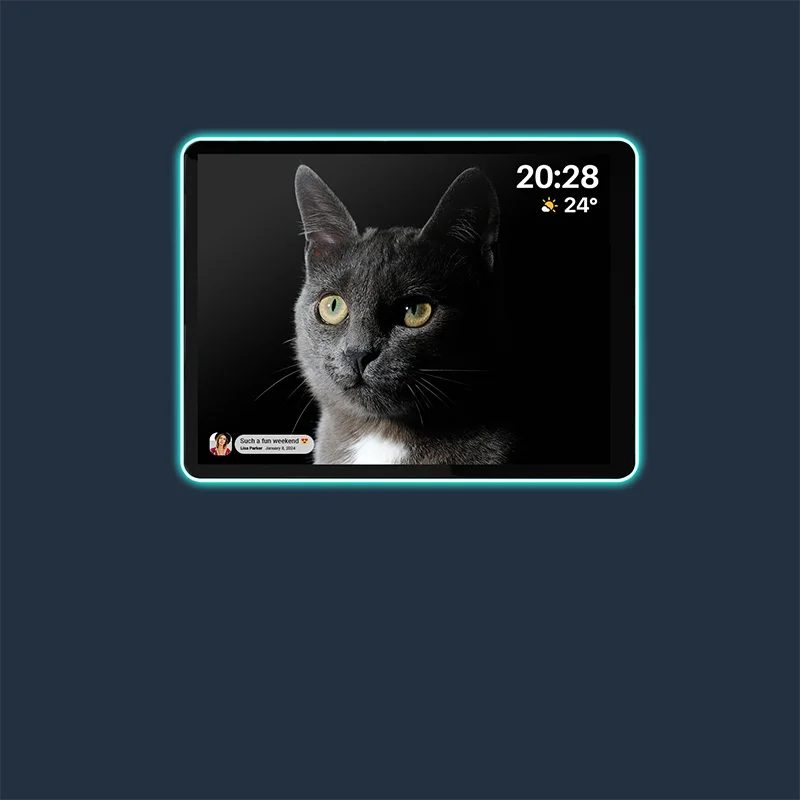
If you opt for the Apolosign 27" 4K Digital Calendar, the benefit extends beyond sharp text. It elevates the "screensaver" mode. When the calendar isn't active, these devices often loop family photos. On a standard 1080p 27-inch screen, photos can look slightly soft if you get close. The 4K version packs so many pixels that your vacation photos look like high-end gallery prints. For families who want the electronic calendar for wall mounting to double as premium decor, 4K resolution offers a significant visual upgrade.

Room-by-Room Guide: Matching the Screen to Your Space
Every room has a different "vibe" and functional requirement. Here is where each size wins.
The Kitchen (Heart of the Home) -> 27-inch
The kitchen acts as the gravity well of family life. It is where plans form and meals happen. A 27-inch screen here becomes the family bulletin board. With Apolosign's voice control ("Hey Google"), you can add items to your shopping list while your hands are covered in dough. The large screen also serves as an excellent recipe display—no more squinting at a phone screen while cooking.
The Mudroom / Entryway -> 15.6-inch
We all know the struggle of the mudroom: coats, backpacks, and shoes everywhere. You don't hang out here; you pass through. A 15.6-inch unit mounted near the door is perfect for that final "sanity check" before leaving: What is the weather? Who needs a ride today? The compact size fits neatly between coat hooks and light switches.
The Home Office -> 27-inch 4K
For the remote worker, a dedicated information screen can serve as a productivity hack. Mounting a 27-inch 4K unit behind your monitor setup allows you to offload your schedule, stock tickers, or news feeds from your main computer. It acts as a passive information monitor that keeps you focused on your primary tasks.
Installation Aesthetics: Hidden Wires and Wall Real Estate
Let’s talk about the elephant in the room: the power cord. Nothing ruins the sleek look of an electronic calendar for wall use faster than a black wire dangling down your paint.
Because the 27-inch unit is a permanent fixture, planning for a clean install is wise. Both Apolosign 27-inch models support standard VESA 100x100 mounts. If you are handy (or know a good electrician), installing a "recessed outlet" behind the screen allows you to plug the device in and hide the bulky power brick inside the wall cavity. The result is a "floating" screen that looks built-in.
The 15.6-inch model is more forgiving. Since you might place the unit on a counter using the stand, the visible wire is expected, much like a toaster or coffee maker. If you do wall-mount the device, a simple plastic wire channel painted to match your wall usually suffices to hide the cable without major renovation work.
Cost vs. Longevity: Why One-Time Investment Matters
For US homeowners, value is paramount.
Apolosign differentiates itself significantly from competitors like Skylight through its business model. Many brands charge a subscription fee just to unlock basic features like photo frame or rewards system. The Apolosign 15.6" Digital Calendar and the larger counterparts function on a subscription-free model. You buy the hardware, and the software, including the app, cloud syncing, and Google Play integration, is yours to use forever.
While the 27-inch model commands a higher upfront price, consider the long-term value. It replaces a wall clock, a paper calendar, a weather station, and a digital photo frame. Plus, Apolosign offers Free Shipping to the contiguous United States and backs the product with a 1-year warranty and a 30-day risk-free trial. If you plan to keep the device for 5+ years, avoiding monthly fees makes the larger, more premium hardware a smarter financial play in the long run.
15.6" vs. 27" Specs at a Glance
| Feature | 15.6-inch Model | 27-inch / 27-inch 4K Model |
| Best For | Entryways, Desks, Small Nooks | Kitchens, Living Rooms, Open Spaces |
| Mounting | Wall or Desk (Stand included) | Wall Only (VESA compatible) |
| Readability | Good up to 3 feet | Excellent up to 15 feet |
| Resolution | 1080p (Full HD) | 1080p or 4K (Ultra HD) |
| Multitasking | Single focus app recommended | Perfect for Split-Screen / Widgets |
FAQs
Q1: Can I use the 27-inch screen as a photo frame when not using the calendar?
Absolutely. In fact, the device excels at the task. Both Apolosign 27-inch models support Google Photos integration without a subscription. You can set the unit to start a slideshow of your favorite albums automatically when no one is actively touching the screen, turning your calendar into a massive digital art canvas.
Q2: Is 15.6 inches big enough for a family of four?
It can be, provided you place the screen in a spot where people naturally stand close to it, like a hallway or right next to the fridge handle. However, if you have a very dense schedule with four people's activities color-coded, you might find the monthly view on a 15.6-inch screen a bit cramped. The 27-inch offers the breathing room needed for complex family logistics.
Q3: Does a 27-inch digital calendar consume much power?
Not as much as a TV. These devices are designed for always-on usage (or long-duration usage). They include light sensors to adjust brightness automatically based on the room's ambient light. You can also schedule "sleep times" so the screen turns off completely while the family sleeps, saving energy and extending the screen's lifespan.