



If you are choosing between Apolosign and Skylight, the biggest practical difference comes down to cost structure: Apolosign is a one-time purchase, while Skylight relies on an annual subscription to unlock its full feature set.
Both are wall-mounted displays that sync with major calendar platforms including Google Calendar and iCloud, but their hardware, system architecture, and long-term cost structure are fundamentally different.
Why Families Are Replacing Paper Calendars with Digital Displays in 2026
Paper calendars and phone app reminders each solve half the problem. A wall-mounted digital display keeps the schedule visible in the room your family passes through most, without requiring anyone to proactively check a device.
The Hidden Cost of Missed Events and Scheduling Chaos
Poor family scheduling carries costs that go beyond a single missed appointment:
- Repeated verbal reminders create daily friction between parents and kids.
- Last-minute scrambles add stress to mornings that are already rushed.
- One person ends up carrying the mental load of tracking everyone else's schedule.
- Notifications get missed or ignored, and events fall through the gap between devices.
A shared, always-on display makes the schedule visible to everyone in the room, without requiring anyone to ask or check a device.
What a Digital Family Calendar Actually Does Every Day
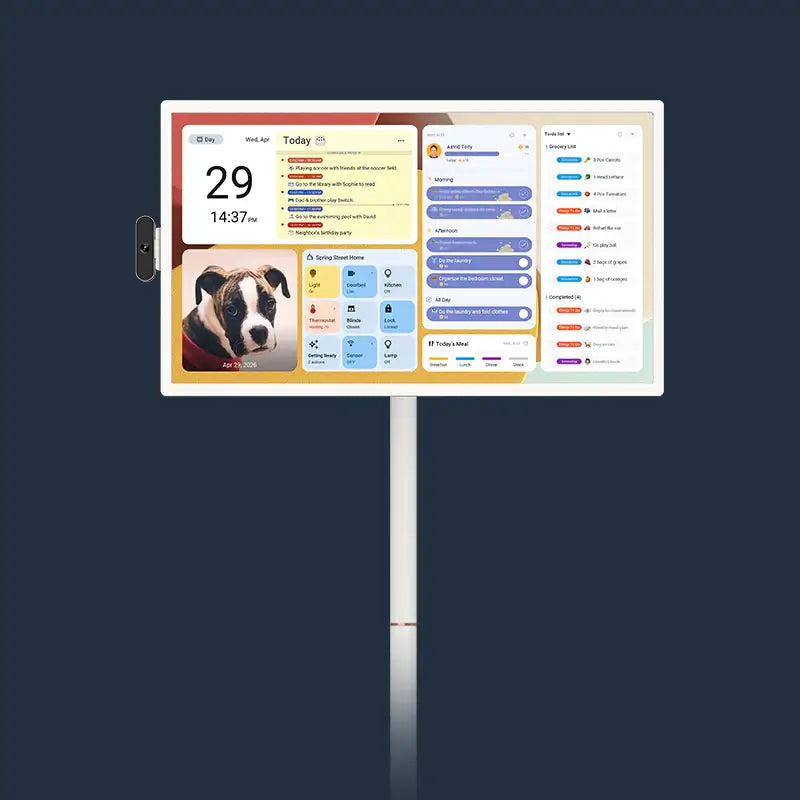
A digital family calendar pulls events from Google Calendar, iCloud, and Outlook into one color-coded display. It shows each person's schedule at a glance, manages chore assignments, tracks task completion, and displays the week's meal plan.

Apolosign vs. Skylight: Specs, Price, and What You Get Out of the Box
Both Apolosign and Skylight compete at the 27-inch screen size and a similar starting price, but their hardware capabilities and what each device includes at purchase are meaningfully different.
Screen Size, Resolution, and Hardware Specs Side by Side
|
Spec |
Apolosign 27" |
Skylight Calendar Max 27" |
|
Resolution |
1080p Full HD (4K UHD model also available) |
2560x1440 QHD |
|
Operating System |
Licensed Android |
Proprietary OS |
|
Processor |
Octa-core |
Not disclosed |
|
Storage |
64 GB |
32 GB |
|
Connectivity |
Wi-Fi 6, Bluetooth 5.4 |
Standard Wi-Fi |
|
Microphone / Voice Control |
Built-in microphone, Google Assistant |
No microphone, no voice control |
|
Google Play Store |
Yes |
No |
|
Annual Subscription |
None |
$79/year (Plus plan) |
Apolosign's standard 27" model and Skylight's Calendar Max start at similar price points, but the hardware gap is significant.
Apolosign offers twice the storage and open app access. On resolution, Skylight's QHD panel has a pixel density advantage over Apolosign's 1080p standard model at this screen size. However, Apolosign's 4K UHD model (3840x2160) exceeds Skylight's QHD resolution and is available at a higher price point for buyers who prioritize display sharpness.
Starting Price and What Each Device Includes at Checkout
Apolosign's 27" 1080p model starts at $599, with a 4K UHD version also available. All core features, including chore charts, photo screensaver, meal planner, and voice control, are included at purchase with no recurring costs.

Skylight's 27" Calendar Max starts at $599.99 and includes calendar sync, color coding, basic chore tracking, and the mobile app. Photo slideshows, meal planning, Stars and Rewards, and Magic Import require the $79/year Plus plan. Pricing and bundles change periodically, so checking the official website before purchasing is recommended.
A Dedicated Calendar Display vs. a Full Home OS: Which One Is Easier to Use
Apolosign's Dual Mode system handles both simple daily calendar use and a fully customizable smart dashboard from the same device, while Skylight focuses on a single dedicated interface.
Setup Experience for Non-Tech-Savvy Parents
Apolosign's setup takes roughly 15 to 30 minutes. You download the mobile app, create an account, link your Google or iCloud calendar, and assign individual color codes to each family member. Families already on Google can complete the initial calendar sync with a single sign-in. Calendar Mode, the view most families use every day, is immediately functional after setup with no additional configuration needed.
Skylight's setup is similarly straightforward and is often described as faster for households that only need to connect one shared calendar.
Daily Navigation, Touchscreen Feel, and Learning Curve
Skylight's interface is fixed and purpose-built: one screen, one calendar view, with no additional modes or settings to navigate. That simplicity is genuinely useful for households that want the device to work without any configuration after setup.
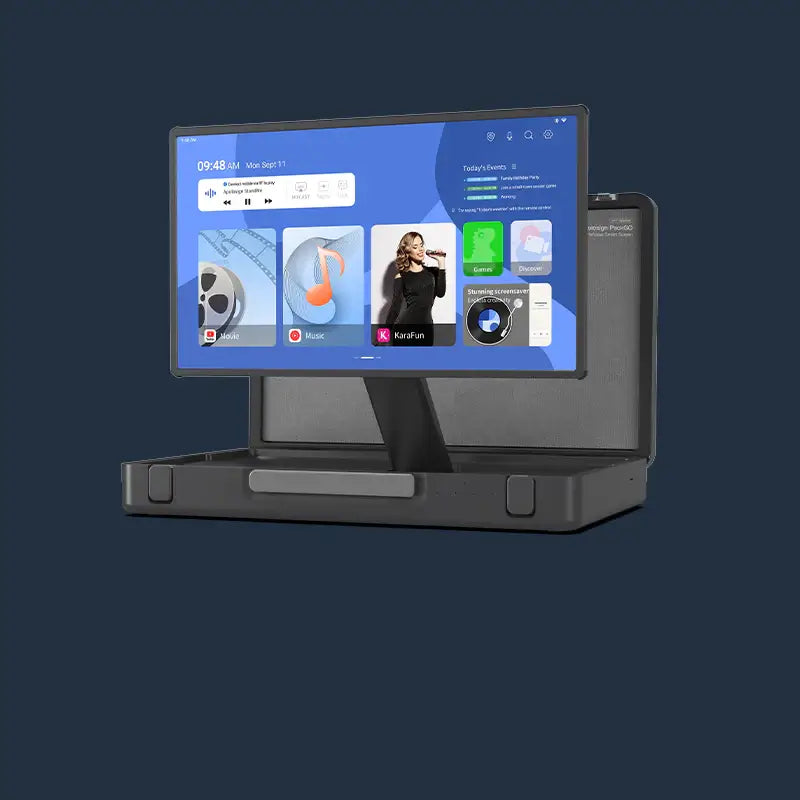
Apolosign's Dual Mode gives users two distinct interfaces in one device. Calendar Mode keeps the display clean and focused on the day's schedule. Android Mode opens a fully customizable dashboard where families can add weather widgets, music controls, meal plan cards, or Google Home camera feeds. The tradeoff is a slightly longer initial learning curve, which most families work through in the first week of ownership.
How Well Does Each Calendar Handle Syncing and Task Management?
Calendar sync reliability is the most critical daily function. A display that lags or drops events quickly becomes unreliable as a household tool.
Google, iCloud, and Outlook Sync: Reliability Across Platforms
Apolosign syncs with Google Calendar, iCloud, Outlook, and Yahoo. Google Calendar uses native real-time sync, where changes typically appear on the display within seconds. iCloud and Outlook connect by importing a shared calendar link, so updates may have a slight delay and occasionally need a manual refresh from the app.
Skylight handles sync similarly: strong Google Calendar integration, with shared calendar link connections for other platforms.
For Google-primary households, both devices perform reliably. For iCloud-primary households, expect the same URL-based behavior on either device.
Chore Charts, Kids' Routines, and Reward Systems Compared
Apolosign's full chore and reward system is included at no extra cost. Parents assign tasks with color codes, set point values, and configure reward thresholds from the app or directly on the display. Kids mark tasks complete on screen, and progress updates in real time. The system supports morning, afternoon, and evening routine breakdowns for structured household schedules.
On Skylight, the basic chore and task tracking feature is available on the free tier, but the Stars and Rewards gamification system, where kids earn points and unlock rewards, requires the paid Plus plan.
What Does Each Device Actually Cost Over 5 Years?
These are the features that differ most between the two devices, and where the subscription gap becomes most visible.
What Features Are Free and What Sits Behind a Paywall
|
Feature |
Apolosign |
Skylight Calendar Max |
|
Calendar Sync |
Included |
Included |
|
Basic Chore and Task Chart |
Included |
Included |
|
Stars and Rewards System |
Included |
Requires Plus plan ($79/year) |
|
Photo Screensaver |
Included |
Requires Plus plan ($79/year) |
|
Meal Planning |
Included |
Requires Plus plan ($79/year) |
|
Magic Import (email/PDF to calendar) |
Not applicable |
Requires Plus plan ($79/year) |
|
Third-Party App Access |
Google Play Store, included |
Not supported |
|
Voice Control |
Google Assistant, included |
Not available (no microphone) |
All of Apolosign's core organizational features are available from day one with no subscription required.
A 5-Year Total Cost Breakdown: Hardware, Subscription, and Hidden Fees
Apolosign's 27" 1080p model costs $599 with no recurring fees. Skylight's 27" Calendar Max starts at $599.99, but the $79/year Plus plan brings the 5-year total to approximately $995.
The 5-year math still favors a no-subscription device for most households that plan to keep the device long-term.

Open Android System vs. Closed Proprietary OS: Why It Matters for Your Family
The operating system determines what your device can do not just today, but for the next five or more years of daily use.
What You Can and Cannot Install on Each Device
Apolosign runs a licensed version of Android with full Google Play Store access. Your family can install any Android-compatible app directly on the display, including Spotify, a recipe tool, a homework tracker, or any other app that suits your household's routine.
Skylight's proprietary OS limits the device to the features the manufacturer has built in. If Skylight does not add a feature through a software update, that feature is not available on the device.
Smart Home Integration: Google Assistant, Voice Control, and Third-Party Apps
Apolosign includes a built-in microphone and full Google Assistant integration. Voice commands work from across a typical kitchen for setting alarms, checking the weather, playing music, or opening YouTube videos without touching the screen. Through Google Home integration, the display can also show doorbell camera feeds and control connected smart home devices on the same screen.
Skylight's hardware does not include a microphone, so voice control is not supported on the device.
How Does Each Calendar Perform During Your Family's Busiest Moments?
Good hardware specs only matter if the device performs during the moments families actually need it.
The Morning Rush: Getting Everyone Out the Door Without Nagging
Apolosign shows color-coded schedules and chore check-offs for each family member, and supports voice control for hands-free updates while cooking.
Skylight shows the same color-coded daily view and supports chore check-offs, but does not include voice control.
After-School Hours: Activities, Homework Reminders, and Dinner Coordination
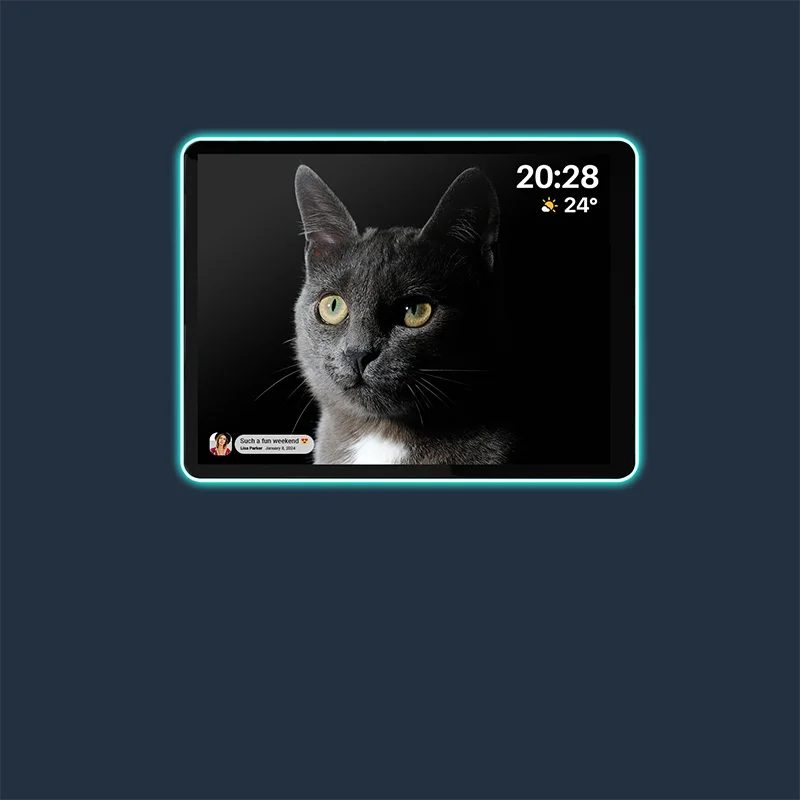
Apolosign displays meal plans, color-coded activity times, and a full chore reward system at no extra cost. The photo screensaver cycles through family photos automatically.
Skylight covers chore tracking on its free tier, but the Stars and Rewards system and photo screensaver both require the paid Plus plan.
Hardware Design: Which Calendar Actually Looks Good on Your Kitchen Wall?
A display that looks out of place will not stay on the wall. Design finish and placement flexibility affect whether your family consistently uses the device over time.
Wall Mounting, Portrait vs. Landscape, and Finish Options
Both devices support portrait and landscape wall mounting and ship with a wall mounting bracket. Apolosign offers frame finishes in multiple colors including teak yellow, spruce grey, black and white. Skylight Calendar Max uses a swappable Snap Frame system, letting you change the frame style after purchase.
Neither 27" model includes a desktop stand in the box; both ship with a wall mount bracket; Apolosign's desktop stand is available on the 15.6" model, and a third-party tabletop stand for Skylight's 27" is sold separately.
Screen Readability in Real Kitchen Lighting Conditions
Both devices support auto-brightness adjustment.
Apolosign uses matte glass across all models, which provides stronger reflection reduction in bright kitchen environments.
Skylight's Calendar Max also carries an anti-glare coating on its HD display. At 27 inches, both screens are readable from a typical kitchen distance without needing to approach the display.
Which Families Should Choose Apolosign, and Who Might Prefer Skylight?
Most households get more long-term value from a no-subscription, open-system device. The right answer still depends on how your family actually plans to use it.
Apolosign Is the Right Fit If Your Family Looks Like This
- Your household runs primarily on Google Calendar, or a mix of Google and other calendar platforms.
- You want chore rewards, photo screensavers, and meal planning included without an annual fee.
- You use Google Home or other smart home devices and want a single screen to manage them.
- You plan to own the device for five or more years and prefer a one-time hardware purchase.
- You want the flexibility to add apps like Spotify, a recipe tool, or a homework tracker on the same display.
When Skylight Makes More Sense
Skylight may be the better fit if your household looks like this:
- You want the simplest possible setup: power on, sync one calendar, and use it as-is.
- Your family has no interest in voice control, smart home integration, or installing additional apps.
- You prefer a fixed, purpose-built interface with no extra settings to configure.
Choose Your Digital Family Calendar Based on What You Will Actually Use
Apolosign and Skylight both display shared schedules and sync with major calendar apps. What differs is what you pay after year one and what the device can do beyond a basic calendar view. Apolosign includes all core features at purchase, runs on an open Android platform, and supports smart home and voice control with no subscription attached. Visit Apolosign to compare models and find the right size for your household.
FAQs About Apolosign vs. Skylight Digital Calendars
Q1. Is a Digital Wall Calendar Worth Buying, or Is a Shared Phone App Enough?
It depends on your household size. A shared phone app works well for one or two adults who reliably check their phones. A wall-mounted display solves the visibility problem for everyone in the household, including younger children without phones, because the schedule is always visible without anyone needing to open an app.
Q2. What Is the Difference Between Apolosign's Calendar Mode and Android Mode?
Calendar Mode focuses the entire display on family schedules, chore charts, and task lists with no additional content visible. Android Mode opens a fully customizable dashboard where you add widgets for weather, music, meal plans, news, or Google Home camera feeds. You switch between the two modes with a single tap, and both are included at no extra cost.
Q3. Can Apolosign and Skylight Both Sync with Google Calendar and iCloud?
Yes. Both devices support Google Calendar, iCloud, and Outlook. Google Calendar sync works natively on both and updates in real time. iCloud and Outlook connect via a shared calendar link on both devices, so updates may have a slight delay and occasionally need a manual refresh. If your household runs primarily on iCloud, test the sync during the return window on either device.
Q4. Does Apolosign Require a Subscription to Use All Its Features?
No. All core features, including calendar sync, chore charts and rewards, photo screensavers, and meal planning, are included at purchase with no subscription required. An optional subscription is available for AI features, but it is not required to use any of the core organizational functions.
Q5. How Do I Set Up Apolosign for the Whole Family?
Download the Apolosign companion app, create an account, and connect each family member's calendar account (Google, iCloud, or Outlook). Assign each person a unique color code so their events are easy to identify on the shared display. The mobile app handles all ongoing updates without requiring physical access to the device.