




You arrive home to find the dishwasher unemptied and a school permission slip unsigned on the counter. Your partner asks what is for dinner, genuinely unaware that groceries never appeared via magic. That sudden chest tightness isn’t just annoyance; it is the weight of carrying the household’s invisible cognitive architecture alone. Learning about the ApoloSign mission can provide context on how we aim to solve these modern family challenges.
The Mental Load: The Work You Do That No One Sees
Most people confuse household labor with the mental load. Scrubbing a toilet or folding laundry represents visible, tangible labor. You can measure such tasks. The mental load, however, remains abstract. It involves the endless, invisible act of anticipating needs before they arise. It is noticing the toothpaste is running low three days before the tube is empty. It is remembering that the dog needs heartworm medication on the first of the month and that the toddler has outgrown their sneakers.
When one partner carries the entire cognitive burden, they are not just doing chores; they are holding the family universe together with their mind. The exhaustion stems not from the physical act of buying a birthday gift, but from the weeks of remembering the date, researching the child’s current interests, checking the budget, and planning the pickup. It is a constant, low-level background noise of "don't forget" loops playing on repeat. When a partner says, "I would have helped if you asked," they unintentionally validate the problem. They are waiting for instructions, leaving the management role entirely on your shoulders.

From “Default Parent” to Default Project Manager of the Household
In the corporate world, project managers earn high salaries to organize teams, track deadlines, and assign tasks. In a home, one person usually assumes such a role for free, often without volunteering. We call the result the "Default Parent" or the household manager. The other partner becomes a subordinate who executes tasks only when directed.
Such a dynamic kills intimacy. It creates a parent-child dynamic between spouses. You do not want to manage your partner; you want to share a life with them. When you have to delegate every single action, the delegation itself becomes work. Thinking through the steps required to get the kids ready for soccer, breaking those steps down, and verbalizing them to another adult takes almost as much energy as doing it yourself.
Over time, family planners and manual lists attempt to bridge the gap, yet they often fail because they require constant upkeep from the manager. If the manager stops writing on the whiteboard, the household stops running. The burden remains static. The goal is not just getting help with the execution; the goal is sharing the conception of the task itself.
Why “Why Didn’t You Tell Me Sooner?” Hurts So Much
Few phrases trigger immediate rage quite like this one. When a partner asks, "Why didn't you tell me?", they imply that the failure lies in your communication, not their lack of awareness. It suggests that you possess the sole key to the information vault and that you failed to distribute the data in a timely manner.
The phrase reveals a fundamental disconnect. It assumes that knowing the schedule is your job, and being told the schedule is their privilege. It hurts because it reinforces the loneliness of the mental load. It confirms that you are the only one scanning the horizon for incoming storms while everyone else is simply enjoying the view.
Arguments stemming from such phrases are rarely about the specific forgotten event. They are about the exhaustion of being the only one who cares enough to remember. It signals that your partner views themselves as a helper who assists you with your responsibilities, rather than a co-owner of the shared life.
Invisible Systems: How Families “Sync” Schedules Without Realizing It
Every household runs on an operating system. For many, that system is chaos. We rely on memory, shouting reminders across the house, or assuming the other person saw the email from the school. We assume our partners absorb information through osmosis.
Couples often engage in "tag-team" syncing. One person walks in the door, and the other recites a rapid-fire list of updates: "Plumber comes at 8, Sam has piano, we need milk." The listener absorbs maybe thirty percent of the data. The rest evaporates, leading to inevitable conflicts later.
Without a centralized family schedule, information lives in silos. It resides in one person’s brain or on a private phone screen. When systems are invisible, accountability disappears. If the plan exists only in your head, you are the only one who can fail. When the plan exists externally, the system works for everyone.

Why Fragmented Tools Make Fights Worse (Even If You’re “Organized”)
You might think you are organized because you use a phone calendar. Your partner might use a sticky note system. The school sends emails. The sports coach uses a dedicated app. The result is fragmentation.
Family planners and organizers often compound the issue when they are not unified. If you put the dentist appointment on your Google Calendar but your partner operates off a wall chart, the conflict is inevitable. "I put it on the calendar" becomes a weaponized phrase. Which calendar? Who checked it? When was it updated?
Smartphones, while powerful, are personal devices. They are designed for individual consumption. A notification on your lock screen does not help your partner know they need to pick up the dry cleaning. We trap family information inside personal passcodes. To truly share the load, information must move from the private sphere to the public sphere of the home.
Making the Mental Load Visible: Shared Screens and Digital Family Calendars
To solve the visibility problem, the information must live in a neutral, communal space. It needs to be undeniable and accessible without asking permission. This is where the concept of a digital command center transforms the household dynamic.
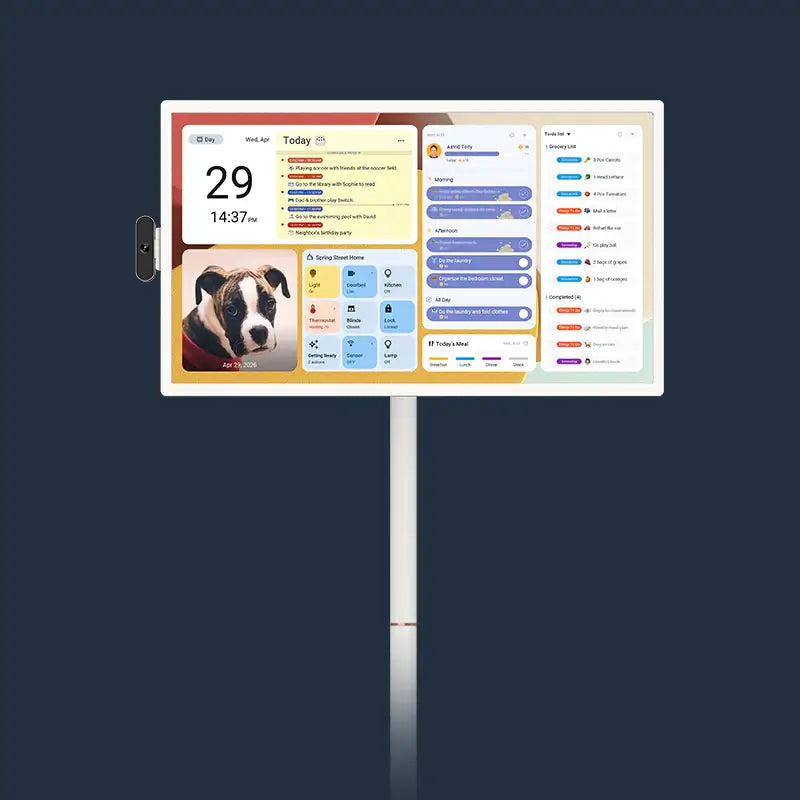
The ApoloSign 27" 4K display serves as a prime example of how hardware can alleviate cognitive friction. Unlike a small tablet or a cluttered whiteboard, the device offers a massive 27-inch 4K ultra-clear display. Its anti-glare matte finish is crucial; it allows the screen to be readable from any angle in a bright kitchen without acting like a mirror. It sits in the heart of the home, broadcasting the plan to everyone.
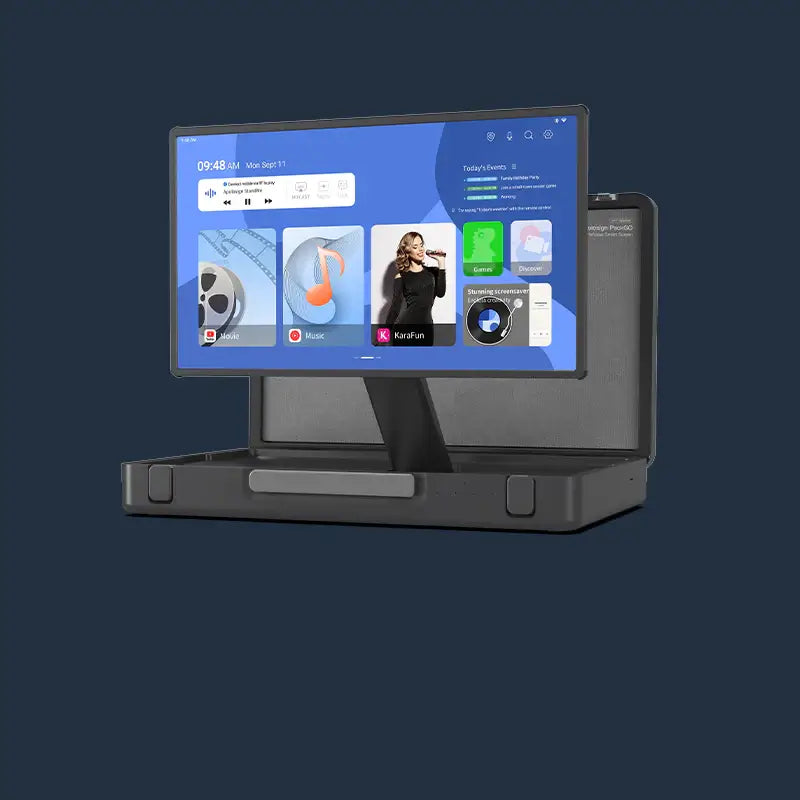
A device of such caliber functions as the single source of truth. With its Dual Mode interface, families can switch seamlessly between a dedicated Calendar Mode and an Android Dashboard Mode. The Immersive Calendar View is particularly effective for reducing the mental load. It provides a large, clear visual of the family planner calendar, allowing every member of the house to see what is happening today, tomorrow, and next week.
Syncing capabilities are non-negotiable for a modern family calendar. The Apolosign unit auto-syncs with major platforms including Google Calendar, Apple Calendar, Outlook, Yahoo Calendar, and Cozi. When you add an appointment at work, it appears on the wall at home. Multi-calendar support allows you to overlay work schedules, school calendars, and meal plans in one view.
Beyond simple dates, the device tackles the "chore gap." The Focus Mode includes a routine task tracker with points. It turns dull household duties into a gamified experience, encouraging kids (and partners) to build good habits. You can assign tasks and track rewards directly on the screen.
Customization plays a huge role in adoption. In the Custom Mode (Android Mode), you can download and arrange widgets for weather, music, stocks, and meals. You can create custom to-do lists for groceries or shopping and color-code them via the calendar or mobile app. The dashboard personalization lets you drag and rearrange widgets to build a hub that fits your specific family logic.
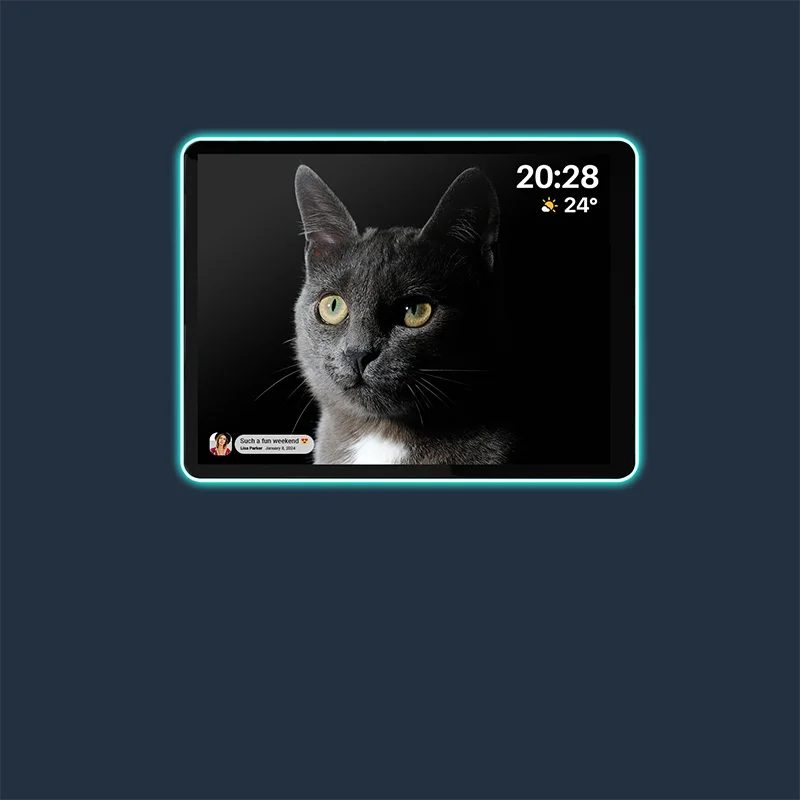
Performance matters when replacing an analog tool. The device features high responsiveness with smooth touch interaction. It receives ongoing OS updates to add new features over time. Crucially, there are no subscription fees for the built-in photo or calendar functions. It works as a photo frame with Google Photos when not in use, blending into the decor.

Instead of “Why Didn’t You Tell Me?”, Try “Is It on the Screen?”
Implementing a central hub changes the verbal loop in the house. You no longer have to be the nagging reminder. When a partner asks, "What are we doing this weekend?", the answer is no longer a recitation of your mental list. The answer is, "Check the Apolosign."
Such a shift transfers authority. The screen becomes the manager. If the event is on the screen, everyone is responsible for it. If it is not on the screen, it does not exist. The Apolosign 27" 4K supports such autonomy through smart integration. Voice control with Google Assistant allows anyone to set alarms, check the weather, or organize tasks hands-free while their hands are covered in flour.
Full Google Home integration means the screen also acts as a control panel for doorbells, cameras, and smart devices. It centralizes control. You are no longer the gatekeeper of the house’s operations; the device is.
What Tools Can’t Replace: Boundaries, Fairness, and Real Conversations
While the best family planners can organize the data, they cannot fix a relationship where one person refuses to care. A digital calendar is a tool, not a cure. It provides the transparency needed to have a fair conversation, but the conversation must still happen. If you have questions about how our technology can facilitate these conversations, feel free to contact us.
You must agree that checking the calendar is a daily responsibility for all adults in the house. You must agree that entering data is a shared task. The tool removes the excuse of "I didn't know," forcing the couple to confront the real issue: "Why didn't you look?"
Technology supports the boundary. It allows you to say, "I have released this information from my brain to the wall. My job is done." It validates the work you have been doing in the shadows and invites your family to step into the light and share the weight.
From Invisible Labor to Shared Systems: Managing the Mental Load Together
The mental load destroys relationships when it remains invisible and unacknowledged. Shifting from private individual tracking to a public, shared system relieves the pressure on the default parent. Utilizing a centralized hub like the Apolosign 27" 4K display creates a neutral ground where information is accessible to all, eliminating the need for constant reminders. When the schedule becomes a shared visual reality rather than a private mental burden, the question changes from "Why didn't you tell me?" to "How can we handle the week together?"