


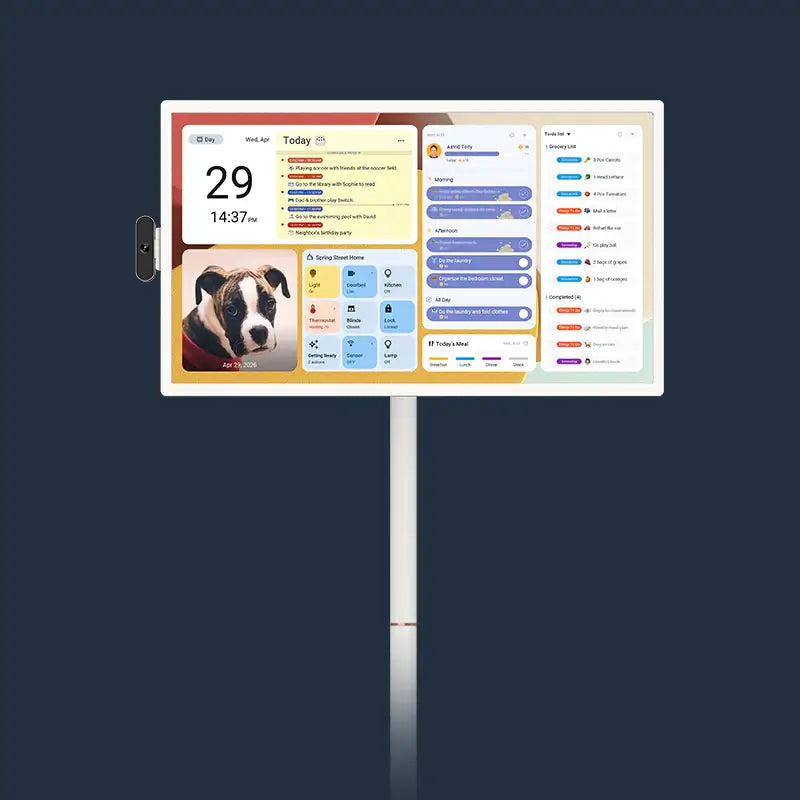
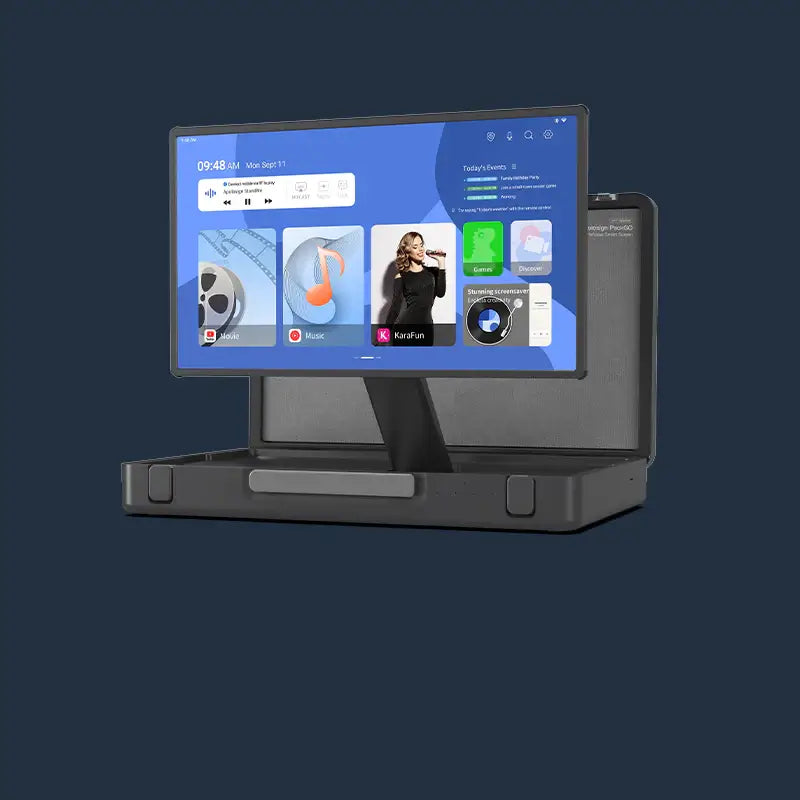


Placing a digital calendar where your family naturally looks keeps the schedule in plain sight and closes a gap that phone apps rarely fill: nobody has to open an app to see what is next. Households that mount a shared display in the kitchen or hallway can help reduce missed events and less last-minute scrambling.
Digital calendars earn their spot through three things: at-a-glance planning, countdown timers that prompt action, and a shared message board that keeps reminders and lists where the whole family reads them.

Why Visual Reminders Work Better Than Phone Notifications at Home
A notification disappears in seconds. A wall display stays in view every time someone walks through the room, which is part of why a wall display is often harder to miss than phone alerts.
How Staying Visible Prevents Missed Events
When a schedule lives on a shared wall rather than inside individual phones, every family member sees the same plan whenever they pass by. Many families find that an always-on schedule helps children grasp what is coming next and cuts down on repeated verbal prompts. The plan works because it stays where people look, not somewhere you have to remember to open.
How Color Coding Helps Families Scan Schedules Faster
Color-coded categories let a parent scan the display and separate school events, chores, and family appointments without reading every line. This works best when the household keeps color assignments consistent week to week. The benefit is not the color itself but the pattern recognition it creates: families read the full schedule in seconds rather than minutes.
How a Digital Calendar with Countdown Timer Changes Daily Routines
Countdown timers turn time from an abstract idea into a number anyone can read at a glance. When a child or adult sees how many minutes remain ahead of a departure or deadline, the shift from getting started happens faster and with fewer prompts.
School Mornings and Departure Times
For households where mornings run late, an on-screen countdown to departure removes the need for repeated verbal reminders. A family member can see that 12 minutes remain and start getting ready without being asked. This matters most in the final stretch of a school morning, when everyone is rushing at once.
Chores, Deadlines, and Recurring Tasks
Countdown timers also work for homework blocks, household responsibilities, and recurring weekly tasks. They answer the question "How much time is left?" without pulling anyone toward a phone or separate device. A running timer keeps attention on the current task instead of being one more thing pulling attention away.
Trips, Birthdays, and Seasonal Events
Events that need preparation across several days, such as family travel or birthday parties, benefit from a countdown that stays on the wall for weeks. With the date always in front of everyone, packing reminders and coordination across several people are less likely to slip through.

How a Digital Message Board for Home Replaces Paper Notes
Sticky notes on the refrigerator fall off, get buried, or go unread. A digital message board for home keeps the same reminders and countdowns on one screen where the whole household reads them.
Reminders and Countdowns Everyone Can See
A digital message board shows reminders and countdowns in one shared spot rather than on scattered paper slips. A note about an early pickup or a countdown to a school deadline stays on screen until it no longer applies. Because the board sits where the family already gathers, the message reaches everyone without a group text.
Shared Lists in One Place
Grocery, to-do, and wish lists work on the same board, color-coded so each list stays easy to scan. Any family member can add an item from the screen or a linked phone app, which keeps the running list current without a separate notes app.
Which Reminder Method Works Best for Shared Household Planning?
Different reminder tools serve different household habits. The table below compares common options across visibility, update speed, and shared access to help identify what fits a typical family routine.
|
Reminder Method |
Visibility |
Update Speed |
Shared Access |
Best Fit |
|
Phone app |
High when opened, low when ignored |
Fast |
Good if everyone checks regularly |
Individuals who rely on phones all day |
|
Paper notes |
High at first, fades quickly |
Slow |
Limited |
Short-term single reminders |
|
Whiteboard |
Easy to see in one room |
Moderate |
Good for one household spot |
Simple household lists |
|
Digital wall calendar |
Always in view in the room |
Fast once set up |
Strong for shared family use |
Busy homes that need one trusted source |
A wall-mounted digital calendar offers the strongest mix of visibility and shared access. It works best when the household wants a single place to trust rather than relying on multiple apps and lists at once.
How to Choose the Right Size Digital Wall Calendar for Your Home
Among the specs, screen size has the biggest effect on daily usability. The right size is the one your household can read comfortably from where people naturally stand, not the largest screen that fits on the wall.

Matching Screen Size to Room and Use Case
|
Screen Size |
Best Room |
Ideal For |
|
15.6 inches |
Small kitchen, desk, kids' bedroom |
One or two people; close-range daily reference |
|
21.5 inches |
Kitchen wall, hallway, family hub |
Most families; primary shared display spot |
|
27 inches |
Living room, open-plan area |
Larger households; whole-family command center |
The 21.5-inch model suits most kitchen and hallway placements well because it balances readability at a normal standing distance with a size that fits most walls. The 27-inch model, available in both 1080p and 4K resolution, fits families who need the display to serve a larger open area or several people reading it at once.

Other Specs Worth Checking When Buying
A few specs affect daily use more than the rest. These are the ones worth confirming on the product page.
- Anti-glare glass and auto-brightness affect everyday readability most, since a display without them becomes hard to read near windows or under bright overhead lighting.
- Wi-Fi connectivity and calendar sync with Google Calendar, iCloud, Outlook, or Yahoo keep the display current without manual entry.
- Memory of 4GB RAM and 64GB ROM handles app downloads and calendar functions smoothly for standard family use.
- Color choices on the 15.6", 21.5", and 27" 1080p models include Teak Yellow, Spruce Grey, Black, and White.
Choose a Digital Wall Calendar Your Family Will Use
A digital calendar earns its place when it stays in view, stays current, and fits the room where your family already gathers. Countdown timers cut morning friction. Color coding speeds up schedule scanning. A digital message board keeps reminders where everyone reads them. The Apolosign Digital Calendar series comes in 15.6", 21.5", and 27" sizes with no subscription fees and covers these needs in one display. Pick the size that fits your wall and start with your household's most-used schedule categories.
FAQs About Digital Calendars for Family Use
Q1. What Is a Fridge Calendar and How Does It Work?
A fridge calendar is an informal name for a digital wall calendar kept in the kitchen or a shared family area. It shows schedules, reminders, and lists on one screen and syncs with phone calendar apps so the display stays current.
Q2. Do Digital Wall Calendars Need Wi-Fi to Work?
Yes. Calendar sync and automatic updates run over Wi-Fi, so events added on a phone appear on the display while it stays connected. Without Wi-Fi, the screen keeps its last synced view but will not pull new changes until the connection returns.
Q3. Do Digital Family Calendars Require a Subscription to Use All Features?
Not always. Some digital calendars include sync, chore charts, reward tracking, photo display, and smart home control in the purchase price with no recurring fees. Others lock key features behind monthly or annual plans, so check the full fee structure before you buy.
Q4. How Does Privacy Mode Work on a Digital Kitchen Calendar?
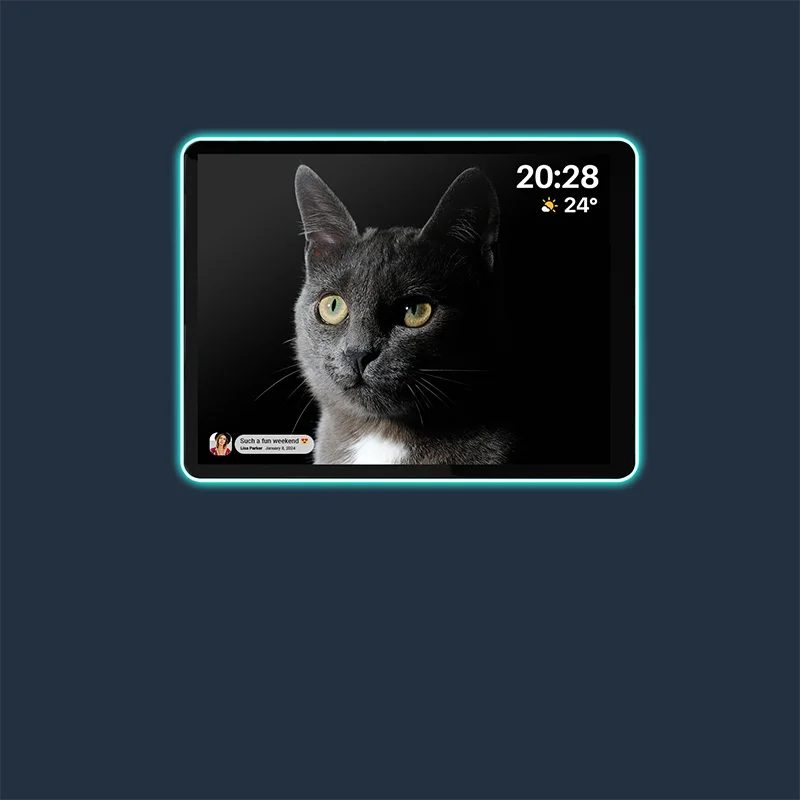
Privacy mode replaces the calendar view with a photo screensaver using a single swipe. The schedule hides right away without powering off the display, which helps when guests are over and the household does not want appointments or tasks shown in a shared room.
Q5. Can Kids Use a Digital Wall Calendar to Track Chores and Earn Rewards?
Yes. Calendars with built-in chore charts let parents assign tasks by name and color, and children check off their own progress on the screen. A reward system tied to finished tasks adds motivation and keeps the routine going without constant reminders from a parent.