


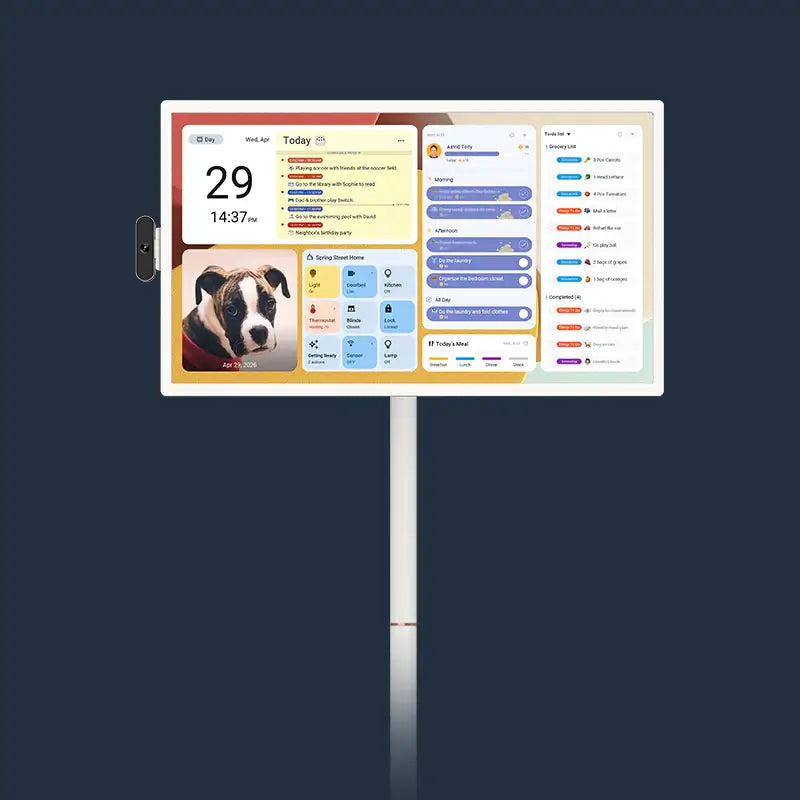



A digital chore chart keeps working where paper fails because two things stay easy: checking off a task and seeing the reward move because of it. The display needs to update in seconds, and the reward system needs rules a child can restate without help. Get both right and the chart survives past the first week, which is where most paper versions quietly stop.
Why Paper Chore Charts Stop Working
Most paper chore charts stop working within a month, and the cause is almost always friction, not a lack of interest from the child. A parent has to remember to update it, find a marker, and physically walk over to check off or rewrite a task, and once that habit slips for a week, the chart turns into wallpaper nobody reads anymore.
The reward side breaks down just as fast. a sticker chart only pays off when a child sees the connection between finishing a task and getting something for it, and a chart that’s updated late or inconsistently weakens that connection every time it happens. Once the feedback stops feeling immediate, the chore chart stops doing the one job it had.
Build a Digital Chore Chart Kids Can Follow
A digital display solves the friction problem directly: tasks update instantly, and a completed chore changes color or disappears the moment it’s tapped. Three design choices decide whether that turns into a chart a child actually uses.
Make Ownership and Completion Criteria Clear
Assign each task to one named child instead of a shared household list. A shared list lets responsibility diffuse, since any child can assume someone else will handle an unclaimed chore, and a chart that never gets checked off teaches the opposite lesson from the one it’s meant to teach.
Completion criteria need to be just as specific. “Clean your room” is too vague to check off with confidence, while “put clothes in the hamper and clear the floor” gives a child, and a parent reviewing the chart later, a clear yes-or-no test.
Keep Daily and Recurring Tasks Separate
Daily tasks and weekly or occasional ones belong in separate sections, not one combined list. A single list that mixes brushing teeth with cleaning out the garage buries the small, frequent wins that keep a child checking the chart in the first place.
Split the display into two views instead: a daily list that resets each morning, and a recurring list for tasks tied to specific days, such as trash night or watering the plants. That separation also speeds up weekly review for a parent, since daily habits and less frequent chores don’t need the same kind of check-in.
Design for Fast Parent Updates
Pick a system a parent can update in under a minute, since a chart that takes longer to maintain than a paper version defeats its own purpose. Look for bulk-add options for recurring chores, a simple tap-to-mark-complete interaction, and one screen that shows every child’s list instead of switching between separate profiles.
The result is a chart that stays current because keeping it current is genuinely easy, not because a parent has to be unusually disciplined about it.

Set Rewards That Match the Child and the Chore
A chart that’s easy to keep current still needs a reward system built around how a child actually responds to points, not just the mechanics of the display.
Choose Age-Appropriate Rewards
Match the reward type to the child’s age instead of running one reward menu for every kid in the house. A reward that motivates a six-year-old, like a sticker or an extra bedtime story, usually falls flat with a preteen who responds better to earned screen time or a choice of weekend activity.
| Age Range | Reward Type That Tends to Work | Example |
|---|---|---|
| 4 to 6 | Immediate, small, sensory | A sticker or five extra minutes of a favorite show |
| 7 to 10 | Points toward a choice | Picking the family movie or an extra half hour of screen time |
| 11 to 13 | Earned privilege or currency | Extra allowance, a later weekend bedtime, or choosing a weekend outing |
Whatever the mechanism, the same rule holds across every age band: the reward has to show up close to the completed task, not get stockpiled for an unpredictable payout weeks later.
Make Points Easy to Understand
Keep the point value for each chore fixed and simple, ideally the same number for tasks of similar effort, so a child can estimate how close they are to a reward without doing math. A system where one chore is worth three points and another is worth seventeen for reasons a child can’t explain undercuts the same clarity a completion checkbox is supposed to provide.
Round numbers work better than precise ones. Five points for a quick daily task and twenty for a bigger weekly one is easier to track mentally than four and twenty-three.
Review Rewards Without Moving the Goalposts
Revisit the reward list every few weeks, but keep the point values for existing chores stable while you do it. Changing what a chore is worth after a child has already started working toward a goal reads as a broken promise, even when a parent’s intention was just to keep the system fair.
Add new rewards or retire ones a child has outgrown instead of adjusting the math on tasks already in play. That keeps the review focused on relevance, not on quietly making the system harder to win.
Put the Display Where the Family Already Looks
A chore chart only works if it’s seen without being sought out, so mount the display somewhere a child already passes several times a day: a kitchen wall near the table, a hallway between a bedroom and the bathroom, or a spot near the door used on the way out to school.
A few placement checks are worth running before settling on a wall:
- Confirm the display sits at the child’s eye height, not just an adult’s.
- Avoid direct glare from a window or overhead light at the times of day it actually gets checked.
- Keep it out of a walkway where reaching it to tap a task means squeezing past furniture or foot traffic.
A display tucked into a home office or a rarely used den solves none of these problems, even if that room happens to have an open wall.
Compare Display Options Before You Buy
Screen size should match where you’re mounting it: a 15.6-inch display suits a hallway or bedroom, while a 21.5-inch or 27-inch screen reads better from across a kitchen. Apolosign’s Digital Calendar lineup includes a points-based chore rewards system at no added subscription cost under its current pricing, alongside calendar sync and meal planning. Check the current spec page for exact sizing and pricing before you buy.

FAQs About Digital Chore Charts
Q1: Should siblings share one combined point total, or does each child need a separate score?
Each child needs a separate running score, even when they’re completing similar chores. A shared total makes it hard to tell who did the work, and it can turn chore completion into a competition that has nothing to do with the actual task.
Q2: What’s a reasonable age to start a child on a points-based system instead of simple stickers?
Around age six or seven is a common starting point, once a child can reliably count and understand that a number represents progress toward something. Below that age, a sticker or a filled-in box usually communicates progress more clearly than a numeric total.
Q3: How often should a family reset or clear completed tasks on the display?
Daily tasks should reset automatically each morning, while recurring weekly chores should clear only once they’re actually completed, not on a fixed daily reset. Clearing a weekly chore too early can make it look unfinished before a child has had the chance to do it.
Q4: Does taking away earned points as a consequence for bad behavior undermine the chore chart system?
Generally yes, since it mixes two different systems: points for completed chores, and consequences for unrelated behavior. Keeping the two separate protects the chart’s own credibility, since removing already-earned points as punishment teaches a child that a reward they thought they’d locked in isn’t actually guaranteed.
Q5: Can one digital display work for a household with a big age gap between kids, like a 5-year-old and a 12-year-old?
Yes, as long as the display supports separate profiles or sections for each child. The chore list and reward menu should differ by child even on a shared screen, since one combined list flattens the age-appropriate reward matching described earlier.