


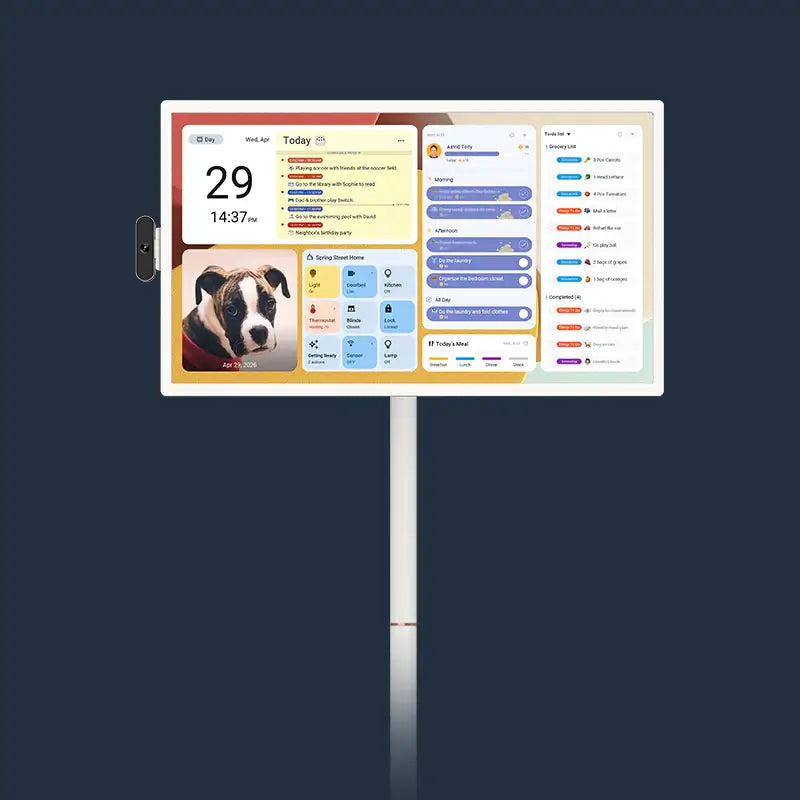
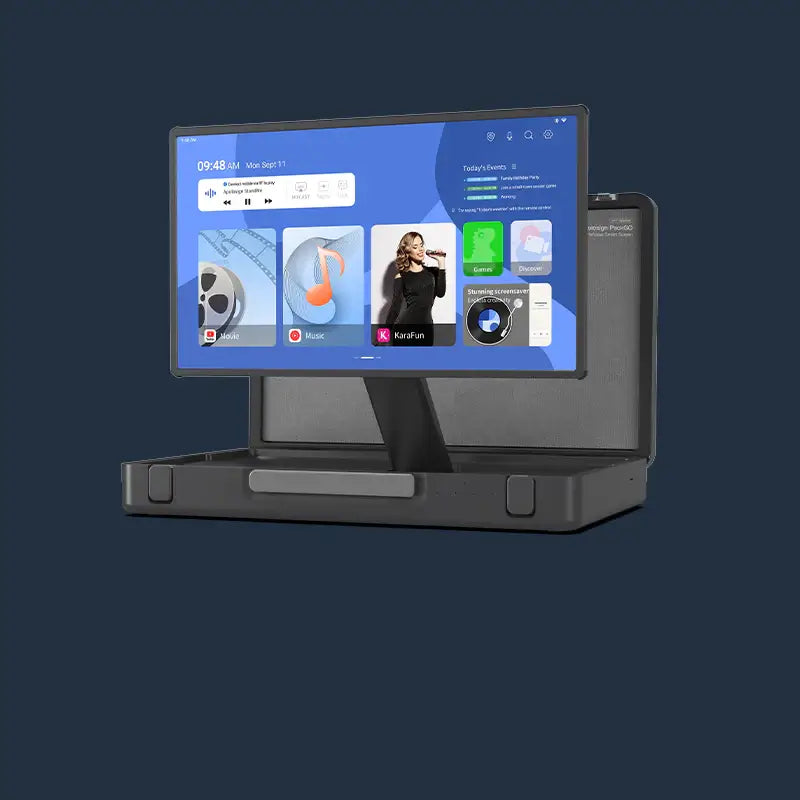
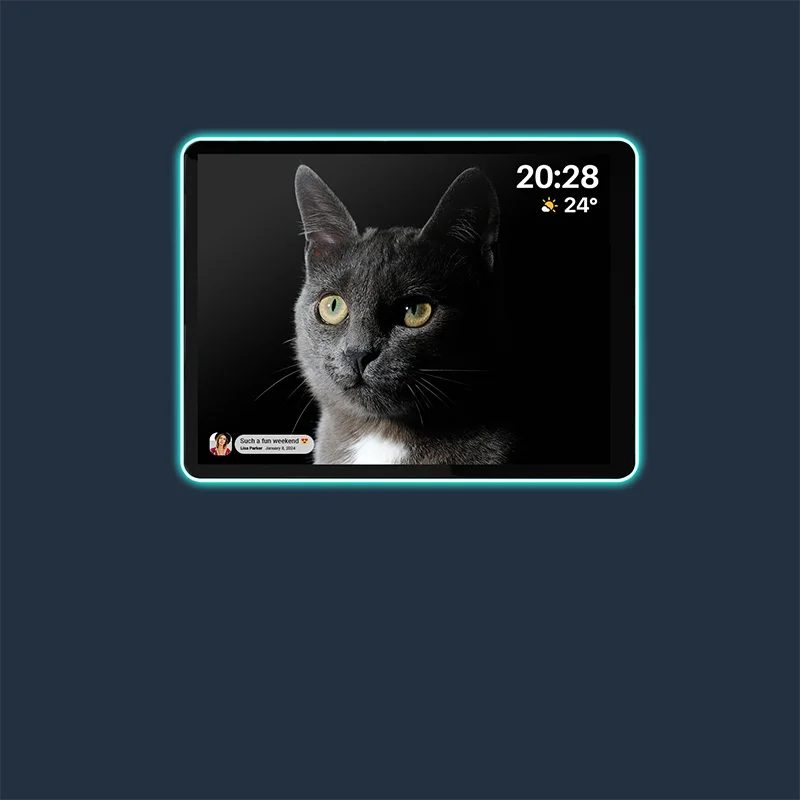


A portable TV that moves room to room on wheels, runs on a built-in battery, and needs no installation is no longer a niche product for campers. It has become a practical second screen for families who need more than one TV can cover.
What Is a Portable TV, and How Is It Different from a Regular Small TV?
A portable TV is built to go where you go, not stay where you put it. A small TV and a portable TV look similar on the surface, but they work very differently. The key difference is freedom of movement.
Portable TV vs. Regular Small TV
|
Feature |
Portable TV |
Regular Small TV |
|
Power source |
Built-in battery, no outlet needed |
Requires a power cord at all times |
|
Mobility |
Rolls freely between rooms and outdoors |
Fixed to one location |
|
Control method |
Touchscreen, no remote required |
Remote only |
|
Installation |
No setup, ready immediately |
Needs a stand or wall mount |
|
Outdoor use |
Yes |
No |
A regular small TV is still a fixed device. You place it once, and it stays there. A portable TV belongs to a different category entirely. It is designed for households where needs change by room, by time of day, and by who is home.
Why One Living Room TV Is No Longer Enough for Modern Families
Most households have one main TV in the living room. That works fine when everyone watches the same thing at the same time. It stops working the moment schedules and preferences split.
The Content Conflict Most Households Know Well
One person is watching a game. Another wants to put on a show while folding laundry in the bedroom. A child needs to pull up a video for a school project. The main TV can only serve one of those needs at a time, and no streaming subscription changes that.
Families with two or more children run into this conflict daily, especially on weekday evenings. Working parents who finish the day at different times often want to watch different content in different rooms. The result is a scheduling problem built into the layout of the home itself.
Why Adding Another Fixed TV Does Not Fix the Problem
Adding a second fixed TV means choosing a permanent location, drilling into walls, and losing flexibility the moment your needs change. A portable TV goes where the need is: bedroom tonight, kitchen tomorrow morning, patio on Saturday. There is no installation cost, no wall damage, and no commitment to a single room. It fills the gap without replacing the main TV, so both screens serve different people at the same time.
Where a Portable TV Actually Gets Used Inside Your Home
The most common objection to buying a portable TV is not knowing where it would realistically live. The answer is that it moves, which is the point.
Kitchen: Hands-Free Recipes and Background Entertainment
The kitchen is the room most often missing a screen, and also the one where people most want one. When hands are covered in flour or raw ingredients, reaching for a phone or scrolling on a tablet is not practical. A touchscreen on a portable TV lets a cook tap pause or rewind a recipe video with one knuckle or elbow, no remote needed.
A battery-powered TV sits on the counter without needing an outlet on that wall, which matters in kitchens where sockets are already occupied by appliances. Built-in dual speakers also make a real difference here. A kitchen with a running exhaust fan or boiling water is noisy, and tablet speakers rarely cut through.
Bedroom and Home Office: A Screen That Earns Its Place
Not everyone wants a TV mounted permanently in the bedroom, but most people have nights when they want one. A portable TV rolls in when needed and rolls out when it is not, so the bedroom does not become a permanent screen room. The adjustable tilt and height on a wheeled stand mean the screen angles correctly whether the viewer is sitting up, propped on pillows, or working at a desk. In a home office, the same screen doubles as a second display for video calls or background content during long work sessions.
Kids' Room and Playroom: On-Demand Education and Screen Time Control
Parents who do not want a fixed TV in a child's room still face the reality that children need screens for schoolwork and educational content. A portable TV running Android OS and the Google Play Store supports educational apps, reading programs, and video lessons without requiring a dedicated device for each room.
Because the TV rolls in and out, a parent can bring it to the playroom for an hour and remove it when screen time ends. The child does not need a remote. The touchscreen interface is straightforward enough for older kids to navigate without help.

Backyard and Patio: Outdoor Movie Night Without Extra Equipment
Outdoor entertaining usually means either skipping the screen or running an extension cord across the yard. A battery-powered TV means no extension cord is needed. The screen rolls through the door and onto the patio without any setup beyond positioning it, and the wheeled stand handles the transition from indoor flooring to a patio surface without needing to carry or lift the TV.
Is a Portable TV Better Than a Tablet for Home Use?
Tablets are already in most homes. For shared family viewing across a room, a portable TV wins on every dimension that matters: screen size, sound, and total cost. For personal use at arm's length, a tablet works fine.
|
Tablet (8–13 inches) |
Portable TV (24–32 inches) |
|
|
Solo viewing at arm's length |
Comfortable |
More than needed |
|
Two people watching from 4–6 feet |
Straining |
Comfortable |
|
Family of four from the couch |
Not practical |
Works well |
|
Hands-free viewing |
Requires a separate stand |
Built-in adjustable stand |
|
Speaker volume in open spaces |
Insufficient |
Fills the room |
|
Out-of-box cost for home TV use |
Screen only, stand and speaker extra |
Screen, speakers, and stand included |
A tablet setup built from separate accessories (stand, Bluetooth speaker, streaming stick) can approach or exceed the cost of a purpose-built portable TV, while delivering a smaller screen and less flexibility. A tablet is built for one person to hold. A portable TV is built for a room.
How to Choose the Right Portable TV for Your Home
The right portable TV depends on three things: where you will use it most, how long you need it to run without charging, and what smart features your family will actually use.
Screen Size: What Works Room to Room
|
Screen Size |
Best For |
Typical Users |
|
24 inches |
Kitchen counter, bedroom, single viewer |
One or two people |
|
27 inches |
Flexible home use, travel, mixed indoor and outdoor |
One to three people |
|
32 inches |
Living room, family room, outdoor patio |
Two or more people |
Choose by the room where the TV will spend most of its time, not by the largest size available. Apolosign's 24-inch smart portable TV, 27-inch briefcase portable TV and 32-inch smart portable TV are built around exactly this split, with each size optimized for the room type it will most likely live in.

Battery Life: How Many Hours Do You Actually Need
Battery life varies by screen size and how bright you run the display, so pick based on how you actually use it, not the highest number on the box. A 24-inch portable TV typically offers up to 4 hours of battery life, which covers a cooking session, a workout video, or an evening show in the bedroom. A 27-inch model offers up to 6 hours, making it a practical middle ground for mixed indoor and outdoor use. A 32-inch model can offer up to 8 hours on a single charge on selected configurations, though real-world runtime at normal brightness tends to run shorter, especially outdoors. If outdoor use or full-day family viewing is the priority, a larger model with a higher-capacity battery is the more reliable choice.
Connectivity and Smart Features Worth Checking
Four things are worth confirming before buying:
- Streaming access. Wi-Fi connects directly to streaming apps. HDMI and USB let you mirror a laptop or connect a gaming device.
- App compatibility. Android OS with Google Play access means the TV runs apps your family already uses, from educational tools to fitness videos and calendar apps.
- Camera and microphone. A built-in camera supports video calls from the kitchen or living room without a separate device.
- Subscription fees. Some portable TVs charge monthly for calendar sync or family management tools. Zero subscription fees for core features is worth confirming upfront.
Stand and Mobility Design: Details That Affect Daily Use
A wheeled stand with height and tilt adjustability matters for viewers of different heights and for comfortable viewing while lying down versus sitting at a desk. Smooth, quiet wheels make a practical difference on hard floors, especially if the TV is moved daily between rooms. A touchscreen also reduces daily friction. Reaching for a remote that has slid behind a cushion is a small problem that adds up quickly.
When a Portable TV Is Worth Buying
A portable TV is not the right purchase for every household. It works best for families with one or more of these needs.
- Families with children who need screens in multiple rooms at different times.
- Households with a kitchen, home office, or patio that currently have no screen.
- Renters or people who move often and cannot install wall-mounted TVs.
- Anyone who does not want a fixed TV in every room but still wants a screen available when needed.
Find the Right Portable TV for Your Family
A modern home rarely fits one screen in one room anymore. Families cook, work, study, and relax in different spaces at the same time, and a single fixed TV cannot keep up. A portable TV with a built-in battery, a touchscreen, and a wheeled stand fills that gap without installation or a permanent spot on any wall. If your household runs into content conflicts, or if you have rooms that need a screen but not a permanent one, a portable TV covers all of it. Browse the Apolosign Portable TV lineup at Apolosign to find the right size for your home.

Apolosign PackGo 27" Briefcase Portable TV
FAQs
Q1. Can a Portable TV Work Without Wi-Fi?
Yes, with some limitations. A portable TV can play content from USB drives or HDMI-connected devices without an active Wi-Fi connection. Most streaming services require Wi-Fi, so downloading content in advance through apps that support offline playback is the most reliable option for cord-free use.
Q2. How Heavy Is a Portable TV with a Wheeled Stand?
Weight varies by screen size and stand design. A 24-inch portable TV with a stand is generally lighter and easier to reposition than a 32-inch model. Check the product listing for the exact weight spec before purchasing, since the wheeled stand adds to the total.
Q3. Is a Portable TV Bright Enough to Watch in Direct Sunlight?
Not in most cases. Most portable TVs with 1080p displays are not bright enough to compete with direct midday sunlight, and the picture will wash out significantly in open outdoor settings. A covered patio, shaded lawn, or indoor-facing doorway setup gives a much more comfortable viewing experience than full sun exposure.
Q4. What Apps Can I Download on an Android Portable TV?
Any app available through the Google Play Store works on an Android-based portable TV, including Netflix, YouTube, Disney+, Hulu, Spotify, fitness apps, and educational platforms. The experience is the same as using Android on a phone or tablet, just on a larger screen.