


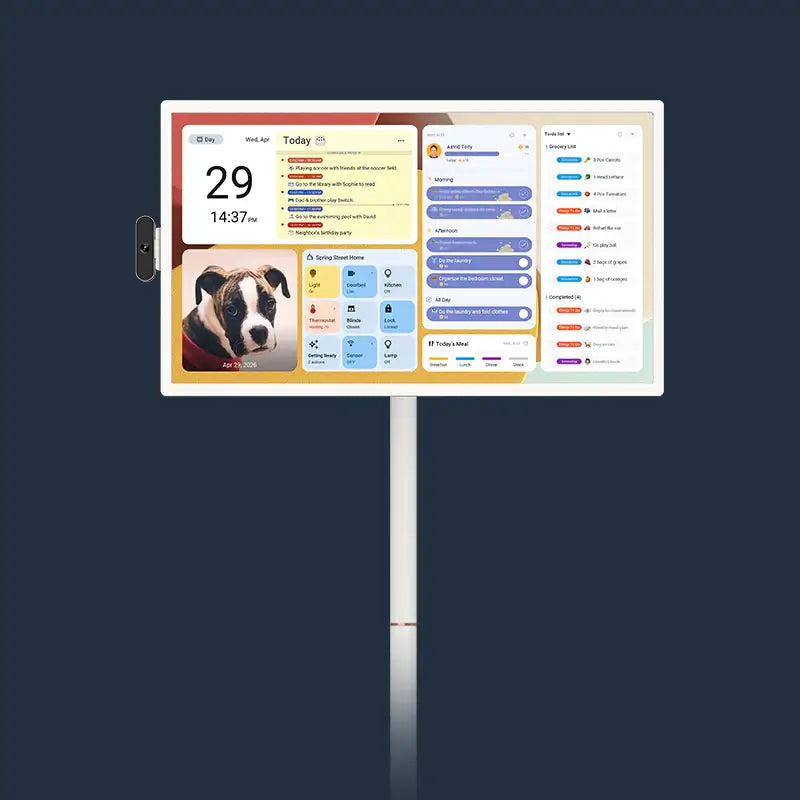
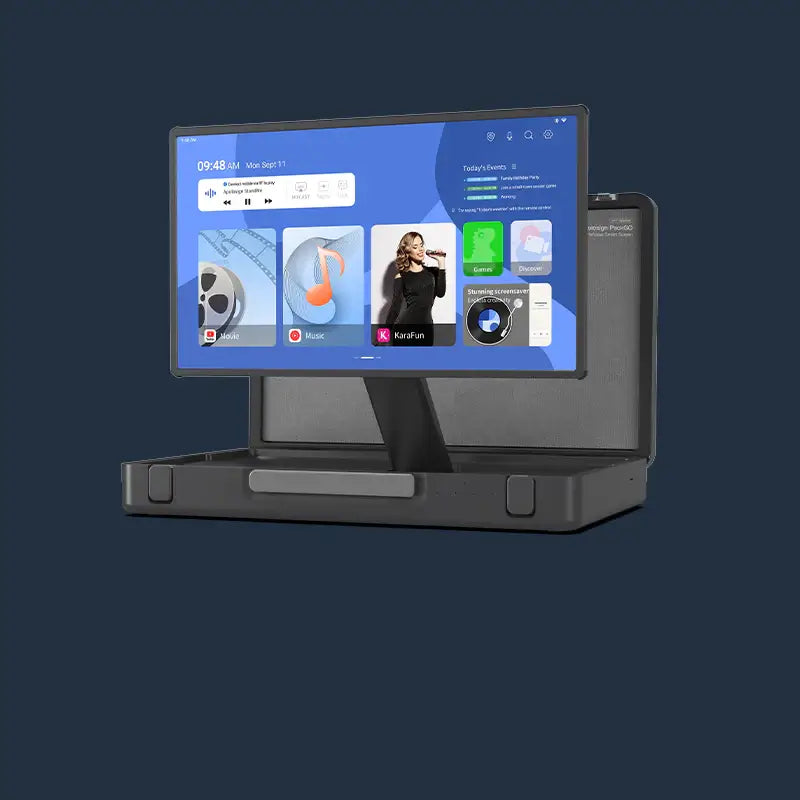


ApoloSign, a subscription-free smart family display, is gaining traction among dual-income households seeking a centralized solution for shared scheduling, chore management, and home coordination — without the recurring fees that other brands charge.
But is it really worth it? Will it end up gathering dust after two weeks?
This honest, independent family review answers the 6 questions you care about most.
01. Does it actually reduce family chaos?
Yes – if everyone is willing to use it.
ApoloSign does not automate family management, but it centralizes information in a way that meaningfully reduces coordination friction. What it does is bring all the scattered information to one place where the whole family can see it.
- Syncs with Google Calendar and Outlook – no more “Dad thought Mom picked up the kids, Mom thought Grandma took them to practice.”
- Chores + point rewards – many parents say their kids actually start doing tasks on their own.
- Biggest change: no more one person reminding everyone else over and over.
If your household already feels like “the family member responsible for coordinating schedules often experiences significant organizational burden,” ApoloSign can make a real difference.

02. Digital wall calendar vs phone calendar
They’re not replacements for each other. One is a personal tool, the other is a family bulletin board.
|
Aspect |
ApoloSign Wall Calendar |
Phone / Computer Calendar |
|
Visibility |
Passive, always visible |
Active, private |
|
Information intake |
See it as you walk by |
Must open the app |
|
Family involvement |
High – kids can see it too |
Low – easily ignored |
|
Extra features |
Chores, lists, photo frame |
Unlimited apps |
Phone calendars work for your own plans. A wall calendar solves the whole family’s information sync.

Real example: after homework, will a child check their phone for tasks? Almost never. But walking past a kitchen screen that says “Take out trash ➕10 points” – This passive visibility has proven more effective for younger users than app-based reminders.
03. Is it useful long-term or just novelty?
It’s not a fad, but long-term use depends on whether you weave it into your family’s daily flow.
Families who keep using it for months usually do three things:
- Put daily pick-ups, after-school activities, and dinner plans into it – when they stop, chaos returns.
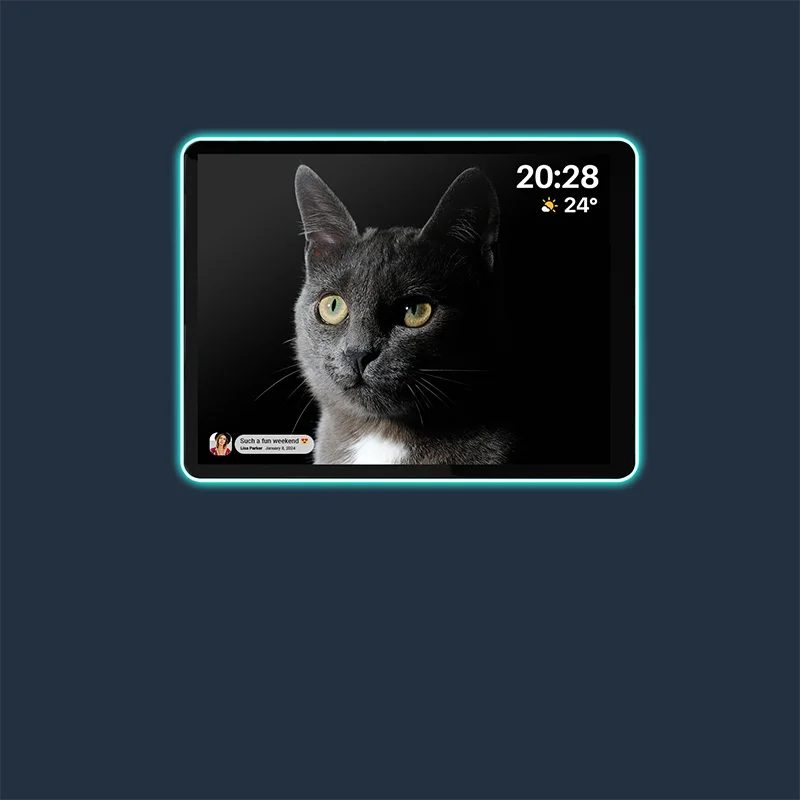
- Set the screensaver to family photos – it becomes emotional value, not just a tool.
- Use it for a shared grocery list – anyone going to the store can see what’s needed.
Software keeps improving: in 2025–2026 ApoloSign rolled out more stable sync and a dual-mode calendar. The novelty fades, but if you depend on it to avoid forgetting things, it won’t collect dust.
04. Is subscription-free really important?
For long-term family use, this is an underrated advantage.
Some similar devices or apps charge monthly or yearly fees. ApoloSign keeps its core features free for life:
|
Feature |
ApoloSign |
Other similar products |
|
Shared calendar sync |
✅ Free |
Some require subscription |
|
Shared lists & chores |
✅ Free |
Some require subscription |
|
Points & rewards system |
✅ Free |
Some require subscription |
|
Multi-device whole-home sync |
✅ Free |
🚫 Usually paid |
At $4.99/month, comparable subscription-based platforms cost approximately $120 over two years. ApoloSign's one-time hardware purchase eliminates this ongoing expense entirely.
05. Who should buy it
✅ Dual-income families with school-age kids
Packed schedules (pick-ups, activities, parent-teacher meetings) – you need a family-visible command center.
✅ Parents who want kids to take initiative with chores
The points system works much better than repeated verbal reminders.
✅ Anyone tired of subscription fees for family management apps
You don’t want to pay every month just to keep everyone on the same page.
✅ Families building a smart home control hub
In Android mode, ApoloSign can add smart home controls – lights, music, doorbell, cameras – all on one screen. With Google Assistant voice control, you can turn off lights or adjust the thermostat while cooking. It can also show your video doorbell feed, so you see who’s at the door without leaving the stove. Calendar and smart controls in one place – no more switching between apps.
✅ Anyone whose kitchen or family area could use a combined info + photo frame device
It reduces forgotten tasks and adds a touch of tech to your home.

06. Applicable Scenarios
❌ Households where members are clearly resistant to screens / apps
If they won’t even sync their phone calendars, a wall screen will likely become an expensive digital photo frame.
❌ Families with very simple schedules
Only weekend plans, no kids’ activities, almost no need for multi-person coordination – you won’t see the value.
❌ Tight budget and no current chaos
Apolosign is designed to address existing coordination challenges, not to preemptively create new routines. It’s for solving a problem, not creating one.
Final thoughts: Is it worth it?
Simply put: if your household already feels chaotic – schedule clashes, missed pick-ups, one person chasing everyone for reminders – then ApoloSign is likely the tool that solves it.
It’s not magic. It won’t automatically make everyone more responsible. But what it does is solid:
- Puts calendars, chores, shopping lists, and photo frames on one wall
- Ends the endless “what time is practice?” and “who’s going to the store?”
- No monthly fee – one payment, long-term use
Whether to buy it comes down to just one thing:
Is your current way of coordinating already exhausting you?
- If yes → give it a serious look. To explore ApoloSign's full feature set, view verified customer reviews, or find current pricing, visit verified customer reviews or leading retail partners. A one-week trial setup — entering the family's upcoming schedule in full — is recommended to evaluate its impact on household coordination firsthand. That’s more useful than going back and forth in your head.
- If no → your current system works fine. Don’t buy for “maybe it’ll help someday.”
One last suggestion:
If you decide to buy, use the first week as a trial run. With the whole family, fill in next week’s pick-ups, activities, and dinner plans. After a week, notice whether there are fewer “who’s doing what?” conversations around your home. Consistent family routines can make daily expectations easier for children to follow.
That’s when you’ll have your real answer.