


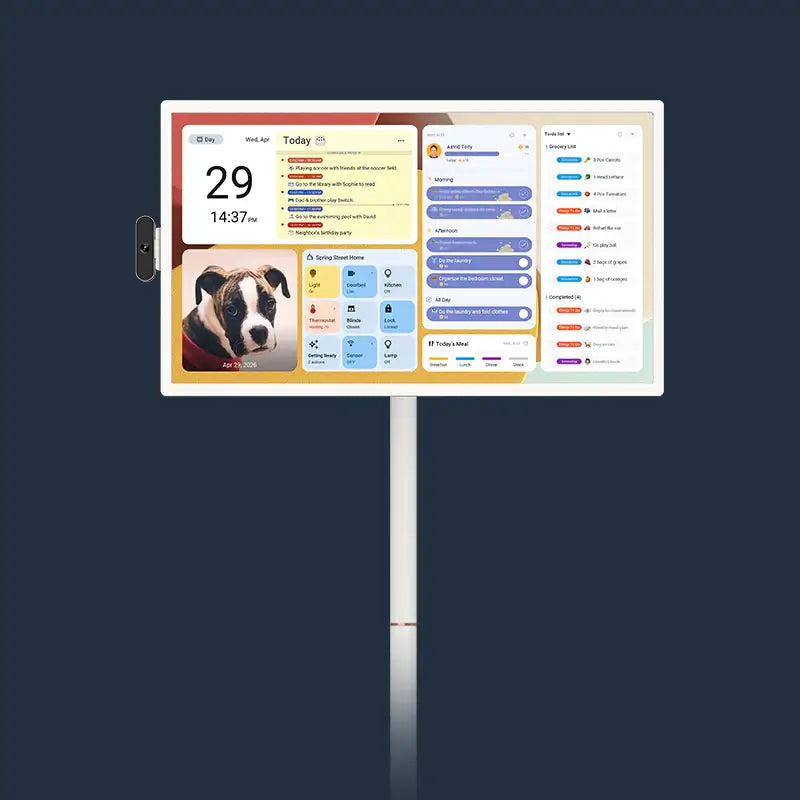




Most digital calendars stop getting used because they became more work to maintain than to ignore. Real digital calendar organization usually does not require a new app or a new screen. It starts by cutting entry effort, sharing ownership among family members, keeping the schedule visible where people already walk by, and running a short reset every week so the calendar stays trustworthy.
That combination turns digital calendar organization from a one-week experiment into a routine your family actually keeps. Start by figuring out which piece is broken in your house before changing anything else.
Diagnose the Friction Before You Change the Tool
A calendar usually breaks down for one of three reasons: it takes too much work to update, the information on it has gone stale, or no one is sure who's supposed to keep it current. Match your symptom to the right fix below before you swap tools or add features.
When entering events feels like a second job
If typing in every practice, appointment, and playdate takes real time, organizing a digital calendar becomes another chore instead of a shortcut. Keep only the information that actually changes what someone does that day or week, and cut duplicate reminders, extra fields, and categories nobody checks. A family calendar works best as one central hub rather than a place that duplicates what's already in someone's phone or email.

When old information makes the calendar hard to trust
Expired events, canceled plans, and outdated reminders are content debt. Once a family stops trusting what's on the screen, they stop looking at it, even if the current information is accurate. Don't wait for a full cleanup weekend. Fold this cleanup into your next reset instead, so stale items never pile up for long.
When nobody knows who keeps it current
A shared calendar only works if someone is responsible for each recurring input, and that responsibility shouldn't default to whoever notices the problem first. Give practices, school events, and appointments each an owner. A consistent home base for these updates works the same way digital family organization does for the rest of your household planning: fewer surprises when everyone knows where information belongs.
Choose the Right Visibility Layer for Your Household
Not every family needs a screen mounted in the kitchen. The right answer depends on whether people actually miss plans when the schedule only lives on a phone.
Keep the online calendar alone when it already gets checked
If everyone already sees the shared calendar, phone alerts reach the right people, and your main problem is content or ownership, stick with the online calendar. Adding a second surface just creates another place that needs to stay current, which recreates the exact fatigue you're trying to fix.
Add a persistent home layer when phone checks are the gap
If important plans get missed because people don't open their phone calendars at the right moment, a dedicated display in a shared space can close that gap. One reviewer described exactly this pattern, saying a large kitchen display let the household see an up-to-date calendar without pulling out a phone. Placement matters here: put it somewhere the family already walks through, like a kitchen wall or an entryway, not a spare room nobody visits.
A display like this is a visibility layer, not a fix for stale content or unclear ownership. Those still need the diagnosis and reset covered elsewhere in this guide.

Share Calendar Ownership Without Creating an Administrator
Several people can maintain one calendar without turning it into one person's job. The goal is a short list of clear roles, not constant reminders.
Assign recurring inputs instead of assigning the whole calendar
Give each recurring source, like school events, sports, or work travel, to a specific person or role instead of handing the whole calendar to one adult. This spreads the entry work and lets your weekly reset catch anything that slipped through, rather than requiring one person to monitor everything all the time. The same logic behind a family chore reset applies here: clear, narrow tasks stick better than one broad responsibility.
Give children a small role they can repeat
Kids can check the day's plan, mark off a routine task, or suggest a simple entry like a friend's birthday. Keep adult appointments, account permissions, and private details with adults. A small, repeatable job builds familiarity with the calendar without putting scheduling responsibility on a child.
Keep one shared source instead of parallel versions
Personal phone calendars are fine as a private view, but the household needs to agree on which calendar is the actual source of truth. Copying the same plans into two systems just doubles the maintenance work you were trying to cut in the first place.

Use a Short Weekly Reset to Keep the Calendar Current
A brief, repeatable reset at the start of each week is what actually keeps a family calendar trustworthy over time. Run through these four steps together instead of leaving cleanup to whoever happens to open the app.
- Remove expired, canceled, or irrelevant items so the display only shows what's still true.
- Scan the coming week for schedule changes, appointments, and any essential household needs like meals or errands.
- Assign any missing entries or follow-ups to the person responsible for that recurring input.
- Set the next reset point and leave only the useful, current view visible until then.
One household described camping out in front of their calendar for a few minutes each week to plan meals and errands together, which is roughly the shape this reset should take: short, forward-looking, and shared rather than solo. There's no required length or day, just a consistent point everyone can count on.

If your remaining problem after fixing entry, ownership, and content is simply that plans get missed between phone checks, a persistent display can help close that last gap. Our Apolosign 21.5-inch Digital Calendar syncs with Google Calendar, Outlook, iCloud, Yahoo, and Cozi, and includes routine tracking with points and rewards, custom color-coded lists, and a family message board, all on a touch screen sized for a kitchen or entryway. It won't run the reset for you, but it gives the whole household one visible place to look during it.
FAQs
What if some family members still prefer using their phones?
That's fine. Let personal phones stay the entry point or private view for each person, while one shared calendar remains the household's single source of truth. The problem to avoid is running two unrelated schedules that both need updating.
Should children be allowed to edit a family calendar?
Give them a narrow, repeatable role, like viewing the day's plan or marking off a routine task, rather than full editing access. Keep appointments, account permissions, and any private details with adults so the calendar stays accurate and age-appropriate.
What is the smallest reset to restart a calendar after a missed week?
Clear out anything expired, then add only the next few important events instead of rebuilding every category at once. Pick your next reset point and treat this as a quick recovery step, not a full system rebuild.