


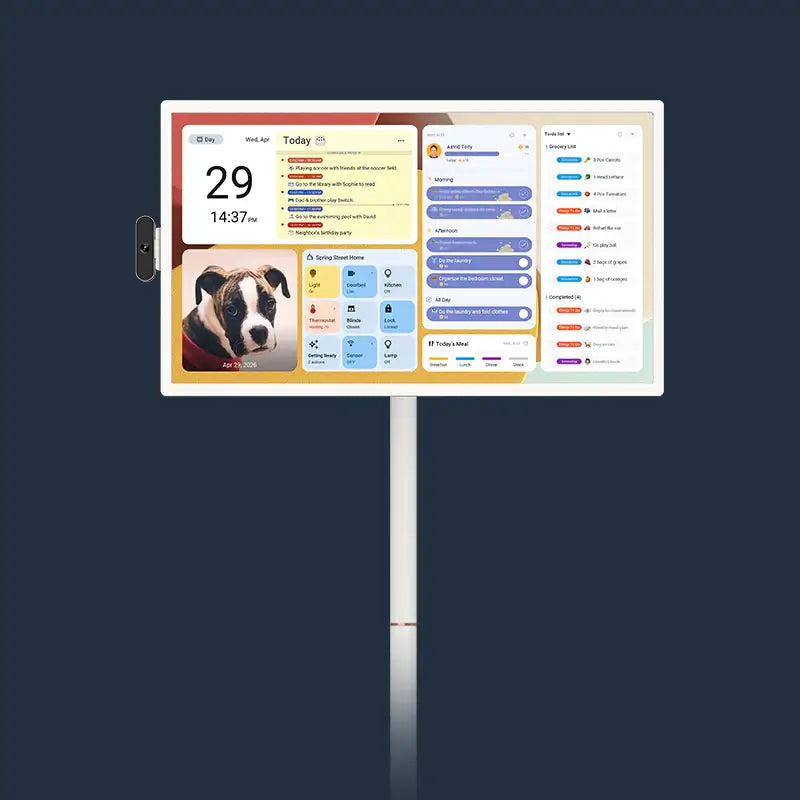
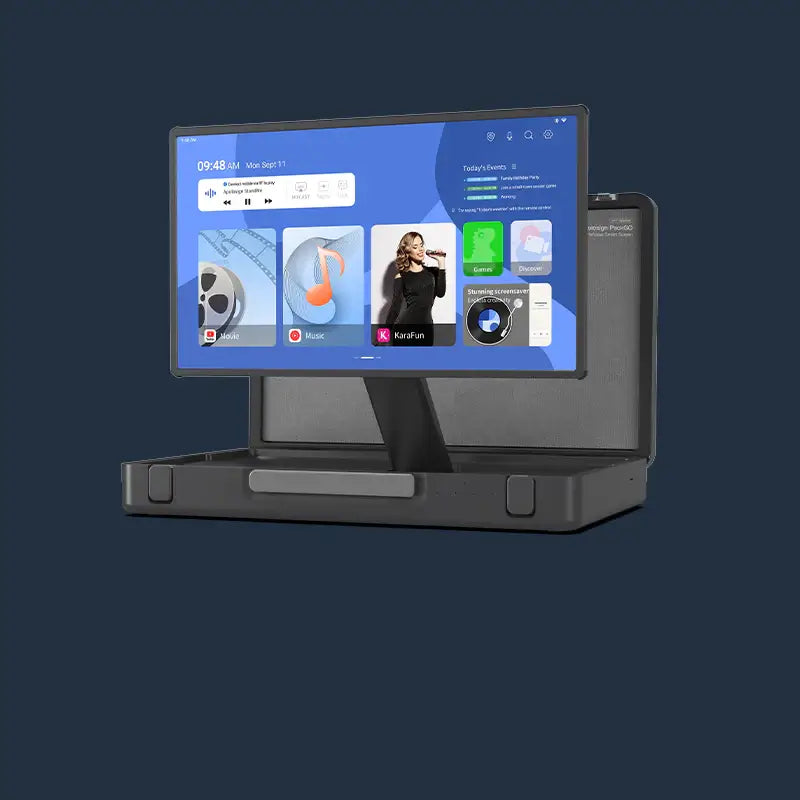


Here's a simple rule of thumb: pick a tablet if one cook follows the recipe up close, and consider a portable TV if several people need to see the same screen while they cook together. The portable TV only makes sense when its larger screen has a spot that doesn't crowd your prep space.
That rule isn't a lab result. It comes from how kitchen recipe screens actually get used. Three questions decide it: who needs to see the recipe, how you interact with it, and where the screen sits during and after cooking.
For Shared Cooking, Start With Who Needs to See the Recipe
If two or more people cook from the same recipe at the same time, a portable TV is worth a look. If one person does most of the reading, a tablet is usually the simpler choice.
Picture a Saturday night taco prep. One person is chopping onions at the island. Another is browning meat at the stove, a few steps away and facing a different direction. A teenager is grating cheese at the far end of the counter. A tablet propped next to the cutting board works well for the person chopping. The other two have to walk over, lean in, or keep asking, "What's next?"
That's the problem a shared cooking screen solves. When the recipe is on a larger display that everyone can see from where they already stand, nobody has to leave their station to read the next step. This is the same idea behind shared home viewing: one screen serves the whole group instead of one person at a time.
Try this before you shop. Think about your usual cooking session and picture where each person stands. Then ask one question: do two or more people need to read the same screen at the same moment?
- Yes, often. A portable TV is a reasonable fit, as long as you can place it where those people can see it.
- Rarely. A tablet will likely cover it, since one cook is doing most of the reading.
A phone is the smallest option in this lineup. It works for a quick glance at an ingredient list, but it's the hardest screen to share across a counter.
Who's looking is only half the story. How you use the recipe matters too.
For Close Recipe Interaction, Keep the Screen Near the Cook
If you mostly read, scroll, and tap through written steps, keep a tablet close to where you work. If your cooking session centers on watching a recipe video together, a portable TV can make more sense.
Take a solo cook making bread on a weeknight. The recipe is a long page with notes, ingredient weights, and a few photos. They scroll back to check the flour amount, zoom in on a shaping photo, and set a timer. All of that happens within arm's reach of the mixing bowl. A tablet fits this job well because it sits right next to the work, and it's easy to move a few inches when you need the space.
Now take two roommates learning to make dumplings from a video. They pause it, replay the folding step, and try to copy what they see. Here the main job is watching together, not tapping through text. A larger screen placed where both can see it may help them follow along without crowding around one small device.

Touch controls aren't limited to tablets, either. Some portable TVs, including models in our portable TV lineup, use touchscreens. So the real question isn't "Can I tap it?" It's "Will the person tapping be standing close enough to reach it?"
Glare can also affect how easy any screen is to read. If your kitchen gets strong window light, our piece on matte screens in bright kitchens explains why a glossy finish can reflect light.
Once you know how you'll use the screen, the last question is whether your kitchen can fit it.
Counter Space and Storage Can Reverse the Choice
If a larger screen would crowd your cooking surface, or you have nowhere to put it away, choose a tablet. That holds even if shared viewing sounds appealing. If you have both a good spot and a storage place, a portable TV stays on the table.
Think about a small apartment kitchen with one stretch of counter between the sink and the stove. Every inch goes to cutting boards, bowls, and ingredients. A big screen there would take up the exact space you need to cook. After dinner, it would need a home, and a closet already full of vacuum parts may not have room. In that kitchen, a tablet that slides onto a shelf or into a drawer is the more practical choice.
Now think about a kitchen with an open end of the island, a nearby dining table, or a corner that stays clear during cooking. There's also a spot in a pantry or next to the fridge where a larger screen can go afterward. That household can place a portable TV where everyone can see it and still keep the counter free.
Screen size alone won't tell you whether a device fits. A screen's diagonal measures only the display, not the frame, base, or stand. Before you decide, compare the model's full published dimensions, like those on this portable TV dimensions page, with two real spaces: the spot where it will sit while you cook and the spot where it will live afterward. Measure both with a tape measure. If the device fits both, it's a real option. If it doesn't fit one of them, a tablet is the better call.

The bottom line: A solo cook who reads and taps through recipes up close is usually best served by a tablet. A household that cooks together and needs one shared view can consider a portable TV, but only when the kitchen has room for it during cooking and a place to store it after. Your next step is to note where everyone usually stands, then hold the chosen device's full dimensions up against your actual counter and storage spot.
FAQs
How can I tell if my recipe app will run on a specific device?
Look up the exact model and find out which app store it uses. Then search that store for your recipe app by name. If the app isn't listed, plan on using a web browser version or a different recipe source instead.
Why doesn't screen size tell me how much room a device needs?
Screen size is measured diagonally across the display only. The frame, speakers, base, or stand add to the real footprint. Use the full width, depth, and height from the product listing when you measure your counter or storage space.
Does a kitchen recipe screen need to stay plugged in while I cook?
That depends on how long you cook and how long the device runs on battery. Compare the listed battery life with your longest usual cooking session. If you'll need to plug it in, pick a spot where the cord stays away from the sink, stovetop, and walkways.