



No one kitchen screen size is right for every cook. The right size shows your own recipe clearly from the spot where you usually stand, and the whole device still fits the space you have.
To narrow it down, look at three things: where you watch from, what you need to see, and how much room you can give up. Each one can knock a size off your list.
Choose From Your Usual Kitchen Viewing Spot
Judge every screen from the place where you actually cook, not from a size chart. In one Consumer Reports kitchen test, a 10.4-inch Samsung Galaxy Tab S6 Lite was big enough for comfortable recipe videos but kept sliding around when propped on granite counters, which shows that the right size still has to work in the right spot.
A Nearby Prep Spot
Start at your cutting board or mixing bowl. Stand there with your hands busy and see whether you can read the next step without leaning in or picking up the device. In the same test, the reviewer had to pick up an iPhone 14 and hold it close to see technique details. That's hard to do with flour or raw chicken on your hands. How far away you stand doesn't point to one exact size. What matters is whether you can keep cooking without stopping to get closer.
A Shared or Farther Viewing Spot
Now picture a busy weeknight. One person chops at the island while another stirs a pot at the stove across the room, and both glance at the same screen. In a kitchen like that, test from the farthest spot where someone regularly follows the recipe, not just the closest one. A screen that works fine for a solo cook at the counter may not work from the stove. If your family also wants a screen that stays readable across a room, our guide to comparing two display sizes walks through a similar trade-off.
Match the Screen to What You Need to See
The size you need depends on the detail you rely on, so test with your own recipe instead of a sample page. Written steps and videos ask different things of a screen.
Following Written Ingredients and Steps
Open a recipe you actually cook and stand in your normal spot. Can you read ingredient amounts, like "1/2 tsp" versus "1 1/2 tsp," and find the current step at a glance? An Epicurious reviewer tested how far away each tablet stayed comfortable to read, plus how much the recipe font could be enlarged before too little of the recipe fit on screen. The 7-inch Fire tablet in that test was hard to read beyond arm's length. Use that as a signal for your own trial: if you have to zoom so far that you keep scrolling to find your place, try a larger screen or move it closer.
Watching a Technique Video
With video, the key detail is often small: the angle of a knife, the texture of dough, or the color of browning butter. Play the video you'd really use and pause at the moment that matters. If you can see it from your usual spot, the size works for that job. If you keep stepping over, squinting, or rewinding, the screen is either too small for your distance or placed in the wrong spot. This says nothing about text needing a different size. It only tells you whether this screen shows this detail from where you stand.
Make Sure the Whole Screen Fits Your Kitchen
A screen only works if the whole unit fits, and the advertised size won't tell you that. As this guide on how to measure a screen explains, the listed number is the diagonal of the screen, not the width, height, or depth of the entire unit with its frame, bezel, and stand.
Measure the clear space at the spot you have in mind: width, depth, and height, including any upper cabinets above the counter. Then compare those numbers with the full external dimensions of each screen you're considering. Don't try to guess the footprint from the diagonal. A base or stand can take more counter depth than you expect, and that space often comes out of your prep area.

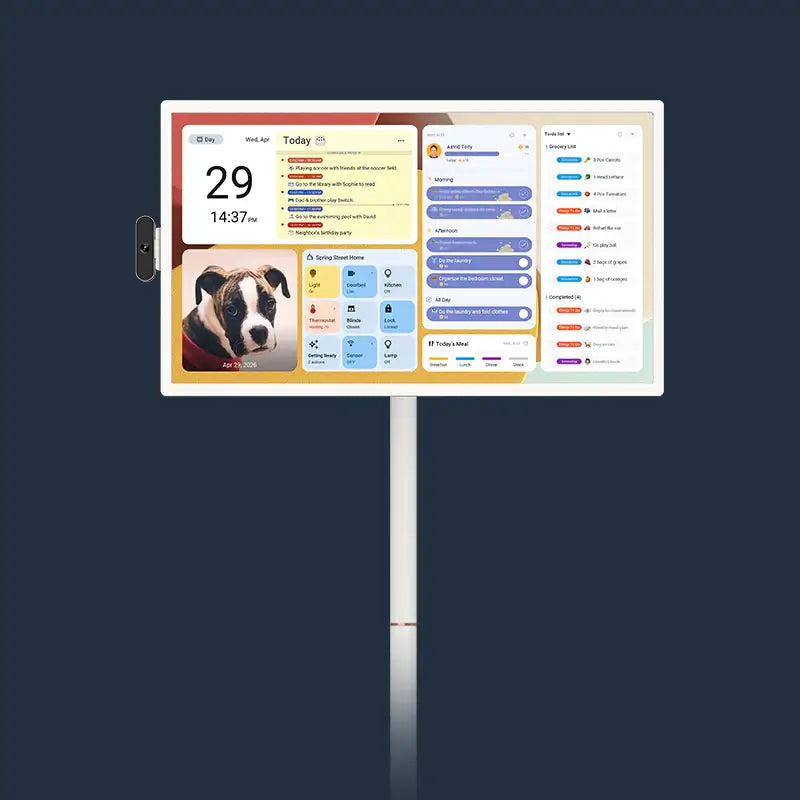
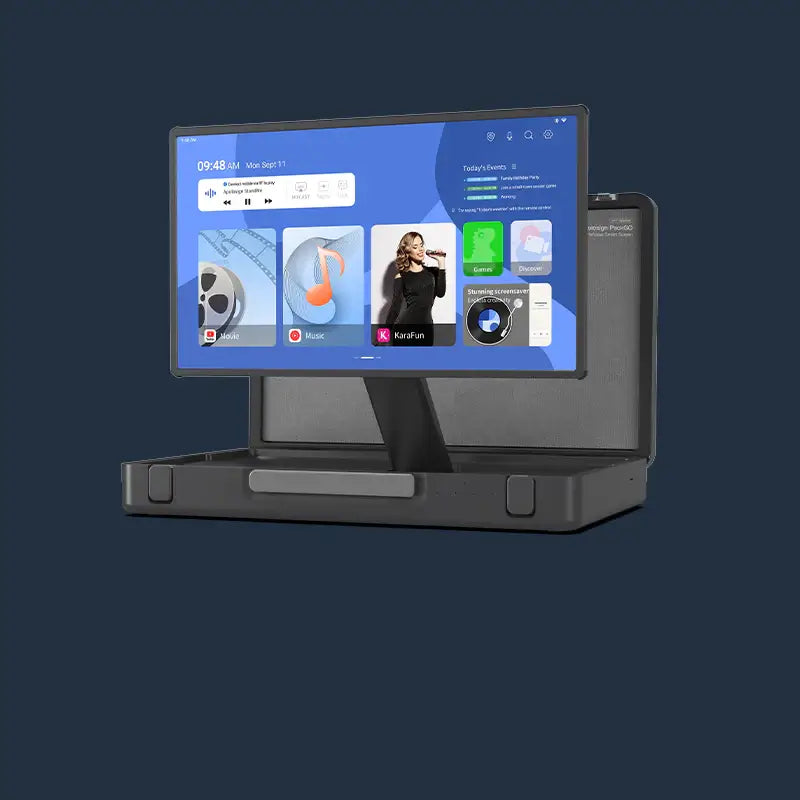
Here's a practical way to put it together. It's a simple home trial, not a lab test. Bring up your real recipe on any screen you're considering, look at it from each regular cooking spot, and note whether you can follow it without stopping. A size passes only when the detail you need is visible from those spots and the whole unit fits the space without crowding your cutting board. If the counter is the problem, weighing wall-mounted versus countertop setups can help you keep your prep area clear. If you'd like a display that rolls between the counter and dining area, our Apolosign 24" Smart Portable TV or larger Apolosign 32" Smart Portable TV can keep recipe details visible from across the room without taking up prep counter space. Our portable TV buying guide covers other features to check, and you can compare options across our portable touchscreen TVs.

So what kitchen screen size should you pick? A solo cook who reads from one nearby prep spot can usually focus on counter footprint first and pick the smallest screen that shows the recipe without zooming. A household that follows recipes from the island and the stove should let the farthest regular spot decide the size, then make sure that unit still fits. Either way, your next step is the same: test your own recipe from where you cook, then measure the space before you choose.
FAQs
Can I just zoom in on a small screen instead of buying a bigger one?
Sometimes. Enlarging the font helps you read from farther away, but less of the recipe fits on screen at once. If zooming means scrolling every few seconds to find your step, the screen is too small for that spot, or it needs to sit closer.
Does a bigger screen always make recipes easier to follow?
No. A bigger screen only helps if you can place it where you can see it and it doesn't eat your prep space. A larger unit that crowds the counter or won't fit under the cabinets can make cooking harder, so pick the right kitchen screen size for your space, not just the biggest one.
Should a kitchen recipe screen go on the wall or on the counter?
It depends on your space. A mounted screen keeps the counter free and stays in one place. A countertop screen can move around but takes up prep room and needs a stable base. If your counters are already tight, look at wall or off-counter options first.