





A digital calendar that stays mounted in one spot usually only needs the standard one-year warranty, since the main risk is a manufacturing defect rather than an accident. A portable TV that gets carried between rooms or packed for a weekend trip is a different story, and it is worth checking whether a paid protection plan actually covers drops, cracks, or spills before you pay for one. When asking if an extended warranty is worth it for a digital calendar or portable TV, the right call depends on the written terms in front of you, not the price tag or product category alone.
The short answer: buy coverage for the risk you actually face
Every coverage decision comes down to one question: does the plan cover the specific event you are worried about? Here is what each layer actually includes before you decide.
What the standard warranty covers
Our published Apolosign standard warranty runs for one year from purchase and covers material and manufacturing defects under normal use, as described in the published Apolosign standard warranty. It does not cover accidents, drops, spills, misuse, normal wear, or cosmetic damage. That gap matters because most household worries, a knocked-over calendar or a TV dropped during a move, are exactly the events this warranty leaves out. If your concern is a defect that shows up in the first year, the standard warranty already handles it at no extra cost.
What added protection can change
A paid protection plan can add accidental-damage coverage for drops, cracks, and liquid spills, plus mechanical or electrical breakdown coverage after the manufacturer's warranty ends, based on the published product protection terms. That coverage is conditional: claims need administrator authorization, documentation, and a reporting deadline, and refunds or reimbursements can involve fees and limits. The plan is only worth paying for when its listed events match the accident you are actually likely to have, not simply because it exists.

A stationary digital calendar usually has a narrower protection case
A calendar mounted in a kitchen, hallway, or home office and left in place has less routine handling than a device that moves around the house. When the display stays put, the main open question is usually a manufacturing defect, which the standard warranty already covers.
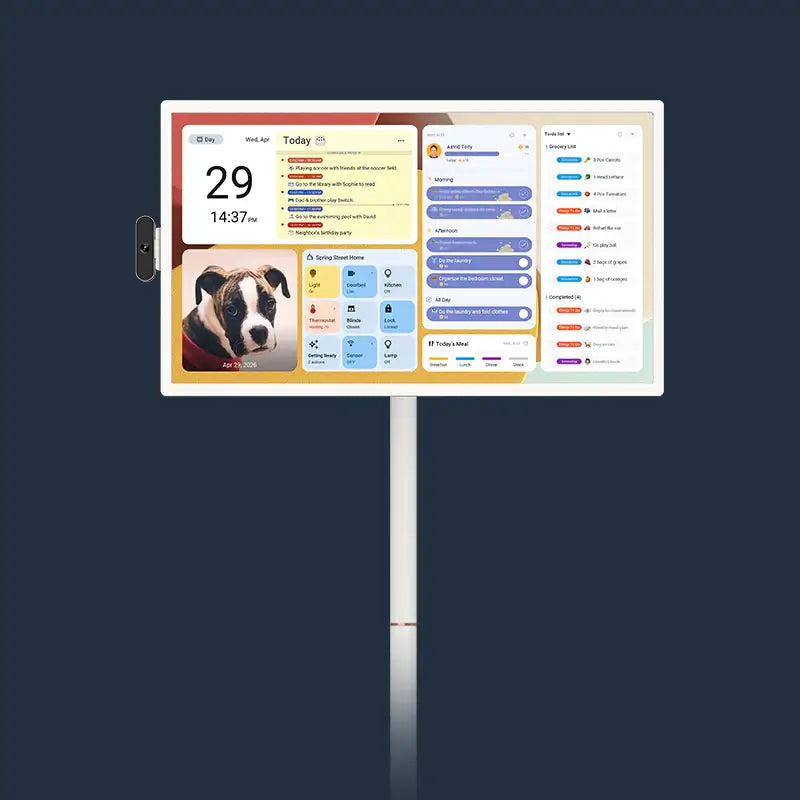
Picture a family command center: a calendar screen mounted near the kitchen door so everyone can see the week's schedule without touching it. Once it is installed, the household mostly looks at it rather than lifts, carries, or repositions it. That lower handling pattern is why paid accidental-damage coverage tends to add less value here than it would for a device that moves constantly. Our Digital Calendar lineup includes models built for a fixed wall or stand setup, which fits this lower-handling scenario.
That said, a few conditions can flip the answer. A home with young kids or pets near the mounting spot, a spill-prone counter location, an unstable stand, or a calendar that would be expensive or disruptive to replace all raise the case for checking whether a plan's accidental-damage terms actually apply. If none of those apply to your household, standard coverage or no added plan is the more defensible starting point.
A portable TV can justify a closer look at accidental-damage coverage
A portable TV that gets carried between rooms, rolled to a patio, or packed for a weekend trip has more chances for a drop, tip-over, or spill than a screen that never leaves its mount. That extra handling is exactly the kind of event a standard defect warranty does not cover, so it is worth reading the plan's accidental-damage language closely before you buy one.
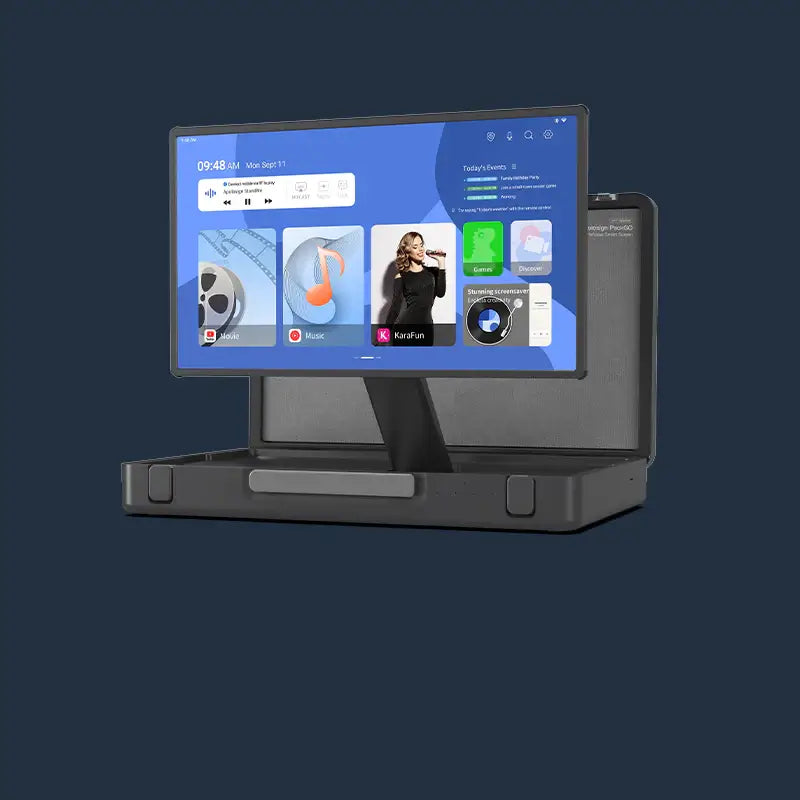
Think of a household that moves a portable screen from the living room to a bedroom for movie night, then out to the patio for a weekend cookout. Every one of those moves is a chance to bump a doorframe, set it down near a drink, or have a pet knock it off a stand. If the plan you are considering lists drops, cracks, and liquid spills as covered accidental damage, it addresses that exact risk. Our Portable TV collection is built around this kind of room-to-room and short-trip use.
Even so, a plan is not automatically the right buy. If your household handles the screen carefully and mostly leaves it in one place, the accidental-damage benefit may see little use, and standard coverage plus careful handling may be enough. The plan only pays off when the covered event matches your actual risk and the fees and claim process are acceptable to you.

Use this checkout comparison before adding a plan
Before you add a plan at checkout, compare its written terms against the standard warranty using the same categories the FTC's extended warranty guidance recommends. A plan that merely repeats the standard warranty adds little value no matter how it is priced.
| Checkout term | What the written offer needs to say | Why it changes the choice |
|---|---|---|
| Price and term | Total cost and length of coverage | Sets the baseline cost to weigh against likely repair or replacement cost |
| Defect coverage | Whether it duplicates the standard warranty | Duplicated coverage adds little during year one |
| Accidental damage | Drops, cracks, or spills named explicitly | Only a listed event protects against the accident you expect |
| Exclusions | Misuse, environmental damage, or specific parts left out | An excluded event means the plan will not pay a claim |
| Deductible or fees | Per-claim cost, administrative fees, shipping | Reduces the plan's real value even when the event is covered |
| Claim process and deadline | Authorization steps and reporting window | A missed deadline or unmet condition can void an otherwise valid claim |
| Repair or replacement limit | Reimbursement cap or per-claim limit | A low limit may not cover a full repair or replacement |
| Cancellation and overlap | Refund rule and any existing coverage you already have | Avoids paying twice for protection you may not need |
Once you have filled in these rows from the actual offer, the rule is simple: buy the plan only if it adds a clearly covered event or a useful post-warranty period at a total cost you accept. Otherwise, the standard warranty and your own judgment about handling risk are enough.
Your final coverage choice
Name the event you are actually worried about, whether a defect or an accident, then match it against the written coverage. If it is a defect, the standard one-year warranty already applies. If it is an accident and the plan explicitly covers that event at an acceptable cost, added protection can be a reasonable budget choice.

When neither condition is met, skip the plan and keep that money as a repair reserve instead. If you are deciding on a fixed setup, our Apolosign 27" Digital Calendar works well for a wall display with calendar syncing across Google, Apple, and Outlook. You do not need an added plan to use it; protection remains a separate choice based on your home's handling risk.
FAQs
Could another policy or credit-card benefit already cover the device?
It is possible, but coverage depends entirely on that specific provider's terms. Before adding a plan, compare its exclusions, deductibles, reimbursement limits, and which provider actually handles the claim against any existing card, retailer, or homeowner coverage you have. Do not assume an existing benefit covers accidental damage on electronics without checking its terms directly.
Can I cancel a product protection plan after buying it?
Under Apolosign's published protection plan terms, canceling after 60 days results in a prorated refund minus an administrative fee that varies by state and is capped at $50. Other providers may set different rules, so check the specific plan's cancellation terms before you buy, not after.
What is the alternative to buying an extended warranty?
The FTC notes that setting aside money for repairs is a recognized alternative to a service contract. This works if you can comfortably absorb a repair or replacement cost yourself and the plan you are considering would add little coverage beyond what you already have. It is not guaranteed to be cheaper, but it avoids paying for protection you may never use.