






Most kids don't need a specific birthday to start using a visual digital calendar. Readiness shows up when a child recognizes a familiar picture, symbol, or word, follows one short routine, and acts on the next step with manageable adult support.
When deciding when should you get a visual digital calendar for kids, look at daily habits rather than chronological age. If those foundational skills are not in place yet, a simple paper chart or a few index cards will work better than a screen on the wall.
Use Readiness, Not Age, as the Starting Point
Age alone does not tell you whether your child is ready. What matters is whether they can understand a visual cue and act on it with manageable adult prompting.
The CDC notes simple routine milestones such as following everyday routines when told and following two-step instructions as skills many children demonstrate by 30 months. That developmental reference provides helpful context rather than a universal buying rule. Some four-year-olds need more time, while some three-year-olds manage well. The table below outlines how to match your child's current skills to a practical starting point.
| Observable Sign | What It Looks Like at Home | Best Starting Point |
|---|---|---|
| Visual comprehension | Child points to or names a familiar picture, symbol, or word for an activity | Trial a visual calendar or schedule using that familiar format |
| Action on a short sequence | Child completes a two-step task like brushing teeth and dressing with a reminder | Trial one short routine on a visual display |
| Adult support level | Child still requires frequent verbal prompting to notice or follow a visual cue | Start with a simpler, adult-led paper chart or picture cards |
A child can understand a visual cue and still require an adult reminder to complete the action. That normal developmental gap between understanding and independent action means the display works as an aid rather than an automatic replacement for parental guidance.

Match the Calendar to a Routine Your Child Already Knows
Pick one routine your child already recognizes instead of introducing the entire family schedule at once. Starting small keeps the initial learning curve manageable.
Start with a Familiar Sequence
Choose a daily sequence with a distinct beginning and end, such as preparing for school or winding down for bedtime. A tight sequence limits the amount of new information your child processes at one time.
Let the Child Act on One Cue
Show your child one visible next step or an easy way to check off a completed task. Visual schedules can show activities through pictures, symbols, or words, helping children follow directions and transition smoothly between tasks. Keep an adult nearby to provide prompts as needed, because early adoption focuses on participation rather than unassisted independence.
Expand Only After the First Routine Works
Add chores, school events, or activity reminders gradually over time. A visual planner supports routine steps by helping children remember upcoming actions and stay on task, but the tool is most effective when it is not overcrowded from day one. A single working routine provides far more practical value than a busy calendar that goes unnoticed.

Make the Family Setup Do Its Share of the Work
A child cannot benefit from a schedule that the household does not keep current. Establishing a clear routine for updates and positioning ensures the calendar remains functional.
Give Schedule Updates One Clear Owner
Assign calendar entry and event adjustments to one adult or caregiver rather than the child. Your child's role is checking the screen and marking off assigned chores, not managing family logistics.
Make the Display Part of the Route Through the House
Mount the display in a high-traffic shared location such as the kitchen or entryway where family members walk past regularly. Connecting calendar checks to an established transition point, like gathering shoes before leaving, encourages consistent use.
Agree on What Stays Current
Establish an agreed household routine for updating events, whether during breakfast or after dinner. The schedule reduces confusion only when entries reflect accurate plans and caregivers consistently consult the board.
Know When a Simpler Tool Is Enough
Paper charts, phone calendars, and digital wall displays serve distinct purposes. Selecting the proper format depends on which specific communication problem you need to solve.
Keep Paper for One Short Routine
A paper chart works well when your child needs a single stable sequence without synced events. Its low setup cost and easy physical customization often beat digital alternatives for a narrow task.
Keep the Phone Calendar for Adult Logistics
A standard mobile calendar is sufficient when adults simply need on-the-go scheduling and children do not interact directly with the schedule. If shared household visibility is not an issue, personal phones handle the task well.
Choose a Wall Display for a Visibility Gap
Consider dedicated hardware when family members frequently overlook updates on individual phones or when interactive routine tracking solves a recurring friction point. A wall board offers a shared glance point, though success still relies on family engagement.

When a Digital Wall Display Adds Real Value
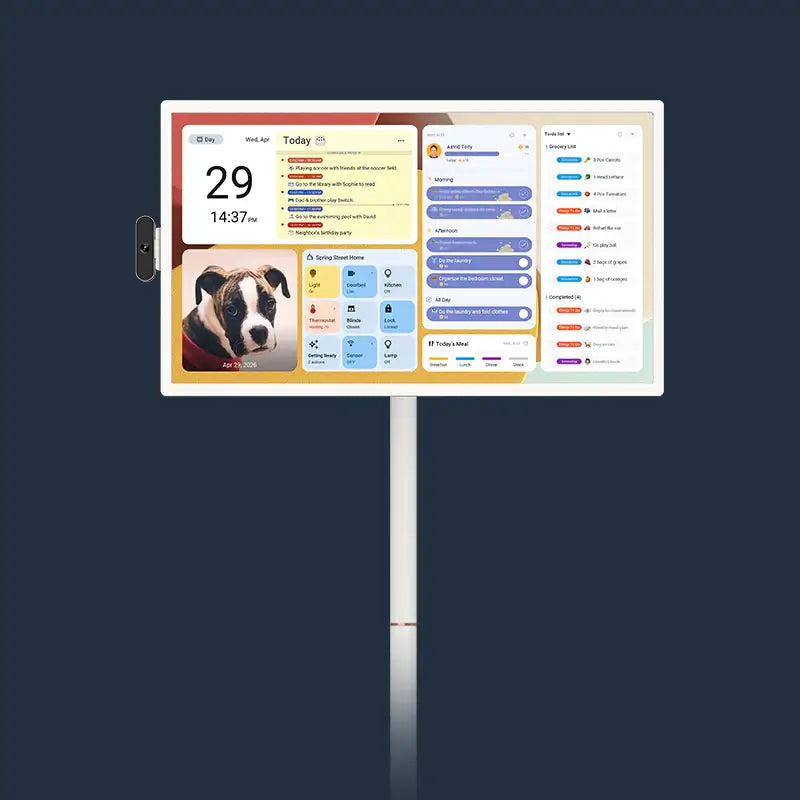
A dedicated display justifies its role when a household identifies a clear gap, such as event updates scattered across personal phones or a chore routine that benefits from a centralized interactive board. That scenario represents the core focus of our Apolosign 27-inch Digital Calendar.
Use the 27-Inch Model for a Shared-View Problem
Our 27-inch model features a 10-point touch screen, syncs with Google, Apple, and Outlook calendars, and includes a Routines tool that translates chores into points and rewards. This setup supports families needing an always-visible central hub where children can actively check off tasks. It is not designed for a single simple routine that a basic paper list handles cleanly.
Keep Model Facts Separate from Child-Readiness Claims
The touch interface, calendar syncing, customizable Android widgets, and chore-and-reward tracking represent verified hardware and software features of this 27-inch model. A large touch display does not guarantee unassisted child use or provide specialized account permissions. Families should assess whether their child's current developmental stage matches this level of interactivity.
Treat Room Placement as Part of Fit
The anti-glare matte glass, automatic brightness adjustment, and one-swipe privacy mode provide useful display utility in an active family room. However, parents should still consider the screen height and viewing angle relative to the child's height. Proper placement ensures the schedule remains easy to see and use during busy morning and evening routines.

Try One Routine Before Expanding the Schedule
Before building out a full digital family calendar, test the concept with a single routine and a clear assessment rule.
Choose One Routine to Try
Select the single routine that creates the most daily friction, such as morning departure, bedtime preparation, or an individual chore. Keeping the trial focused allows you to see whether visual cues meaningfully improve task completion.
Judge the Routine, Not the Novelty
Observe whether your child notices the visual prompt and acts on it with manageable guidance. At the same time, ensure the designated caregiver continues updating and reviewing the calendar after the first week.
Expand Only When the Display Earns Its Place
Introduce additional events or complex chores only after the initial routine functions smoothly. If your household requires a centralized, interactive view across multiple users, our Digital Calendar collection offers relevant choices to explore. If the trial does not take hold, maintaining a simpler visual chart remains the most sensible approach.
FAQs
Is there one age when kids should start using a visual digital calendar?
No universal starting age exists. Readiness depends on whether your child recognizes familiar images or symbols, follows a simple two-step routine, and responds to visual cues with manageable prompting. Developmental benchmarks such as the CDC's 30-month milestones serve as informative references rather than strict age thresholds.
Does my child need to read a clock to use a visual calendar?
Clock reading is not required for an initial routine. Picture icons, color blocks, symbols, and simple sequences communicate upcoming tasks effectively, while adults handle the precise schedule timing behind the scenes.
Can a visual calendar replace parent reminders?
A digital calendar clarifies what happens next, but it does not eliminate the need for adult guidance. Most children still benefit from gentle verbal prompts while learning to use the display as an everyday cue.
Who should keep a family digital calendar updated?
An adult or designated caregiver should manage event scheduling and overall maintenance. Children can stay engaged by checking upcoming activities or tapping completed chores, keeping their responsibilities focused and achievable.