






Building a predictable after-school meltdown routine usually eases the 3:30 transition by changing the order of the afternoon, not the amount of work in it. Try this sequence: greet your child calmly, offer water and a snack, add a short no-pressure reset, then ask for one small homework step. Chores can wait until your child is ready for another demand.
This order works because it puts basic needs and calm before any request for effort. A tired, hungry child cannot easily meet an academic or chore demand, and asking too soon often turns into a battle. The guide below explains how to sequence snacks, downtime, and homework, plus how to adjust your after-school meltdown routine on hard days.
Start with a low-demand arrival sequence
The first ten minutes after school set the tone for the whole afternoon. Keeping the arrival sequence low-pressure helps kids reset before facing homework or chores.
A predictable and flexible after-school routine gives kids a sense of what comes next without locking your family into a rigid schedule you have to abandon on busy weeks. Here is a simple order to try tomorrow:
- Greet your child warmly. Skip questions like "How was your day?" for now.
- Offer water and a snack right away.
- Give a short, no-pressure reset (more on choosing this below).
- Check together what homework or plans are due.
- Ask for one small, visible homework step.
- Save chores for later, once your child is calm and homework is underway or done.
The point is not to finish everything fast. It is to make each next step easier by removing pressure from the one before it.
Make the after-school snack easy and sustaining
A practical snack pairs a protein food with something else your child already likes, and it should be ready before your child walks in the door.
Use a simple snack formula
Keep it simple: protein plus one more food group. Think yogurt with fruit, cheese with whole-grain crackers, or hummus with vegetables. These balanced snack combinations work because they combine foods from more than one group without requiring a new recipe at a tough moment. Stick to items your child already accepts. Introducing a brand-new food during a rough transition adds one more thing to negotiate.
Keep hunger from becoming another negotiation
Always offer water alongside the snack. If dinner is close, keep the portion small. If dinner is a couple of hours away, make the snack a bit more filling within your family's normal eating pattern. Do not force your child to eat, and do not use the snack as a reward for finishing homework. It is a basic need, not a bargaining chip.

Choose quiet time, movement, or a sensory reset
The right reset depends on what your child's body and behavior are telling you, not on a fixed rule that every afternoon must look the same.
Choose quiet when the child is spent
If your child seems withdrawn, quiet, or worn out, cut back on questions and background noise. Reading, drawing, or resting on the couch can help. Watch for a calmer voice or a willingness to talk again. That is your cue that the reset worked.
Choose movement when the child is restless
If your child is pacing, fidgety, or cannot sit still, try a short walk, some outdoor play, or basic stretching. Keep it brief so it does not eat into the rest of the afternoon. Look for better engagement, not instant calm. Engagement is the sign the reset is working, even if your child is still a little wound up.
Unstructured downtime that is screen-free can be one solid option here, but it does not have to look the same every day. If every choice seems to raise conflict instead of lowering it, pull back on conversation and hold off on the next demand for a bit longer.
Introduce homework with one small first step
Homework goes more smoothly when it starts in the same spot every day with one clear, small task, not a demand to finish everything at once.
Make the work location easy to enter
Keep pencils, folders, and any needed devices together in one place. Cut down on nearby noise and activity when you can. Using the same spot regularly means your child associates that location with the next step, so you spend less time repeating instructions.
Start with one visible action
Instead of saying "finish your homework," name one small, concrete action: open the worksheet, write the date, or read the first direction. If frustration shows up right away, pause. Offer a short additional break or push the start time back a bit rather than pushing through. A comfortable homework space with materials on hand removes some of the friction before your child even starts.
Shorten and shift the routine on hard days
Early activities and rough afternoons call for a shorter version of the routine, not a scrapped one.
Use a shorter version before early activities
On practice or lesson days, offer the snack and water, then use the shortest reset that still works. If there is real time left, check gear and name one small homework step. If not, tell your child plainly that homework will start later, and skip adding a last-minute chore on the way out the door.
Picture a Tuesday where soccer practice starts at 4:15. Instead of trying to fit snack, reset, and a full homework block into 30 minutes, the family offers a snack in the car, skips the reset, and agrees homework starts right after dinner. That one change avoids a rushed, tense departure. The flexible routine approach supports adjusting the order like this without treating it as a failure.
Change one part when the pattern repeats
When meltdowns keep happening, notice where the friction starts. Is it hunger, noise, the reset choice, or the homework task itself? Change just one piece of the routine for several days in a row before deciding whether it helped. Keep the sequence visible, written down or posted somewhere your child can see it, so you are not relying on memory or repeated verbal reminders.

Know when a home routine is not enough
Try the routine as a general experiment first. If concerns persist or disrupt daily functioning, that is the signal to bring in outside support rather than keep adjusting alone.
Occasional rough afternoons happen and do not automatically mean something is wrong. Jot down a quick note of the time, hunger level, activities, and what you changed. If the pattern does not improve, or it starts affecting school, sleep, meals, or family life more broadly, talk with your child's pediatrician or school counselor. You do not need a diagnosis in hand to ask for guidance. A second set of eyes can help you spot something the daily routine alone cannot fix.
A calmer 3:30 starts with less pressure
The simplest next step is to write out tomorrow's sequence tonight, before pickup: snack, reset, one small homework step, then chores later. Keeping demands low until your child is ready is the thread that runs through every part of an effective after-school meltdown routine.
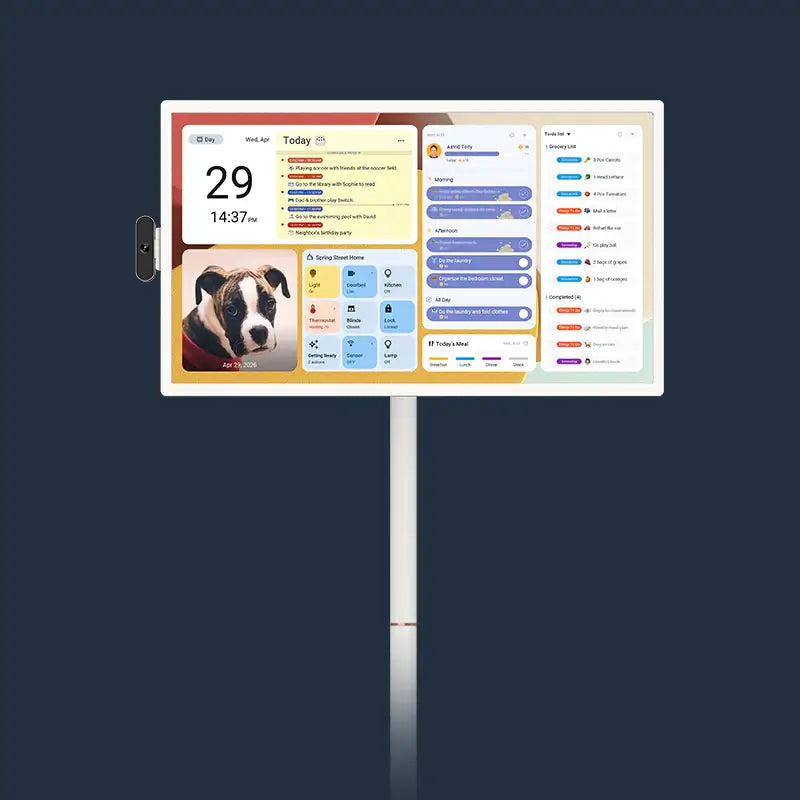
For families whose main struggle is repeating the same reminders every day, a shared visual schedule can take some of that pressure off. We built the Apolosign 15.6" Digital Calendar so the whole family can see the day's plan, routines, and reminders in one place without extra nagging. It will not prevent a meltdown on its own, but if visibility and repeated prompting are your household's biggest friction points, it is worth a look.
FAQs
What if my child is not hungry right after school?
That is fine. Your child does not need to eat on command. Offer water, leave a familiar snack out or easy to grab, and try again in a little while. Avoid turning food into a standoff, and adjust the next meal if needed instead of pushing the issue.
Can downtime include screen time?
It can, as long as it actually lowers friction for your child and has a clear stopping point you both agree on ahead of time. If ending screen time creates a bigger blowup than it prevents, choose a non-screen reset instead, like reading or a short walk.
What if the routine still ends in frequent meltdowns?
Track when it happens and change one piece of the routine at a time rather than overhauling everything after one bad day. If the pattern does not ease up, or it starts affecting sleep, meals, or school, reach out to your pediatrician or school counselor for guidance suited to your child.