






Keeping school mornings consistent between two homes comes down to four shared anchors, one portable checklist, and one clear rule for handling changes. You do not need identical households to get this right. You need both parents watching the same short list of outcomes and using the same channel when plans shift.
How to Keep a School Morning Routine Consistent Between Co-Parents
To keep a school morning routine consistent between co-parents, agree on four shared anchors: a wake-up window, a get-ready sequence, an evening bag check, and a departure milestone. Focusing on these core outcomes follows AAP guidance on family routines, whether both homes manage them through simple charts or a shared digital family calendar.
Start with Four Shared Anchors
Pick anchors that both homes can recognize without a script. Wake-up window means the child is up within roughly the same 15 to 20 minute range on school days. Get-ready sequence means hygiene, dressing, and breakfast happen in whatever order works, but all three happen before the bag check. Evening bag check means someone confirms the backpack is ready the night before. Departure milestone means the child leaves the house or reaches the bus stop by an agreed time. These four points matter for school readiness. Everything else, like breakfast menu or bedtime story habits, can stay different.
Make It a One-Week Trial
Talk through these four anchors in one short conversation, then run them for one school week before changing anything. If a step fails, such as the bag check getting skipped on busy mornings, fix that single step instead of building a longer rulebook. This keeps the system light enough that both parents will actually use it, and it gives you real information about what needs adjusting instead of guesses made in advance.

Why Two Homes Do Not Need Identical Mornings
Mornings break down for three separate reasons: normal style differences, forgotten items, and missed updates. Each one needs its own fix, so it helps to tell them apart before changing anything.
When the Morning Feels Different
A child who alternates homes on school nights might wake up at 6:40 at one house and 7:00 at the other, get dressed before breakfast in one house and after in the other. None of that causes a problem as long as the four shared anchors still land on time. Trying to force identical timing in every detail usually creates friction that has nothing to do with school readiness. The shared outcome, not the matching schedule, is what protects the child's morning.
Separate Forgotten Items from Missed Updates
Forgotten homework or a missing lunch box is a packing problem, and it points back to who owns the evening bag check. A missed early dismissal or a pickup change is a different problem entirely: it means the information did not reach both parents in time. Treating these as one issue leads to vague fixes like "be more careful." Treating them separately lets you solve packing with a checklist and solve information gaps with a communication rule, which is exactly what the next two sections cover.
Build a Portable School-Bag and Departure Checklist
One checklist, used in both homes, removes most of the guesswork from morning packing. Keep it short enough to run through in under two minutes, and store it somewhere the child can see, whether that is a card in the backpack or a printed sheet taped inside a closet door.
- Get ready: wake up, brush teeth, get dressed, eat breakfast
- Pack: homework and folders, lunch or snack money, water bottle, any signed forms
- Leave: shoes and weather-appropriate outerwear, backpack zipped, phone or tablet if allowed, final look around the room
Assign one adult per evening as the packing checkpoint rather than assuming the same parent always handles it. Whoever has the child that night runs the list before bed, not in the morning rush. This single habit cuts most of the "we forgot it at the other house" moments, since the bag leaves the house already complete. Some families like a visual approach to morning routines that turns this checklist into something the child can follow independently, which can help once the basic list is working in both homes.

Set One Rule for Schedule Changes and Exceptions
Pick one shared source for schedule information and one backup channel for anything urgent. This keeps a late change from turning into a guessing game for your child.
Choose the Source of Truth
Use a single shared calendar for school events, exchanges, transportation, and activity changes, so both parents are always looking at the same information. Keep this source limited to what actually affects handoffs and school days. Using a shared co-parenting calendar with early written notice reduces the confusion that comes from two parents working off two different pictures of the week.
Handle the Exception Without Involving the Child
Say a school calls with an early dismissal on a Tuesday. The parent who gets the call updates the shared calendar right away and sends a short message naming what changed, who is picking up, and when. The other parent replies to confirm they saw it. If that reply does not come within a reasonable window, the sender follows up by text or call rather than waiting. The child only hears the final, settled plan, never the back and forth. This keeps kids out of the middle of logistics that are not theirs to manage.
When a Visible Calendar Helps Across Two Homes
A shared online calendar is enough when both parents reliably check their phones and respond to updates. A visible display becomes worth considering only when information exists in the calendar but keeps getting missed anyway.
A Shared Online Calendar May Be Enough
If both households already open the calendar app during the day and acknowledge changes, you likely do not need anything else. The calendar stays the single source of truth, and the morning checklist stays a separate tool for packing. Adding hardware to a process that already works usually just adds a second thing to maintain.
A Visible Display Helps When Information Stays out of Sight
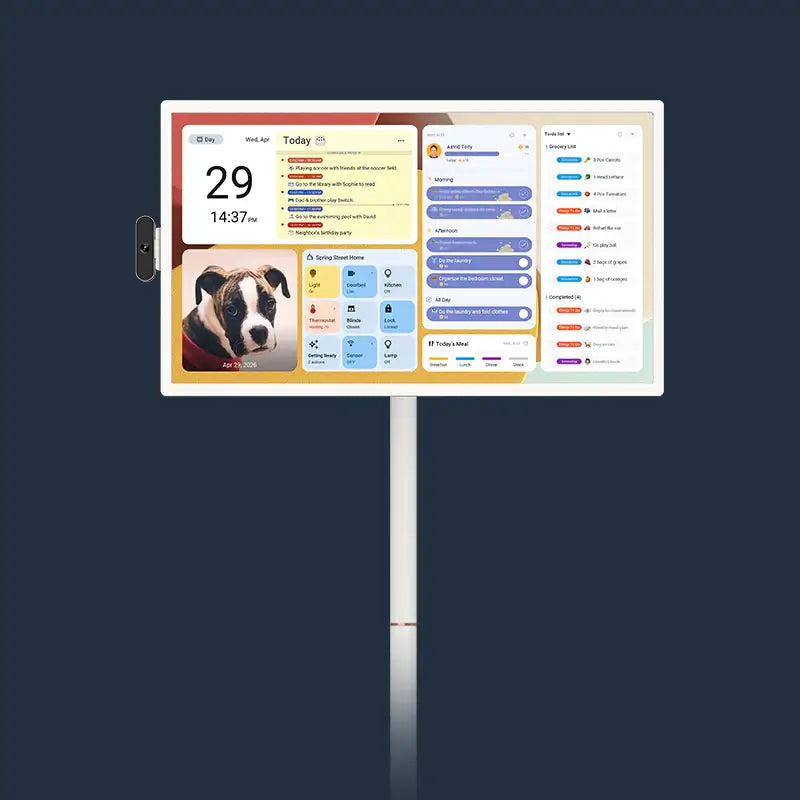
If the calendar has the right information but someone still misses it because notifications get buried or a phone stays in a bag all morning, a display in a high-traffic spot can help that one household see it. We built the Apolosign 27-inch Digital Calendar for exactly this gap. It syncs with Google, Apple, and Outlook calendars, so the same events already on a phone show up on a wall-mounted 27-inch screen. Its dashboard can turn routines into chores with points and rewards, and its message board holds reminders and countdowns for the day ahead. Before treating a display as a fix, both parents still need to agree on who updates the underlying calendar and how exceptions get communicated, since the screen only shows what gets entered.

Conclusion: Choose the Simplest System Both Homes Will Use
If the recurring problem is forgotten homework or a missing lunch, start with the shared checklist and the evening packing checkpoint. That alone solves most packing failures without adding anything new to manage. If the problem is schedule information that exists but keeps getting missed, keep the shared calendar as your source of truth and add a visible anchor in the household where phone notifications tend to get lost.
For that second case, the Apolosign 27-inch Digital Calendar gives one home a constant view of the same synced schedule, without replacing the agreement both parents still need about who updates it. Start with the conversation and the checklist this week, then add a visible display only if missed information is still the problem after that.
FAQs
Do co-parents need to use the same calendar app?
No. What matters is agreeing on one shared source for school events and exchanges, whatever app either parent already uses, plus a backup written message for anything one parent might not see in time. Name that source and agree on a quick acknowledgment rule together, and the app choice stops mattering.
How can we keep a school bag list without making mornings feel overwhelming?
Trim the list down to the handful of items that actually cause missed departures, usually homework, lunch, and outerwear, and keep the fuller list in one portable spot for reference rather than reciting it daily. Run the shorter version for one school week and see if departures get smoother before adding anything back.
What should we do when a pickup or school schedule changes at the last minute?
Send the update through your agreed channel right away, name who is handling the next step, and wait for a quick confirmation from the other parent. Tell the child only the plan that is actually settled, and make a note of the exception so it does not repeat at the next handoff.
How do we keep the routine fair when the two homes have different parenting styles?
Keep the shared agreement limited to things you can observe, like whether the child left on time with a packed bag, rather than how either home runs its evening. Any rule that does not change school readiness, handoff success, or schedule visibility can safely be dropped from the shared list and left to each household's own style.