





Start with the time your child has to leave the house, then work backward through each task. Pick a short sequence of visible steps, six or fewer works well for most families, and practice it together until your child can follow the cues with less help from you. This backward approach fixes the most common problem: routines that ask for more time than the morning actually has.
How to Create a School Morning Routine for Elementary Kids
A routine that finishes on time starts with the departure clock, not a wish list of good habits. Here's how to build one your child can actually follow.

Start With the Time the Child Must Leave
Write down the exact time your family needs to be out the door, then count backward through every real transition: getting dressed, eating, brushing teeth, and grabbing a backpack. Name the very first action your child can do right after waking up, and keep that order the same every day. If you find yourself repeating the same reminder morning after morning, that usually means the next step is invisible or takes longer than you planned, not that your child needs to hear it more times.
Use a Sample Timeline as a Starting Point
The table below is one illustrative model, not a universal schedule. Adjust the time blocks to match your child's school start time, your commute, and your family's morning responsibilities.
| Time Block | Child-Facing Milestone | Night-Before Support |
|---|---|---|
| 6:45 to 6:55 | Wake up, use the bathroom | Clothes laid out |
| 6:55 to 7:10 | Get dressed, brush teeth | Toothbrush and hairbrush ready |
| 7:10 to 7:25 | Eat breakfast | Breakfast items placed within reach |
| 7:25 to 7:35 | Pack backpack, check homework folder | Backpack packed except lunch and folder |
| 7:35 to 7:45 | Put on shoes, grab backpack | Shoes by the door |
| 7:45 to 7:50 | Departure buffer, final check | Nothing new, just leave |
A predictable order, night-before preparation, visible time cues, and a final belongings check before leaving all help make school mornings easier to manage, according to Understood's guide to school morning routines. Keep that last block as a buffer, not another task, so a slow morning still ends on time.
That timeline gives you the order and pacing. The next step is turning each block into something your child can actually see.
Turn Morning Tasks Into Visual Milestones
A routine only works if your child can see what comes next without asking you. Turning each task into one clear, visible cue removes the guesswork.
Give Each Milestone One Visible Next Action
Rewrite each block from the timeline as a single observable action, like "shoes on" or "backpack by the door," instead of a vague instruction like "get ready." Keep the full list short enough for your child to scan from top to bottom in a few seconds. If one task keeps disappearing from the routine, give it its own checkpoint instead of folding it into a bigger step.
Adjust the Cues for Younger and Older Elementary Kids
Younger children generally do better with fewer steps, pictures instead of long text, and practice near the actual spot where the task happens, like a bathroom mirror or a bedroom door. Older elementary kids can often handle more written detail, a simple clock check, and a self-correction cue like "if it's 7:20 and you're not dressed, skip the extra step." Base the adjustment on what your child can finish without help right now, not on a grade-level cutoff.
A Forgotten-Backpack Scenario Changes the Milestone
Say a third grader named Mia reaches the front door without her backpack three mornings in a row. Instead of adding another spoken reminder, move the backpack checkpoint earlier in the sequence, right after breakfast, and place a visible cue where the backpack is stored, like a hook by the kitchen table. The rest of Mia's routine stays exactly the same for the next trial run. If more than one sibling forgets the same kind of item, connect that cue to a shared household schedule in a common space instead of repeating the reminder to each child separately.
Once the milestones are visible, the next job is teaching your child to use them without you standing over their shoulder.
Practice the Routine Until Prompts Fade
Walk through the full routine with your child during a calm moment, not during a rushed morning, so the sequence feels familiar before it counts. This turns you from a constant reminder system into a coach who steps back over time.
Teach the Sequence Before the Busy Morning
Go through the routine in order on a weekend or evening and let your child point to or check off each step themselves. If one transition, like getting dressed, consistently slows things down, practice that single step on its own instead of running the whole sequence again. Keep this first practice short and focused on just the next action, not the entire morning.
Fade Reminders One Layer at a Time
Start by modeling the step yourself or giving a direct prompt, then shift to simply pointing at the visual cue, then pause and let your child start the action on their own. Providing simple, well-defined steps, an easy-to-reference picture schedule, and specific praise for completed tasks supports this kind of practice, according to the Child Mind Institute's guidance on school routines. Praise the specific action, such as "you got your shoes on by yourself," rather than a general "good job." If your child can't start after the pause, go back one level of help and practice that same transition again before trying to fade it further. The realistic goal is fewer prompts for steps your child already knows, not full independence overnight.
Choose Between a Paper Chart and a Persistent Digital Schedule
Which format works better depends on how many people need to see the schedule and how often it changes. A paper chart fits a stable routine in one spot, while a shared display fits a household where information shifts often.
Choose Paper for a Short, Stable Sequence
A paper chart works well when one child follows a fixed order and the chart can sit right where the routine happens, near the bedroom, bathroom, kitchen, or front door. Your child can see the next task and mark it off without needing power, an app, or any account setup. A caregiver still has to update the paper by hand whenever the sequence or timing changes.
Choose a Persistent Display for Shared, Changing Information
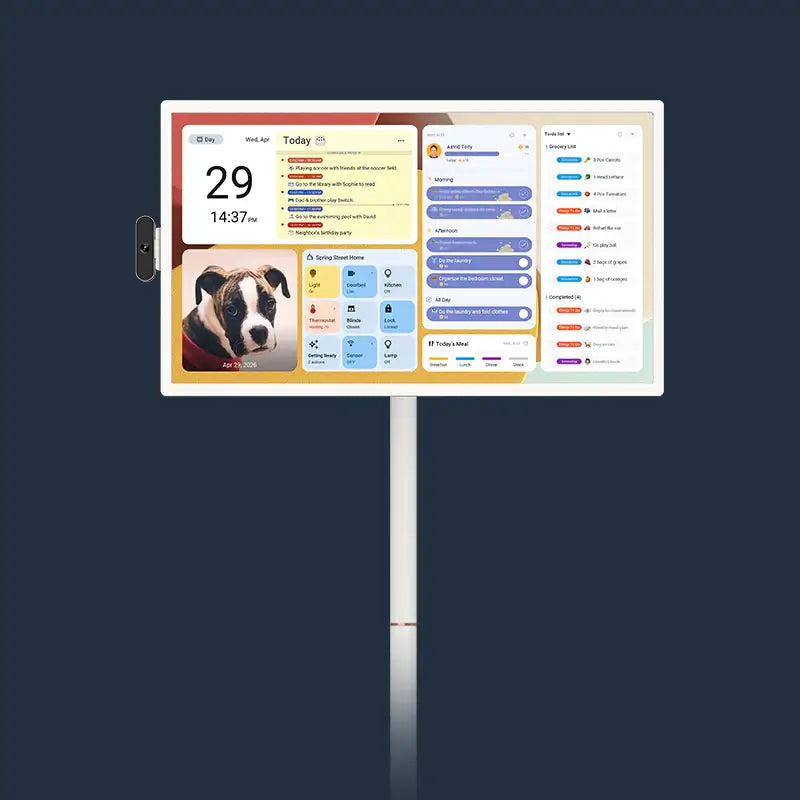
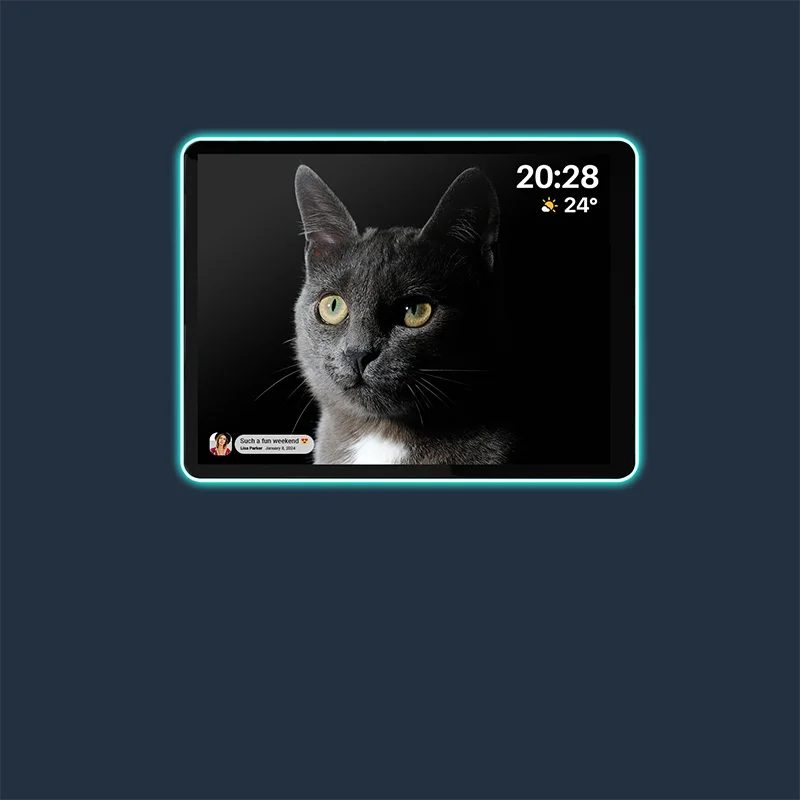
A shared household display becomes more useful when several people, not just one child, need the same schedule visible in a common room. Our Apolosign 15.6-inch Digital Calendar lists Apple, Google, and Outlook calendar auto-sync, routines, and a Message Board for reminders and countdowns, all shown on a 15.6-inch LCD touch screen. Think of these as visibility and organization tools that keep changing information in one place, not as a feature that removes the need for practice or prompting on its own.
A Two-Caregiver Schedule Changes the Tool Choice
Picture a family where two caregivers alternate school-morning duty and departure times shift with after-school activities. A paper chart in that home may need frequent hand edits just to stay accurate. If the caregivers already keep a shared digital calendar and want reminders visible outside of their phones, a persistent display fits that pattern better. If instead the routine belongs to one child and rarely changes, the simpler paper option still does the job. Families who want to browse options first can look through our digital calendar collection before deciding.
Fix the One Step That Keeps Getting Missed
When a routine breaks down, fix the exact checkpoint that failed instead of rebuilding the whole morning. Isolating the problem keeps the parts that already work intact.
Repair a Forgotten Task at Its Point of Failure
Move the visual cue to the spot where your child actually encounters the task, not just to the start of the list. If a broad step like "get ready" keeps getting skipped, split it into the specific missed action, such as "put on socks," so the next move is obvious. Leave every other part of the routine unchanged so your child doesn't have to relearn steps that were already working.
Repair a Late Routine by Changing the Inputs
Run the routine once during a calm morning and time each block to see which one consistently runs long. Protect your departure buffer by shifting night-before preparation earlier or dropping a nonessential choice, like picking an outfit in the morning instead of the night before. Only move the wake-up time after you know exactly where the extra minutes are going.
FAQs
How Long Should an Elementary School Morning Routine Be?
Long enough for your child to finish every required task without rushing, plus a short departure buffer. Time one calm run-through of the full routine to see how long it actually takes, then add a few extra minutes as a buffer rather than guessing at a fixed length.
How Many Steps Should a School Morning Routine Include?
Start with the fewest observable actions needed to get out the door, often five to seven blocks. Only split a step into two if your child repeatedly misses a specific part of it. If the list feels long, remove a nonessential step before adding a new checkpoint.
How Can We Keep the Morning Routine Consistent When the Schedule Changes?
Keep the overall order the same and change only the time block or milestone affected by the new schedule, such as a different caregiver or a later school start. Run through the updated version once with your child before the next busy morning so the new cue isn't a surprise.
How Should a Morning Routine Differ for Younger and Older Elementary Kids?
Younger children generally need fewer steps, pictures instead of text, and closer practice near where each task happens. Older elementary kids can often take on more written detail, simple time checks, and a self-correction cue once they've mastered the basics. Adjust based on what your child can finish without help, not their age alone.
Conclusion: Match the Routine Aid to Your Family
If one child follows a short, stable sequence in one spot, a simple paper chart placed near that routine is often all you need. When a household includes several people, changing schedules, or alternating caregivers, a persistent shared display fits the routine better.
For that multi-person setup, our Apolosign 15.6-inch Digital Calendar keeps family calendars synced and reminders visible in a common room, without promising to replace the practice your child still needs. Try backward planning this week, then pick the display format that matches how your mornings actually run.