





A workable school morning routine does not require everyone to wake up or leave at the same time. Start with each person’s fixed departure or handoff, work backward through the preparation steps, and add only the shared blocks that truly overlap. Give each shared task one owner, keep personal reminders with the person who acts, and leave room for a family-specific buffer.
This approach helps when one child catches an early bus, another has a later drop-off, and a parent leaves for work at a different time. It creates one household plan without forcing everyone into the same morning.
Start With Each Departure Time, Then Build the Shared Morning Sequence
Write every fixed departure, transportation change, and caregiver handoff in one place before arranging flexible tasks around them. Then work backward from each anchor and prepare what you can the night before.
A predictable sequence can still support different start times. The goal is a routine that is steady enough to follow but flexible enough for real family life—a balance described by the American Academy of Pediatrics.
The times are illustrative. Replace them with your household’s actual departure, preparation, and handoff needs.
| Person and fixed departure | Backward-planned preparation blocks | Overlapping block or task owner |
|---|---|---|
| Child A, illustrative bus departure at 7:05 a.m. | Wake up, breakfast, pack check, shoes, leave; add an adjustable ready-to-leave buffer | Breakfast overlaps with the parent’s kitchen check; the parent owns the bus-day change |
| Parent, illustrative work departure at 7:40 a.m. | Wake up, personal preparation, breakfast, lunch or bag check, leave | The parent owns the shared breakfast reset and final household check |
| Child B, illustrative drop-off at 8:10 a.m. | Wake up later, breakfast, pack check, shoes, leave for drop-off | The parent owns the drop-off handoff; Child B follows a separate preparation path |
To use the template, begin with the last action: leaving, boarding, arriving at a drop-off, or completing a handoff. Add the steps that must happen first. Mark the blocks that overlap, such as breakfast or a transportation handoff, and assign an owner to each shared block.
If someone’s departure or transportation time changes, give that person a separate timing block instead of forcing them into the same household wake-up time. Try the plan on the next school morning, then adjust the block that actually slips rather than adding rules to the entire routine.

Assign One Owner to Each Shared Morning Task
Name one owner for every recurring shared task before the morning begins. This prevents breakfast, transportation changes, or caregiver handoffs from becoming “everyone’s job,” which often means no one checks the final detail.
Separate Shared Tasks From Personal Steps
Write shared tasks and personal steps in separate lines. Shared tasks include breakfast setup, packing support, transportation decisions, and handoffs. Personal steps include dressing, checking one child’s items, and leaving on time unless the household has assigned support.
The owner does not have to complete every part of a task. The owner checks that the shared step is ready and responds when the plan changes. For example, one parent can own the transportation update while each child checks their own bag. A child can handle an assigned breakfast or packing step when that fits the family’s established abilities and circumstances.
Use an Evening Reset Before the Morning Starts
Do a short evening reset: place bags, clothes, forms, food, and known schedule changes where they belong. This moves avoidable decisions out of the busiest part of the morning and makes the sequence easier to follow. For a co-parenting or two-household routine, name the transportation and handoff owner in both homes. A calendar entry can show the task, but it does not replace the person responsible for completing the handoff.
Decide What Belongs on the Shared Family View
Put information on the shared view when another person must change their timing or action. Keep it personal when only one person needs to act. This practical test keeps the family calendar useful instead of filling it with every individual reminder.
Put Coordination Details on the Shared View
Add school, bus, work, or drop-off departure times; transportation plans; caregiver handoffs; recurring activities; no-school dates; and dated household-wide exceptions such as an early release or changed carpool. These details can change who leaves first, when breakfast must happen, or who must prepare for the next handoff.
Keep Individual Prompts Personal
Keep individual alarms, one child’s item reminder, private prompts, and sensitive details in that person’s reminder system. For example, the household may need to see that a child’s departure time changed, while only that child needs a reminder to bring a particular item.
Use a visible schedule, clock, designated supply location, or personal list for the type of prompt it supports. Visible cues and personal lists can support a child’s school-day sequence. Keep the shared view focused on coordination, not private information or personal responsibility.

Update the Routine When Homes, Carpools, or Schedules Change
Keep the recurring routine intact and change only the affected blocks. This preserves a familiar sequence while allowing different weekdays, homes, carpools, and handoffs to work differently.
Keep the Recurring Skeleton
Keep departure, preparation, breakfast, packing, transportation, and handoff points as the routine’s basic skeleton. Record each one-off change in one agreed-upon shared location and label it with a date or event. Remove expired notes after an early release, carpool change, or handoff update so old information does not compete with tomorrow’s plan.
Review the Block That Repeatedly Slips
After several real mornings, adjust the block that repeatedly runs late or creates a rushed handoff. Move, simplify, or reassign that block while keeping the buffer adjustable. This makes the routine a working draft based on actual household experience rather than a rigid schedule written once.
In a two-household arrangement, share recurring departure and handoff information across homes, but let each home control its local breakfast, packing, and leaving details. The shared parts need a common reference; the local parts need room to match each household’s habits. A predictable-but-flexible routine is more workable than forcing identical timing in every home, as the American Academy of Pediatrics explains.
Choose Between Personal Reminders, a Shared Calendar, and a Visible Display
Choose the simplest reminder layer that solves the actual failure point. Use a personal reminder for one-person action, a shared online calendar for reliably maintained shared information, and a visible display only when shared information is repeatedly missed.
Match the Tool to the Action
Keep an individual alarm, item prompt, or private task with the person responsible when no one else must coordinate it. Use a shared online calendar when the people who need the information already check and update the same system. This avoids adding another device when the existing habit works.
Judge the choice by three questions: Will people see the information when they need it? Is someone responsible for keeping it current? Does it fit the family’s existing calendar habits and common pass-through space?
Consider a Visible Display Only for a Visibility Gap
Consider an always-visible display when the calendar is maintained but shared departures or handoffs are still easy to miss on phones, and the household has a kitchen, entryway, or other place where people naturally look. A display does not fix unclear ownership or outdated information.
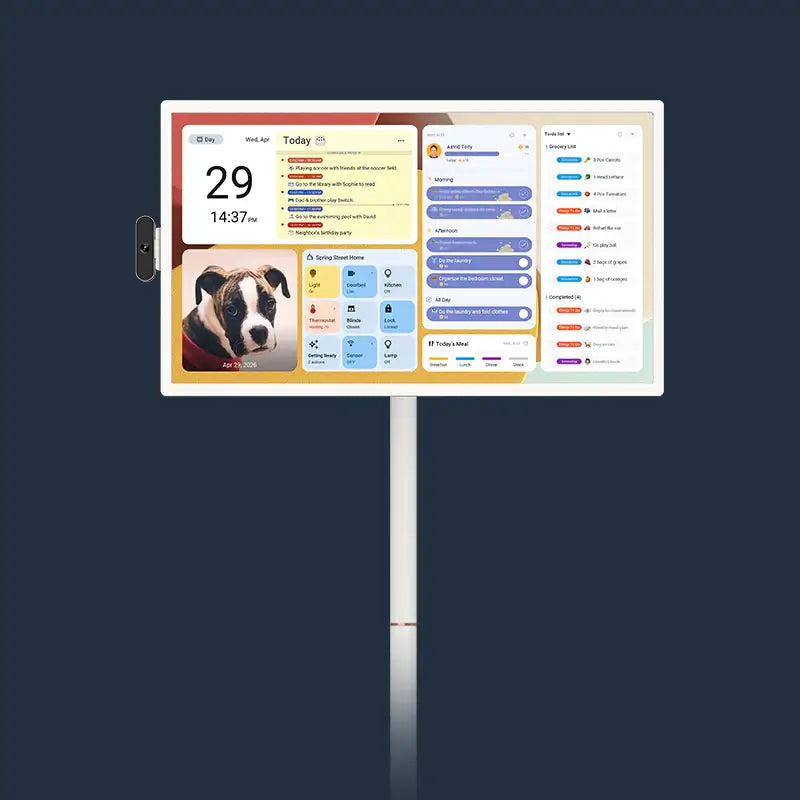
A dedicated display puts shared events in a common space, while a phone or online calendar depends on someone opening it at the right moment. WIRED describes this category’s value as dependent on maintained calendars and a shared viewing location in its review of dedicated displays in a shared home location. The review also discusses Apolosign calendar imports, routines, to-dos, and notifications, while describing the tested experience as requiring more hands-on setup. Because the review did not identify the exact 21.5-inch model, do not treat that setup comment as a model-specific fact.
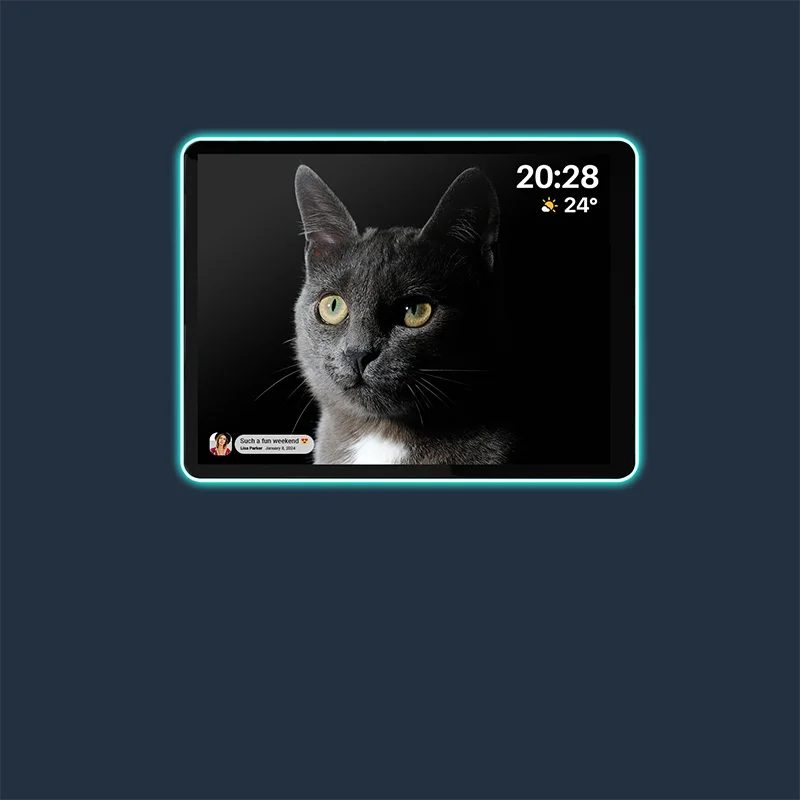
For a household with a persistent shared-visibility gap, our Apolosign 21.5-inch Digital Calendar is one optional layer. The product page currently lists calendar syncing, routine tasks with points and rewards, custom to-do lists, meal planning, and a family message board with reminders and countdowns. Those listed functions may fit a family that wants shared schedule information and routine prompts in one visible place, but they do not replace named owners, personal reminders, or accurate updates.

Put Tomorrow’s Next Departure Where the Household Can See It
Tonight, write each person’s departure or handoff time in one place. Work backward, mark only the overlapping blocks, name one owner for every shared task, and add an adjustable buffer. Keep individual prompts with the person who must act.
Test that plan through several real mornings. If the routine works but people still miss shared information, consider a visible layer; if the family does not reliably check or update the system, simplify that system first. When a consistent viewing space exists and visibility remains the problem, you can explore Apolosign digital calendars as an optional addition—not a replacement for ownership or personal preparation.
The right setup follows the problem: personal reminders for individual action, a shared calendar for reliable coordination, or a visible display for repeatedly missed shared information. Start with tomorrow’s departures and adjust the block that causes real friction.
FAQs
How Do I Create a School Morning Routine?
Write each departure or handoff time first. Work backward through wake-up, preparation, breakfast, packing, and transportation, then add shared blocks, one owner for each shared task, and a flexible buffer. Prepare what you can the night before.
How Can I Manage Multiple Kids Leaving at Different Times?
Build one school-morning routine for multiple kids around the household’s shared blocks, but give each child a separate start time and responsibility. Keep transportation and handoff information visible to everyone who must respond.
What Should Go on a Family Morning Checklist for School Days?
A family morning checklist for school days can include shared departure or bus times, transportation, handoffs, recurring activities, and household-wide exceptions. Keep personal alarms and one-child item reminders in the individual’s own system.
Is a Shared Calendar Enough for a Staggered Family Morning?
It may be enough when everyone who needs the information reliably checks and updates the same calendar. Consider a visible kitchen or entryway display only when shared information is repeatedly missed despite that habit and the household has a consistent place to see it.