






If you are wondering how to stop toddler bedtime stalling with visual routine strategies, the fastest way is a short, repeatable picture sequence that shows exactly what happens next, from pajamas to lights out. Point to the next picture instead of re-explaining the whole evening, and keep your words few and calm. This won't make every delay tactic disappear, but it gives your toddler something concrete to follow instead of a spoken plan repeated for the third time.
Building one takes about ten minutes once you know which steps belong on it and where to put it. The rest of this guide covers the exact sequence, how to make it toddler-readable, what to say when your child asks for one more thing, and when a paper chart is enough versus when a shared digital display might help.
Build the smallest workable visual bedtime routine
Start with only the steps that happen on an ordinary night, not every possible request. The American Academy of Pediatrics recommends a quiet, consistent bedtime routine that helps a child know what's coming, and that idea is the backbone of any visual chart.
Start with the final steps that happen most nights
Write down only the steps your family actually does at the end of the day. A predictable brush, book, bed sequence is a useful starting model: teeth, a book or two, then bed. Adjust it to your own order, whether that means bathroom, pajamas, one book, a cuddle, and lights out. The chart should show the normal path, not every occasional errand or request.
Turn each step into one visible cue
Use a simple picture, a picture with one short word, or a photo of the actual toothbrush, pajamas, or book your child uses. Keep each cue tied to a single action so your toddler can look at it and know what comes next without you narrating it. A small four or five card sequence works better than a crowded poster with every possible variation on it.
| Step in the normal bedtime path | Picture or short cue | Parent's brief action |
|---|---|---|
| Bathroom / teeth | Toothbrush icon | Point, say "teeth" |
| Pajamas | Pajama photo | Point, say "pajamas" |
| One book | Book icon | Point, say "book time" |
| Cuddle and lights out | Moon icon | Point, say "lights out" |
The table above is the whole routine. Once it's posted, your job each night is mostly pointing, not explaining.

Make each bedtime step visible and easy to scan
The chart only works if your toddler can read it faster than you can talk. That means matching the format to what your child actually understands and putting it where the routine begins.
Match the cue to what your toddler understands
Use a recognizable picture first, since most toddlers aren't reading independently yet, and add a short word underneath if it helps you or another caregiver follow along. Stick with one visual style, whether that's real photos, simple icons, or drawings, instead of mixing several. Avoid leaning on color alone if the picture or action isn't already clear on its own.
Place the chart at the transition point
Hang or prop the chart where the routine actually starts, such as the bathroom door or bedroom wall, not somewhere it only gets seen in passing. Point to the current or next cue rather than reciting the whole sequence out loud. Picture a toddler deeply absorbed in blocks: instead of saying "it's time to get ready for bed, we need to brush teeth, then read, then go to sleep," you walk over, point to the toothbrush picture, and say "teeth." That one visible cue replaces a paragraph of explanation.

Use the chart to end the negotiation loop
The chart only reduces negotiation if you use it the same way every time a request comes up. That means settling ordinary needs early and pointing back to the sequence instead of debating it.
Answer one-more requests before they become a loop
Handle predictable needs, like a sip of water or a last bathroom trip, before the final steps begin whenever that's practical. The AAP notes that taking care of a child's needs before bedtime removes some of the common reasons kids stall. If a request still comes up after the sequence starts, point to the next picture and use one calm sentence, such as "after lights out," rather than opening a new discussion. Not every request is a deliberate delay tactic, but the response can stay the same either way.
Make transitions smaller without changing the order
Offer a limited choice inside a step, such as which pajamas or which book, without changing the order of the steps themselves. Point to the next cue before asking your child to leave an activity, rather than after. The chart is a prompt for the next single action, not a demand that your toddler understand or agree to the whole evening at once.
Adjust the sequence without making it unpredictable
Ordinary nights will change sometimes, and the routine can flex without losing its shape. The key is marking what's different and returning to the familiar order as soon as you can.
Keep ordinary changes brief and visible
Say or show what's different, like "we're brushing teeth in the hotel bathroom tonight," then move through the same core cues you'd use at home. Preserving the order of steps matters more than preserving every exact detail, since the order is what your toddler is actually learning to anticipate.
Shorten a chart that has stopped helping
If the chart has grown too long, remove occasional steps, unclear pictures, and anything your child ignores, until only the normal path is left. Use your child's actual actions and your own household's words instead of abstract labels. A simpler chart that gets used every night beats a detailed one that gets skipped.
Know when routine advice is not enough
If bedtime resistance seems tied to a health concern rather than an ordinary stalling pattern, pause routine changes and talk with your child's healthcare provider instead of continuing to adjust the chart. This guide covers routine building, not a medical evaluation.

Paper chart or a persistent digital display?
Most families do fine with a paper chart taped to a wall or door. A shared digital display earns its place only when the household already needs persistent, shared visibility for more than just bedtime.
Choose paper for one stable bedtime path
Print, draw, or post the sequence when one location and one normal order are all your family needs. If your routine barely changes and one caregiver mostly handles bedtime, paper keeps the tool simple. It needs no power, no setup, and no ongoing account, which fits a household that wants the lowest-maintenance option.
Choose digital when visibility serves the whole household
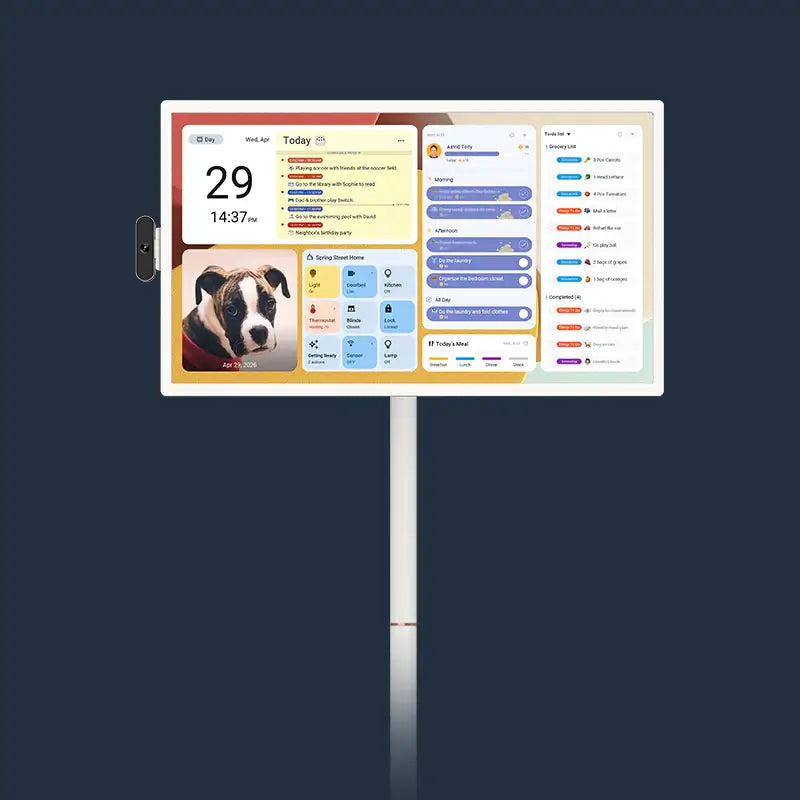
Consider a persistent display only when your family already juggles shared calendars, chore routines, or reminders that go beyond bedtime. Picture a busy household with two working parents and three kids, where a screen in the kitchen already needs to show the week's schedule. In that setting, we build the Apolosign Digital Calendar to sync a Family Calendar across Apple, Google, and Outlook accounts and to turn routine tasks into points and rewards, alongside its calendar view. Those features support broader family organization; they don't change how a toddler responds to bedtime on their own.

Match the Apolosign size to the placement need
Choose the 15.6-inch Digital Calendar when desk placement matters, since it ships with both a desk stand and a wall-mount bracket, so it can sit on a dresser or mount on a wall depending on the room. Choose the 21.5-inch Digital Calendar when a larger, fixed wall display fits a shared space better, since it comes with a wall-mount bracket but no listed desk stand. A sponsored 21.5-inch hands-on review describes it hanging in a kitchen as a synced family planner, which is useful context for that specific size, though it's sponsored coverage rather than independent testing, and it doesn't speak to toddler bedtime behavior specifically.
Choose the simplest routine your family will actually use
A household with one caregiver and one steady bedtime location usually does best with a paper chart taped near where the routine starts. A busier household that already needs a shared, always-visible schedule for chores, calendars, and reminders may get more use out of a persistent digital display that also happens to show the bedtime sequence. Either way, start with the smallest set of steps your family actually follows every night, put the cues where the routine begins, and use the pointing habit from this guide starting tonight.
If a shared display fits your household's broader routine needs, our Digital Calendar collection is a low-pressure place to compare sizes, but a printed chart is a complete answer on its own for many families.
FAQs
What if my toddler refuses to use the bedtime chart?
Refusal isn't a signal to add more steps or explanations. Try introducing the chart during a calm daytime moment, walk through it together once without any bedtime pressure attached, and then use it as a pointing cue at night rather than a test your child has to pass.
Can siblings share one visual bedtime routine?
Siblings can share a chart when their final steps genuinely match, like brushing teeth and reading in the same order. When one child needs something different, such as medication, an earlier bedtime, or a separate comfort item, add one small extra card just for that step instead of building two full charts.
Do we need a reward system for a visual bedtime routine to work?
No. The chart's job is to show what happens next, not to pay your child for compliance. If your family likes stickers or small rewards, they can sit alongside the chart, but they aren't required, and adding them doesn't guarantee the routine will stop every stalling tactic.