




If you are wondering how to make chores fun for kids, the answer usually starts with clear routines, small tasks, and rewards that make progress visible. When chores feel predictable and achievable, children are more likely to participate and build better habits over time.
The good news is that chores can become easier, more positive, and even fun when parents use clear routines, playful structure, and rewards that feel motivating. Instead of turning every task into a battle, you can create a system that helps kids understand what to do, why it matters, and how their effort leads to progress.

Why Kids Resist Chores
When kids push back on chores, it is easy to assume they are being lazy or defiant. In many cases, though, resistance comes from something much simpler: the task feels unclear, overwhelming, boring, or disconnected from their world.
A child may resist because:
- They do not know exactly what "clean your room" means.
- The task feels too big to start.
- They would rather keep playing.
- They do not see the immediate benefit.
- They have not built the habit yet.
- They only hear about chores when someone is frustrated.
For younger children, "put your laundry away" may need to be broken into smaller steps like "match socks," "put shirts in this drawer," and "place pajamas in that bin." Older kids may understand the task but still need consistency, reminders, and a sense of ownership.
The goal is not to force perfect behavior overnight. The goal is to make kids chores predictable, age-appropriate, and connected to positive feedback. When children know what is expected and feel capable of succeeding, they are much more likely to cooperate. Research from the American Academy of Child and Adolescent Psychiatry confirms that children who do chores may develop higher self-esteem and be better equipped to deal with frustration — benefits that begin as early as age 3, according to guidance on age-appropriate chores and self-esteem.
What Makes Chores Fun for Kids?
Chores become fun for kids when they feel like meaningful activities rather than simple tasks they are told to complete. Clear goals, age-appropriate responsibilities, and positive feedback help children understand their role, build confidence, and experience a sense of achievement.
Parents can make everyday chores more engaging by adding elements of choice, play, and visible progress. When children can see what they have accomplished, track their improvements, and receive recognition along the way, chores can become a more motivating and positive part of their daily routine.

Why Making Chores Fun Helps Kids Build Habits
Games work because they give kids clear goals, visible progress, and a reason to keep going. Chores often fail because they lack all three. A child may not know when the task is "done," may not feel any sense of achievement, and may only receive attention when something is incomplete.
Turning chores into a game changes the emotional experience. Instead of "You have to clean up now," the message becomes "Let's see how many points you can earn," or "Can you finish this before the timer rings?"
Simple ways to gamify chores include:
- Use a timer Challenge your child to complete a small task in five or ten minutes.
- Create levels Start with easy chores, then let kids "level up" to bigger responsibilities.
- Award points Give points for completed tasks, helpful attitudes, or finishing without reminders.
- Add choice Let your child pick from a chores list instead of assigning every task.
- Celebrate streaks Track how many days in a row they complete their responsibilities.
Gamification does not mean every chore needs a prize. It simply makes the process more engaging, especially while children are still learning how to build routines. Pairing this approach with a digital calendar for kids' habits can make the routine even more consistent and visible. The American Academy of Pediatrics also recommends building structure and routines into family life to help children remember their chores and develop responsibility, as outlined in their guidance on chores and child responsibility development.

How to Build Better Chore Habits for Kids
If you want chores to become a habit, clarity matters. Vague instructions create confusion, while clear expectations help kids feel successful.
Instead of saying:
- "Clean up the living room."
Try saying:
- "Put the blocks in the basket, place books on the shelf, and bring cups to the kitchen."
Instead of saying:
- "Help more around the house."
Try saying:
- "After dinner, your job is to wipe the table and put napkins in the trash."
A strong chore routine usually includes:
- A specific task
- A clear time to do it
- A simple way to mark it complete
- Positive feedback when it is done
- A predictable reward or benefit when goals are met
Positive feedback is especially important. Kids need to hear what they did right, not just what they forgot. Try phrases like:
- "You started without being asked. That shows responsibility."
- "Your shoes are put away exactly where they belong."
- "You helped our family get ready faster today."
Over time, this helps children connect chores with identity: "I am helpful," "I can contribute," and "I can follow through." Displaying tasks visually on a shared screen can reinforce this structure — see how visual chore charts on wall screens help families stay consistent.
How a Chore Reward System Helps Kids Stay Motivated
A chore reward system gives children a visible reason to participate while they are still developing internal motivation. It also helps parents stay consistent because expectations and rewards are easier to track.
The best reward systems are simple. They do not need to be expensive or complicated. Rewards can include:
- Extra bedtime story time
- Choosing a family movie
- Picking dessert one night
- Extra screen time within family limits
- A special outing
- Staying up a little later on the weekend
- Saving points toward a larger reward
The key is to connect rewards to effort, not perfection. If a child makes progress, completes a task, or improves their attitude, that should be noticed.
To create a balanced system:
- Choose a small number of chores Start with two or three age-appropriate tasks.
- Assign point values Give simple tasks fewer points and harder tasks more points.
- Set reward goals Decide how many points are needed for different rewards.
- Review progress often Talk about wins daily or weekly.
- Adjust as needed If the system feels too hard or too easy, change it.
Rewards should support habits, not replace family values. You can still teach that everyone contributes because they are part of the household. The reward system simply makes that learning process more visible and motivating. According to a University Hospitals child psychologist citing the Harvard Study of Adult Development, children given age-appropriate chores develop stronger relationships, a better work ethic, and higher life satisfaction as adults — a powerful case for the long-term value of chores and children's mental health benefits.
▶️ Watch this video to learn how to use Apolosign's built-in reward system.
How Apolosign Digital Calendar Makes Chores More Fun with a Built-In Reward System
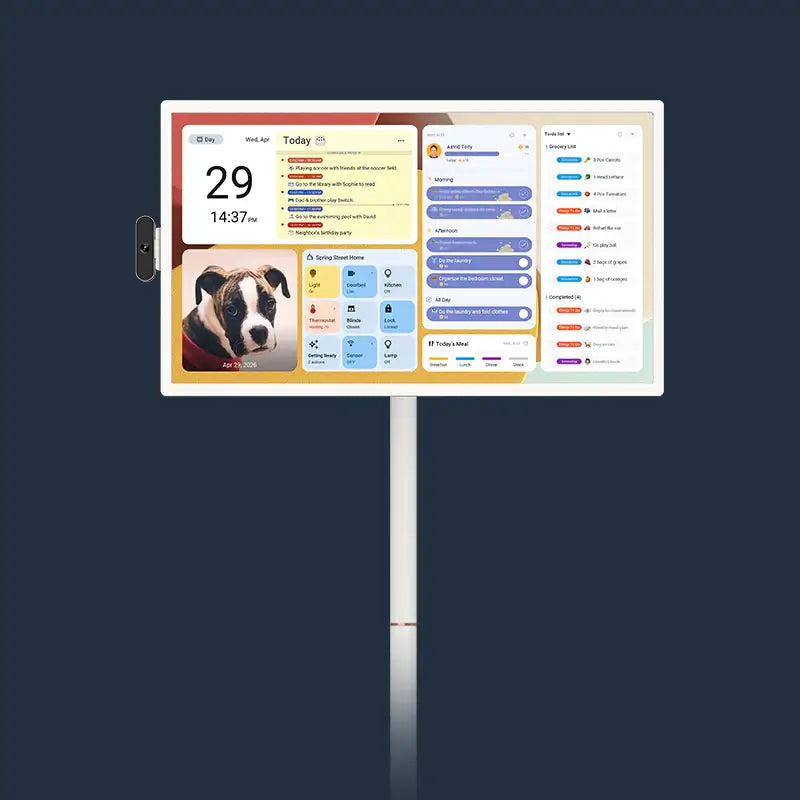
The Apolosign digital calendar can help families turn everyday responsibilities into an organized, visual routine. Instead of relying on repeated verbal reminders, parents can use a shared calendar-style system to display tasks, routines, and rewards in one easy-to-see place.
For children, seeing their chores displayed clearly can make the routine feel more concrete. A visual system helps answer the questions kids often have:
- What do I need to do today?
- When should I do it?
- What happens after I finish?
- How close am I to earning a reward?
A built-in reward system makes chores feel more interactive. Kids can complete tasks, see progress, and understand how their effort adds up over time. That visibility can reduce arguments because the system becomes the reminder, not just the parent.
For busy families, this can also make coordination easier. Morning routines, after-school tasks, pet care, homework reminders, and bedtime responsibilities can all be part of a consistent family rhythm.
How to Use Apolosign's Points Reward System to Build Better Family Routines
To get the most from Apolosign's points reward system setup, start simple and build from there. A complicated system can feel exciting at first but become hard to maintain. A simple system is easier for everyone to follow.
Here is a practical step-by-step approach:
- Create a starter chores list Choose a few tasks your child can complete with little help. Examples might include making the bed, clearing dishes, feeding a pet, packing a backpack, or putting toys away.
- Match chores to your child's age and ability Younger kids need quick, concrete tasks. Older kids can handle multi-step responsibilities like folding laundry, loading the dishwasher, or taking out trash.
- Assign points to each chore Keep the numbers easy to understand. A simple task might earn one point, while a harder or less preferred task might earn more.
- Add routine-based goals Include morning, after-school, and bedtime tasks so chores become part of the day instead of random interruptions.
- Choose rewards together Let your child help pick rewards that feel exciting but realistic. This gives them ownership and makes the system more motivating.
- Celebrate progress daily Take a minute to notice completed tasks. A quick "You earned three points today" can make the effort feel worthwhile.
- Review and reset weekly At the end of the week, talk about what worked, what felt hard, and what reward they are working toward next.
The best part of a points-based routine is that it gives children a sense of control. They can see that their actions lead to progress, and progress leads to rewards.
Best Chores for Kids by Age
Ages 3–5
- put toys away
- place clothes in hamper
- wipe low surfaces
Ages 6–8
- set the table
- feed pets
- make the bed
Ages 9+
- fold laundry
- empty dishwasher
- take out trash
Final Thoughts: Chores Are More Than Just Tasks
Chores are not only about clean rooms or empty trash cans. They are daily opportunities to teach responsibility, cooperation, patience, and independence.
When parents make chores clear, visual, and rewarding, children are more likely to participate without constant reminders or frustration. A well-designed routine helps kids understand that contributing at home is not a punishment—it is a way to become more capable and confident.
By combining a shared family calendar, visual task management, and a built-in points reward system, Apolosign Digital Calendar makes it easier for families to create healthy routines and celebrate progress together—all without subscription fees.
Ready to make family routines easier and turn everyday chores into a positive experience? Explore how Apolosign Digital Calendar can help your family organize schedules, encourage good habits, and make teamwork at home more rewarding.
FAQ
What are age-appropriate chores for kids?
Age-appropriate chores for kids are tasks that match a child's ability, attention span, and level of independence.
- Younger children do best with simple, repeatable chores such as putting toys away, placing dirty clothes in a hamper, or helping wipe a table.
- Older children can take on more responsibility, such as making the bed, feeding pets, folding laundry, loading the dishwasher, or taking out the trash.
The best chores for kids are safe, easy to understand, and small enough for them to complete successfully on a regular basis.
Do chore charts actually work for kids?
Yes, chore charts can work very well for kids, especially when tasks are clear, visual, and easy to follow. Many children respond better when they can see what needs to be done instead of only hearing verbal reminders. A chore chart helps break routines into simple steps, gives children a sense of progress, and makes expectations more consistent. For younger kids, visual charts are especially helpful because they make daily responsibilities easier to remember and repeat.
What is the best chore reward system for kids?
The best chore reward system for kids is one that is simple, consistent, and easy for your child to understand. A good system usually includes a small number of age-appropriate chores, clear point values or checkmarks, and rewards that feel motivating but realistic. For example, children might earn points for making the bed, feeding a pet, or cleaning up toys, then trade those points for extra story time, a family movie choice, or another small reward. The most effective chore reward systems focus on building habits and recognizing effort, not demanding perfection.
How do I motivate my child to do chores without arguing?
To motivate your child to do chores without arguing, make the task smaller, clearer, and more predictable. Instead of saying "clean your room," give one simple direction at a time, such as "put the books on the shelf" or "place the toys in the bin." It also helps to offer limited choices, use routines, and give positive feedback when your child follows through. Many parents find that visual task systems, chore charts, and small rewards reduce resistance because the routine becomes easier to understand and less dependent on repeated reminders.