




New Year's resolutions often crumble before February, not due to a lack of willpower, but because traditional planning methods fail the neurodivergent mind. For 2026, the strategy must shift. The goal involves externalizing executive function, turning abstract intentions into concrete reality using tools designed for how the brain actually works. This approach aligns with the ApoloSign mission to build intuitive technology for modern life.
The "Object Permanence" Fix: Why Planners Must Be on the Wall
For an ADHD brain, the concept of "object permanence" extends beyond physical items; it applies to tasks and time. If a task cannot be seen, it effectively does not exist. Pocket diaries get lost in bags, and phone apps remain hidden behind locked screens. Once those apps close, the schedule vanishes from the conscious mind.
A visual planner must live in the physical environment, impossible to ignore. A small tablet or a piece of paper on the fridge rarely suffices because they blend into the background clutter. The solution requires scale and presence.
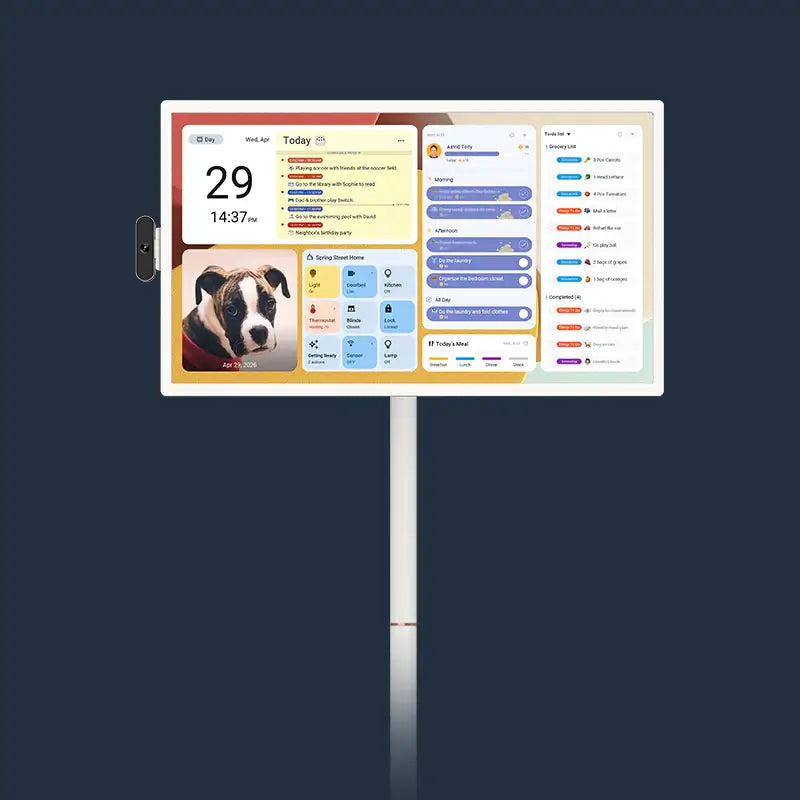
The ApoloSign 27" 4K Digital Calendar addresses that specific neurological need. At 27 inches, the screen functions less like a tablet and more like a command center or a digital billboard for one's life. The 4K Ultra-clear display (3840 × 2160 resolution) renders text and images with absolute clarity.
Why Visibility Matters:
- Size: A 27-inch screen demands attention. It creates a focal point in the kitchen or living room.
- Clarity: The anti-glare matte finish prevents reflections from overhead lights or windows, guaranteeing readability from any angle.
- Permanence: Unlike a phone that sleeps in a pocket, the device can stay mounted via a VESA 100x100 mm mount or stand on a desk, always presenting the day's structure.
When the schedule occupies physical space in the room, the brain processes upcoming events passively. One does not need to remember to check the calendar; the calendar proactively presents the information.

Defeating "Time Blindness": Visualizing the Future
"Time blindness" describes the difficulty in perceiving the passage of time or estimating how long a task will take. For many, time feels like a binary state: "Now" and "Not Now." A deadline two weeks away feels imaginary until the night before.
To combat the issue, one must see time as a spatial concept—a grid where days and weeks occupy tangible blocks. A digital calendar offers the only sustainable way to manage such visualization without the tedious labor of rewriting paper schedules.
However, a digital tool fails if data entry becomes a barrier. If updating the family hub requires manual input separate from one's phone, the system will collapse. The Apolosign excels here through aggressive compatibility.
The Family Calendar auto-syncs with every major platform used in daily life:
- Google Calendar
- Apple Calendar
- Outlook
- Yahoo Calendar
- Cozi
Such integration permits a partner to add a doctor's appointment from their work computer, or a spouse to update a dinner reservation from an iPhone, and the changes appear instantly on the home display. The "Immersive Calendar View" allows the user to see the month's landscape at a glance, turning the abstract concept of "next Tuesday" into a concrete visual location.
For families, the multi-calendar sync organizes chaos. Color-coding different family members allows the ADHD brain to quickly scan and differentiate between personal obligations and shared family events. The device supports these updates across all devices, keeping everyone on the same page without nagging.

The "Distraction-Free" Zone: Why Not Just Use a Phone?
A common question arises: "I have a calendar on my phone; why do I need another screen?"
The phone represents the enemy of focus. One unlocks the phone to check a meeting time, sees a notification from Instagram, and loses twenty minutes to scrolling. The phone is a portal to everything, which renders it terrible for specific executive tasks.
A dedicated home hub creates a physical boundary. The Apolosign 27" 4K Digital Calendar offers a "Dual Mode" interface that respects the need for separation.
Focus Mode (Calendar Mode): The device locks into a pure organizational tool. It displays the schedule, the chore chart, and essential reminders. No pop-ups, no social media feeds, just pure, calm structure.
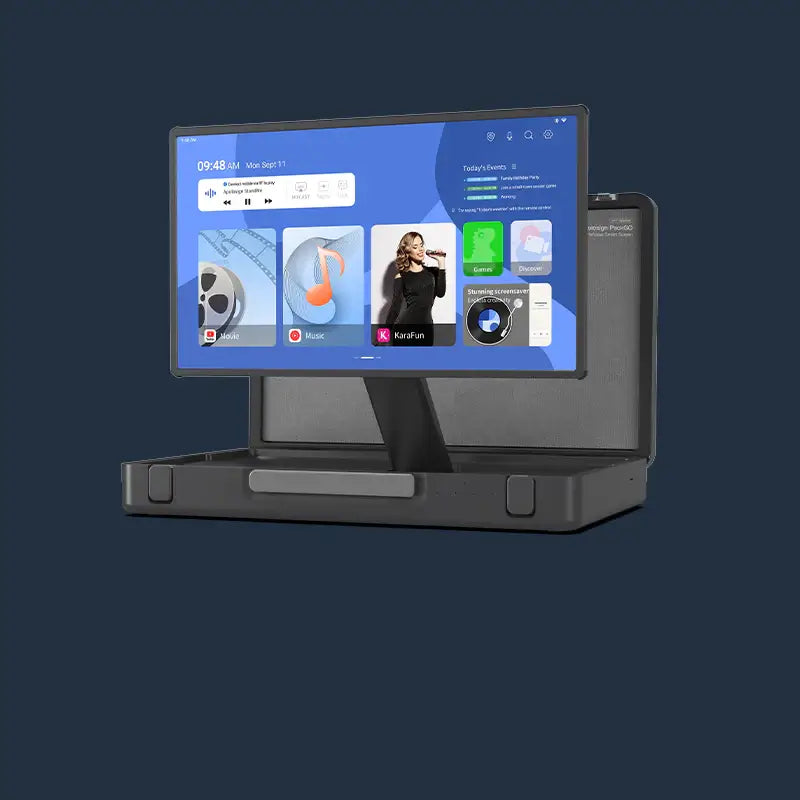
Custom Mode (Android Dashboard): When the workday ends, or during a break, the device switches personality. Powered by an RK3576 octa-core processor and 4 GB of RAM, the Android dashboard allows for full customization.
Hands-Free Control: ADHD often involves a struggle with "task initiation." Getting up to check the schedule can feel like a hurdle. Integration with Google Assistant removes the friction. Voice control allows the user to set alarms, add items to a grocery list, or check the weather without stopping their current activity.
Furthermore, the device serves as a central control unit for the smart home. Full Google Home integration means users can monitor doorbells, view security cameras, and control lights from the same screen. Centralizing control reduces the mental load of managing a household. This is a key benefit of a dedicated smart display for home management.
Dopamine via Gamification: Turning Chores into Quests
The neurodivergent brain often possesses a deficit in dopamine, the neurotransmitter responsible for reward and motivation. Routine maintenance tasks—dishes, laundry, trash—provide zero dopamine, creating massive resistance.
Paper lists feel like obligations. A digital system can feel like a game. Gamification hacks the reward system.
The Apolosign features a routine task tracker specifically designed to turn a boring chore chart into a point-scoring system.
The Strategy:
- Assign Values: Assign point values to tasks.
- Visual Feedback: Tapping the screen to mark a task "complete" provides immediate tactile and visual feedback.
- Rewards: Points accumulate toward a reward (a movie night, a new gadget, a guilt-free lazy day).
While often marketed for children, a chore chart for adults is a powerful cognitive behavioral tool. It externalizes the reward mechanism. The "Custom to-do lists" feature enhances the experience. Users can create grocery lists, shopping wish lists, or project steps, and color-code them for visual sorting.
Because the device runs on an Android OS (EDLA-licensed) with high responsiveness and 10-point multi-touch, interacting with the list feels snappy and satisfying. The 64 GB of storage ensures plenty of room for apps that aid in habit tracking.

The Ultimate Act of Love: Pre-Setting the Device
Gifting technology often burdens the recipient with "admin." For someone with ADHD, a box containing a complicated setup process might sit unopened for months. The "Wall of Awful"—the emotional barrier to starting a task—prevents them from ever using the gift.
The most profound way to give the Apolosign isn't just handing over the wrapped box. The true gift involves opening it, updating the firmware (ongoing OS updates guarantee long-term reliability), and configuring it beforehand.
The "Ready-to-Go" Setup:
- Connect: Pre-load the Wi-Fi credentials. The device supports Wi-Fi 6 (IEEE 802.11 a/b/g/n/ac/ax) for fast connectivity.
- Sync: Log in to the family Google or Apple calendars so the schedule appears the moment they turn it on.
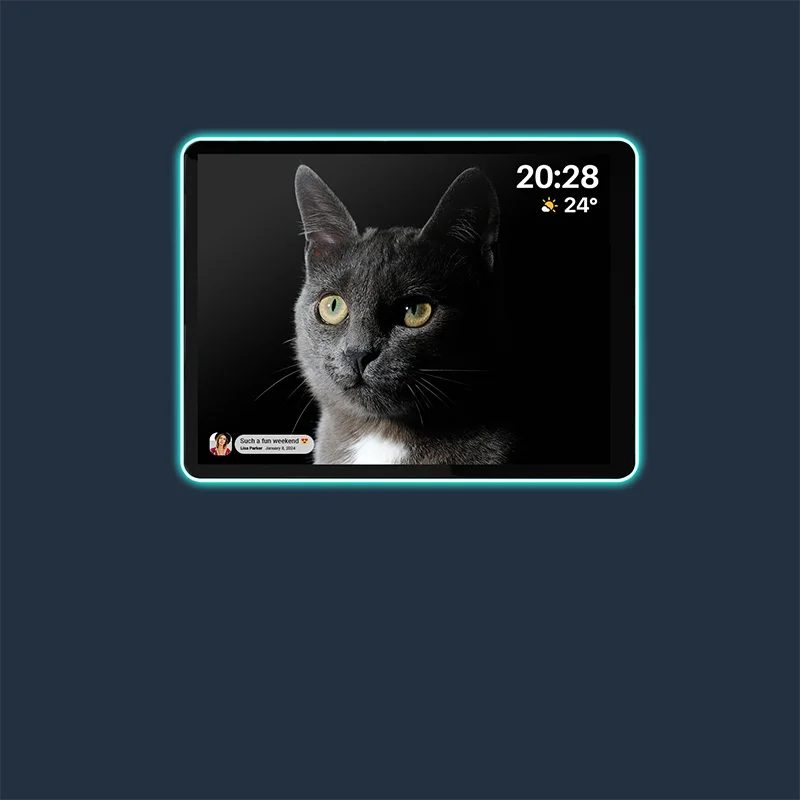
- Personalize: Set the screensaver. The device works as a stunning photo frame with Google Photos. With no subscription fees required, you can curate an album of happy memories.
- Audio: Test the 2 × 3 W speakers with a favorite playlist via Bluetooth 5.4. Note: Current product specifications list the speakers as dual 4-watt units, offering even more powerful sound.
A Special Christmas Opportunity:
For those looking to secure the device for the holidays, a specific promotion applies. A 10% off discount activates automatically upon placing an order. The offer covers the entire store, providing a significant saving on the hardware. Whether you're considering the Apolosign 27" 4K Digital Calendar, the 21.5" model, or the 15.6" model, there's a perfect option to suit every space and need. However, timing remains critical; the discount expires sharply on December 25th at 23:59.
Securing the device now allows time for shipping and that crucial pre-setup phase. Handing a loved one a tool that instantly works communicates, "I understand your brain, and I want to help carry the load."
Final Verdict: A System That Works With Their Brain, Not Against It
Willpower is a finite resource; systems are infinite. The Apolosign 27" 4K Digital Calendar succeeds because it stops asking the user to "try harder" and instead provides a support structure that matches their neurology. Through high-visibility prompts, seamless automation, and dopamine-friendly gamification, it bridges the gap between intention and action. Give the gift of clarity this Christmas, with the perfect model for every home office or personal space.