





The fastest way to help an ADHD child transition to bedtime smoothly is to make the next step visible instead of explaining it out loud. Show one current action, use the same transition signal every night, and lower light, noise, and screens as bedtime gets closer.
This works best inside a short, steady wind-down rather than a long list of spoken instructions. Try a simple sequence of pictures or short words that any child can glance at and follow, night after night.
Build the smallest usable visual wind-down sequence
Start by making the very next action visible instead of trying to explain the whole evening at once. A short sequence with clear cues beats a detailed schedule that nobody reads.
Choose what the child can see at a glance
Use pictures for a child who cannot read independently, and a few plain words for a child who reads comfortably. Show only the current step in a large, simple format. A dense chart with every rule and reminder on it defeats the purpose, because the child has to search for the part that matters right now.
Start with an example sequence
Preview the routine before the preferred activity ends, then move through finishing that activity, body care, a calm activity, and bed. This is a starting model, not a fixed prescription, and families can shorten or reorder it. It can fit inside a calm, consistent wind-down of roughly 30 to 60 minutes, without every household needing that exact length.
| Step | Visual cue | Transition signal | Sensory-lowering option |
|---|---|---|---|
| Preview | Picture of the whole sequence | Parent points to the chart | Turn down overhead lights |
| Finish preferred activity | Picture of the current toy or screen | Gentle timer or chime | Give a two-minute warning |
| Body care | Picture of teeth and pajamas | Same chime as before | Warm water, soft towel |
| Calm activity | Picture of a book or breathing exercise | Point to the next picture | Quiet voice, dim lamp |
| Bed | Picture of the bed | Consistent goodnight phrase | Comfortable temperature and bedding |
The value of the table is that each step pairs one visible cue with one signal and one way to lower stimulation, so the parent is not inventing a new approach every night. A child who struggles most at the "finish preferred activity" step often needs a longer warning window there, while everything else stays the same.

Use the same cue for every change, not more words
Once the sequence exists, how a parent uses it each night matters as much as the pictures themselves. Repeating the same phrase or pointing to the same image, instead of adding new instructions, is what makes the routine predictable.
Preview the next change
Point to the sequence before the child has to stop the preferred activity, and name the next action in one short phrase, such as "two more minutes, then teeth." Use that same preview pattern every evening so the child recognizes it before the switch even happens.
Signal the switch without reopening the plan
Pair the visible cue with a gentle alarm, timer, or other consistent signal, then offer a small choice inside the next step, like which pajamas or which book. Picture-based charts and simple alarms can help a child who tends to lose track of spoken directions, and building in a short buffer period between steps gives enough time for a slower transition without rushing.
Picture a parent whose child is deep into a Lego set and has already ignored two verbal reminders. Instead of repeating the instruction a third time, the parent points to the chart, sets a two-minute timer, and says the same phrase used every night. The child still may resist, but the parent now has one repeatable move instead of carrying the whole routine in words.
Lower stimulation in the last part of the routine
A visible schedule works better when the room itself is also getting calmer. Adding more pictures will not help if the lights are too bright or the evening still feels rushed.
Change the room before asking for calm
Dim the lights, cut background noise, and set out comfortable sleep clothing or bedding before the final steps begin. A bedroom that already feels ready gives the child fewer competing sensations to react to, so the next cue is easier to notice. A family whose child fights the last five minutes of the routine, even with a clear chart, is often dealing with a room that is too loud or too bright rather than a missing instruction.
Make screen reduction gradual when needed
If screens run right up to bedtime, move the stopping point earlier in small stages rather than cutting them off all at once. CHADD recommends a calm, consistent 30 to 60 minute wind-down that gradually reduces screen time, swaps in a calming activity like reading or slow breathing, and keeps the bedroom cool, comfortable, and dim. Replacing the screen with a calm activity already shown on the sequence, instead of a new one, keeps the visible cue accurate.

Adapt the cues to age, sensory needs, and schedule changes
The same method looks different depending on the child's age, sensory needs, and how often the evening schedule shifts. Matching the cue format to the child changes how well the routine actually gets followed.
Younger children need fewer visual decisions
A younger child who cannot yet read benefits from clear pictures and one action per cue, with a short spoken prompt that matches the image the parent is pointing to. This child still needs a parent guiding the transition; the chart supports the routine, it does not run it on its own.
Older children can own more of the routine
An older, more independent reader can often follow written steps, set their own timer, and help edit the sequence when it stops matching real evenings. Letting that child choose between two acceptable calm activities, without changing the order of the routine, builds ownership while keeping the structure predictable.
Keep the order stable when the clock changes
On a late night, remove an optional step rather than dropping the whole sequence, and update the visible chart so the child sees the shorter version before the next transition starts. A family with a sensory-sensitive child may also need to adjust lighting, clothing, or bathroom steps for that particular night, while keeping the same overall order and signals.

When a persistent digital display is worth using
Once the routine and cues are set, the last decision is where that information lives. Paper works for many families, but some households need the plan visible to more than one person at once.
A persistent display fits a shared visibility problem
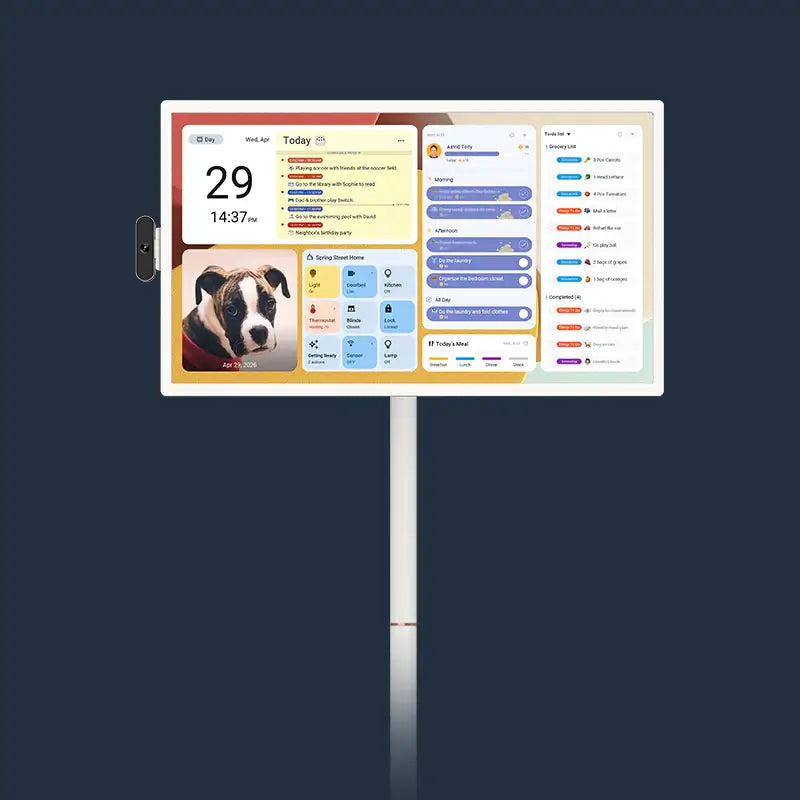
Our Apolosign 21.5-inch calendar can act as an optional common-area layer for families who need the evening plan, reminders, and countdowns visible in one shared place. It syncs with calendars like Google and Outlook, turns routine tasks into a points and rewards system, and includes a family message board for reminders and countdowns, the same kind of visual reminders and countdowns that support a wind-down chart. That value comes from persistence and shared access, not from any proven behavioral effect.
Paper or an ordinary timer may be enough
Choose the simpler cue, picture cards, or an ordinary timer when one child follows a stable sequence that rarely changes and only one parent manages it. Consider a shared display when several people in the household need to see or update the routine and the plan changes often enough that a static paper chart stops matching real evenings.
A family with one child and a settled bedtime usually does fine with paper and a kitchen timer. A family juggling two caregivers, shifting activities, and a routine that gets edited weekly is the one more likely to benefit from a shared screen. Either way, start with the smallest visible cue tonight, and look at our Apolosign 21.5-inch calendar only if keeping that information current and visible to everyone becomes the unresolved problem.
FAQs
What should I do if my child ignores the visual bedtime schedule?
Simplify the cue before adding more of it. Point to just the current step, remove extra pictures or words, and walk through the first action together for a few nights. If the format still gets ignored, try a different cue type, such as switching from a printed chart to a shared display, before assuming the method itself has failed.
How should we handle bedtime when the evening runs late?
Keep the familiar order but drop one optional step, such as a longer calm activity, instead of abandoning the whole sequence. Update the visible chart so the child sees the shorter version before the next transition begins, since a surprised child is more likely to push back than one who saw the change coming.
Where should we put a visual bedtime schedule?
Place it at the point where the transition actually begins, such as near the spot the child leaves the living room or in a shared hallway the whole family passes through. Keep only the current and next action prominent there, and save any full sequence view for a less busy wall or the family's shared display.