






A toddler and a tween cannot do the same chores, and trying to force one shared chore list is why age-gap sibling chores fall apart. The fix is to run two visible levels: short, supervised participation for the toddler and real household responsibility for the tween. Fairness comes from matching each child's contribution to what they can actually do right now, not from making the tasks look identical.
The rest of this guide breaks that two-level idea into specific tasks, shows when siblings can work together, and draws a firm line between a tween helping out and a tween babysitting.
Use Two Chore Levels, Not One Shared Standard
A single chore chart built for one age group will always fail the other child. Setting a daily routine for kids with visual schedules helps families give the toddler a short, supervised task and the tween a longer, more independent one, treating both as equally real contributions to the house.
Fairness in an age-gap household means comparable effort within each child's current ability, not equal difficulty or equal minutes. A toddler wiping a table for two minutes with help is pulling their weight the same way a tween is when they unload the dishwasher alone. Organizations like ZERO TO THREE recommend age-appropriate responsibilities broken into manageable steps, while HealthyChildren.org recommends a visible chore chart with realistic expectations for the whole family. The next sections build out what belongs on each level, when siblings can share a task, and how to keep the routine feeling fair as both kids grow.
Set the Toddler Level Around Short, Supervised Participation
A toddler's chore should take a minute or two, use one simple instruction, and happen with an adult nearby. Think participation, not completion: the goal is practice, not a finished job done alone.
Give a toddler a concrete, single-step task like putting napkins on the table, dropping toys in a bin, or carrying a light grocery item to the counter. These match the small, manageable chores suggested for 2- and 3-year-olds, and they work because the child can see the start and the finish. Say exactly what you want: "put a napkin by each plate" works better than "help set the table," because a toddler cannot break a vague instruction into steps yet.

Picture a family where the toddler puts stuffed animals in a basket while an adult vacuums the same room. The adult may need to fix the pile afterward, and that is fine. The task is too big when the toddler cannot follow the single instruction, loses interest within a minute, or has to handle something unsafe, like a hot pan or a knife. When that happens, shrink the task or hand it back to the adult and try again once the child is more familiar with it. Close supervision stays in place the whole time; a toddler's chore should never run unsupervised.
Set the Tween Level Around Real Household Work
A tween can take on one or two taught, multi-step chores that run independently once they know the steps. This is where the older child gets real responsibility, separate from anything involving the younger sibling's care.
HealthyChildren.org lists chores appropriate for kids around 11 to 12, including cleaning the kitchen, changing bedsheets, unloading the dishwasher, doing laundry, and cooking a simple meal with supervision. Treat that list as a menu, not a requirement. Pick one or two tasks the tween has actually been taught and can do safely, then let that responsibility stay steady from week to week so it becomes a real skill instead of a moving target.
Picture a tween who folds laundry and unloads the dishwasher every evening while a parent handles the toddler's bath and bedtime. That tween chore is a household job, not a parenting job. If a task's real purpose is watching, feeding, or otherwise managing the toddler, it belongs in a different category entirely, which the next sections cover directly.
Pair or Separate Chores Based on Capability and Adult Availability
Siblings should share a chore only when they are working on one project with distinct roles and an adult stays close enough to handle the toddler's part. Keep the chores separate whenever that adult presence is not there, or the shared task would quietly turn into the tween watching the younger child.
A paired chore works well for something like making a salad: the toddler tears lettuce into a bowl while the tween chops vegetables, and the adult stays in the kitchen the whole time. Rotate tasks between the kids only when both versions genuinely fit each child's ability; a rotation should never land the tween in a role that means supervising the toddler. Keep chores fully separate when the available adult cannot stay in the room, because at that point the "shared" chore stops being a chore and starts being childcare.
That distinction matters because a tween's help with a younger sibling is not the same as being responsible for that sibling. HealthyChildren.org notes that even at 11 or 12, a child watching a younger sibling should do so with an adult present at home, since maturity matters more than age alone. Short, optional help, like reading a book together or playing a game while a parent is in the house, is fine. Ongoing supervision, feeding, hygiene, medication, and transportation stay with an adult, not the tween, regardless of how capable that child seems.
Make Unequal Chores Visible and Explainable
Put both chore levels on one shared chart instead of running two separate systems, so the difference is something the kids can see and understand rather than compare in the abstract. When a child says it is not fair, explain the difference in ability and adjust the task if it genuinely no longer fits.
| Level | Type of contribution | Adult role | Adjust when |
|---|---|---|---|
| Toddler | Short, single-step task | Stays close, helps or finishes | Task is too long, unsafe, or loses the child's interest fast |
| Tween | Multi-step household job | Teaches once, checks in occasionally | Task is too easy, too hard, or needs an adult who isn't available |
A chart works as a visual reminder that keeps everyone on task, and spelling out what is expected daily versus weekly keeps the routine from feeling arbitrary. When a child complains, say the honest thing: the tasks are different because the kids are at different stages, and both of you are still contributing. Then check whether the complaint is really about fairness or about a task that has outgrown the child. Review both levels every few months, since a toddler's abilities move fast and a tween's chore should grow with them.
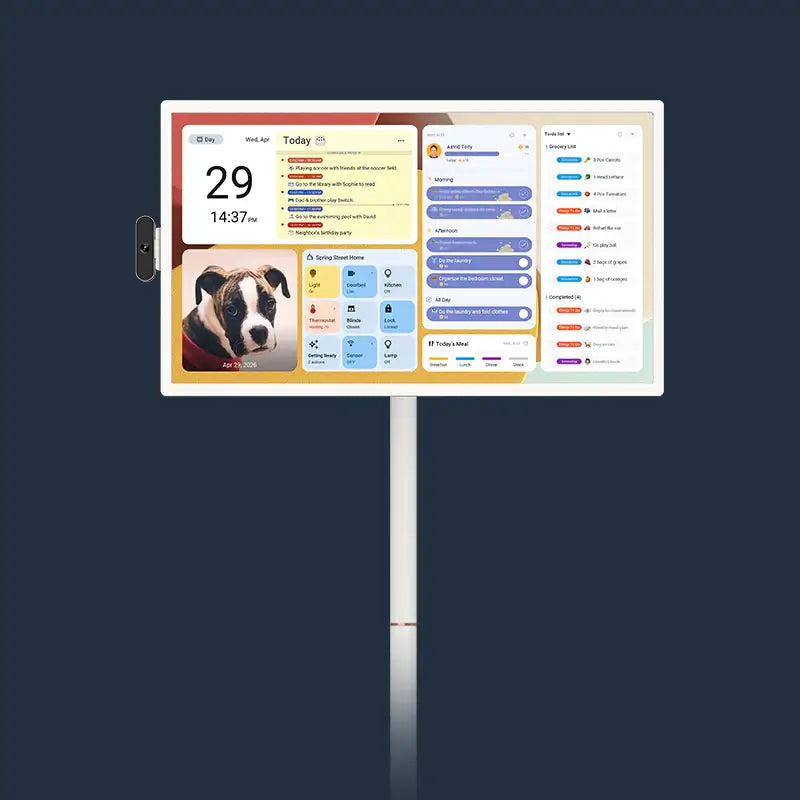
Families whose chart keeps sliding out of use often find it helpful to see how a wall-screen chore chart keeps tasks visible without extra paper, or to reset a chore system that has quietly stopped working.
Decide Whether a Shared Display Solves a Reminder Problem
A paper chart or your existing phone calendar is enough as long as the routine is stable and both kids can actually see it. Consider a shared display only when reminders keep getting missed, the routine changes often, or the family needs one common spot where both chore levels are visible at once.
If a bigger shared screen would solve that visibility gap, we offer two sizes built around family routines. The Apolosign 15.6-inch Digital Calendar syncs your family's calendars, turns chores into points and rewards through its Routines feature, and posts reminders on its Message Board, which suits a smaller wall or counter spot. The Apolosign 27-inch Digital Calendar offers the same calendar syncing, chore-and-reward Routines, and Message Board reminders on a larger 27-inch screen, which fits better when the family wants the chart readable from across the kitchen. Neither model changes how well a chore gets done; they are organizing tools, not a fix for a routine the family hasn't agreed on yet.

Families with an adult consistently free during chore time can lean on paired tasks and rotate more of the tween's work. Families where that adult presence is inconsistent should keep chores separate and hold the caregiving boundary firm regardless of how the routine is displayed. If missed reminders are the real friction point, our Digital Calendar collection is worth a look once the two-level chore plan itself is settled.
FAQs
Should a toddler and a tween have the same chores?
No. A toddler's ability and need for supervision are too different from a tween's for identical tasks to make sense. Give each child their own level, one built around short, supervised participation and one built around a taught household job, so both contributions count without needing to look alike.
How do you explain unequal chores fairly?
Tell the kids the tasks differ because their abilities differ, not because one child's contribution matters less. If a child insists a task is unfair, check first whether the task has actually become too easy, too hard, or dependent on help that isn't around, and adjust it if so instead of trying to match the two chore lists exactly.
Can a tween watch a toddler during chore time?
Brief help, like reading or playing together while an adult is home, is fine. Ongoing supervision, feeding, hygiene, and other care should stay with an adult even at 11 or 12, since maturity matters more than age alone. If no adult is available, keep the chores separate rather than asking the tween to fill that gap.
How often should age-gap chores be adjusted?
Adjust a task when it becomes clearly too easy, too hard, unsafe, too long, or dependent on adult help that isn't consistently there, rather than on a fixed schedule. Reviewing both levels every few months catches most of these shifts, since a toddler's skills and a tween's readiness for more responsibility tend to move faster than a static chart can track.