






There is no single best month to set up a shared digital family calendar. The better rule is to start before your household's biggest upcoming schedule change, whether that is a new school year, a sports season, or a shift in childcare. If missed appointments and mixed-up plans are already an active issue, the best month to begin is simply right now.
That timing rule matters more than waiting for a specific calendar page. Below, we compare the main seasonal windows families use, explain what makes a window workable, and walk through a setup routine you can start this week.
The Best Month Is the One Before Your Biggest Schedule Change
Pick the month right before your household's next real routine shift, not a fixed date on the calendar. A useful trigger is a concrete change: a new school year, a new sports season, a childcare switch, or a new work schedule that affects pickups and drop-offs.

An empty calendar with no upcoming events gives a family little reason to check it, so timing it just ahead of a busy stretch helps everyone build the habit while it still matters. If your household is already missing appointments, double-booking activities, or fielding the same "what time is that again" question every week, you do not need to wait for a seasonal cue. Start now, and keep the initial setup small enough that you can maintain it once the busy season hits.
How the Main Seasonal Windows Compare
Each seasonal window fits a different kind of household change, and none of them is universally best. Use the table below to match your situation to a window, then check the tradeoff before committing.
| Window | Best fit | Why it can work | Main drawback |
|---|---|---|---|
| New Year | Households doing a genuine routine reset | Fresh start motivation while the schedule is still light | Calendar can sit empty until regular activities restart |
| Back-to-school | Families where school, childcare, and activities all shift together | Creates the year's biggest jump in shared commitments | Many events land at once, so setup has to move fast |
| Spring activity season | Households adding sports, camps, or appointments mid-year | Matches the actual new commitment, not an arbitrary date | Existing school-year routine can make the calendar feel redundant |
| Summer schedule change | Families with shifting childcare, travel, or work hours | Captures a real disruption to the normal routine | Frequent changes can make the calendar go stale fast |
| Start now | Households with active missed appointments or unclear ownership | Fixes a live coordination problem right away | Requires agreement on upkeep without a natural "fresh start" cue |
The takeaway is straightforward: match the window to a real change in your household, not to the season that sounds most organized.

Why Household Changeover Matters More Than the Calendar Month
A workable setup window passes three checks: a real routine change, a rise in schedule volume, and enough family participation to keep it current. Skipping any one of them is why a calendar started at the "right" time can still fail.
Match the Setup to a Real Routine Change
Look for an actual shift, such as a new school schedule, a different work shift, a new sport, an upcoming trip, or a household member taking on a new responsibility. Without one of these, a shared calendar has nothing new to organize, and the household has less reason to check it regularly. No single transition always wins here; the right one depends on what is actually changing in your home.
Look for a Noticeable Rise in Schedule Volume
Choose a window before several recurring commitments arrive together, such as practices, pickups, appointments, and school events landing in the same weeks. A change involving only one or two new events may not justify overhauling how your family tracks its schedule. There is no fixed number of events that triggers the switch, but a visible jump in weekly commitments is the signal to watch for.
Leave Room for Family Participation
Before the busy period hits, the household needs time to add real events, decide who updates the calendar, and agree on how changes get communicated. A digital calendar setup routine still requires someone actively entering and maintaining information to stay useful, so setting it up during peak schedule pressure leaves little room to build that habit. If your household cannot agree on ownership yet, that is a sign the window needs more lead time, not a faster setup.

Start With a Small Shared Calendar Setup
Start with one shared calendar source and a short list of upcoming commitments, not an overwhelming, fully built-out system. Keeping the initial version small makes it easier for everyone to practice using it before you layer on extra features.
To begin, pick one shared calendar source everyone can check, such as Google, Apple, or Outlook, and add only the commitments you already know about for the next few weeks. Next, designate one person as the default updater for new events, set viewing and editing access for everyone who needs it, and agree on a simple communication habit, like a quick text, whenever a schedule change occurs.
Learn more about how a digital calendar can improve household organization once this basic routine is in place.
When an Online Calendar Is Enough, and When a Home Display Helps
An online shared calendar is often enough on its own; a home display becomes worth considering only when phones are not getting the schedule in front of the people who need it. The right choice depends on participation habits, not on which option sounds more modern.
An Online Shared Calendar May Be Enough
If everyone in the household already checks and updates their phone calendar reliably, a shared online calendar alone can cover most needs. This is also the better starting point for co-parents or family members living in different homes, since it works over the internet without needing a shared physical space. The deciding factor is whether people actually open and use their phone calendars, not which app or device category they use.
A Home Display Adds a Shared Viewing Layer
A home display is worth considering when children, caregivers, or other household members miss changes simply because they do not open the calendar app. Placing a screen somewhere high-traffic, like a kitchen or entryway, gives everyone a common view without anyone having to remember to check their phone. A display only adds visibility, though; it still depends on someone keeping the underlying shared calendar current. Learn more about when phone calendars stop being enough for a busy household.

Your Best Setup Window by Household Type
The right next step depends on which gap your household actually has: a coming schedule reset or a lack of shared visibility at home.
For Families Facing a Major Schedule Reset
If back-to-school, a new sports season, a childcare change, or a work schedule shift is approaching, start before that transition adds its full load of new commitments. Pick one shared source, load the events you already know about, and get everyone who will use it involved before the first busy week arrives. No single month is universally best here; the right time is simply before your specific reset.
For Families That Need a Visible Home Hub
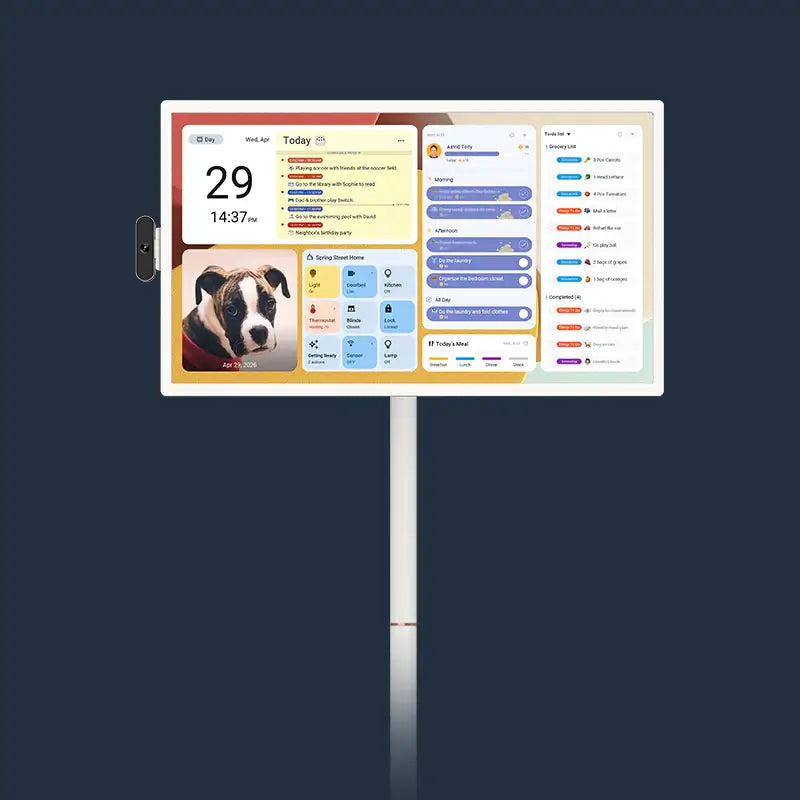
If your household already uses a shared calendar but people still miss updates because no one opens the app, the gap is visibility, not scheduling. In that case, we built the Apolosign 27" Digital Calendar to give households an always-visible option: it syncs with Google, Apple, and Outlook calendars, turns chores into points and rewards, and mounts on a wall so the schedule stays in view. It fits households whose calendar accounts are already in one of those ecosystems and whose main problem is getting everyone to actually see the schedule, not households that still need to agree on a basic update routine first.
FAQs
Should I wait until January to start a shared family calendar?
No. January is one option, not a requirement. Pick the next real transition in your household's routine, whether that falls in January or another month, or start now if missed appointments and mixed-up plans are already a problem.
How far ahead should I set up a shared family calendar?
Begin while you already know what is coming up and before your household's next high-conflict, high-commitment period starts. There is no fixed number of days that works for every family; the goal is enough lead time to load real events and adjust who updates what before things get busy.
Can co-parents in different homes use a shared digital family calendar?
Yes, as long as both homes agree on one shared source and clear access roles for viewing and editing. A home display adds visibility inside one household, but it does not replace the shared online calendar that both homes need to access and keep current.