





A workable evening routine covers four things: pack the backpack, lay out clothes and shoes, gather next-day gear, and land everything at one launchpad by the door. If you want to know how to set up an evening checklist to prep school bags and clothes, aim to fit this into about 15 minutes after dinner.
That target serves as a practical guide rather than a rigid rule, since bag sizes, gear, and family schedules will shape your exact timing.
The 15-Minute Night-Before School Checklist
Think of this as one short sequence rather than four separate chores. Here is the order that keeps it moving:
- Pack the backpack and close it.
- Lay out a full outfit, including both shoes.
- Gather lunch items, activity gear, and any device that needs charging.
- Move everything to the launchpad by the door.
Pack the backpack
Start by pulling out anything that does not belong tomorrow, like today's snack wrapper or a permission slip that already got signed. Add homework, folders, and any school device that needs to charge overnight. Practicing night-before school prep works best when the bag ends the step zipped and sitting in its assigned spot, not left open on a bed or table.
Lay out clothes and shoes
Pick a complete outfit, including socks and shoes, not just a shirt and pants. If a child tends to stall over clothing choices, set out two acceptable outfits ahead of time so the decision is quick instead of open-ended. The step ends with both shoes sitting together where the child will get dressed or walk out the door.

Gather next-day gear
This is where lunch items, activity equipment, and a school computer land if one is needed. Keep anything unusual, like a permission slip or a specific sports jersey, sitting in plain sight instead of trusting anyone to remember it. The goal is for these next-day extras to end up right beside the backpack or in a shared gear spot, not scattered across three rooms.
Finish at the launchpad
Bring the backpack, shoes, an outer layer, and the gathered gear to the spot the family actually walks through on the way out. Take one last look for the backpack, any device, lunch, and activity gear together in that one place. When this step is done right, nothing departure-critical is still sitting in a bedroom, the kitchen counter, or the back seat of the car.
Make the Routine Easy for Kids to Own
The same four steps work better once each child can see what "done" looks like without asking an adult. That means adjusting the prompts and the amount of help, not assigning the whole routine at once and hoping it sticks.
Use a visible starting cue
Write or show each action as one concrete step with an obvious finish point, like "backpack by the door" instead of "get ready for school." For a child who is not yet reading well, using a simple photo checklist provides clear visual cues through clothing, shoes, and bag packing just as reliably as a written list would for an older sibling. Keep the prompt short enough to glance at instead of needing an adult to translate it every night.
Offer choices without reopening the task
When clothing decisions cause delay, offering two preselected outfit choices keeps the child's sense of control without turning the routine into a full closet search. Once a choice is made, move straight to laying it out. Skipping this boundary and opening the whole closet tends to turn a five-minute step into a much longer one.
Match help to the unfinished part
Let a child finish whatever part they can manage, whether that is zipping the bag or placing both shoes together, and step in only for the piece that is stuck. That might mean helping pack a lunch one night and just double-checking a backpack the next. The shared outcome stays the same either way: tomorrow's essentials are staged before bedtime, no matter how much of the work the adult ends up doing.

Build a Launchpad With Fixed Homes
A checklist only stays useful if every item has one place to land, not a rotating set of possible spots. That fixed location is what turns four steps into a routine instead of a nightly search.
Choose homes on the departure path
Put backpacks, shoes, outer layers, and next-day gear somewhere the family already walks through before leaving, like a hallway, mudroom, or spot near the front door. A hook, basket, shelf, or a floor zone marked with tape all work, as long as it does not require a special trip to reach. Our guide to a five-minute entryway launchpad covers how to set up a school bag launchpad with clear zones for shoes and gear if you want a deeper walkthrough of this step.
Separate personal and shared gear
Give each child their own clearly marked spot for a backpack and shoes so items do not get mixed up in a multi-child household. Keep one shared zone for things like lunch supplies or a family schedule note that more than one person needs. Done well, the final check becomes a quick glance across both zones instead of opening every bag to see what is missing.
Shorten the Routine on Busy Nights
Not every evening allows for the full sequence, and that is fine as long as the departure-critical core stays intact. The goal on a tight night is to protect the backpack, clothes, and launchpad steps while moving anything extra earlier or handing it off.
Compress activity-night prep
When practice or a lesson eats into the evening, stage the special gear as soon as the child gets home instead of waiting until after dinner. Keep the bedtime pass limited to what tomorrow's morning actually needs. If the activity gear has to leave with the family again, put it straight into the shared zone so it is not searched for twice.
Run multiple children in parallel
Give each child their own finish point and let them handle their own backpack and clothes while an adult focuses on shared items like lunch supplies. One shared final glance covers anything schedule-specific, rather than repeating a full check for every child. This keeps a two- or three-kid household from turning the routine into three separate 15-minute blocks.
Keep one variable schedule line
Add only the single item that changes tomorrow's normal setup, like an early dismissal, a field trip form, or unusual supplies for a special class. Remove that line once the event passes instead of leaving it as permanent clutter on the checklist. This keeps the core routine stable while still covering whatever is different about that particular week.

Add a Visible Reminder Layer Only If It Solves a Real Gap
Not every household needs a screen to make this routine work. The right next layer depends on whether the problem is remembering the sequence or seeing the schedule across the whole family.
Use a paper or photo checklist first
If the sequence itself is the sticking point and everyone already knows where items belong, a printed or photo checklist taped up at the launchpad solves that without adding any new system. It works because the prompt and the finish point sit in the same place, so there is nothing extra to check or log in. This option needs no account, subscription, or device to keep working every night.
Add a shared screen when visibility is the gap
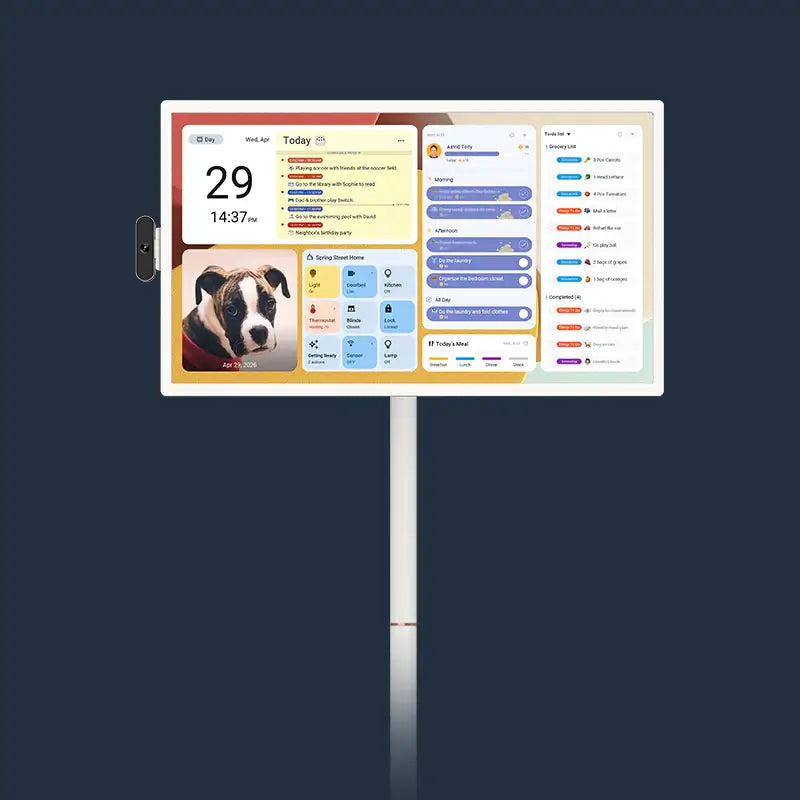
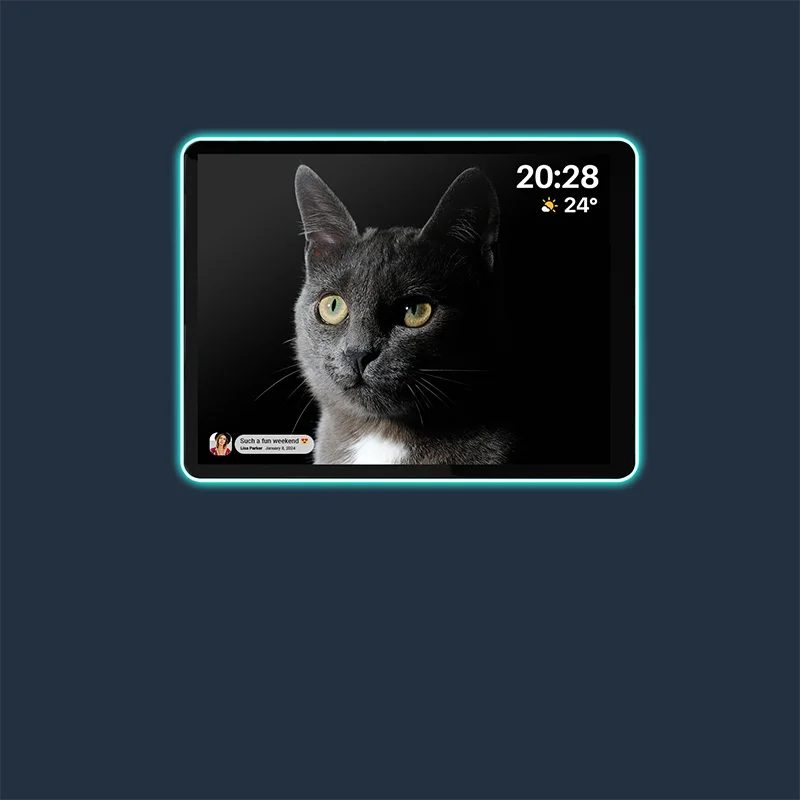
A shared display becomes worth considering when the actual problem is that schedules, reminders, or routine prompts are scattered across different phones and rooms instead of one place everyone can see. Our 15.6-inch digital calendar syncs Apple, Google, and Outlook calendars in one spot, turns routines into a points-based checklist, and lets us post reminders or countdowns on a shared message board. It supports the evening routine by giving the whole household one visible place to check, but it does not replace fixed homes for gear or a clear task sequence, so it works best as an addition rather than a starting point.
Test and Simplify the Routine
The fastest way to fix a routine that keeps running long is to find where it stalls, not to bolt on more reminders. One short trial run usually shows exactly where that is.

Run one short trial
Try the simplest version of the four steps on an ordinary night and watch for where things slow down, whether that is searching for a missing shoe, a vague instruction, or an item that really belongs in an earlier step. Treat that first run as feedback about the setup, not as a test of how motivated the child is. Most slowdowns point to a location or a step that needs to change, not a reason to add another layer on top.
Remove friction before adding reminders
If the same item gets forgotten every week, move its home closer to the launchpad instead of adding a reminder about it. If an instruction keeps causing confusion, shorten it into one visible action instead of a multi-part explanation. Keep the adjusted routine stable for a few nights so the household can actually tell whether the change helped before making another one.
Choose the Lightest Version That Fits Your Home
A household that mainly needs a physical home for gear does well with a paper or photo checklist and a fixed launchpad, and nothing more. A household where the real gap is shared visibility across phones, calendars, and multiple caregivers is the one where a shared display earns its place, since the display solves a visibility problem rather than a missing-location problem.
The condition worth remembering is simple: fix the homes and the sequence first, and only add technology where the gap is about seeing the schedule, not about where things belong. Tonight's next step is to pick the launchpad, write down the four core actions, and run the routine once to see where it actually stalls. If shared visibility turns out to be the missing piece for your family, our Apolosign 15.6" Digital Calendar is worth a look as a low-pressure next step, alongside the paper checklist you already have working.
FAQs
What should a child do if a required school item is missing?
Set the missing item aside in one visible spot near the launchpad, like a basket by the door, instead of stopping the whole routine to search for it. Flag it for an adult to resolve before bedtime if it is something like a signed form or a specific piece of gear. The rest of the checklist can continue while that one item gets handled separately.
Does the evening checklist need to be the same every night?
The four core steps should stay consistent, but add one variable line for whatever is different that day, like an early dismissal or a special class that needs extra supplies. Update or remove that single line as schedules change instead of rewriting the whole routine. This keeps the habit stable while still covering real schedule shifts.
Does every school item need to be packed the night before?
No. Daily essentials like the backpack, homework, and tomorrow's outfit belong in the nightly routine, while occasional items like a sports jersey or a field trip form fit better as a one-time addition to the variable line. Treating every possible item as a nightly task tends to make the checklist longer than it needs to be and harder to keep up with.