


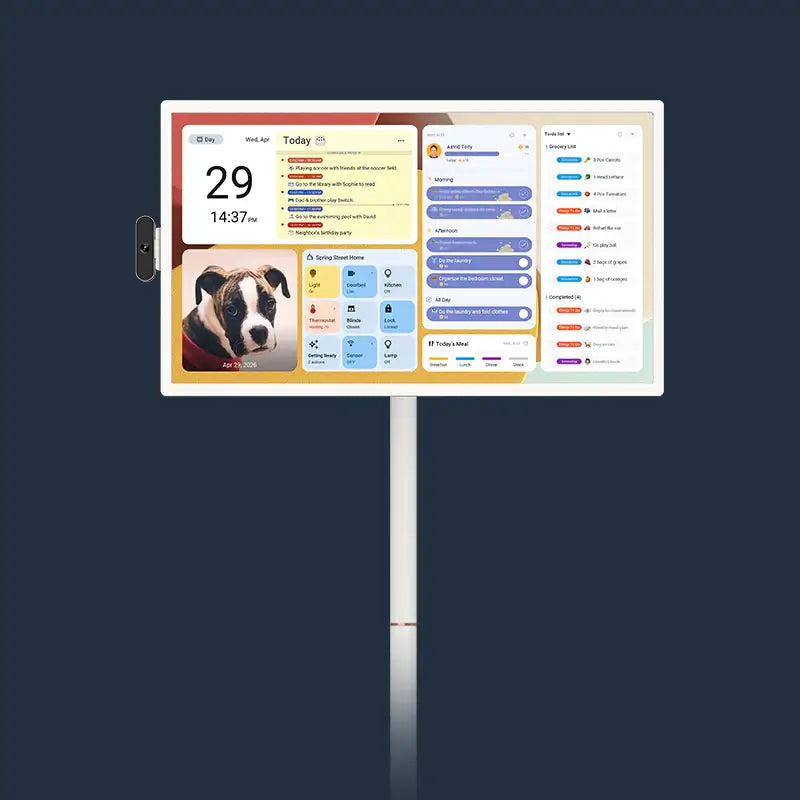
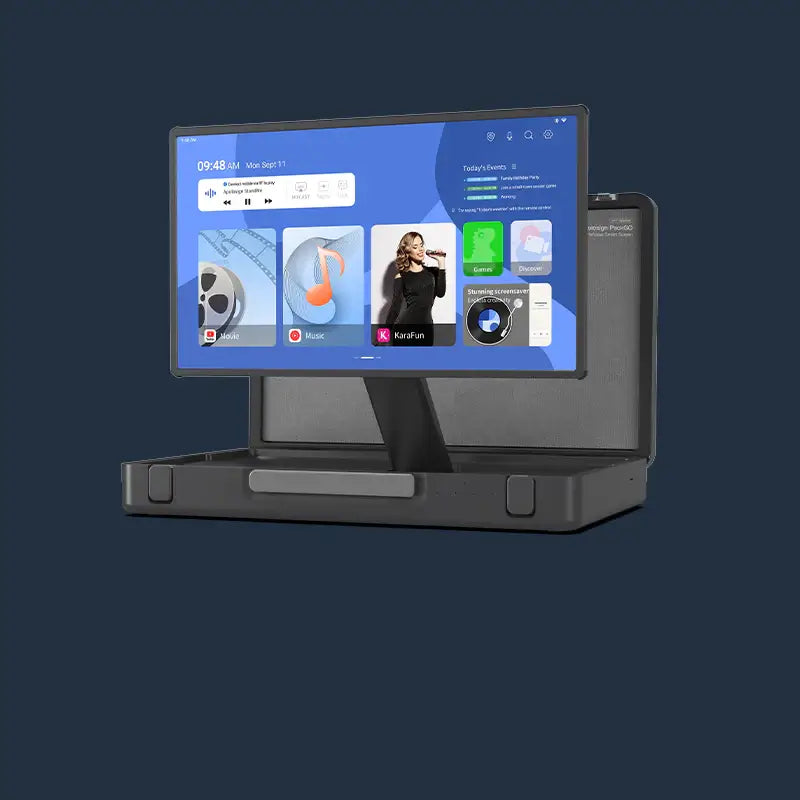
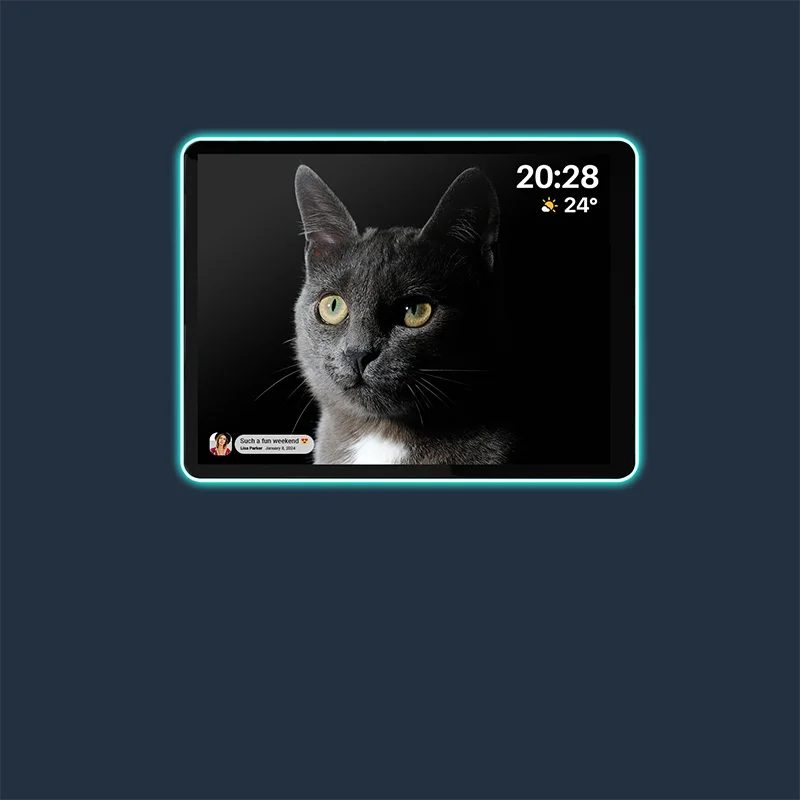


Your family is a likely fit for a digital wall calendar if you already keep a shared online calendar, miss updates because nobody checks phones at the same time, and someone is willing to keep it current. If you want to know how to know if your family will use a digital calendar display, buying the screen first usually will not create those habits. The sections below help you sort out where your household actually stands before you spend the money.
Is Your Family Ready for a Digital Wall Calendar?
Readiness comes down to three things: an existing shared schedule, a real gap in home visibility, and a person willing to own updates. The matrix below sorts most households into one of three categories, each with a next step instead of a guess.
| Household signal | Likely interpretation | Next step |
|---|---|---|
| Already share a digital calendar, phones get missed at home, one person can own updates | Likely fit | Move to the trial below before buying |
| Willing to try a shared calendar, but no owner or location picked yet | Possible fit | Agree on ownership and placement first |
| No shared calendar habit, or phone calendars already work fine at home | Poor fit for now | Fix the habit gap, or skip the purchase |
This is a practical self-check, not a lab-tested score. A family amplifies an existing calendar habit with a screen; the screen rarely builds that habit from nothing. Once you know your category, the next question is whether a wall display actually solves a problem your phones do not.

Does a Wall Display Solve a Real Visibility Gap?
A wall calendar takes your existing online schedule and puts it on a screen everyone can see without opening a phone. That only matters if your family has a real at-home visibility gap in the first place.
When the wall adds a useful visibility layer
The value shows up in routines like morning departures, school pickup, or dinner planning, when several people need the same information without pulling out a phone. As one review of these displays put it, these devices take an existing calendar, whether Google, Apple, or a work account, and place it on a shared room screen. That is a convenience layer, not a fix for missing or incomplete calendar entries.
When phones may already be enough
If everyone in your house checks their phone calendar regularly and the schedule stays current, a wall display may not add much. Buying one because it looks convenient, without a specific visibility problem to solve, is how a screen ends up ignored on the wall. Before moving forward, name the exact gap: who misses what, and when.
Who Will Keep the Family Calendar Current?
A wall display only shows what someone puts into it. Before buying, decide who owns updates and how the rest of the family will know the schedule changed.
Give the calendar one clear owner
Pick one person to keep shared events current, plus a backup for when they are busy or away. Decide which calendar holds household-wide events, and keep personal appointments separate if privacy matters to your family. Without this step, one household manager can end up carrying yet another system instead of gaining shared visibility.
Agree how changes reach everyone
A few simple rules keep the schedule trustworthy:
- Put planned events, like practices or appointments, directly on the shared calendar.
- Use your family's normal text thread or conversation for urgent, last-minute changes.
- Decide ahead of time who is allowed to add or edit events.
A display cannot fix an unclear process for getting information into it in the first place. If your household has not solved this yet, that is worth resolving before you buy anything, and our routine reset guide walks through a simple weekly reset for exactly this problem.

Which Household Scenarios Make a Wall Calendar Worth Using?
Some households get real daily use out of a shared display, and others do not need one. The difference usually comes down to how specific and repeated the communication gap is.
Busy school-and-work mornings
A shared display can fit well when several people need the day's schedule before leaving the house. It works best placed on a natural path, like a kitchen or entryway, where people already pass by each morning. Before buying, name the exact morning question the screen would answer, such as who has practice today or when the carpool leaves.
Chores, meals, and household routines
If your communication gap is about more than appointments, like chores, meals, or shared to-do lists, a display becomes worth considering only if the family will actually use those extra features. Pick one routine, such as a weekly meal plan or a chore list, and test it rather than trying to load every possible feature at once.
Two homes or no real visibility gap
Co-parenting or two-home households need an agreed shared calendar and a clear reason for a display in each home, not just a copy of the same information. If everyone already checks phones reliably, or the proposed spot for a screen would not get noticed, stick with what you have. One sponsored review of a wall display used in a single kitchen for a few weeks noted it worked well for that household's routine, but that represents one family's disclosed experience, not proof that every kitchen setup will play out the same way. Name your household's specific gap before adding hardware.

Run a Simple Trial Before You Buy
You can test the habit with tools you already own, before spending money on a screen. This tells you more than any spec sheet will.
Test the habit with what you already use
- Pick the shared calendar and the one household routine you want the display to support, such as morning logistics or weekly meals.
- Place a temporary calendar view, or even a printed snapshot, where the future screen would hang.
- Assign the person who would maintain it, and watch for a week whether the family naturally looks at that spot.
Use the result to choose a next step
Move forward if the trial shows a real visibility gap and an owner who can keep up with it without much friction. Adjust your plan, meaning the location, the owner, or the calendar process itself, if the idea is useful but not quite working yet. Pause the purchase if the family does not notice a gap, or if nobody steps up to maintain it. A genuinely current schedule in a high-traffic spot is what makes a display useful in practice, not the screen itself.

When Apolosign Matches the Need
Once you have identified a real visibility or routine gap, a specific product feature set can address it. We built our 21.5-inch smart display with exactly that kind of household in mind.
Match the model to the problem
If your family juggles calendars across Google Calendar, Outlook, iCloud, Yahoo, and Cozi, our Apolosign 21.5" Digital Calendar auto-syncs with all of them, so nobody has to re-enter events by hand. For households whose gap goes beyond scheduling, its 10-point touch screen supports routines with a points and rewards system, color-coded to-do lists, daily meal planning, and a family message board with reminders. A large touch screen alone will not close a communication gap; it matters only for families whose identified need actually includes those functions.
Make the final choice without overpromising
Your readiness decision from the earlier sections stands on its own, separate from any product match. One outside review noted that the 21.5-inch model's syncing worked well once set up, but also flagged setup effort before everything runs smoothly, so plan to spend some time connecting accounts rather than expecting instant results. If your trial confirmed a real gap and you have an owner ready to maintain it, our 21.5-inch digital display is a reasonable next step to consider.
FAQs
Will a digital wall calendar replace phone reminders?
Not entirely. A wall display gives the household a shared view of the schedule, but individual phone alerts still matter for private appointments, time-sensitive reminders, or anything you need to see while away from home. The two work together rather than one replacing the other.
What if our family still uses a paper calendar?
Start by building a shared digital calendar first and see whether someone actually keeps it updated before adding a screen. A wall display shows whatever gets entered into it; it will not generate the events for you. If a digital habit does not stick on a phone or computer first, a wall screen is unlikely to change that on its own.
Does an Apolosign calendar 21.5 inches or larger include a desktop stand?
No. The 21.5-inch and larger Apolosign models ship with a wall-mount bracket rather than a desktop stand, based on their listed package contents. If you plan to set the calendar on a counter or desk instead of mounting it, check the specific product page for your chosen size before buying, since smaller models may be set up differently.