


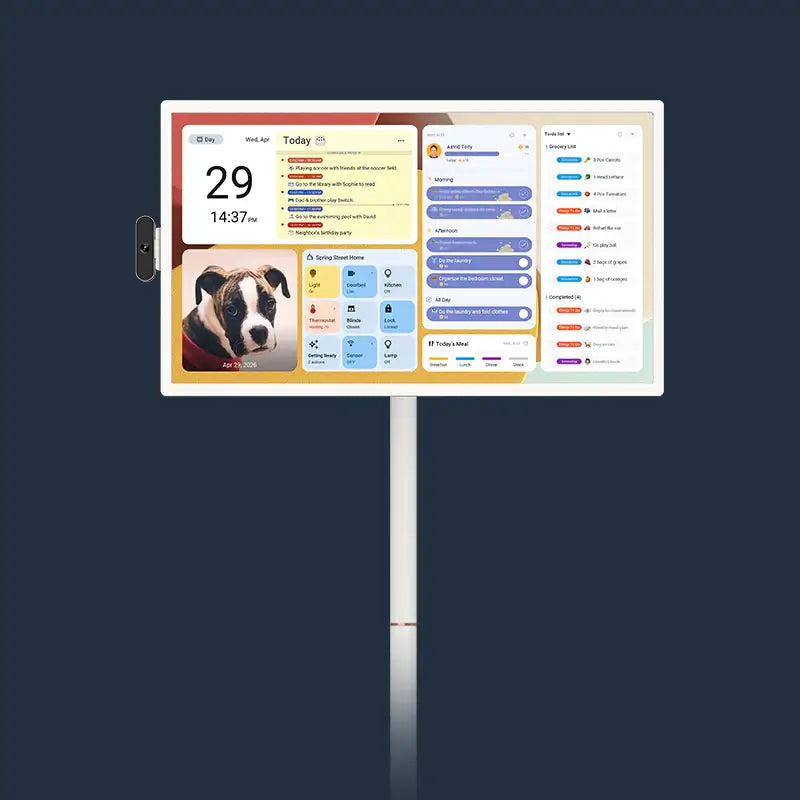




Getting tweens and teens engaged in weekly family planning comes down to one habit: hold a short, predictable check-in where each kid enters their own study blocks, social plans, and ride needs, then agrees on who updates what during the week. The meeting works because it gives teens real ownership instead of a schedule handed down from a parent. Add a shared calendar view, adjust how much control tweens versus teens get, and assign update duties, and most households can run this in twenty to thirty minutes a week.
The biggest shift is not a new app or display. It is moving from telling kids the plan to building it together, one entry at a time.
Run a short weekly family check-in
The check-in works best as a fixed, protected slot on the calendar, not a meeting that only happens when things go wrong. Keep it short, let everyone speak, and save discipline for another time.
- Pick one recurring time each week and put it on the family calendar so it is not competing with homework or practice.
- Open the shared view of the coming week together before anyone talks.
- Have each tween or teen add at least one commitment themselves, whether that is a study block, a game, or a hangout.
- Ask each person to flag any ride, pickup, or timing need tied to their plans.
- Let everyone speak without interruption or criticism, one person at a time.
- Write down any agreement the family makes, from who is driving to what time homework starts.
- Close within twenty to thirty minutes unless the family wants to keep talking.
Guidance on how to run family meetings emphasizes goal setting, turn taking, and recording written agreements, which provides the exact structure this ritual needs. The point of the first few weeks is not a perfect calendar. It is getting each adolescent to make one real entry and see it show up on the shared plan.

Move from telling teens the plan to sharing ownership
Stop filling in the calendar for your teen and start asking what belongs on it. That single change turns a parent-run schedule into one the household actually maintains together.
Offer choices instead of assigning every block
Before you enter anything, ask which study blocks, social plans, and activities need to be on the shared week. Let your teen decide how much detail to add, while the family agrees on what everyone needs to know for rides and timing, like a start time and a location.
Let ownership show up in the calendar
Have your teen enter the event or hand you the details while you support only where it is genuinely needed, like confirming a pickup time. Treat that entry as their planning contribution, not as your approval of every choice behind it. A concrete decision, like whether a study block conflicts with a ride, makes the ownership feel real instead of symbolic.
Adjust the ritual for tweens, teens, and privacy
Tweens usually need more coaching, while teens can handle more independent control. Build the amount of help and privacy into the agreement so the calendar does not feel like a monitoring tool.
Give tweens coaching and a smaller lane
Offer a tween two or three choices instead of an open blank calendar, and help translate an activity like soccer practice into a real entry with a time and location. Let them practice owning one recurring commitment, such as a weekly lesson, while you check the practical details until they get the habit down.
Give teens control with clear boundaries
Let teens decide how much to label personal plans, as long as the family gets the timing, location, and transportation details it needs to coordinate. Keep your boundaries focused on shared logistics, safety-related information, and any change that affects someone else's ride or plans, not on every personal detail of a teen's social life.

Make schedule maintenance a shared responsibility
The calendar stops being a parent-only chore once each adolescent owns one visible piece of it. Assign the upkeep job by name instead of relying on a vague reminder to check the calendar.
Assign one visible upkeep job to each adolescent
Give each teen or tween responsibility for entering their own commitments and flagging conflicts before the week starts, rather than leaving every update to whoever manages the household calendar. A named owner for recurring activities, like practice or a weekly job, keeps that entry from falling back on a parent by default. Our family schedule workflow guide walks through one way to split that upkeep across the household.
Handle changes as part of the ritual
Whoever changes a plan updates the shared calendar and tells anyone whose ride, pickup, or meal time is affected. A short rule like this means a revised plan does not sit unrecorded until the next weekly meeting, and nobody finds out about a change by accident.
When a teen ignores the digital calendar, fix the habit before the tool
Start with the behavior, not the technology. A teen who skips the calendar might not be refusing to participate; they might just not be opening the app.
Start with the missed behavior
Tie the calendar to a decision your teen already cares about, like whether they get a ride to practice or how much study time is left before a test. Ask them to check it while planning that specific thing, instead of reminding them in general to "look at the calendar."
Add a visible layer when phones are not enough
If the household keeps missing plans because nobody opens the app, a shared display can help. As testing of digital wall calendars shows, pulling an existing Google, Apple, or Microsoft calendar onto a shared screen lets the household glance at events without pulling out a phone, though two-way sync behavior can vary by setup. Visibility does not create schedule information by itself, so the entry and update responsibility from the earlier section still applies.

Choose phone-first or continuously visible planning
Pick a phone-first shared calendar when your household already checks it, and add a visible display only when people keep missing plans that require opening an app. This is a household behavior decision first, not a shopping decision.
Keep a phone-first shared calendar when the habit works
If your teens already open the shared calendar and enter changes without repeated reminders, keep the setup simple. The real problem in most stuck households is unclear ownership, not a lack of visibility, so adding hardware would not fix it.
Add a visible household display when the week needs to be seen
When family members need to glance at the week in a high-traffic room instead of unlocking a phone, a continuously visible display fits better. Our Apolosign 27-inch Digital Calendar syncs Google, Apple, and Outlook calendars, includes a Message Board for reminders and countdowns, and has a one-swipe privacy cover for shared spaces. Those are listed capabilities, not proof that a teen will start updating the calendar; someone in the household still has to enter and maintain the information.
Keep the family planning system small enough to use
Put the next check-in on the calendar this week and give one adolescent a named update job before considering any new hardware. If your household already notices and uses a phone-based calendar, keep that setup.
When plans regularly slip through because family members bypass their phones, adding a shared display creates a visible hub in common spaces. You can look at our digital calendar collection to find an option that matches your household room layout.
FAQs
How can I involve a teen who says the weekly meeting is pointless?
Let them pick one agenda item or one commitment to enter first, and keep that first meeting focused on a decision that actually affects them, like a ride or a study block. A reluctant teen is more likely to stay engaged when the meeting solves their problem instead of only organizing everyone else's.
What schedule details should teens share with the family?
Share timing, location, ride needs, and availability on the family view, since that is what the household needs to coordinate rides and meals. Personal or social details can stay private as long as they do not change a shared commitment like a pickup time or a family obligation.
What should happen when plans change after the weekly check-in?
Whoever changes the plan is responsible for updating the shared calendar and telling anyone affected, such as a driver or a sibling waiting on a ride. This keeps a mid-week change from waiting until the next meeting to become visible to the rest of the household.