




To create a home workout corner in a shared room, size the zone around the moves in one real workout, not a standard room size. Place it where the room's everyday paths still work. If you follow along on a screen, make sure you can see it from your workout spots.
Then decide where every workout item goes when you finish. A corner you can set up and clear the same way each time is one that can share a room with daily life.
Choose a zone around your workout, not a standard size
Your routine decides how much floor you need, so start there. The two steps below take you from a list of moves to a tested spot on the floor.
Start with the moves in one real session
Pick one workout you actually plan to do this week. Then write down:
- Moves that travel side to side, like lateral lunges or shuffles
- Moves that travel forward and back, like walking lunges
- Floor moves where you lie down or kneel on a mat
- Any equipment you need within reach
These moves set the edges of your zone. For example, ACE's beginner at-home routine calls for room to move side to side and back and forth. It says 6 to 10 feet is adequate for that routine and notes the exercises can also be done standing in place. That number fits that one routine. A jump rope session or a mat-only stretch will need its own trial.
Mark and try a temporary zone
Clear clutter from the spot you picked, then mark the edges with painter's tape or a mat. Home gym planners at Junckers suggest using tape to mark equipment zones so you can see the layout before you commit.
Now do the moves from your list inside the marks. If you step past the tape, bump furniture, or cut a move short, shift or stretch the zone and try again. If every move fits, you have a first draft. It is not final yet, because the room's other uses still need a turn. If you want a picture of how a corner can look, HGTV shows a living-room workout corner set up in a small space.

Test everyday routes and the follow-along view
A zone that fits your workout can still block the room for everyone else. These two checks show whether your draft layout works for the whole household.
Keep the room's usual paths usable
Test the zone with the room in its normal setup, not after you have pushed everything aside. Walk the paths people use every day: door to couch, bed to closet, desk to hallway. Do this while your mat and gear are out.
If any path now runs through your zone or forces people to step over gear, move the zone toward a wall or corner and walk the paths again. The goal is simple to observe. Someone can pass through the room while you work out without stopping you or tripping on anything.
Check the view from workout positions
This step only matters if you follow a video. Skip it for sessions without a screen.
Stand, kneel, and lie down in the spots your routine uses, and look at the screen from each one. Floor moves change your eye line, so a screen that looks fine standing may be out of sight when you are on your back. If you can't see it, angle the screen or shift your zone. Keep the screen and any cord out of the paths you just walked.
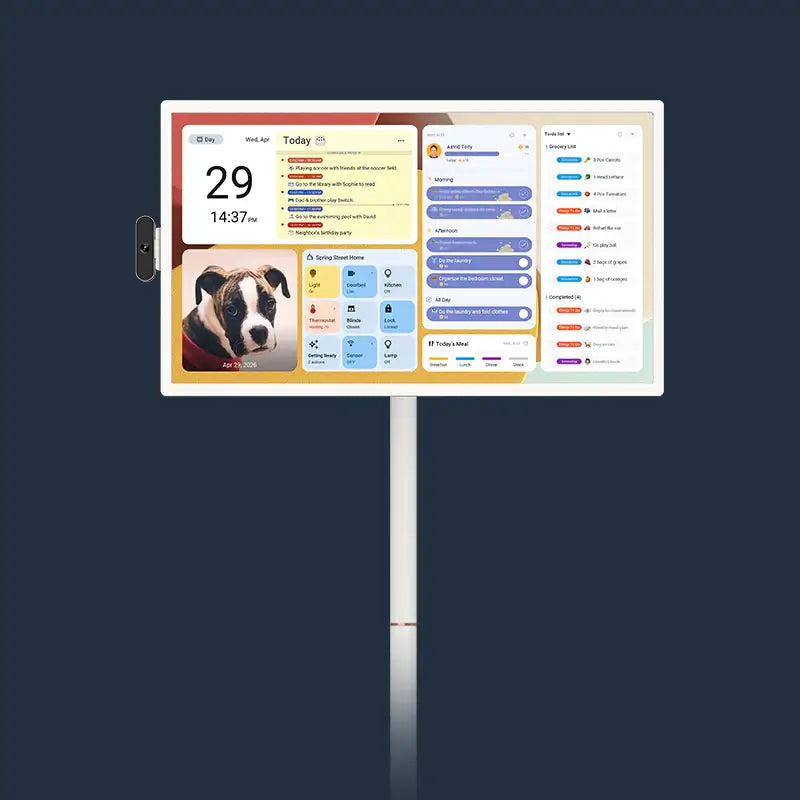
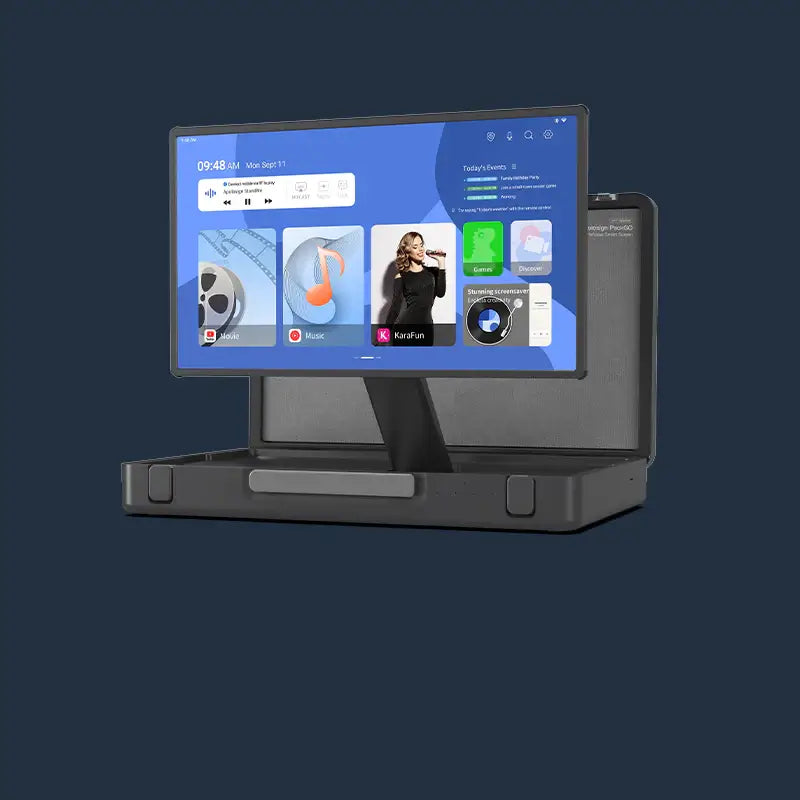
Some households bring the screen to the workout spot instead of working out in front of the main TV. If that fits your room, our portable TV lineup and smart portable TV are options to look at, and these portable display setup ideas show other ways people move a screen around the home.

Give workout items a home and reset the room
Gear left out is what turns a shared room into a gym nobody asked for. A fixed storage spot and a short reset keep the room ready for its next use.
Choose a place for the items you use
Name a spot for each item in your routine before your next session. Only plan for items you really use. Here is an illustrative example:
| Item | Possible home |
|---|---|
| Rolled mat | Behind a door or under the bed |
| Small weights or bands | A bin on a low shelf |
| Towel and water bottle | A hook or basket near the zone |
Pick spots close to the zone so setup takes seconds. Choose places that don't crowd the room's main use, like a nightstand you need or a desk you work at.
Repeat the same reset after each session
Use the same order every time so the reset becomes a habit:
- Put each workout item back in its assigned home.
- Return any chairs, rugs, or tables you moved.
- Look over the room and leave it ready for its next use, like movie night, sleep, or work.
The result you want: no gear on the floor and the room looking the way the household expects.
Choose the version that fits how the room is used
How your household uses the room decides whether you clear the corner each time or leave some of it in place.
In a busy living room where people pass through all day, favor a home workout corner you can fully clear in a few minutes. A bedroom or home office with fewer people coming through may let you keep a mat or bin in place, as long as it doesn't get in the way of sleep or work. Either way, your next step is the same. Do one real workout in your chosen zone, then run the full reset, and adjust anything that felt slow or got in someone's way.
FAQs
What if my workouts change from week to week?
Mark your zone for the routine that needs the most room. Smaller sessions will fit inside it. When you add a new workout with bigger moves, run a quick trial inside the tape before your first full session.
What if there's no storage space in the shared room?
Store workout items in a nearby closet, hallway, or another room, and carry them in for each session. Keep the kit small enough to move in one trip so setup stays quick.
How do we handle it when someone else needs the room at workout time?
Agree on regular time slots for workouts, like early morning or after dinner. A setup you can clear in minutes also makes it easier to switch plans when the room is needed.
Can kids join workouts in the same corner?
Yes, but check that the zone has room for everyone's moves, and give kids a spot where they won't bump into you. For ideas on getting kids active at home, see these family fitness habit ideas.