






Learning how to help middle schoolers wake up and get ready on their own comes down to handing off tasks in stages instead of pulling back all at once. Start with a calm planning conversation, move prep to the night before, give your child a short checklist, and keep one limited backup while the new routine gets tested. This approach lets a tween practice waking up, getting dressed, and packing a bag independently while you stay close enough to catch a real problem.
The shift works best when everyone agrees on what "ready to go" actually looks like before the first trial morning arrives.
Start With a Collaborative Handoff
Move from constant prompting to shared ownership by using a three-stage handoff: plan the routine together, let your child lead while you observe, then step back to a single agreed backup. This sequence gives your middle schooler real practice without leaving them stranded on day one.
Agree on the Finish Line
Decide together what "ready to leave" means in your house. Sit down when things are calm, not during the morning rush, and talk through each step your child will need to finish before walking out the door. Let your middle schooler help write the checklist wording and choose the one backup you will use, since kids follow plans they helped build more consistently than plans handed to them. Discussing the routine ahead of time and prioritizing the essential steps gives your child clear steps, visual schedule, and specific praise to work from instead of guesswork.
Step Back in Stages
Reduce your involvement one layer at a time instead of all at once. Start by pointing to the checklist instead of giving verbal reminders, then move to a single agreed backup action once your child shows they can follow the sequence. Praise specific completed steps, such as packing the bag the night before, rather than general comments like "good job this morning." A calm planning conversation and a small-steps checklist work better than removing every support in one week, because your child needs time to practice each stage before you remove the next layer of help.

Give Each Morning Task One Owner
Assign one clear owner to each part of the morning so nobody is guessing who is responsible. Your middle schooler owns waking up, hygiene, getting dressed, eating breakfast on time, and packing their bag, while you own the agreed backup, transportation limits, and any household-wide schedule changes.
This split matters when you want to help middle schoolers wake up and get ready on their own, because a task with two owners usually gets done by whichever person nags first, and that person is almost always the parent. Give your child full ownership of these personal tasks:
- Waking up and getting out of bed
- Brushing teeth, washing up, and getting dressed
- Eating breakfast within the agreed time window
- Packing homework, gear, and lunch into the school bag
- Checking the clock and leaving on time
You keep responsibility for things your child cannot control alone, such as when the family car leaves, whether a sibling's schedule affects departure time, and the one backup action you agreed to use. Keeping this split visible, even as a short note near the checklist, helps everyone remember who does what without a morning debate.
Use a Night-Before and Morning Checklist
Give your middle schooler one checklist that covers the night before and the morning itself, with a clear owner and backup for each stage. This is the single tool your family needs; skip building a second chart or app for the same routine.
Putting belongings where they are easy to find the night before and gradually letting your child take charge of the sequence supports easy-to-find belongings and a gradual step-back from constant parent involvement. Keep the actual times specific to your family's school start and adjust the table as needed.
| Timing | Child owns | Parent backup |
|---|---|---|
| Night before | Lay out clothes, pack bag, set alarm | Check that alarm is set correctly the first few nights |
| Wake-up | Get out of bed when alarm sounds | One agreed wake-up call if alarm fails |
| Hygiene and dressing | Brush teeth, wash up, get dressed | None, unless a health issue arises |
| Breakfast | Eat within the agreed time window | Have food available and ready |
| Final bag check | Confirm homework, gear, and lunch are packed | None once routine is established |
| Departure | Leave by the agreed time | Handle transportation and timing only |
Keep the wording short enough that your child can glance at it without reading a paragraph first.

Handle Alarms, Distraction, and Rushing Without Taking Over
Match your response to where the routine actually breaks down. A child who sleeps through the alarm needs a different fix than a child who wakes up fine but loses time afterward.
If They Sleep Through the Alarm
Keep one agreed wake-up call as a temporary backup instead of returning to repeated calls every few minutes. Have your child check the alarm's volume, location, and whether it was set correctly the night before, since a missed alarm is often a setup problem rather than a sign the child cannot handle mornings. If the pattern continues after a couple of weeks, revisit the plan together and adjust the alarm setup or bedtime rather than escalating the morning into a daily conflict.
If They Get Distracted After Waking
Trim the checklist down to the essential school-ready steps and move as many decisions as possible to the night before, including clothing and what goes in the bag. Use one visible time cue, like a clock near the bathroom mirror, and point back to the checklist instead of narrating each step out loud. A shorter, clearer sequence reduces the number of decision points where a distractible tween can lose track of time.
Set Parent Backups and Natural Consequences
Autonomy needs a known boundary, not unlimited rescue and not a sudden withdrawal of all help. Decide before the trial starts exactly what you will do when something goes wrong, and stick to that one action.
Set One Backup Rule
Name the single thing you will do, such as one wake-up call or one reminder about the final bag check, and be clear about what you will no longer repeat, such as multiple verbal prompts. Apply the same rule across both parents or caregivers so your middle schooler gets one consistent signal instead of different rules depending on who is home.
Let Ordinary Consequences Teach
Allow a reasonable school-morning consequence, like being marked late or missing a few minutes of breakfast, to stand when your child had a clear plan and no immediate safety, health, or transportation issue caused the problem. Talk through what happened afterward and adjust the checklist if a step turned out to be unclear or unrealistic. Treat the outcome as information for the next trial period, not as a punishment, so the conversation stays focused on fixing the routine instead of assigning blame.

Decide Whether a Visible Calendar Helps
Add a shared visible calendar only if the actual problem is that people miss changing schedule information, not because a digital tool feels like an upgrade. Some households need a checklist and nothing else.
When a Visible Shared Cue Earns Its Place
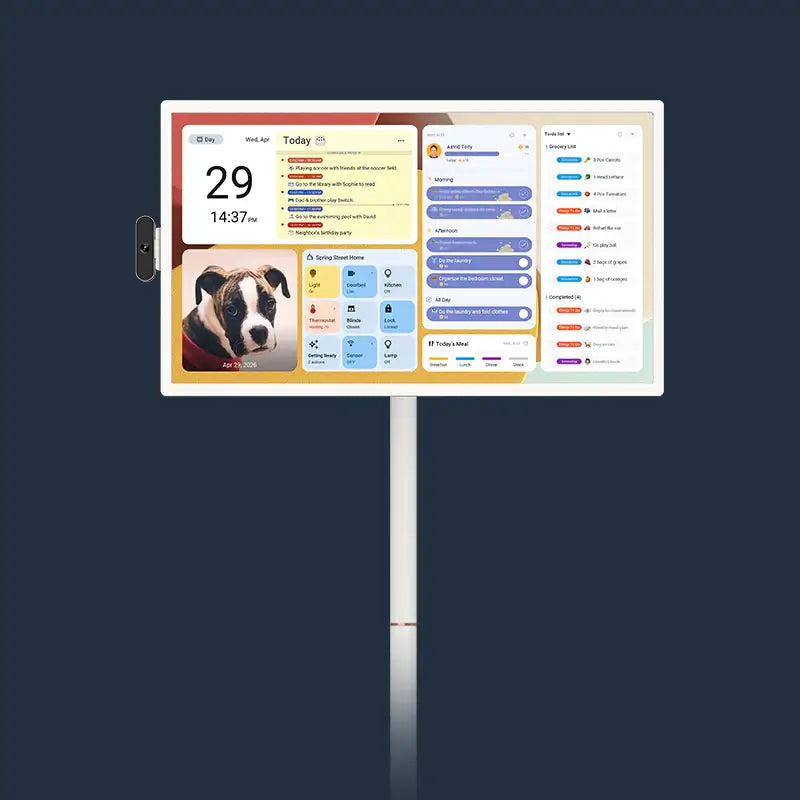
A visible shared calendar earns a spot when several people need the same changing information, such as different school events, sports pickups, or a shared custody schedule, and a phone-based calendar keeps getting missed. A fixed display in a shared space, like a kitchen or hallway, makes that day's schedule easier to notice without opening an app. Our Apolosign 27" 4K Digital Calendar lists family calendar auto-sync with Apple, Google, and Outlook, plus a Message Board for reminders and countdowns, and a Routines feature that turns chores into points and rewards. These are useful for keeping the household's shared schedule visible, but the display does not replace your child's personal morning checklist or take over ownership of any task.
When a Checklist Is Enough
Stick with the simpler checklist when your school schedule is stable, one caregiver already manages updates without trouble, and your child can see and use the written checklist consistently. Adding a screen will not fix a routine problem that is really about an unclear checklist or too many steps crammed into one morning. If your family wants more background on how a shared calendar changes daily coordination before deciding, our guide on a shared family calendar walks through how visibility affects household routines beyond just school mornings.
Choose the Routine That Fits Your Household
Match your next step to what your family actually needs. If your school schedule is steady and your middle schooler already checks the written list without much reminding, you likely need no additional tool beyond the checklist you just built.
If several people need the same changing schedule information and phone reminders keep getting missed, a shared visible display is worth considering alongside the checklist, not instead of it. We built our digital calendar collection for households in that second situation. Either way, agree tonight on the first trial version of your checklist and the one backup rule you will use, then review how it went after a week.
FAQs
How long does it take to shift a middle schooler to a more independent morning routine?
There is no fixed number of days that works for every family. Start with one manageable task, such as packing the bag the night before, and review how consistently your child follows through after a short trial before adding the next task.
What should I do if my middle schooler sleeps through the alarm?
Check the alarm setup first, including its volume, placement, and whether it was set correctly the night before, since a missed alarm is often a setup issue rather than a sign your child cannot manage mornings. Keep one limited backup wake-up call during the trial period instead of going back to repeated calls.
Does our family need a digital calendar for a morning routine?
A written checklist is enough when your school schedule stays stable and your child can see and use it consistently. Consider a visible shared calendar when multiple caregivers or changing activities make phone-only reminders easy to miss.
Can a visible digital calendar replace my child's alarm?
No. The listed features on a shared calendar display cover schedule syncing, reminders, and countdowns, not a guaranteed wake-up alarm. Keep a dependable alarm method separate from the household display, and use the display as a visible cue for the day's schedule instead.