


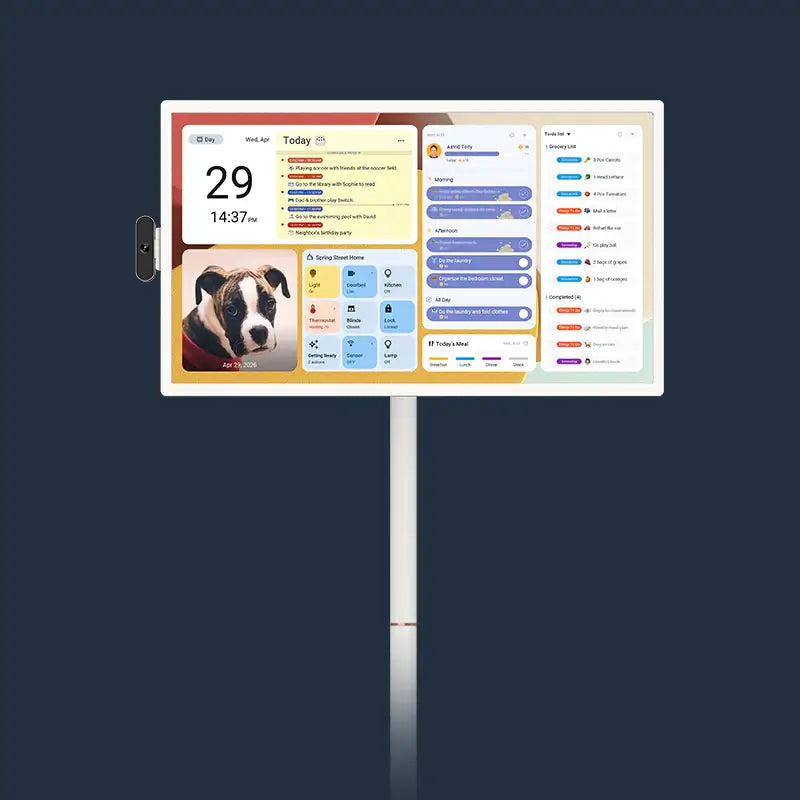




If you’re a parent, you probably know the feeling: there never seem to be enough hours in the day.
Mornings are filled with getting the kids up, making breakfast, packing school bags, and getting everyone out the door. Evenings bring another round of homework, showers, backpacks, and reminders about tomorrow.
Sometimes, the exhausting part isn’t how much there is to do. It’s having to remember, remind, and coordinate everything.
Family time management isn’t about filling every minute. It’s about creating a little more structure so your home feels less rushed and more manageable.

01 | Why Family Time Management Feels So Hard
Most families have different schedules constantly competing for attention. Parents have work commitments, while kids have school, homework, sports, and extracurricular activities. Weekends bring errands, appointments, and family plans.
The problem is that these schedules are often scattered across work calendars, phone notes, school messages, and memory.
One parent ends up remembering everything, while the rest of the family waits to be reminded.
The solution isn’t necessarily a stricter schedule. It’s having a shared view of family life.
02 | Build a Shared Family Calendar Everyone Can See
Start by putting the things that matter in one place: school events, practices, appointments, work commitments, family activities, and anything that needs advance preparation.
The goal is simple: everyone should be able to see what’s coming next.
Instead of keeping the family schedule inside one parent’s head, create a shared family time map that everyone can check and contribute to.
For families who prefer digital tools, a shared calendar can make this especially easy.
03 | Start with a 10-Minute Family Schedule Reset
You do not need to reorganize the whole household in one day. Start with a quick family schedule reset.
In 10 minutes, write down:
- School start and pickup times
- Work schedules or parent commitments
- Homework time
- Sports, clubs, lessons, and activities
- Chores each child is responsible for
- Dinner plans for the week
- Bedtime or next-day preparation routines
Then ask one simple question:
“What does everyone need to see this week?”
This gives your family a starting point without making the system feel overwhelming.

What Should You Put on a Shared Family Calendar?
A shared family calendar works best when it includes the information your household actually needs to act on each day.
Useful items include:
- School schedules and pickup times
- Work schedules or caregiver availability
- Homework and reading time
- Sports practices, lessons, and clubs
- Medical appointments and school events
- Chores and recurring household tasks
- Meal plans and grocery reminders
- Morning routines and bedtime routines
- Weekend plans and family activities
- Preparation tasks, such as packing bags or charging devices
The calendar does not need to include every small detail. Start with the items that usually cause confusion, forgotten tasks, or repeated reminders.
04 | Help Kids Build Time Management Skills with Shared Tasks
Family time management shouldn’t stay entirely on the parents’ shoulders.
As children grow, they can gradually take responsibility for things like packing their school bags, completing homework, cleaning up, or preparing for the next day.
A points-based reward system can make this process more engaging. Kids can earn points for agreed-upon tasks and work toward rewards chosen by the family.
The goal isn’t the reward itself. It’s helping children understand:
Set a task → complete it → see the result → build a habit.
Over time, parents can move from constant reminders to simply helping children check their own schedules and take ownership of what needs to be done.

05 | Use Meal Planning to Reduce Last-Minute Family Stress
Family organization isn’t only about appointments and activities. There’s also the daily question:
“What are we having for dinner?”
Making that decision at the last minute can mean extra planning, grocery runs, and mental effort.
A simple weekly meal plan can help. Decide what the family will eat each day and keep the plan visible throughout the week.
Some digital family calendars, including Apolosign, allow meal planning to sit alongside the family schedule.
Once the meals are planned, creating a grocery list becomes much easier. You can identify the ingredients you need ahead of time rather than figuring everything out at the store.
The workflow is simple:
Plan the meals → make the grocery list → prepare ahead → reduce last-minute decisions.
It’s not about turning family life into a project-management system. It’s about eliminating a few small decisions that quietly consume mental energy every day.

06 | Leave Breathing Room in Your Family Schedule
Good family time management also means leaving room for the unexpected.
Kids take longer to get ready. Traffic happens. Appointments run late. Someone forgets something at home.
If every minute is scheduled, even a small change can throw off the entire day.
Leave some breathing room between activities, and spend about 10 minutes each week looking ahead as a family.
Use this quick weekly check-in to keep family time management simple:
- What important events are happening this week?
- Which days look especially busy?
- Who needs a ride or pickup?
- What homework, projects, or school items need attention?
- What chores should each child handle?
- What meals can we plan ahead?
- What needs to be packed, bought, signed, or prepared?
- Where do we need to leave extra time?
This short conversation can help turn scattered reminders into a shared plan.
Common Family Time Management Mistakes to Avoid
Even a good family organization system can become hard to maintain if it is too complicated. Watch out for these common mistakes:
-
Adding too many details too soon: Start with the most important schedules and responsibilities before adding smaller tasks.
-
Making one parent manage everything: A shared calendar works best when the whole household learns to check it.
-
Forgetting buffer time: Leave space between activities so small delays do not create stress.
-
Using rewards without clear expectations: Children should know exactly which task earns points and what progress looks like.
-
Not updating the calendar: A family calendar only works if it reflects real life. Review it weekly and adjust when plans change.
The best family time management system is not the most detailed one. It is the one your family can actually keep using.
07 | Keep Your Family Organization System Simple
At its best, a family time-management system connects four things:
- Schedules — knowing what’s happening and when.
- Tasks — knowing what needs to be done and who is responsible.
- Rewards — helping children track progress and build habits.
- Everyday life — planning meals, groceries, and recurring household tasks.
A digital calendar can bring many of these pieces together, but the tool itself isn’t the most important part. The system needs to be simple enough that everyone will actually use it.
Cost matters, too. With Apolosign Digital Calendar, core family organization features such as shared schedules, color-coded family views, points-based rewards, meal planning, and grocery lists are currently available without an additional monthly subscription fee. For families comparing digital calendars, that can make Apolosign a practical family calendar without subscription-based access to everyday organization tools.

08 | Less Nagging, More Quality Time Together
Family time management isn’t really about making your household more productive. It is about cutting down unnecessary chaos caused by forgotten plans, spontaneous last-minute choices, and constant repeating reminders.
Instead of one parent carrying every family’s schedule in their head, responsibility gets distributed across the whole household. Instead of nagging children through every small chore, parents guide kids toward independent time-management skills. Instead of debating dinner ideas each night, plans are already laid out ahead of time.
Household life will never run perfectly smoothly. Kids will still misremember things. Plans will shift. Surprises will keep popping up. But a shared view of what lies ahead makes those disruptions much easier to navigate—and that’s exactly what Apolosign Digital Calendar is designed to do.
If you’re tired of being the family’s only reminder, ready to turn scattered schedules into a unified family time map, and eager to swap constant nagging for more quality time with your loved ones, it’s time to take the first step. Explore Apolosign today—with all core family organization features available without a monthly subscription, you can start building a calmer, more connected household right away. Stop managing every minute, and start cherishing the moments that truly matter.
FAQ
What is family time management?
Family time management means organizing schedules, routines, tasks, meals, and responsibilities so the household can function with less confusion and fewer repeated reminders. It is not about scheduling every minute, but about making important information easier for everyone to see and follow.
How can a shared family calendar help parents?
A shared family calendar helps parents put school events, work schedules, activities, chores, appointments, meals, and routines in one visible place. This can reduce the need for one parent to remember everything and repeat the same reminders throughout the day.
How do I reduce nagging at home?
Start by making expectations visible. Instead of repeating instructions verbally, use a shared schedule, task list, or routine chart that children can check. Then praise specific effort, such as checking the calendar or completing a task without being reminded.
What should be included in a family calendar?
A family calendar can include school schedules, pickup times, activities, appointments, homework, chores, meal plans, grocery reminders, morning routines, bedtime routines, and family events. Start with the items that create the most confusion or last-minute stress.
Can kids use a family calendar?
Yes. A shared family calendar can help children understand what is happening next and gradually take more responsibility for homework, chores, packing bags, or preparing for the next day. Younger children may benefit from color coding and simple visual cues.
How often should families review their schedule?
Many families benefit from a short weekly check-in. Spend about 10 minutes reviewing the week ahead, identifying busy days, assigning responsibilities, and planning meals or preparation tasks.