


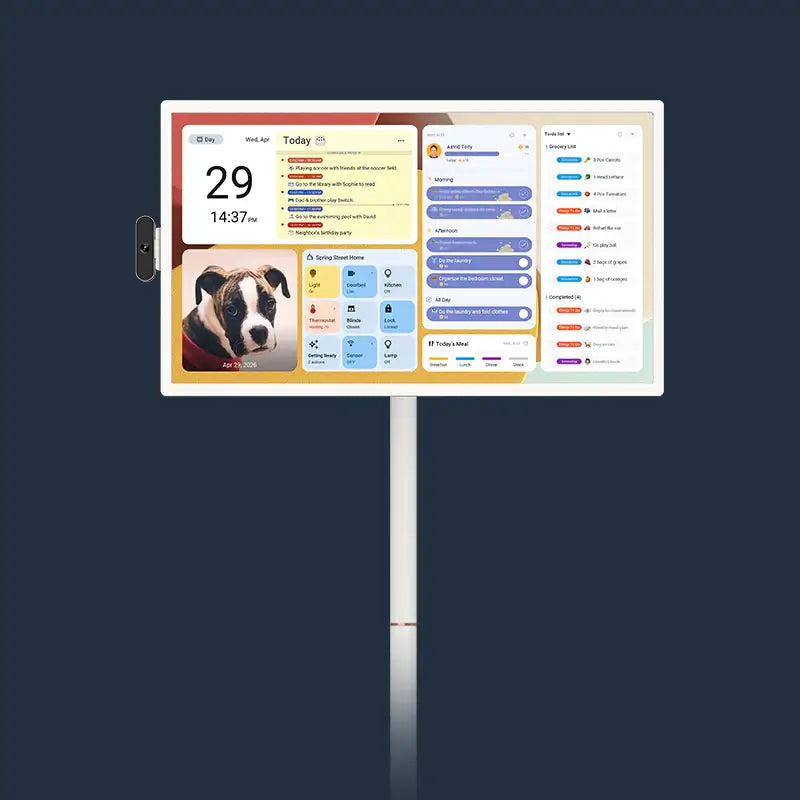
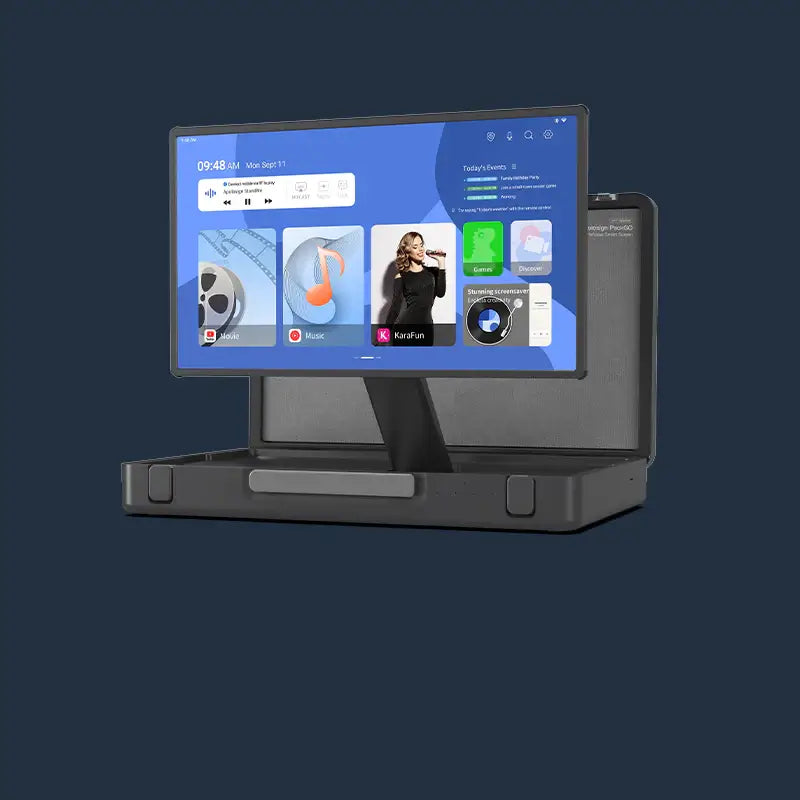
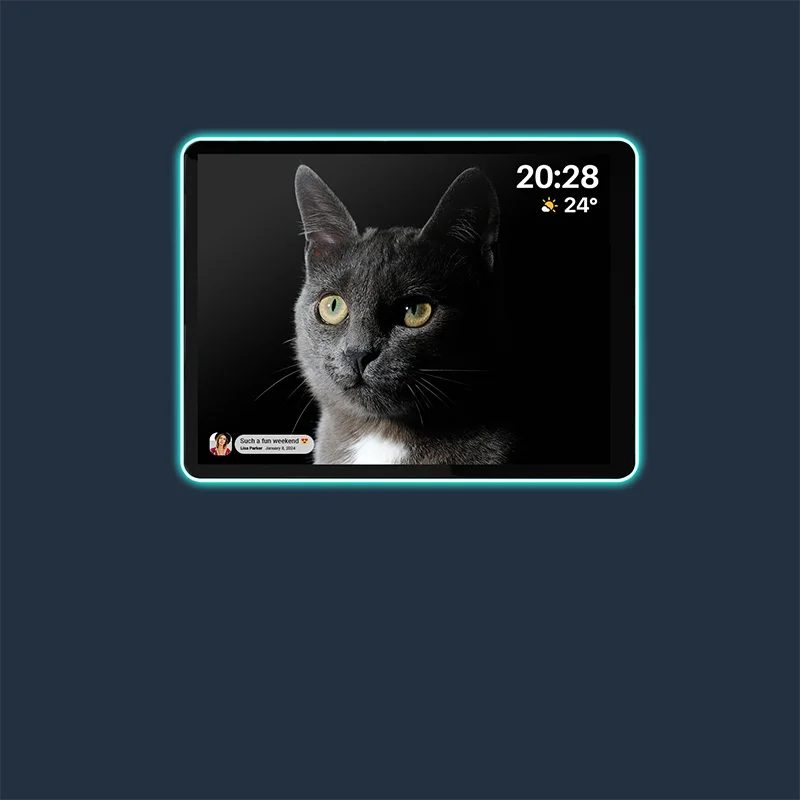


From school schedules and homework to chores, meals, and after-school activities, a digital family calendar can give parents and children a shared, visual way to understand what needs to happen each day.
“What's happening today?”
“Who is picking up the kids?”
“When do I have soccer practice?”
“Did you finish your homework?”
For many parents, these questions are part of everyday life. Family schedules can become complicated quickly. School, work, extracurricular activities, appointments, homework, chores, meals, and bedtime routines all compete for attention. Parents often end up carrying much of the mental load—remembering schedules, checking apps, sending reminders, and telling children what they need to do next.
The problem isn't necessarily that families don't have calendars.
The problem is that family schedules are often scattered across different places and devices.
One parent may use Google Calendar, another may use Outlook, a child may have a school schedule in an email, and activities may be shared through different apps. Important reminders may even end up on a piece of paper on the refrigerator.
A digital family calendar offers another approach: put the family's most important information into one shared, visible space.
For families who want a dedicated shared display, a digital family calendar such as Apolosign Digital Calendar can bring schedules, routines, chores, and reminders into one place at home.

What Is a Digital Family Calendar?
A digital family calendar is a shared digital display designed to help households organize schedules, routines, tasks, activities, and everyday responsibilities.
Unlike a traditional paper calendar, a digital calendar can be updated dynamically and may sync with calendars that a family already uses.
More importantly, a family calendar is designed around shared visibility.
Instead of one person checking a calendar on their phone and then telling everyone else what is happening, the schedule can be visible to the entire household.
Families can use a digital family calendar for:
- School schedules
- Homework
- Sports and extracurricular activities
- Appointments
- Household chores
- Meal planning
- Morning and bedtime routines
- Family events
- Reminders and tasks
The goal isn't to schedule every minute of the day.
It's to make important information easier to see, understand, and act on.
Why Families Need a Shared Digital Calendar
One of the biggest advantages of a shared family schedule is that it can reduce the amount of information parents have to repeatedly communicate.
Consider the difference between these two situations.
Parent:
“It's time to start your homework.”
Calendar:
4:00 — Homework
4:45 — Break
5:00 — Soccer
The second approach gives children an opportunity to see what is coming next without waiting for a parent to announce it.
Over time, this can create an important shift:
Parent reminds → Child follows
toward:
Child checks → Child understands → Child acts
That doesn't happen immediately. A digital calendar isn't a magic solution for time management.
But it can provide a consistent visual cue that helps children practice understanding schedules and transitions.

Phone Calendar vs. Digital Family Calendar: What’s the Difference?
The table below highlights the main differences between a personal phone calendar and a shared family calendar display.
A phone calendar is an excellent tool for managing personal appointments. A digital family calendar serves a different purpose: making shared family information visible at home.
| Feature | Phone / Calendar App | Digital Family Calendar |
|---|---|---|
| Calendar Management | Mainly personal schedules | Shared family schedules |
| Calendar Sync | Viewed on an individual device | Can bring multiple calendars into one display |
| Schedule Visibility | Requires opening an app | Designed for shared, at-a-glance viewing |
| Recurring Routines | Events and reminders | Recurring family routines can stay visible |
| Chores & Tasks | Often handled through reminders or separate apps | Can be displayed with the family schedule |
| Homework | Usually managed on an individual device | Can become part of a child's daily routine |
| Meal Planning | May require another app or list | Can be incorporated into the family schedule |
| Family Overview | Focuses on the user's schedule | Shows the household's schedule in one place |
| Child Participation | Requires access to a device | Children can check the shared display |
If the schedule only needs to serve one person, a phone calendar may be enough. If the schedule needs to guide the whole household, a digital family calendar can be more useful.
In simple terms:
A phone calendar helps individuals manage their time. A digital family calendar helps the household see and coordinate time together.
How to Sync Family Schedules in One Digital Calendar
Buying a digital calendar is only the beginning. The real value comes from how the family uses it.
Step 1: Gather Your Existing Calendars
Start by identifying where your family's schedules currently live.
For example:
- Parent 1's calendar
- Parent 2's calendar
- School calendar
- Sports and activities
- Medical or other appointments
- Family events
You don't need to reorganize everything at once.
First, simply identify where the information is.
Step 2: Sync the Important Calendars
If your digital family calendar supports third-party synchronization, connect the calendars your family already uses.
Google Calendar, Apple/iCloud Calendar, and Outlook are common examples.
The goal is not to create another calendar that parents have to maintain.
The goal is to bring existing information into one shared view.
Step 3: Organize by Simple Categories
You might use categories such as:
School | Activities | Homework | Family | Appointments
Color coding can also make schedules easier to understand, particularly for children.
Step 4: Put the Calendar Where Everyone Can See It
A shared calendar works best when it is actually shared.
Consider placing the display somewhere the family naturally passes through or spends time, such as:
- Kitchen
- Dining area
- Entryway
- Family room
The principle is simple:
If everyone can see it, everyone has a chance to use it.
How to Create a Visual Family Calendar Everyone Can Follow
A useful family calendar shouldn't look like a wall of information.
The most important activities should be easy to recognize at a glance.
For example:
TODAY
8:00 — School
3:30 — Get Home
4:00 — Homework
4:45 — Break
5:00 — Soccer
6:30 — Dinner
7:30 — Prepare for Tomorrow
8:30 — Bedtime
This kind of visual sequence helps children understand more than just what they need to do.
It helps answer:
“What happens next?”
For younger children, predictable transitions can be particularly helpful.
Everyday Ways Families Can Use a Digital Family Calendar
A digital family calendar can support more than appointments. Families can use it throughout the day to create a shared rhythm at home.
For example:
- Before school: show the morning routine, lunch reminders, and what needs to go in the backpack.
- After school: display homework time, breaks, activities, chores, and dinner.
- Before bedtime: remind children to pack their backpack, charge devices, and prepare clothes for the next day.
- On weekends: show sports games, family plans, grocery lists, meal planning, and household projects.
- During busy seasons: keep school events, parent work schedules, appointments, and extracurricular activities visible in one place.
The more visible the schedule is, the easier it becomes for children and parents to understand what is happening next.
How to Build Kids’ Routines with a Digital Family Calendar
A schedule tells a child when something happens.
A routine creates a predictable sequence.
For example:
Get Home → Snack → Homework → Dinner → Bedtime
Rather than creating a complicated plan with dozens of tasks, start with three to five consistent daily anchors.
Once the routine becomes familiar, additional responsibilities can be added.
Let Children Have Some Ownership
Routines don't have to be completely controlled by parents.
Small choices can give children a sense of participation.
For example:
“Would you rather do reading or math first?”
Or:
“What kind of break helps you focus?”
The parent still provides the structure, but the child has some control within that structure.
Break Large Tasks Into Smaller Steps
Instead of:
Finish Homework
try:
Get Books → Math → Break → Reading → Check Work → Pack Backpack
Breaking a large task into smaller actions can make it easier for a child to understand where to start.
Focus on Progress, Not Just Completion
Perhaps the most important part of building a routine is positive feedback.
Don't only notice whether the task was completed.
Notice the effort behind it.
For example:
“I noticed you checked the calendar and started your homework without me reminding you.”
That kind of feedback connects:
Effort → Progress → Achievement → Confidence
The goal isn't for children to depend on rewards or reminders forever.
The goal is to help them gradually develop confidence in managing their own routines.
Should You Use Rewards for Chores and Kids’ Routines?
For some families, a simple rewards system can make routines more motivating.
Rewards don't necessarily have to mean buying something.
They could include:
- Choosing a family movie
- Choosing a weekend activity
- Extra time for a favorite activity
- Choosing a family meal
The important part is helping children connect:
Effort → Progress → Achievement
Some digital family calendars include built-in points and rewards systems, allowing parents to assign points to chores, routines, or other responsibilities.
This can create a simple cycle:
Complete a task → Earn points → See progress → Receive encouragement
Over time, the goal is not to make children dependent on rewards. Instead, rewards can help make progress visible while children are developing new habits.
Who Should Use a Digital Family Calendar?
A digital family calendar isn't necessarily useful for every household.
It may be particularly helpful for families with:
- Young children
- Multiple children
- Busy school schedules
- Frequent extracurricular activities
- Different parent work schedules
- Homework and chores to manage
- Regular morning or bedtime routines
- A preference for visual organization
| Family Type | Digital Family Calendar |
|---|---|
| Individuals with simple schedules | ⭐⭐ |
| Couples with few shared activities | ⭐⭐⭐ |
| Families with young children | ⭐⭐⭐⭐⭐ |
| Families with multiple children | ⭐⭐⭐⭐⭐ |
| Busy families with extracurricular activities | ⭐⭐⭐⭐⭐ |
| Families with different work schedules | ⭐⭐⭐⭐⭐ |
| Families building children's routines | ⭐⭐⭐⭐⭐ |
| Families managing homework and chores | ⭐⭐⭐⭐⭐ |
| Families who prefer visual schedules | ⭐⭐⭐⭐⭐ |
A digital family calendar may not be necessary if your household has a very simple schedule, no shared caregiving responsibilities, or if everyone already uses the same calendar system consistently. In those cases, a phone calendar or a simple paper calendar may be enough.
However, once schedules involve children, school routines, chores, activities, and multiple caregivers, a shared visual calendar can become more helpful because it reduces the need for one person to hold all the details mentally.
Best Digital Family Calendars Compared: Apolosign, Skylight, and Cozyla
Once you know what you need from a digital family calendar, you may also want to compare the options available on the market.
Apolosign, Skylight, and Cozyla are three examples of digital family calendars designed to bring household schedules into a shared display.
Their core approaches are similar, but there are differences in family-focused features and subscription models.
| Feature | Apolosign | Skylight | Cozyla |
|---|---|---|---|
| Calendar Sync | Google, Apple/iCloud, Outlook & more | Google, Apple, Outlook & more | Google, Apple/iCloud, Outlook & more |
| Chores & Routines | ✅ Included | ✅ Available | ✅ Available |
| Rewards | ✅ Included | ⚠️ Requires Plus | ⚠️ Depends on plan/model |
| Meal Planning | ✅ Included | ⚠️ Requires Plus | ⚠️ Depends on plan/model |
| Photo Display | ✅ Included | ⚠️ Requires Plus | ⚠️ Available |
| Third-Party Apps | ✅ Android / Google Play | ❌ Closed system | ✅ Android / Google Play |
| Subscription | No subscription for core features | Plus: $79/year | Essential: $79.99/year |
Features, pricing, and subscription terms may change. Check each manufacturer’s website for the latest information before purchasing. Pricing and feature availability should be reviewed regularly to keep this comparison accurate.
For families, the most important differences may not be the number of features, but which features are included and which require an ongoing subscription.
Skylight's core calendar can be used without Plus, while Calendar Plus adds features such as Rewards, Meal Planning, and additional tools for $79 per year.
Apolosign currently states that its core calendar, chores, rewards, to-dos, and photo screensaver features are available without a subscription. Its AI features are offered separately as an optional subscription service.
For families comparing products, this makes the subscription model worth considering alongside the initial hardware price.
Quick Checklist Before You Buy
Before choosing a digital family calendar, check whether it offers:
- Calendar sync with the services your family already uses
- A clear display that children can understand
- Recurring routines for school days, homework, chores, and bedtime
- Task, to-do, or chore management
- Rewards or progress tracking if your family wants motivation tools
- Meal planning or shopping list support
- Flexible placement in a shared family space
- Clear subscription terms
- Features that fit your child’s age and independence level
How to Choose the Right Digital Family Calendar for Your Family
When comparing digital family calendars, look beyond the screen size and initial price. The best option for your household depends on how your family actually plans, communicates, and builds routines.
Here are a few questions to ask before choosing:
- Does it sync with the calendars your family already uses, such as Google Calendar, iCloud, or Outlook?
- Can everyone in the household easily see the schedule at a glance?
- Does it support recurring routines, chores, homework, and to-dos?
- Are rewards, meal planning, or photo display included, or do they require a subscription?
- Can children understand and interact with the calendar easily?
- Is the system flexible enough for changing school schedules, activities, and family plans?
- Are core family organization features available without ongoing fees?
For families with children, the most useful calendar is usually the one that makes daily responsibilities visible and repeatable. A good digital family calendar should help parents reduce repeated reminders while helping children understand what comes next.

How Apolosign Digital Calendar Fits Into Family Life
For families looking for a digital calendar that goes beyond basic scheduling, Apolosign Digital Calendar combines family organization with a more flexible smart-display experience.
Its calendar can sync with services including Google Calendar, Outlook, and iCloud, allowing families to bring existing schedules into one shared display.
Apolosign also combines recurring routines with chores, points and rewards, meal planning, reminders, shopping lists, and photo display. Its Android-based platform allows families to customize the dashboard and use additional Android apps.
For parents focused on children's routines, this means the calendar can become more than a place to check appointments.
It can become part of the family's daily rhythm:
See the schedule → Follow the routine → Complete the task → Get encouragement → Prepare for what's next
Because Apolosign currently does not require a subscription for core family organization features such as calendar sync, chores, rewards, to-dos, meal planning, and photo display, it may be a practical option for families looking for a digital family calendar without an ongoing monthly or annual fee.
A More Organized Family Doesn't Need a Perfect Calendar
A well-organized family doesn't necessarily have fewer activities.
It simply has a clearer understanding of:
What's happening?
What's next?
Who is responsible?
When should I start?
A digital family calendar can help turn those questions into something visible.
Instead of:
“Mom, what's happening today?”
It can gradually become:
“I'll check the family calendar.”
Instead of:
Parent reminds → Child follows
the goal can become:
Child checks → Child understands → Child acts
That's the real value of a digital family calendar.
It's not about filling every minute of the day.
It's about making family life easier to see, making routines more predictable, and giving children opportunities to practice independence one small step at a time.
Make Family Life Easier to See
A digital family calendar works best when it makes everyday information simple, visible, and easy for the whole household to follow.
If you are looking for a shared visual calendar for school schedules, homework, chores, meal planning, and kids’ routines, Apolosign Digital Calendar offers core family organization features without requiring a subscription.
Explore Apolosign Digital Calendar and see whether it fits your family’s daily rhythm.

FAQ
What is a digital family calendar?
A digital family calendar is a shared visual calendar that helps families organize schedules, routines, chores, homework, appointments, meals, and daily responsibilities in one place. It is designed to make family information easier for everyone in the household to see and follow.
Is a digital family calendar better than a phone calendar?
A phone calendar is useful for personal scheduling, while a digital family calendar is designed for shared visibility at home. Families may still use Google Calendar, iCloud, or Outlook, but a digital family calendar can bring those schedules into one display that parents and children can check together.
Can a digital family calendar help kids with routines?
Yes. A digital family calendar can make routines more visible by showing what happens next, such as homework, chores, breaks, dinner, and bedtime. This can help children practice independence and reduce the need for repeated verbal reminders.
What should I put on a family calendar?
Common items include school schedules, homework, sports, appointments, chores, meal plans, morning routines, bedtime routines, family events, reminders, and preparation tasks for the next day.
Where should I place a digital family calendar at home?
A digital family calendar works best in a shared space where family members naturally pass by, such as the kitchen, dining area, entryway, or family room. The goal is to make the schedule visible without requiring everyone to open a separate app.