




The right portable TV size for family viewing comes from how far away your family sits, not from how big a screen you can find. Use the farthest seat anyone sits in on a normal night to get a rough screen size. Then make sure the whole TV, stand included, can move and be stored where you need it.
The biggest screen isn't automatically the best fit. A large unit that's hard to roll down the hall or fit into a closet can end up stuck in one room, and then you lose the reason you went portable.
Start with the family's farthest regular seat
Distance gives you a starting number. Where everyone else sits tells you whether that number works for the whole family.
Use the farthest seat for the estimate
Measure from where the screen will sit to the farthest seat your family uses regularly. Then divide that distance in inches by 1.6. This distance-based screen-size estimate comes from RTINGS, a TV review site that notes it may earn affiliate commissions on purchases made through its links. RTINGS bases it on a field of view of about 30 degrees for mixed TV use. It also says comfort and personal preference still matter.
Here's an illustrative example for one seating setup. If the farthest regular seat is 4 feet away, that's 48 inches, and 48 ÷ 1.6 = 30. So a screen of about 30 inches is a sensible starting point. Treat that number as a target to shop around, not a pass/fail rule.

The farthest seat sets the number for a reason. A screen that looks fine from the front of the couch may feel too small from the chair in the back.
Consider the other regular seats
After you have your number, sit in each regular spot and picture the screen in its planned place. Think of a typical movie night: a parent on the couch, kids on floor cushions closer in, and a grandparent in an armchair off to one side.
Viewers who sit close may find the screen a little big. Someone off to the side may be watching at an awkward angle. Since a portable TV isn't fixed to a wall, you can usually turn it or move it a few feet so the side seat gets a better view. That easy placement is one reason a portable TV versus a tablet is a better match for shared viewing. If one regular seat still feels wrong, adjust where the screen sits before you change the size you're shopping for.
Let moving and storage set the practical limit
A screen that suits your seats still has to suit your hallways, doorways, and closets. This is often where a smaller option comes out ahead.
Compare the complete device
Shop by the TV's full width, height, and depth, not just the screen diagonal. The diagonal measures the screen from corner to corner, so it tells you nothing about the frame, base, or stand. Crutchfield's advice is to check the dimensions with the stand attached, along with the stand's footprint, meaning the width and depth of its base. That's the space the TV actually takes up when it's set up or rolled away.
Weight is another thing the screen size won't tell you. In TechRadar's 32-inch Apolosign review, the 4K version they tested weighed 22 kg (about 48.5 pounds) in the box and wasn't much lighter out of it. Other models and versions will differ, so check the exact model you're considering. If our PackGo is on your list, the PackGo dimensions page lists its full measurements.
Account for the route and storage spot
Picture a TV that stays in a closet during the week, rolls to the living room for Friday movie night, and goes to a bedroom on a sick day. In that home, the tightest spot on the route matters as much as the seats.
Measure the narrowest point the TV has to pass: a doorway, a tight turn at the end of a hall, or the gap between the couch and coffee table. Then measure the closet opening or the corner where it will be stored. Compare both numbers with the candidate's full dimensions. Crutchfield also suggests making a painter's-tape outline or a cardboard cutout at the TV's size, so you can see the footprint in your space before it arrives.

If a candidate won't clear the route or fit in storage, choose the next size down that does. If the kitchen is one of the stops, our guide to kitchen screen size for recipes explains how cooking-distance viewing changes the choice.
Match the estimate to the available screen sizes
Portable TVs come in set sizes, so your estimate will rarely land exactly on one. Start with the nearest sizes, then let seating comfort and clearance decide.
Say your estimate comes out around 30 inches. In our portable TV lineup, the closest choices are a 27-inch and a 32-inch screen, and there's also a 24-inch model. Go with the larger size when the farthest seat gets used regularly, the side seats still have a good view, and the full unit clears your route and storage spot. Go with the smaller size when the bigger one won't fit where it's stored, someone has to carry it, or most viewing happens closer than the farthest seat.
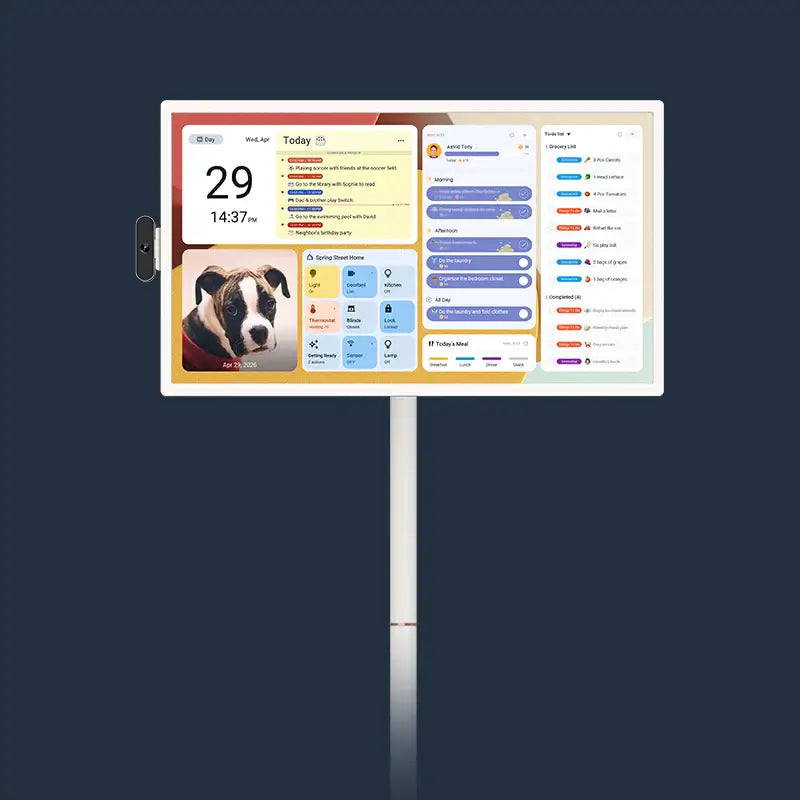
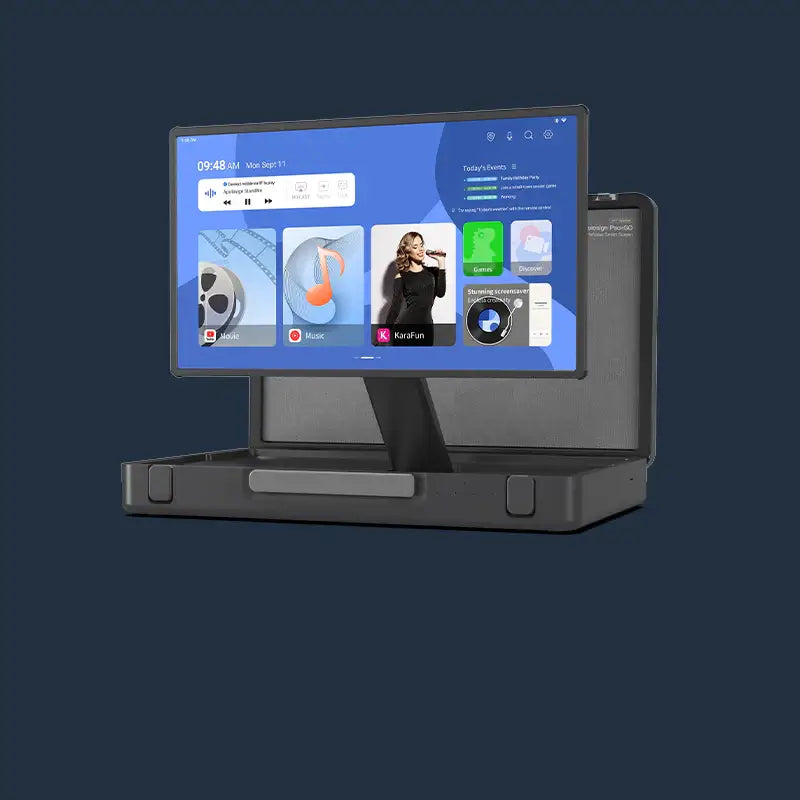
Here's how the two closest sizes fit different routines. Our 32-inch portable smart TV comes on wheels, which suits a family that rolls the screen from room to room on the same floor. Our PackGo 27-inch briefcase TV is built in a briefcase format, which makes more sense if the TV gets packed away or carried between uses.
A practical final choice
Your final pick depends on whether the TV stays in one room or moves around.
If your TV will mostly stay in one shared viewing area, choose the size closest to your distance estimate that still works from every regular seat. If it moves between rooms or goes into storage, start from that same estimate, but let the full unit's fit decide. Pick the nearest size that clears your tightest route and fits its storage spot.
Next step: measure your farthest seat and your narrowest doorway or storage opening, then compare them with each candidate's full dimensions. If you are ready to compare options for your space, explore our portable smart TV models to find the right fit, or read our portable smart TV buying guide for details on battery life and audio.
FAQs
Does the number of people in our family change the screen size we need?
Not by itself. Seating distance sets the size, not how many people are watching. If adding seats for a bigger family pushes the farthest seat farther back, measure the new distance and work out your estimate again.
Can we move the TV closer instead of buying a bigger one?
Often, yes. A portable TV can sit closer to the couch than a wall-mounted set, and a shorter distance to the farthest seat lowers your size estimate. Measure from the new spot so your estimate matches where the screen will actually be.
What if we watch at different distances in different rooms?
Work out an estimate for each room where you watch regularly. If the numbers differ, start with the room where the family watches together most. Then make sure that size still works and fits in the other rooms on its route.