






Knowing how to reset family schedule for new seasonal sports and activities takes about one hour if you work through it in order: close out the old season, collect full details on every new activity, map travel and handoffs into your actual week, rebuild sleep and homework routines around the new cadence, then assign someone to keep the calendar current. Skipping steps is what causes double-booked practices and missed pickups later.
The payoff is a calendar that has already been tested against your real week, not just a list of start times copied from a sports sign-up sheet.
The One-Hour Seasonal Schedule Reset
Work through five short phases in order. Each phase builds on the last, so finishing phase one before starting phase two keeps the hour from turning into a scattered afternoon.
- Close the old season (10 minutes). End or archive every recurring event that no longer applies.
- Capture new activities (15 minutes). Write down the full schedule, location, and responsible adult for each new commitment.
- Map travel and handoffs (15 minutes). Place addresses and pickup duties next to each event and look for conflicts.
- Rebuild the weekly cadence (10 minutes). Set bedtime, homework, and meal windows around the new activity load.
- Assign upkeep and review (10 minutes). Name a calendar owner and pick one weekly check-in time.
This pacing is a suggested model, not a fixed rule. Some households will spend more time on the travel map and less on archiving. As one family planning resource on seasonal family routine check-ins points out, a useful reset also involves asking kids what worked, setting one or two realistic goals, and looking ahead at the next few months rather than just the next event.

Close the Old Season Before Adding the New One
Clear out finished commitments first so the new season isn't layered on top of clutter. This keeps the active calendar focused only on what's actually happening now.
Archive finished commitments
Remove finished recurring series from your main view, or archive them if your calendar service allows it. Keep a record only if it might help with next year's registration or scheduling. Separate anything genuinely old from exceptions that are still active this week.
Carry forward only what still applies
Before copying an old recurring event into the new season, check whether the activity, day, location, and responsible adult are all still correct. If any detail changed, treat it as a new commitment instead of quietly editing the old one. Leave uncertain items off the active calendar until you have a confirmed detail to add.
Capture Each New Activity as a Complete Commitment
A start time by itself isn't enough. Every new activity needs enough detail that another caregiver could handle it without calling you first.
Record the full activity
Write down the schedule, location, expected arrival time, travel estimate, and the adult responsible for drop-off and pickup, all in the same record. Add the season's start and end dates and any exceptions you already know about, like a tournament weekend or a week off. This turns a bare time slot into something a co-parent, grandparent, or babysitter can actually use.
Separate fixed details from flexible ones
Keep practice and lesson times separate from homework, meals, and prep time, since those can shift. Label tournaments, cancellations, and special pickups as exceptions rather than folding them into the regular recurring event. Using the same name or label for each child or activity also makes the week easier to scan at a glance.

Map Locations, Travel, and Handoffs into the Week
A workable week accounts for movement and responsibility, not just event start times. This is where hidden conflicts usually show up.
Build the real travel map
Turn each event time into a full sequence: when someone needs to leave home, when they'll arrive, when the activity ends, and who is responsible for the next handoff. Factor in the adult, child, equipment, and location involved in each move. Flag any day that only works if every transition goes exactly on time, since that's the day most likely to fall apart.
Resolve overlap before adding more
When two children have events at the same time, decide which one is fixed and which one has more flexibility. Pick the carpool, alternate adult, or activity adjustment before the season starts rather than scrambling in week one. If your afternoons are already tight, our after-school transition plan walks through a concrete staging and pickup routine for multi-activity days.
Rebuild Sleep, Homework, Meals, and Home Routines
Protect bedtime first, then build homework, meals, and prep time around whatever time is left. A new activity season should adjust the evening, not eliminate it.
Protect bedtime first
Treat bedtime as a fixed anchor rather than whatever time is left after practice. In 2024, about 86% of US children ages 2 to 17 had a consistent bedtime routine, and consistent bedtimes have been associated with getting enough sleep. That's a reason to check whether any new practice or late travel time is going to eat into bedtime on a recurring basis, not just occasionally.
Place homework and meals around anchors
Once bedtime is set, place homework, dinner, packing, and showering wherever the actual route allows them to happen. If one evening is genuinely too tight for the full routine, build a simpler version for that night instead of expecting the same routine every day. When an activity ends close to bedtime, move prep earlier in the day rather than compressing it afterward.

Assign Calendar Ownership and Keep Changes Visible
A shared calendar only reduces coordination work once someone is clearly responsible for keeping it current. Decide this before the season starts, not after the first missed pickup.
Name the calendar owner
Pick one person or role responsible for seasonal cleanup, new entries, corrections, and exceptions. Make that role visible to the household instead of an unspoken assumption. Give other caregivers enough access to see what they need, even if they aren't doing the editing.
Set the update and review rhythm
Pick one predictable time each week to scan the next seven days together. Agree on how last-minute changes get added so they don't live only in one person's head. If your household uses Google family calendar tools, note that anyone with access can edit or manage sharing, but event notifications for changes made by other members are a separate setting worth checking.
Overlapping Children and Two-Home Households Need a Different Map
The five-phase sequence stays the same for every family, but overlapping children and two-home coordination both need clearer ownership boundaries before the calendar can be trusted.
When children's schedules overlap
Start with the hardest overlap, not the easiest event, and assign the adult, carpool, or preparation step that makes it work. Keep one combined family view so everyone can see the whole week, but attach child-specific details like equipment and pickup responsibility to each event. Use that combined view to decide which commitment is truly fixed and which routine has room to move.
When households use two homes
Share only the events, addresses, and handoffs that cross both homes. Leave meals, homework blocks, and bedtime routines with whichever home is actually responsible for them that day. Agree on one clear way to communicate exceptions so a schedule change doesn't depend on one adult remembering to mention it.

Finish the Reset by Choosing the Right Visibility Layer
A phone calendar is enough for some households, and a visible display helps others. The right choice depends on whether people are actually missing updates, not on which option seems more modern.
A phone calendar is enough when
Every caregiver already checks the same maintained calendar and gets the information where they use it. If the real problem is missing details or unclear ownership rather than visibility, fix that first. Adding a display on top of an unmaintained calendar just gives you a second thing to update.
A visible home layer adds value when
Consider a shared display when the household regularly misses phone updates, or one adult keeps repeating the day's plan out loud. A kitchen or entryway screen can make the week visible at a glance without anyone opening an app. It only helps once the household is committed to keeping the underlying calendar current, since the display simply reflects what's already entered.
Where our Apolosign options fit
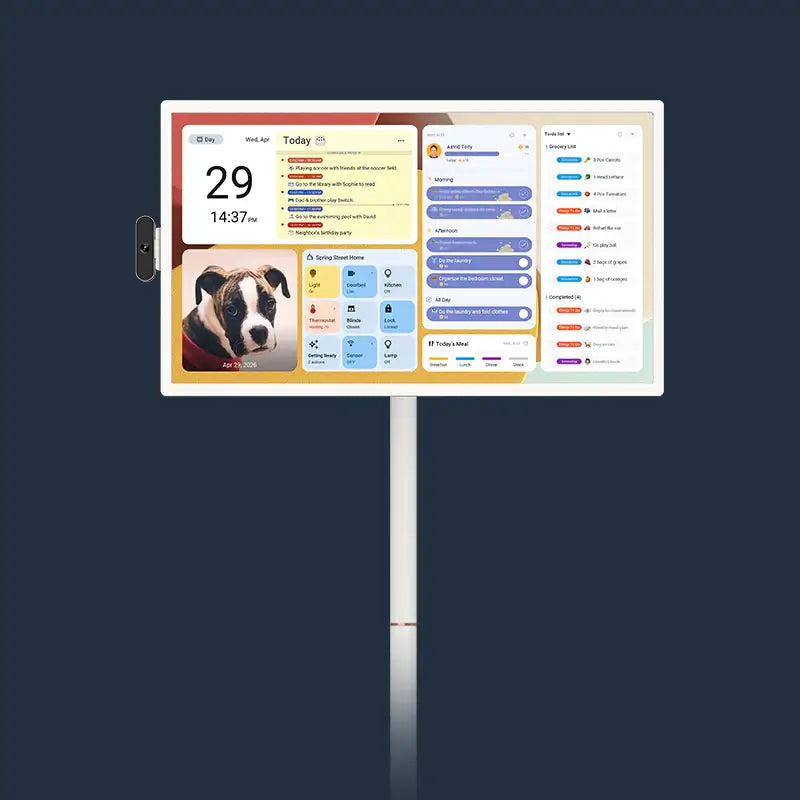
If your household already relies on Google Calendar, Outlook, iCloud, Yahoo, or Cozi and wants routines, meal planning, reminders, and shared to-do lists in one visible spot, our Apolosign 21.5" Digital Calendar syncs those services and adds a chore points system alongside a family message board. For households that use Google, Apple, or Outlook calendars and want a larger shared screen, our Apolosign 27" Digital Calendar offers a 27-inch 1080p touch display with the same routine, meal, and reminder tools. Either model is worth considering only after your shared calendar is already maintained and you've confirmed a real visibility gap in your home.
Decide first whether your household needs only a phone calendar habit or a physical central screen. Once you have chosen your visibility setup, schedule your one-hour reset session with all caregivers before the first practice begins.
FAQs
How can we help children adopt the new seasonal schedule?
Give children a predictable place to check, like the same wall display or phone screen each morning, and use consistent colors for their activities. Assign one simple responsibility, like checking tomorrow's departure time or gathering their gear the night before, so checking the schedule becomes an everyday routine instead of a reminder from parents.
What belongs in a recurring calendar event versus a one-time event?
A recurring event should represent the repeating base schedule, like a weekly practice time. Tournaments, cancellations, school breaks, and one-off pickup changes belong as separate dated exceptions instead of edits to the recurring series, so the base schedule stays accurate for the rest of the season.
How should families handle sudden practice time changes during the season?
Agree on a single channel for last-minute alerts, such as having the designated calendar owner update the shared event immediately and post a short note in the group chat. Keeping one person in charge of editing prevents contradictory times from lingering across different family phones.