






Managing different bedtime routines for multiple kids works best when you stop trying to match bedtimes and instead build one overlapping flow. Start with shared, low-effort steps for everyone, then protect a focused settling window for the child who needs the most help, and give the older child a quiet, bounded activity while that happens. This sequence lets each child get age-appropriate attention without turning the evening into a noise standoff.
Start With an Overlapping Bedtime Flow, Not Matching Bedtimes
The core flow has three parts: a shared preparation phase, a protected settling window for the child who needs the most hands-on help, and a quiet holding pattern for the child who can wait longer. You do not need identical lights-out times to make this work.
Share the low-effort steps first
Start bedtime with the steps that do not require one-on-one attention, such as brushing teeth, changing into pajamas, and a quick room tidy. Doing these together saves time and lets both children move toward bed at the same pace. Keep this shared phase short so the younger child is not pushed past the point of being overtired before settling even starts.
Protect the most hands-on settling window
Once shared steps are done, send the child who needs the most help into their settling routine first, even if that child is not the oldest. Base the order on attention needs, not birth order. Keeping this window quiet and predictable, rather than waiting until every sibling is ready, is the part of the routine most likely to actually calm a young child down. Consistent, regular bedtimes are associated with children getting enough sleep, so a repeatable order matters more than an exact clock time.
Give the later child a clear holding pattern
Tell the older child exactly what to do while the younger sibling settles: one quiet activity and one cue for what happens next. Offering two or three approved choices, instead of open-ended free time, keeps the plan simple enough for the child to follow without check-ins. This structure is what keeps the overlap calm instead of chaotic.

Map Each Child's Bedtime Role by Age and Attention Need
Each child's bedtime role should match what they can actually do, not a fixed age cutoff. Splitting the evening into three roles, shared participant, coached child, and quiet independent child, makes it easier to assign the right amount of attention.
Mark the steps everyone can share
Steps like hygiene, pajamas, and picking out tomorrow's clothes rarely need individual negotiation, so let siblings do them together when it speeds things up. This shared start reduces the number of separate trips a caregiver has to make around the house.
Give hands-on children a coached sequence
Keep the coached portion focused on what that child actually needs, whether that is a story, extra comfort, or help settling down. Avoid adding new choices once a child is in this window, since more decisions at this point tend to stretch out the routine instead of shortening it.
Bound the older child's independence
Offer the older child a short menu of quiet activities and one clear signal, like a timer or a specific song ending, for when the quiet time is over. The American Academy of Pediatrics recommends keeping school-age bedtime routines manageable with limited choices, and letting children gradually take more responsibility for their own routine over time rather than expecting full independence right away.

Protect the Younger Child's Settling Window From Sibling Noise
The main way to stop an older sibling's activity from disrupting a younger child's bedtime is to move active tasks out of the settling zone entirely. Give the older child a defined quiet spot, a single low-noise activity, and a clear rule for when they can enter the younger child's room.
Move active tasks out of the settling zone
Finish homework, showers, and conversations before the younger child's settling window starts whenever the schedule allows it. If that is not possible, move those active tasks to a separate room so noise and movement do not carry into the sleep space.
Set one quiet activity and one entry cue
Pick a genuinely low-noise activity, such as reading, drawing, or a quiet puzzle, that matches the older child's ability and the space available. Set a specific point when the older child may enter the younger one's room, such as after a set amount of quiet time, so they are not repeatedly checking in and interrupting the settling process. The American Academy of Pediatrics notes that older siblings who are still awake can make toddler bedtime harder, and recommends a quiet, consistent routine paired with handling comfort needs before bedtime so a child has fewer reasons to resist settling.
Use a backup when quiet independence fails
If the older child cannot maintain the quiet activity, move it closer to a caregiver or swap it for something simpler, like listening to a short audio story. Keep the younger child's settling boundary intact rather than restarting the whole evening, since the goal is a small fix, not a full reset.

Build a Solo-Parent or Two-Caregiver Handoff That Keeps the Flow Moving
One caregiver can run this flow by starting both children together, launching the older child's quiet activity, then moving directly into the younger child's settling routine. Two caregivers can run it in parallel as long as one adult owns each piece.
Use a solo-caregiver sequence
Begin with both children in the shared preparation phase, then set the older child up with their quiet activity and stated next cue before stepping away to focus on the younger child. Saying the cue out loud, such as "read until the timer goes off," keeps the older child from needing a check-in mid-routine.
Assign ownership when two adults are present
When two caregivers are home, name one adult for the younger child's focused settling and one for the older child's quiet transition or shared preparation. A short handoff phrase, like "quiet phase started," lets both adults track progress without a full verbal update, which matters when one adult is mid-task with a child who is close to falling asleep.
Use a Flexible Example Schedule to Test the Overlap
A sample overlap schedule shows how the phases line up rather than telling you what time to start. Use the relative order below and adjust the length of each phase to fit your household.
| Phase | Younger child | Older child | Caregiver cue |
|---|---|---|---|
| Shared preparation | Hygiene and pajamas together | Hygiene and pajamas together | Start both kids at once |
| Quiet launch | Waiting for settling to begin | Starts approved quiet activity | State the older child's next cue |
| Focused settling | Story, comfort, and settling | Continues quiet activity alone | Stay with younger child only |
| Final transition | Asleep or nearly settled | Moves toward own bedtime steps | Check in briefly, then close out |
Read the sequence from left to right
The table shows how the shared start reduces duplicated work before attention splits between the two children. Notice that the older child's quiet activity begins before the younger child's focused settling, not after, so there is no gap where the older child is unsupervised and unoccupied.
Shift the handoff, not the whole routine
If one phase runs long, such as focused settling taking extra time, adjust the cue for the next phase instead of rebuilding the schedule. Avoid attaching exact clock times to this table, since the value here is the order of events, not a fixed nightly formula.

Revise the Plan When Independence or Timing Is Not Fitting
When the plan is not working, find the exact point where it breaks before changing anything else. Timing problems, independence problems, and noise problems usually need different fixes, so treat the first repeated failure as your adjustment target.
Name the point where the plan breaks
Ask whether the issue is that a phase runs too long, that the older child cannot maintain the quiet activity, or that noise is crossing into the settling space. Each of these calls for a different change, so pinpointing the failure first prevents overcorrecting the whole evening.
Add back only the support that is missing
If independence is the issue, shorten the quiet activity or move it physically closer to a caregiver rather than removing it altogether. If timing is the issue, restore one coached step you had removed too early. Keep the parts of the routine that are already working so the family does not lose a sequence that took time to build.
Retest after a small change
Look for a calmer transition and fewer interruptions over the next few nights rather than expecting a perfect evening right away. Only increase independence again once the current version runs smoothly without repeated reminders.

Make the Schedule Visible Without Making It Another Job
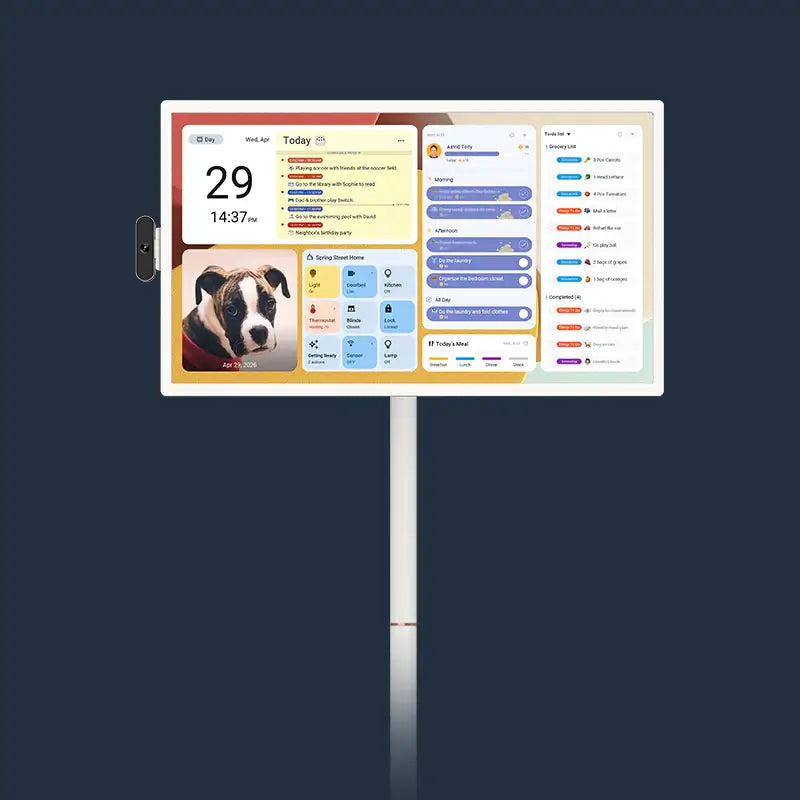
Choosing between a phone calendar and a wall-mounted display comes down to how your household handles reminders. Sticking to phones makes sense when adults consistently follow mobile alerts, while a persistent wall screen helps when family members miss cues that stay buried inside personal apps.
Choose phone planning or wall visibility
If reminders on a phone consistently get seen and acted on, there is no need to add another device. If cues get missed because nobody looks at the phone during the bedtime rush, a shared display in a common area solves that specific problem.
Show only the cues bedtime needs
Whatever you use, display the current phase, each child's next step, the older child's quiet activity, and the caregiver handoff point. Keep the screen limited to these cues rather than turning it into a crowded family dashboard, since more information at bedtime tends to slow the routine down instead of helping it.
Use Apolosign as an optional visibility layer
We built our Apolosign digital calendars to sync family schedules, display routine tasks, send reminders, and hold a shared message board, so the plan stays visible without anyone needing to open an app during the bedtime rush. A screen like this does not run the routine for you, and someone in the household still needs to keep it updated for the cues to stay accurate. If your family already uses a digital family calendar guide to plan the week and just needs a way to display bedtime steps where everyone can see them, our Apolosign digital calendars are worth a look.
FAQs
Can siblings share a bedroom with staggered bedtimes?
Yes, as long as the room stays available for the younger sleeper while the older child completes active steps somewhere else, like a living room or hallway. The older child should enter the shared room only for the final quiet transition, not during the younger child's focused settling.
How should we handle homework on a night when the younger child goes to bed first?
Place homework before the younger child's protected settling window whenever the schedule allows it. If that is not possible, move the work to a separate quiet location away from the sleep space and shorten the older child's final transition instead of letting active work happen near a settling child.
Should the staggered routine change on weekends?
Keep the same order of steps on weekends so the cues stay familiar, but allow some flexibility in timing for older, school-age children. The American Academy of Pediatrics notes that lights-out can happen later on weekends for these children, though this flexibility is specific to that age group and should not be read as a reason to drop the routine's sequence entirely.