





It's mid-August. Your inbox has a dozen unread school emails. A supply list is taped to the fridge, a "Meet the Teacher" flyer is buried under the mail, and your child just mentioned they need a signed form by tomorrow.
You're not disorganized. You're carrying the mental load—and back-to-school season is when it can feel especially heavy.
For working parents, the start of a new school year means new schedules, new teachers, new activities, and a constant stream of information from emails, school apps, paper notices, and group chats. Remembering every deadline, pickup, and "wear sneakers on Thursday" can feel like a full-time job on top of your full-time job.
The solution isn't to become perfectly organized. It's to get some of that invisible work out of your head and into a system the whole family can see and use.

Why Back-to-School Worsens Mental Load?
Mental load is the invisible cognitive work of running a household: planning, remembering, anticipating, coordinating, and reminding.
It's not just packing a lunch. It's remembering that Wednesday is pizza day, Thursday is library day, and Friday requires a signed field-trip form.
It's not just taking your child to the dentist. It's remembering to schedule the appointment, checking everyone's availability, arranging transportation, adding it to the calendar, and remembering what needs to happen afterward.
In other words, mental load is often less about doing the task and more about being the person who has to remember that the task exists.
According to a 2026 Pew Research Center survey of 2,242 U.S. working parents, 52% of couples where both parents work full time say the mother takes on more day-to-day parenting tasks—compared with just 10% who say the father does. The report also notes that mothers are more likely to carry the invisible "mental load" of tracking school schedules, appointments, and logistics.
Back-to-school season overloads this system because everything changes at once. Bedtimes shift (the National Sleep Foundation notes this transition can take 1–2 weeks), school calendars arrive, extracurriculars restart, and new information comes through multiple channels simultaneously.
The result isn't simply a busy schedule. It's the feeling that your brain is always running a background process: Did I forget something?
Why a Digital Family Calendar is the Best Solution
Most families use one of three scheduling tools—and all three break down during back-to-school season:
- Paper calendars are visible at home but can't send reminders when you're at work, and they quickly run out of space when multiple activities land on the same day.
- Phone calendar apps are powerful but often stay personal rather than shared. The schedule is in one app, pickup arrangements in a group chat, the supply list in email—and your partner can't see any of it.
- "Keeping it in your head" is the most common system—and the most exhausting. When information doubles in August and September, relying on memory alone guarantees something will slip.
A digital family calendar offers a different approach: externalize the information, make it visible, and let the system handle some of the remembering. Instead of one parent carrying everything, the family works from one shared view.
The goal isn't to put every minute on a screen. It's to create a reliable shared source of truth for the things everyone needs to know.

How to Use a Digital Family Calendar This School Year
1. Put Every Important School Event in One Place
Start by entering the dates that cause the most problems when forgotten: first and last days of school, parent-teacher conferences, early-dismissal days, holidays, picture day, field trips, performances, and fee deadlines.
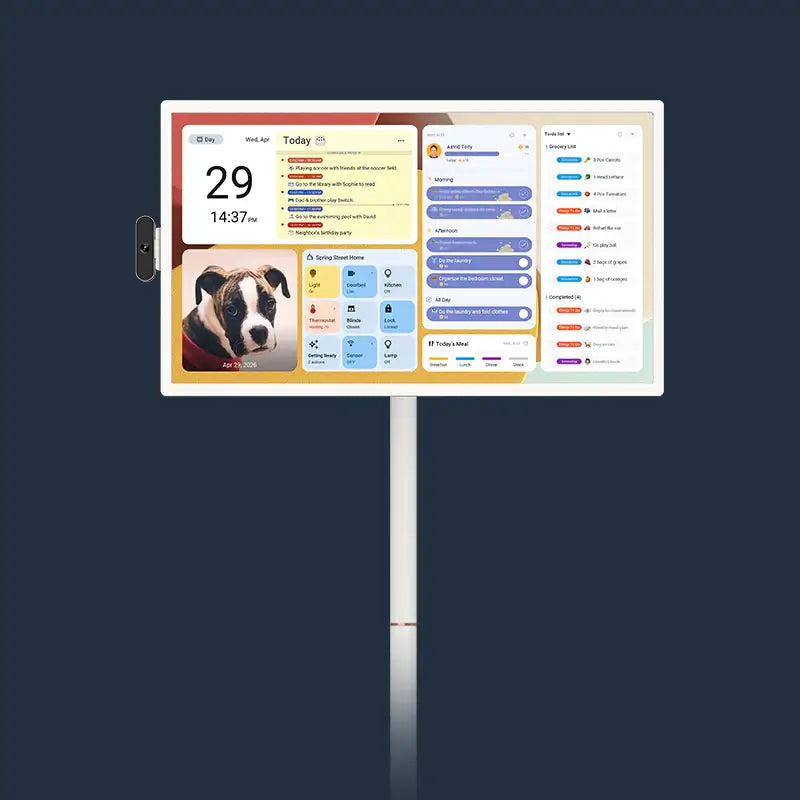
A dedicated smart display like the [Apolosign Digital Calendar] acts as the best shared family calendar, keeping this information visible in a shared space—the kitchen, hallway, or entryway—so family members see what's coming without opening an app, searching email, or asking, "What's happening today?"
The calendar becomes less a storage place and more a visual reminder of what the family needs to prepare for.

2. Make Pickups, Drop-offs, and Responsibilities Visible
Back-to-school often means a completely new transportation routine. Who handles Monday pickup? Who has Tuesday drop-off? Which days involve after-school care?
When those details live in text messages and group chats, someone inevitably ends up asking the same question: “Who’s picking up the kids today?”
A shared family calendar answers that question before it needs to be asked. Use a simple color-coding system to make everyone’s schedule easy to scan:
- Blue: Mom’s schedule and responsibilities
- Green: Dad’s schedule and responsibilities
- Orange: After-school care
- Purple: Carpool or shared transportation
- Yellow: School events and activities
You can use the same color system for household chores and other recurring responsibilities.
The benefit isn’t just visual organization—it’s shared ownership. When everyone can see who’s responsible for what, one parent doesn’t have to constantly coordinate, remind, or follow up.
As one working mom put it: “Last year I coordinated carpools in three group chats. This year everything’s on the family calendar. My husband sees his pickup days without me asking. Huge weight off.”
3. Help Kids Manage Their Own Routines
One of the most effective ways to reduce parental mental load is to help children take ownership of age-appropriate responsibilities. A visual calendar can turn a list of reminders into clear, manageable steps that kids can follow on their own.
For a morning routine, that might mean:
- 7:00 AM — Get dressed
- 7:10 AM — Eat breakfast
- 7:25 AM — Pack backpack
- 7:30 AM — Put homework in the bag
- 7:35 AM — Fill water bottle
- 7:40 AM — Put on shoes
For an evening routine:
- 7:00 PM — Finish homework
- 7:30 PM — Pack backpack
- 7:40 PM — Choose tomorrow’s clothes
- 7:45 PM — Read for 20 minutes
- 8:05 PM — Get ready for bed
Younger children may not be ready to manage a traditional calendar independently. Large text, simple layouts, and visual cues can make routines easier to understand and follow.
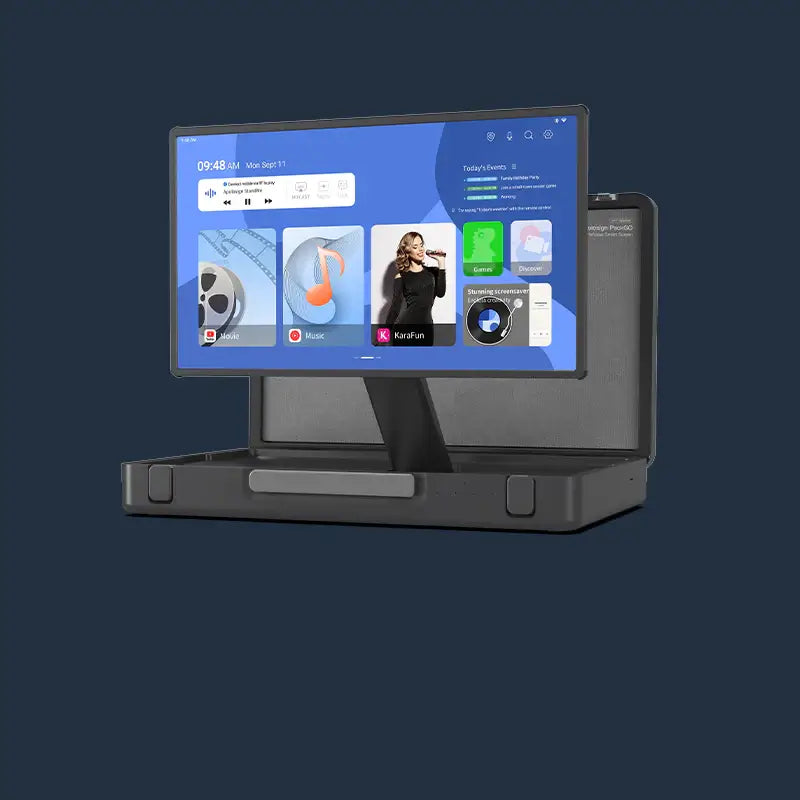
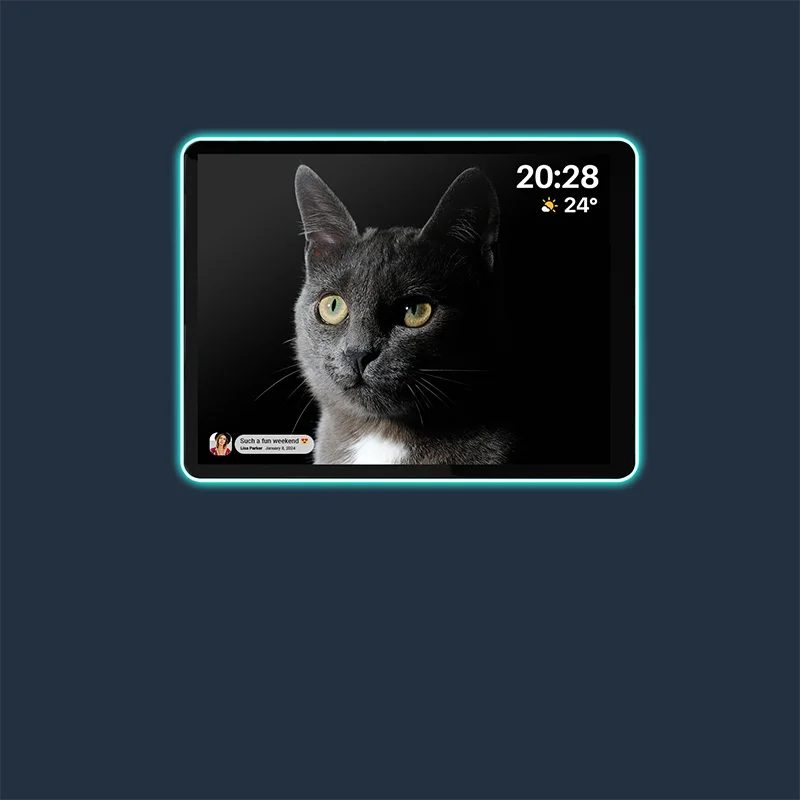
The Apolosign Digital Calendar is a digital calendar with no subscription fees, featuring a stunning 4K display and three size options—15.6, 21.5, and 27 inches—can serve as a visible reference point in the home. Instead of hearing “Hurry up” five times every morning, kids can check what comes next and work through the routine step by step.
The goal isn’t to make kids responsible for everything overnight. It’s to gradually shift age-appropriate tasks from parent-managed to child-managed—giving kids more independence while taking a few more daily reminders off parents’ plates.
4. Use Reminders as a Second Memory System
A good family calendar shouldn't just tell you what's happening—it should help you remember when to prepare for it. Think of reminders as a second memory system.
For a school field trip: set a reminder one week before to submit payment, one day before to pack the permission form and lunch, and one hour before to leave for drop-off.
This is especially useful for small recurring details that are easy to forget: PE is every Thursday, so pack sneakers Wednesday night. Library books are due every Friday. Check the school app Sunday evening.
Instead of keeping these details in your head, build them into the family's system. This changes the question from "What am I forgetting?" to "What does the calendar tell us we need to do next?"
5. Hold a 10-Minute Sunday Planning Session
A shared calendar works best when the family uses it together. Set aside ten minutes every Sunday evening to review the upcoming week: major school events, pickup schedules, extracurriculars, appointments, work conflicts, and anything needing advance preparation.
Then ask one question: "Who needs to do what?"
If Tuesday has a doctor's appointment, soccer practice, and a project deadline, decide in advance who handles transportation, dinner, and supplies. This shifts the family from reacting every morning to planning ahead together—and prevents one parent from being the only person who knows what's happening.

How to Choose the Right Digital Family Calendar
The best option isn't the one with the most features—it's the one that makes important information easy for everyone to see and act on.
|
Dimension |
Phone Calendar App |
Paper Calendar |
Apolosign Digital Calendar |
|
Shared family visibility |
Depends on setup |
At home only |
✅ Designed for shared visibility |
|
Automatic reminders |
✅ Usually available |
❌ |
✅ Visual + timed |
|
Kid-friendly display |
❌ Often limited |
❌ |
✅ Large text, icons, 4K display |
|
Subscription fees |
⚠️ Some require |
❌ |
✅ One-time purchase, no subscription |
|
System flexibility |
⚠️ Locked to OS |
— |
✅ Open Android system |
|
Size options |
❌ One size (phone) |
❌ Limited |
✅ 15.6" / 21.5" / 27" |
When comparing options, focus on one question: Will this reduce the number of things someone in my family has to remember?
A phone app is great for personal scheduling. A paper calendar gives a quick at-home overview. A dedicated digital family calendar adds another layer: a shared, always-visible household display. For busy families, that distinction matters.

Get Started Before the First Day
You don't need to organize the entire school year in one sitting. Start small:
- Add the next two months of school dates, activities, appointments, and recurring commitments.
- Set three essential reminders for things your family is most likely to forget—packing the backpack, library day, and the weekly planning session.
- Add the first two weeks of transportation—pickup, drop-off, carpool, and after-school schedules.
Then pay attention during the first week. What still causes chaos? That's where you add more visual tasks, reminders, or routines. The goal isn't a perfect calendar—it's a calendar your family can trust.
Final Thoughts: Let Your Brain Clock Out, Too
Back-to-school mental load isn't necessarily about having too much to do. It's about having too much to remember, coordinate, and manage—often without anyone else seeing how much work is happening behind the scenes.
A digital family calendar doesn't eliminate the work of running a family. But it makes that work more visible, shareable, and easier to manage. Instead of "I have to remember everything," you move toward "We all see the same plan."
This school year, give yourself permission to stop being the family's reminder service. Put the schedule where everyone can see it. Make responsibilities visible. Let reminders handle some of the remembering. And give your kids opportunities to manage the routines they can handle themselves.
Your family may still be busy. But your brain doesn't have to carry the entire schedule alone.
Ready to make back-to-school scheduling easier?
Stop paying monthly fees for calendar apps. Explore the Apolosign Digital Calendar—featuring an open Android system, no subscriptions, and three sizes to fit any home.
🚨 Back-to-School Special: Take $30 OFF any size! (Offer ends August 31st)