






In modern families, children’s schedules are busier than ever: homework, extracurricular classes, sports, and family activities. Parents are busy with work, and children need to learn how to manage their own time. Many households rely on phone calendar reminders, yet children still struggle to understand and keep track of their schedules.
So the question arises: is a phone calendar enough, or can a digital wall calendar provide a more effective solution? This article compares the two tools and offers practical advice to help parents choose the best schedule management approach for their family.
The Pros and Cons of Phone Calendars
The main advantage of phone calendars is convenient, on-the-go reminders. Whether commuting or picking up children from school, parents can receive notifications for important events, such as extracurricular classes, parent meetings, or family activities. Phone calendars also support syncing with school or work accounts, making it easier to manage multiple schedules.
However, phone calendars have limitations. First, the information is usually only visible to the account owner, so children cannot clearly see their daily or upcoming schedules. Second, time is an abstract concept for kids, and it’s difficult for them to understand and plan their day on a small phone screen. Most importantly, coordinating schedules still places a heavy burden on parents, who often have to repeatedly remind children, while kids rarely take initiative.
In short, phone calendars are useful for personal reminders but have limited effectiveness in helping children develop time management skills or supporting overall family coordination.

The Advantages of Digital Wall Calendars
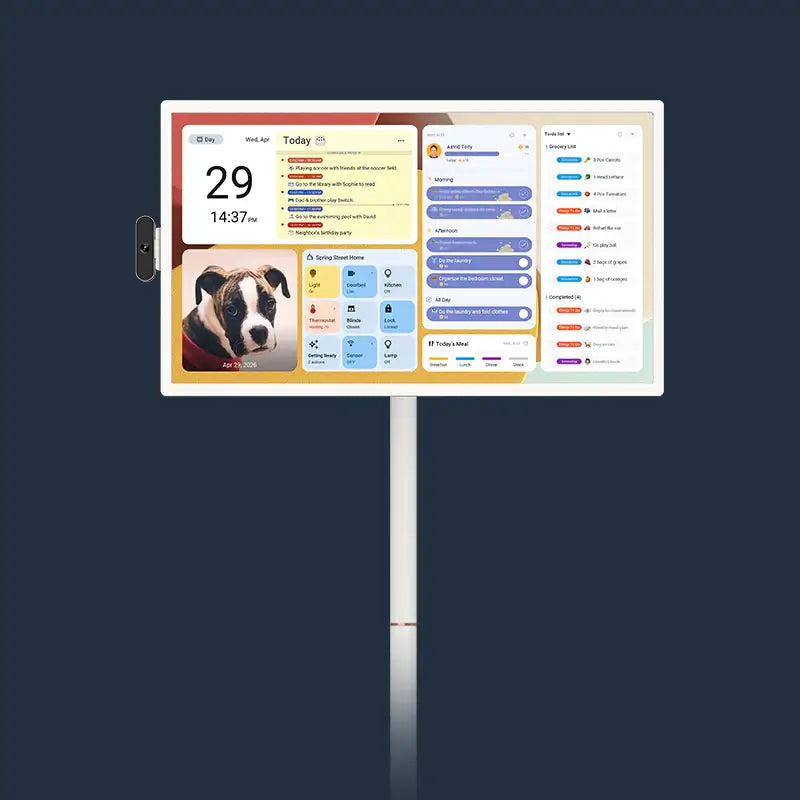
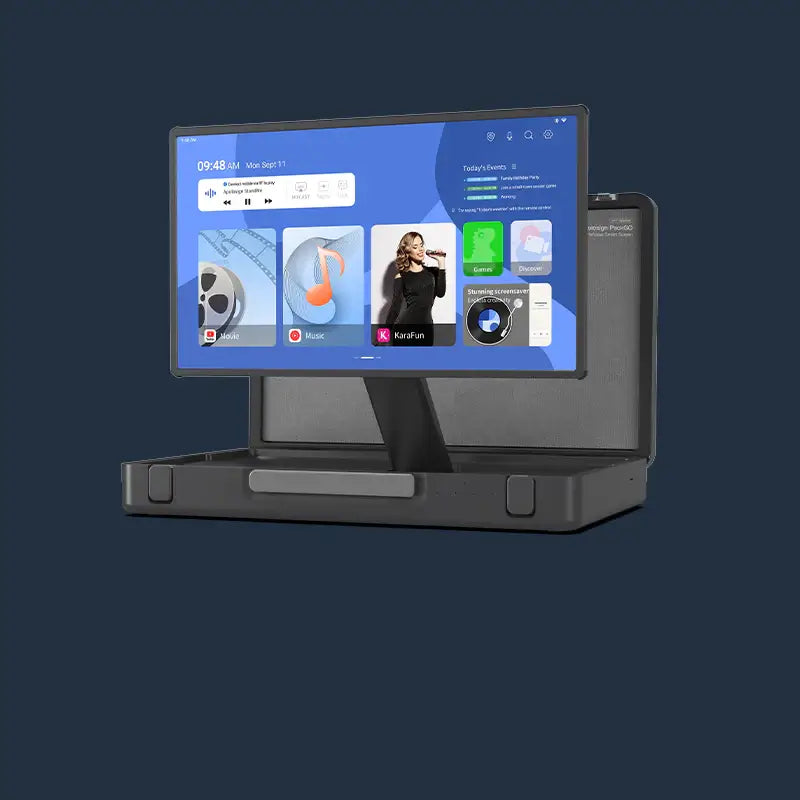
In contrast, a digital wall calendar places the family schedule in shared spaces like the kitchen, living room, or study, allowing both children and parents to see the plan at a glance and encouraging children to participate actively. Apolosign Digital Calendar is not just a digital wall calendar—it can also sync with phone calendars. Whether you’re at home or away, your family’s schedule is updated in real-time and always visible. Both children and parents can see the day’s plan on a large screen, avoiding missed activities or repeated reminders. The calendar comes in three sizes—15.6, 21.5, and 27 inches—so it can fit in the kitchen, living room, or study, blending seamlessly into family life. By providing shared visibility and a visual interface, it not only synchronizes the family schedule but also makes time more tangible for children, helping them develop responsibility and active participation. In addition, the digital wall calendar supports a customizable dashboard that displays schedules, countdowns, and family messages, while also offering voice control and a screensaver photo frame, making family schedule management easier and more engaging. It can also sync with Google Calendar, consolidating school and family schedules on a single large screen for full family sharing.
By making schedules visible and tangible, children can actively engage with their daily plans instead of passively following instructions, making family schedule management more efficient and reducing parents’ workload.
Phone Calendar vs. Digital Wall Calendar in Real-Life Scenarios
In daily family use, phone calendars usually only allow parents to view schedules, giving children little intuitive understanding. Children’s sense of time is weaker, requiring frequent reminders, and coordinating multiple people can be complicated. By contrast, a digital wall calendar provides a shared family view, allowing children to see their daily and upcoming plans clearly. Family collaboration becomes smoother, and task completion is easy to track. The large screen and customizable dashboard make visual information easier for children to understand and remember.
Furthermore, a digital wall calendar is placed in common family areas, whereas a phone is portable, small, and easy to overlook. This allows children to integrate time management into daily life rather than relying solely on reminders.

How to Help Children Develop Time Management Skills
- Start with visibility: Place the schedule where children can see it regularly to understand their daily plan.
- Encourage participation: Let children check tasks themselves and mark them complete, fostering independence.
- Review regularly: Go over the schedule together each evening or weekend to make time management a family habit.
- Combine digital tools: Use phone calendars for reminders and syncing, and digital wall calendars for shared visualization to achieve the best results.
Conclusion: Empowering Family Organization
Digital wall calendars make schedules visible to the whole family, helping children develop time awareness and responsibility while reducing the need for repeated reminders from parents. Phone calendars are convenient for personal alerts but are limited in supporting children’s time management and overall family coordination.
Apolosign Digital Calendar offers multiple sizes, shared schedules, and customizable dashboards, making it an ideal tool for modern families to manage daily life efficiently and teach children to manage their time responsibly.
Allowing children to see time, understand it, and participate in family scheduling is key to an organized home and helping children learn self-management skills.