


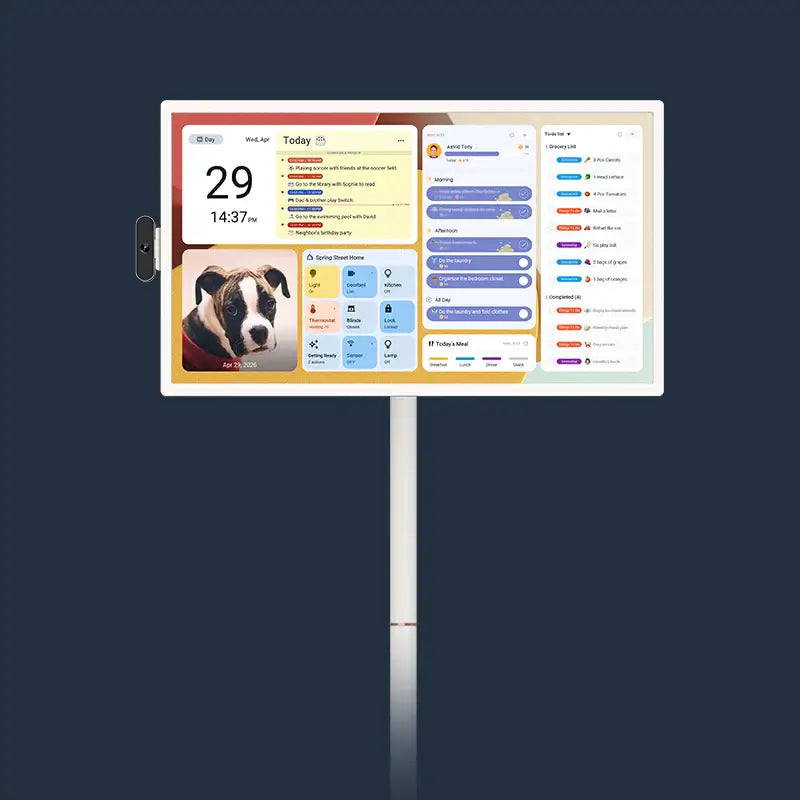




The easiest Thanksgiving family schedule does three things: it shows fixed times, gives each task one owner, and keeps kids’ routines visible. Put those items in one shared view. Then your family can see what needs to happen without sending more texts or asking one person for every answer.
Start With One Shared View of the Short Week
Use one calendar for Monday through the Sunday after Thanksgiving. A shared display, phone calendar, or paper calendar all work. What matters is that everyone looks at the same plan.
Keep entries short. Write “Mia picks up rolls at 2:30” instead of a long note. Each item needs three details: what happens, who owns it, and when it is due.
Set up the view with the adults who will carry the main jobs. Ten minutes together is usually enough to catch a missing ride, a work conflict, or a meal task that nobody owns. Once the basics are in place, children and visitors only need to check the parts that affect them.
Add four kinds of items:
- Fixed times, such as school pickup, flights, and dinner.
- Household tasks, such as groceries and setting the table.
- Guest plans, such as airport rides and bed setup.
- Kid routines, such as breakfast, outside time, and bedtime.

Add School Closures, Travel Times, and Guest Arrivals First
Put in the events that cannot move before you plan food or fun. School closures, work shifts, travel, and dinner time decide when the rest of the week can happen.

Mark the Times That Cannot Move
Add early dismissals, travel arrival windows, and the meal time first. Give travel an extra buffer for traffic, bags, and a quick stop. If an adult is picking up a guest, write down who stays with the kids during that time.
Treat arrival windows as planning tools, not promises. If a flight is due at 4:00 p.m., the household can plan a quiet arrival period from 4:00 to 5:00 rather than scheduling a full activity at 4:15. This keeps the day flexible without leaving everyone unsure what happens next.
| Day | Put These Items on the Calendar |
|---|---|
| Monday and Tuesday | School schedule, work hours, grocery pickup |
| Wednesday | Guest arrivals, bed setup, make-ahead dishes |
| Thursday | Meal time, cooking slots, rides, kids’ activity |
| Friday through Sunday | Return travel, leftovers, laundry, Monday prep |
This simple Thanksgiving week family calendar prevents two plans from claiming the same person at the same time.
Give Each Household Member a Clear Color or Label
Give each household member one color or label. Use a separate “household” label for shared tasks. Keep the system simple enough that a guest can understand it at a glance.
Label visitors by their arrival or departure, such as “Aunt Maya arrives,” instead of tracking their whole day. The calendar should show what the household needs to do, not every detail of a guest’s visit.
Put the color key where everyone can see it. A small note such as “green = Dad, orange = household” can prevent children from asking who owns a task. Use words as well as color when possible, since a label still works on a printed calendar or a phone screen in bright light.

Turn the Thanksgiving Meal Into Small, Visible Tasks
Break dinner into shopping, prep, cooking, and pickup tasks. “Make Thanksgiving dinner” is too big to assign. Small tasks are easier to start, share, and finish.
Separate Shopping, Prep, Cooking, and Pickup Tasks
For a Thanksgiving meal planning schedule, give each task one clear result:
- Confirm the guest count by Monday evening.
- Pick up groceries on Tuesday.
- Chop vegetables and label containers on Wednesday.
- Set out serving dishes before Thursday breakfast.
- Assign one person to pick up ice or a missing item.
Put food-safety reminders beside the food task they affect. For example, add “move turkey to refrigerator” on the date that matches the package instructions. A visible task is harder to forget than a note buried in a recipe.
Check kitchen limits before you assign cooking times. List the dishes that need the oven, the stove, or a slow cooker, then place them in an order that makes sense for your meal time. You do not need a restaurant-style plan. You only need to notice early if three dishes need the same oven rack at the same moment.
Assign an Owner and a Realistic Due Time to Each Task
Give every task one owner. “Someone sets the table” invites delay. “Jordan sets the table by 1:00 p.m.” gives the household a clear next step.
Use due times with room for normal delays. A task that supports a 5:00 p.m. dinner should not be due at 4:55. Leave time for cleanup, kids, traffic, and a grocery substitution.
If a task needs a handoff, put both parts on the calendar. For example, one person can finish a side dish by 3:30, while another warms it at 4:40. This is clearer than marking both adults as the owner of “sweet potatoes,” and it makes a late change easier to fix.
Keep Kids’ Routines Visible When the School Week Changes
A school break family routine needs only two or three anchors. Keep breakfast, one active block, and bedtime visible. A familiar pattern helps kids know what to expect even when cousins, guests, and meal prep change the day.
Give each child one role in plain language, such as “fold napkins,” “choose a game,” or “help make the guest bed.” Add a short warning before a transition if that helps, such as “10 minutes until kitchen helper time.”
Plan one low-effort option for the time when adults need the kitchen. A puzzle, a movie, a backyard game, or a basket of coloring supplies can fill that window without asking a child to wait with no idea of what to do. Put the activity and its location on the schedule if another adult is responsible for it.
Use a Short Daily Check-In to Handle Last-Minute Changes
Spend five minutes each morning on the day’s plan. Ask: What cannot move? What needs an owner? What do the kids need before dinner?
Choose a repeatable time for the check-in, such as after breakfast or before the first adult leaves the house. Keep it standing up and brief. The goal is a clear handoff, not a family meeting about every holiday decision.
Only change the items affected by new information. If a flight is late, update the arrival time and move the tasks that depend on it. Do not rebuild the entire week.
Reset the Household Plan Before Monday Returns
Clear completed meal tasks on Sunday evening, then add Monday’s school and work commitments. Include return travel, leftovers, laundry, and anything that needs to be ready for the morning.
Check the places where holiday items tend to pile up. A quick note to wash a school uniform, pack a backpack, or return a borrowed travel item can save a stressful Monday morning. The reset should make Monday easier, not create one more large project.
This short reset stops the Thanksgiving plan from covering up the week that comes next.
Put the Plan Where Everyone Can See It
One visible plan makes a full house easier to manage. Keep it short, name the owner of each task, and update it when the day changes. A shared planning space for schedules, meals, to-dos, and routines can keep those moving parts in one place.
Thanksgiving Week Planning FAQs
Q1: When should I make a Thanksgiving family schedule?
Start about a week ahead. Confirm the school schedule, guest travel, grocery pickup, and meal time first. Then add the tasks that support those fixed events.
If you only have a few days, start with the items that affect other people. A clear arrival plan and a grocery pickup window help more than a perfect color system.
Q2: How detailed should a Thanksgiving week family calendar be?
Include anything that affects another person, such as arrivals, pickups, meal tasks, and children’s key routines. Keep private errands on personal calendars.
Use one line per item when you can. If an entry needs a long explanation, split it into two smaller tasks or discuss it during the daily check-in.
Q3: What if a guest does not know their arrival time yet?
Use a time window and label it as tentative. Plan the tasks that need to happen before the earliest likely arrival, then update the calendar when the travel details are firm.
Give the guest one contact person for updates. That keeps flight texts and changing estimates from reaching every adult at once.
Q4: How can children help with Thanksgiving planning?
Give each child one job that fits their age and write it on the shared plan. A visible, specific task is easier to follow than a general request to help.
Let the job end at a clear point. “Put all napkins on the table” works better than “help set up,” because the child can see when it is finished.
Q5: What should stay on the calendar after Thanksgiving?
Keep return travel, leftovers, laundry, school supplies, and Monday commitments. Remove finished cooking tasks so the next week is easy to read.
Leave one small reminder for the next holiday season, such as a dish that took longer than expected or a pickup time that worked well. That note can make next year’s planning faster.