






Start with one small, visible task and grow it as your child shows they can handle it. Assign shared household work in short, concrete steps first, then match the next task to what the child has already proven they can do, not just to a birthday. A workable plan increases responsibility gradually from age 2 through 18 and adjusts for each child's ability and the household's real routine.
Chores for Kids by Age: The Progression from 2 to 18
Every age band below is a starting point, not a guarantee. Children can begin contributing with simple chores and growing responsibility that expand as their skills develop through the school years and adolescence.
| Age band | Chores to try | Why they fit | Increase or reduce when |
|---|---|---|---|
| 2-3 | Put toys away, help carry light groceries, dress with help | Short, one-step jobs match a toddler's attention span | Increase when the same cue leads to the same result; reduce hands-on help if the child loses the sequence |
| 4-5 | Feed a pet, clear plates, make the bed loosely | Simple routines with a visible finish line build habits | Add one step once the routine runs with one reminder |
| 6-8 | Wipe counters, sort laundry, sweep, help load the dishwasher | Bounded tasks let kids own a defined space | Assign the full task when materials are gathered and returned without prompting |
| 9-11 | Put away own laundry, make snacks, vacuum, clean a shared room | Longer sequences can be split into stages | Add a planning step (gathering supplies) when the child recovers from small mistakes |
| 12-14 | Change sheets, clean a bathroom, fold laundry, wash the car | Weekly ownership builds real household stake | Move to a full weekly routine once the task resets without you tracking it |
| 15-18 | Grocery planning, cooking a meal, laundry cycles, errands | Tasks resemble adult household management | Reduce or share the load during exams, work shifts, or transportation limits |
Use this table to separate personal-care tasks, like belongings and bedmaking, from shared family work, like common rooms and meals. The method for teaching and adjusting any of these tasks stays the same across every age band.

Ages 2 to 3: Start With Short, Concrete Jobs
A 2- or 3-year-old can manage one or two brief jobs when an adult stays close enough to help finish them. AACAP's age-based chore examples for this age include putting toys and groceries away and getting dressed with support.
- Put toys in a labeled bin
- Carry a light grocery item to the counter
- Put dirty clothes in a hamper
- Get dressed with help buttoning or zipping
The goal at this age is participation in a short sequence, not a perfect result. Repeat the same job in the same spot each day. If your child loses track of the steps or needs you to finish most of it, shorten the task instead of dropping it.
Ages 4 to 5: Build Simple Routines Around Belongings and Meals
Four- and five-year-olds can follow a simple routine when the finish point is visible, like toys in a bin or dishes on the counter. Tie the task to a daily transition, such as right after breakfast, so it becomes a habit instead of a request.
- Feed a pet's food dish
- Clear their plate and cup after meals
- Make their bed, even with imperfect corners
- Put clean clothes in drawers
Add one extra step, like carrying a plate to the sink after clearing it, once the child handles the current routine with a single reminder. If the added step causes frustration, drop back to sorting and putting away instead.
Ages 6 to 8: Add Personal Ownership and Basic Home Care
Around ages 6 to 8, many kids can own a bounded personal space or common-area task instead of just helping alongside an adult. School-day anchors, like right after school or before dinner, work well for these jobs.
- Wipe tables and counters
- Put away their own laundry
- Sweep floors
- Load or unload the dishwasher with adult help nearby
The shift here is from helping to owning: the child gathers what's needed, finishes the sequence, and puts supplies back without a parent managing each step. If the whole task feels like too much, assign one surface, one laundry category, or one dishwasher step instead.
Ages 9 to 11: Expand Into Laundry, Meals, and Shared Spaces
Kids ages 9 to 11 can usually handle a full, low-risk routine such as putting away their own laundry or cleaning one defined shared area. This is also a good age to add a planning step, like checking what's needed for lunch before starting.
- Laundry: sort clothes and put them away
- Meals: help make dinner or prepare their own snacks
- Shared spaces: vacuum or clean a common room
- Outdoor or pet work: walk a familiar, calm pet on a leash with an adult nearby
Longer sequences can be split into a start job, a middle job, and a finish job across siblings or days. If the child can gather materials and recover from a small mistake with one prompt, the task is ready to expand. If not, keep it to one stage of the process.
Ages 12 to 14: Practice Independent Daily and Weekly Responsibilities
Tweens ages 12 to 14 can move from following assigned steps to planning a familiar weekly responsibility on their own. Weekly tasks work especially well here because they let kids practice resetting a shared space for the week ahead.
- Personal upkeep: change their own sheets
- Shared rooms: clean a bathroom or kitchen zone
- Laundry: fold and put away a full load
- Outdoor: wash the car with supplies laid out
A task is ready for full independence once your child can schedule it, gather what's needed, finish it, and reset for next time without you carrying the sequence. During busy weeks, assign a smaller zone or pair the task with a sibling instead of removing it entirely.
Ages 15 to 18: Shift Toward Adult Household and Life Skills
Teens ages 15 to 18 can take on tasks that resemble real adult household management, but this is gradual preparation, not a sudden handoff of adult labor. Prioritize tasks that require planning and follow-through over tasks that just take more physical effort.
- Grocery planning or shopping
- Cooking a simple meal from a list
- Running a full laundry cycle
- Selected errands, when transportation and timing allow
Increase responsibility when your teen anticipates what needs doing, tells you about changes, and finishes the task safely without you tracking every detail. Scale back during exams, work shifts, illness, or other real workload changes, since the goal is a household contributor, not an unpaid backup schedule.
Match the Chore to the Child, Not Just the Age
Age tells you where to start looking, not which chore your child is actually ready for. Choose the task from demonstrated ability and the support your child needs, since developmental monitoring guidance emphasizes observed skills over rigid age labels.
A task is ready to expand when your child repeats a familiar sequence with fewer reminders, follows a short spoken or written list, and handles the materials safely. A task is too big when your child can't name the next step even after you've shown them, or the sequence clearly overwhelms them. In either case, shorten the task, change the tool or setting, model one step again, then retry the simpler version before adding anything new.
This adjustment applies to any child with different attention, motor, sensory, or organizational needs; it just means choosing a smaller version of the same task, not a different developmental category. If everyday tasks beyond chores are consistently a struggle, that broader pattern is worth raising with your child's pediatrician rather than solving with a chore chart alone.
Build a Fair Plan Across Real Household Scenes
Fair doesn't mean identical. Solve the actual household problem first, then decide which chore fits which child, since equal checkmarks can still represent very unequal work.
Start with a morning belongings routine: a young child puts pajamas in a hamper and toys in one bin at the same transition every day, which solves the scattered-belongings problem without adding decision fatigue. A meals-and-laundry routine works differently. Give each child a mix of a personal job, like their own laundry, and a shared job, like clearing the table, and rebalance the split when one task clearly takes more time, supervision, or cleanup than another. A fair chore plan built around effort and time, not task count, holds up better across siblings with different ages and schedules.
Use rotations when kids need practice with different skills, and stable ownership when a child does better with predictability. The next action: list your household's two or three recurring pain points, then assign one personal task and one shared task per child based on that list.
Safety Boundaries for Heat, Sharp Tools, Chemicals, Heights, Pets, and Equipment
Keep children away from active heat, unsecured chemicals, running equipment, and unpredictable pets until an adult can directly supervise that specific task. This one boundary covers most of the exceptions to the age-based progression above.
In the kitchen, keep hot liquids, stoves, and sharp tools under your control or close supervision, since kitchen heat and sharp-tool boundaries call for locked, out-of-sight storage for sharp instruments and staying near young children during hot-liquid tasks. Cleaners and laundry products need the same treatment: store them in original containers, locked or out of reach, since detergent and cleaning product storage matters most for detergent packets, which young children should never handle. For powered mowers, follow the sourced walk-behind and riding mower age guidance of 12 or older for walk-behind mowers and 16 or older for riding mowers, and still require training and supervised practice before your child works alone.
Pets and heights need a supervision rule instead of an age number. Parents keep ultimate responsibility for a child's safety around animals, and guidance on pet safety stresses never leaving young children unattended with animals, so match feeding, walking, or grooming to the specific animal and your child's demonstrated judgment. For climbing, ladders, or any elevated task, match the equipment to your child's size and ability and stay nearby, since supervision around fall hazards reduces injury risk more than any specific age cutoff. When a hazardous version of a chore isn't ready yet, assign the safe prep or cleanup step instead and revisit the full task later.
Start, Teach, Adjust, and Review the Routine
A chore routine holds up when you introduce one task at a time, show your child the finished result, and check back regularly instead of assuming it will run itself. One task at a time and regular family review keeps the plan from overwhelming a child who hasn't taken on responsibilities before.
- Start: Pick one recurring household pain point and assign one named task to the child best positioned to try it.
- Teach: Show the finished result, walk through the steps together, and practice the sequence before expecting independent completion.
- Make it visible: Post the task at a predictable transition, like after breakfast or before bed, using whichever paper or digital chore system your family will actually keep current.
- Adjust and review: Shorten the sequence or add support after you notice overload or repeated confusion, and revisit the plan at a regular family check-in before adding anything new.
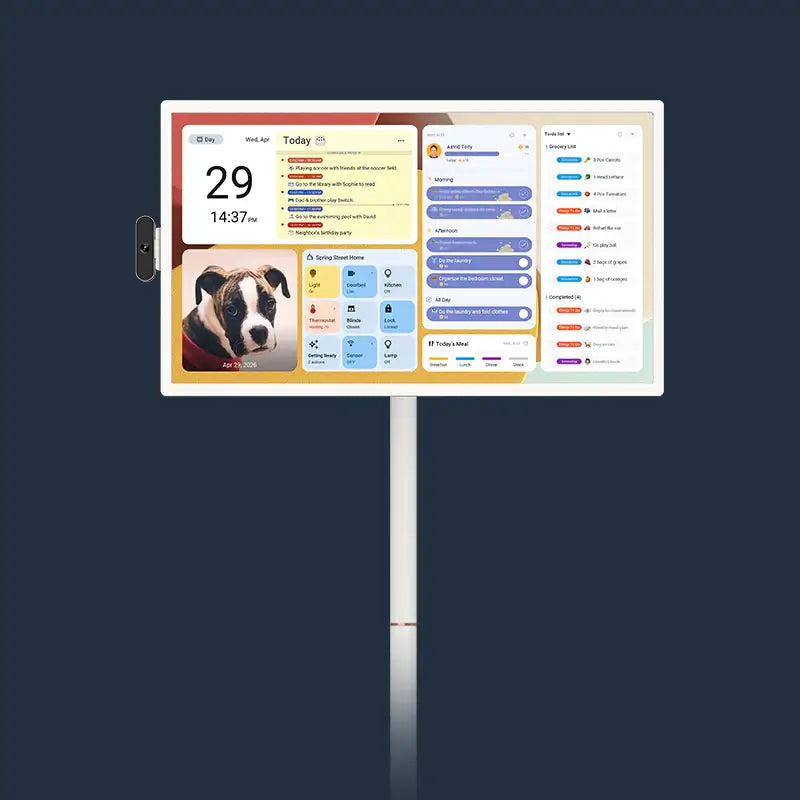
A wall display, like visual chore charts, or a synced digital calendar can make the current assignment easier to see, but the routine still depends on someone keeping it updated. Visibility helps only when the tasks listed are specific and current.

Conclusion: Choose the Next Chore That Fits Today
A household with mostly young children should prioritize short, supported participation: one visible task, taught directly, repeated at the same daily transition. A household with tweens or teens can prioritize planning and follow-through, letting kids own a full weekly routine while you adjust for school, work, and safety limits.
Either way, the choice condition stays the same: pick the smallest safe task your child can learn, teach it fully, and expand it once familiar completion happens with fewer reminders. Today's next step is simple: name one household pain point, teach the task once, and put the first review on the calendar.
For families that want one shared, visible place for chore routines, calendar syncing, and reminders, we built the Apolosign 27-inch Digital Calendar with a dashboard that turns chores into points and rewards alongside your synced Google, Apple, or Outlook calendar. It's a visibility tool for a routine your family still has to teach and maintain, not a replacement for either.
FAQs
What should we do when a child resists a chore they've handled fine before?
Resistance often points to a routine problem rather than a motivation problem. Check whether the task is still specific and visible, whether the timing shifted, or whether the load recently increased, and adjust the sequence or reduce the load before assuming the child is simply refusing to cooperate.
How do I simplify a chore that's clearly too hard right now?
Shorten the sequence, change the tool or setting, model one step again, and let your child retry a smaller version before adding anything back. This keeps the age-based suggestion useful as a starting point without turning it into a pass-fail test.
My child has different attention, motor, or sensory needs. Does the age guide still apply?
Yes, as a starting point rather than a fixed target. Use the same readiness signals, fewer reminders, a manageable sequence, safe handling of materials, and choose a smaller or modified version of the listed task instead of skipping responsibility altogether.
Which chores still need an adult present, even for an older teen?
Powered mowers, unfamiliar equipment, unpredictable pets, and any elevated or climbing task still call for direct adult supervision until your teen has shown the specific skill and judgment that task requires, regardless of age alone.