





Start with one chore, not a chart. Pick a task your child can already do in its smallest form, describe what "done" looks like in plain terms, and put the first step where the chore actually begins. Practice it together a few times, then watch which part breaks down before you add any prompt or picture.
That single choice matters more than the format of the reminder. A chore chart or app only helps once the chore itself is sized right and the finish line is clear.
Choose One Chore and Define Done
Before picking a visual system, decide exactly what the child needs to do and what finished looks like. A vague goal like "clean your room" gives the brain nothing to grab onto.
Start With the Finished Result
Tell your child what they will see when the chore is done, not what they should do in general. "Bed made" means the blanket is pulled up and pillows are on top. That is different from "clean up in here," which leaves too much open to interpretation. A clear, visible end state gives the child something concrete to check their own work against.

Use Readiness, Not Age Alone
Chronological age is a rough guide, not a rule. What matters is whether the child can physically do the task, understand the instructions, and manage it with the supervision your family can actually provide. The American Academy of Pediatrics recommends spelling out tasks clearly and introducing one chore at a time, since a long list can overwhelm a child who is still building these skills. A ten-year-old who struggles with multi-step sequencing may need the same simplified version you would use for a younger child, and that is fine.
Choose the Smallest Useful Version
Pick a version of the chore that produces a real result without requiring more steps than your child can hold onto right now. You can always add complexity once the basic version is solid. The table below shows how the smallest useful scaffold changes depending on where the routine actually breaks down.
| Observed Bottleneck | Smallest Useful Scaffold | Observable Result |
|---|---|---|
| Never starts the chore | Visible cue at the exact spot the task begins | Child begins within a few minutes without a verbal reminder |
| Starts, then loses the sequence | Short list of only the needed steps, with or without pictures | Child completes steps in order without asking "what's next" |
| Starts, then drifts away | Visible endpoint or simple timer tied to a routine anchor | Child returns to finish instead of abandoning the task |
Use this table to identify which section below applies to your family right now. The next sections walk through each fix in detail.
Make the First Action Easy to Start
If your child sees the chore list but never actually begins, the problem is usually where the cue lives, not the child's willingness.
Put the Cue at the Starting Point
Move the reminder to the exact place the chore begins instead of a shared bulletin board across the room. A laundry reminder taped to the hamper works better than one on the kitchen fridge, because the child sees it right when their hands are already near the task.
Remove Setup Friction
Keep the first item the child needs within reach of that starting point. If putting away toys requires walking to three different rooms for bins, the child may stall before they even begin. Group the supplies for the chore in one spot so the first action does not require a separate search-and-gather step.
Practice the Trigger
Walk through the "when, where, and first action" with your child a few times before expecting them to run it alone. Say the cue out loud, point to the starting spot, and have them do the first physical step while you watch. CHADD's guidance on executive-function support notes that it helps to make the first action visible and to let the child rehearse it directly, rather than only describing it verbally.
Show the Sequence Without Overloading Working Memory
A chore with five hidden steps can feel like one confusing blob to a child who struggles with working memory. Breaking it into a short, visible sequence turns that blob into something manageable.
Show Only the Necessary Steps
Write down only the steps required for the version of the chore you chose earlier. Skip optional extras like folding a sock a specific way until the core task is solid. A three-step sequence for loading the dishwasher, such as scrape, rinse, place, is easier to follow than a longer list that includes every possible detail.
Choose Words, Pictures, or Both
Match the format to what your child can actually use, not what is quickest for you to write. A younger child, or one for whom reading adds friction, often does better with simple pictures next to each step. HealthyChildren.org notes that written chore lists are especially useful for helping a child with ADHD keep track of daily tasks, and that these lists work as a form of scaffolding that can gradually shrink as the child needs less support.
Connect Steps to Supplies
Label where supplies belong so your child does not have to hunt for them mid-task. A bin labeled "laundry" next to a bin labeled "toys" removes a decision point that can otherwise stall the whole routine. Add a simple completion marker, like an item returned to its labeled spot, so the child can visually confirm the chore is finished without needing to read anything. For more visual formatting ideas, this guide on visual routine ideas walks through picture-based schedules for different ages.
Keep the Chore Moving With Time and Environmental Cues
Some kids start a chore just fine but lose track of time or wander off partway through. That calls for a different fix than the sequencing problem above.
Anchor the Chore to an Existing Transition
Tie the chore to something that already happens every day, like right after snack or right before screen time. This gives the child a consistent starting context instead of an abstract time on a clock. Avoid inventing a brand-new time slot that you cannot realistically enforce every day.
Make the Endpoint Noticeable
Show what finished looks like, and pair it with a simple visual cue if that helps your child judge how much is left. The goal is orientation, not pressure to move faster than the task allows. A shared family display can help here if the household already struggles to track schedules in one place; this piece on shared visual routines covers how a wall calendar can make that information visible to everyone.
Reduce the Routine Before Adding More Cues
If your child consistently drifts halfway through, shorten the task before adding another reminder. A five-minute pickup is often more workable than a fifteen-minute one for a child who loses momentum partway through. Keep supplies grouped together so switching between steps does not cost extra attention that the child does not have to spare.
Match Adult Prompts to the Family's Capacity
The right amount of adult help depends on what a caregiver can realistically repeat every day, not on an ideal you saw somewhere else.
Model the Current Version
Show your child the whole routine, start to finish, before expecting them to do it solo. Keep this modeling focused on the one chore you chose, not a broader standard for the whole room. Watching an adult complete the task once or twice gives the child a concrete picture of what "doing it" actually looks like.
Use One Prompt at a Time
Give a short cue about the next action instead of repeating the full instructions from the beginning. If your child still cannot move forward after that one prompt, that is a signal to adjust the task or the scaffold, not to repeat yourself louder or more often. HealthyChildren.org frames these written chore lists and routines as scaffolding, meaning they support the child now and can be adjusted later, rather than a fixed set of rules.
Fade One Support When the Current Version Is Manageable
Once your child handles the current version with less help, remove one prompt or cue at a time, and leave the rest of the scaffold in place. If completion drops after you remove something, bring that support back and try again later rather than stacking on a different change at the same time. There is no fixed timeline for this, since it depends on the specific chore and the child.
Review the Routine and Change One Variable
When a routine stops working, the fastest fix is finding exactly where it breaks, not overhauling the whole system at once.
Look for the Bottleneck, Not the Blame
Notice where the chore actually stalls: at the very start, mid-sequence, while looking for supplies, or right before the finish. That observation tells you which fix to try next. Treating a missed chore as proof of laziness usually leads to more pressure without solving the actual problem.
Change One Variable
Adjust a single piece, such as shortening the task, moving the cue, grouping supplies differently, or changing the prompt, and leave everything else the same. This keeps the change easy to evaluate and easy to undo if it does not help. If you are deciding between a paper chart, a digital app, or some mix of both for tracking these adjustments, this comparison of paper or digital chore systems walks through the tradeoffs for different family setups.
Know When to Reduce the Demand
If the routine is consistently overwhelming, shrink the task to a smaller, still-meaningful version before adding more structure on top. If the chore routine repeatedly causes significant distress or asks for more than the child can currently manage, that is a sign to scale back at home and talk with your child's pediatrician or school support team rather than pushing harder on the same plan.
When a Continuously Visible Display Fits
A wall display is worth considering only when the actual problem is that a cue needs to stay visible in a shared room, not when the issue is a single chore in one location.
Use It for a Shared-Space Visibility Problem
If your child's reminders live on a phone that stays in a pocket or another room, that reminder is easy to miss. A shared-space display fits when the family needs a cue that everyone passes by naturally, and someone is willing to keep the information current.
What Our Display Can Add
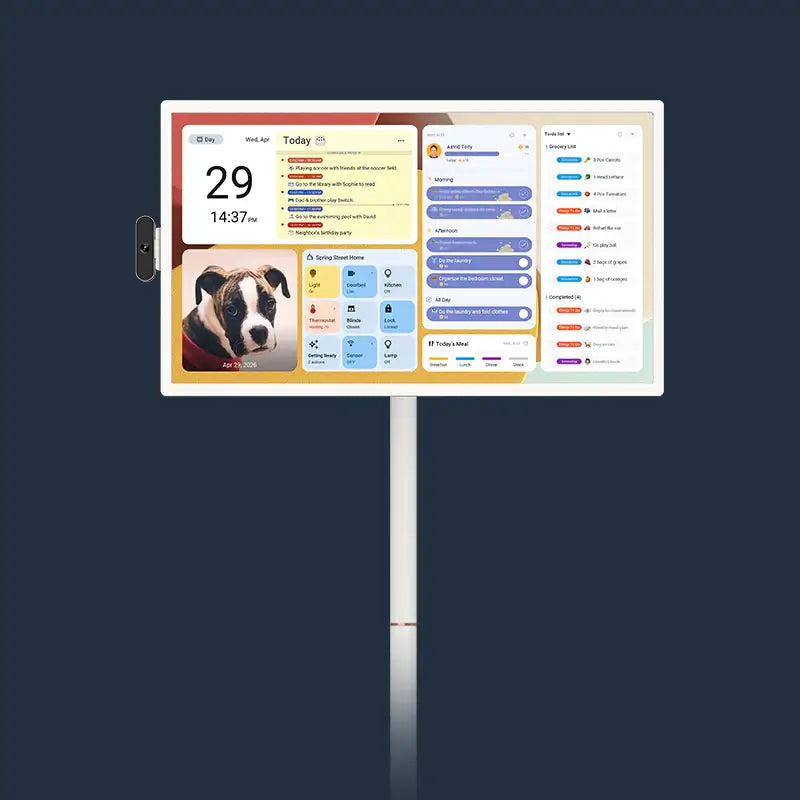
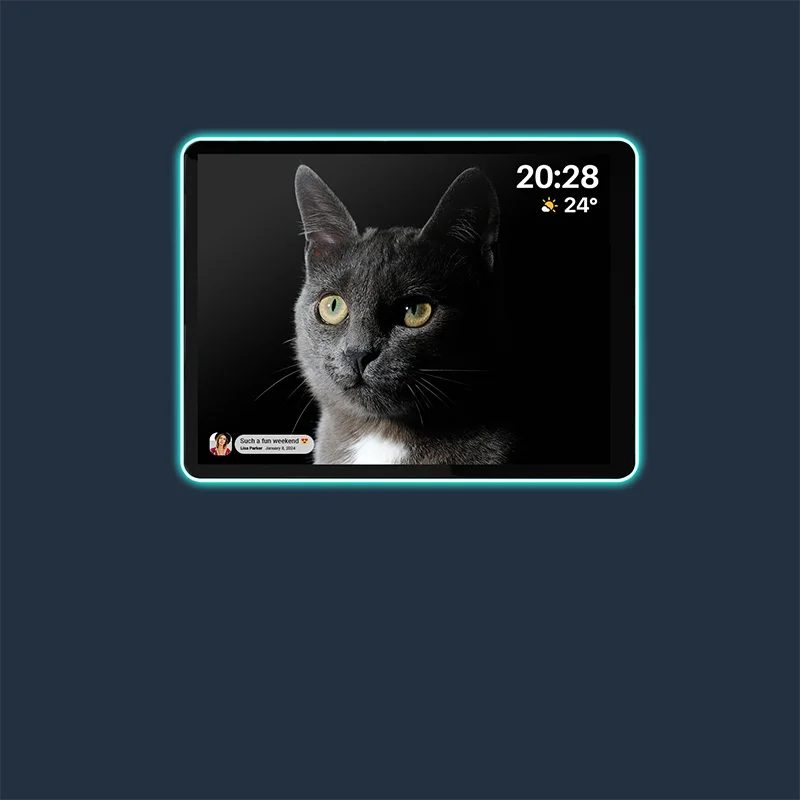
Our Apolosign 27" 4K Digital Calendar syncs a family calendar automatically with Apple, Google, Outlook, and other calendar accounts, so everyone sees the same schedule without manual entry. It also includes Routines, which can turn a chore into points and rewards, and a Message Board for posting reminders and countdowns. The 27-inch 4K touchscreen keeps that information visible across the room instead of buried in an app. These are organizational features for a shared display, not a treatment for ADHD or a guarantee that a child will notice or complete a chore on their own.

When a Simpler Cue Is Better
If the only problem is one chore in one spot, like the bathroom sink or the laundry hamper, a local task card or a labeled bin is often enough and costs less setup. A shared display still depends on an adult keeping the information current, and it does not replace practicing the routine with your child. If a shared visibility problem is the real bottleneck, you can browse our Digital Calendar collection to compare display sizes for your space.
For most families, the choice comes down to two situations. If one child, one chore, and one location are the whole problem, a paper card or label at that spot solves it without extra cost. If several chores and several family members need to see the same information in a shared room, a continuously visible display can carry that load better than a phone reminder everyone forgets to check. Either way, start with the routine itself: define the chore, place the cue where it starts, and adjust based on where it actually breaks down.
FAQs
How do I simplify a chore that keeps failing even after I built a visual sequence?
Cut the sequence down to fewer steps before changing the visual format. If a three-step version still stalls, drop to two steps and rebuild success there before adding complexity back in.
Should I use pictures or written words on a chore chart?
Base the choice on what your child can act on quickly, not on what is easiest for you to make. Pictures usually help younger children or children for whom reading adds an extra barrier, while older children who read comfortably may do fine with short written steps.
What should I do if my child ignores the chore reminder entirely?
Check where the reminder is placed before assuming the child is ignoring it on purpose. A cue placed away from where the chore begins is easy to miss even when the child intends to do the task; moving it to the starting point often resolves this without any other change.
How long should I keep reminding my child before removing a prompt?
There is no fixed timeline. Wait until your child completes the current version of the chore with less help than before, then remove one prompt and watch what happens. If completion drops, restore that prompt and try again later rather than removing more support at once.
Is a wall display necessary, or can a paper chart work just as well?
A paper chart or task card works well when one chore in one location is the only issue. A continuously visible display is more useful when several family members need to see the same shared schedule in a common room, since it does not depend on anyone remembering to open a phone app.