




To adjust a school morning routine for winter weather, move status checks earlier, stage bulky gear the night before, and follow one visible sequence. Then test a 15-minute departure buffer against your family's slowest step instead of guessing. This keeps cold mornings calmer without forcing every school day to start unnecessarily early.
The adjustments below work together: a weather cue tells you whether to change anything at all, evening staging removes decisions from the morning, and the buffer calculation gives you a number to test and adjust.
Start With the Weather and School-Status Cue
Before you touch the clock, check two things: the local forecast and your school's official status update. That order tells you whether today needs your normal routine, a tested buffer, or a bigger change.
Make the Forecast the First Winter Cue
Check your local forecast early enough to still change clothing, gear, or departure plans if needed. Winter travel time is not fixed the way it is in warmer months, since winter conditions can change quickly, and a clear morning can turn icy by the time you leave. Treat the forecast as a planning input, not a formality you skip because yesterday was fine.
Add the School or Transportation Status
Next, check your district's official channels, such as email, text, app, website, or a transportation notice, since alert methods vary by school and this reminder is a bounded, local one rather than a national rule. Do not assume a delay or closure just because the forecast looks rough. Your district's official alert channels are the only source that confirms an actual change to the school day.
Choose the Morning Branch
Once you have both pieces of information, pick one of three branches. Keep your normal departure target when the forecast and school status show no real change. Use the tested seasonal buffer, described later in this guide, when gear or travel will predictably run slower. Make a larger change to your plan only when the trip itself, the transportation schedule, or the school's status update requires it.

Stage Winter Gear the Night Before
A crowded entryway is where winter mornings usually fall apart, so fix that the night before instead of during the rush. Assign a landing zone for each child's gear and set out tomorrow's full outfit before bedtime.
Give Each Child a Landing Zone
Assign one consistent spot for each child's backpack, coat, boots, and small accessories, such as a hook, a bin, or even the back of a chair if your entryway cannot fit a full row of cubbies. A family with three kids sharing one narrow hallway can label three hooks and three floor bins instead of relying on one shared pile. When gear has a fixed home, children stop hunting for a missing glove while everyone else waits by the door.
Stage the Next Day's Full Set
Set out clothes, coat, boots or shoes, hat, gloves, backpack, lunch, and any transportation-specific item, like a bus pass or car seat cushion, before bedtime. Pair small items together, such as clipping gloves to a coat sleeve, so they do not disappear into the general clutter of a shared entryway. This kind of night-before preparation is a common recommendation for easing school morning routines, and it works the same way for winter gear as it does for backpacks and homework folders. A shared family schedule can help everyone stay aligned on which nights need extra staging time, like the night before an early bus pickup.
Create a Place for Wet Gear
Keep wet boots, snow pants, or damp mittens in one designated spot that will not block the path to the door, such as a boot tray or a mat near the entrance. Make that spot obvious so kids drop gear there after school instead of scattering it around the house. A predictable landing place after school is what keeps the same zone ready and uncluttered the next morning.

Run a Winter-Adjusted Morning Sequence
Bulky gear adds real steps to a normal morning, so the fix is to give those steps a fixed place in the order rather than squeezing them in at the end. Use one sequence every school day so nobody has to think about what comes next.
Put the Slow Winter Step on the Clock
Identify which step actually slows your mornings down, whether that is dressing a toddler in snow pants, finding matching gloves, or handing off gear between two kids getting ready at once. Place that step earlier in the sequence, before the final shoes-and-coats countdown, instead of hoping it will somehow fit into the last five minutes. A family whose four-year-old needs help with zippers and boots should schedule that help right after breakfast, not after the backpacks are already by the door.
Use One Visible Exit Sequence
Post or display the same short order every school day so kids know what happens next without being told. As you adjust school morning routines for winter, a six-step order works well for most households:
- Check the weather and school-status update.
- Handle bathroom and breakfast.
- Get dressed in regular clothes.
- Add boots, coat, hat, and gloves.
- Start a visible countdown and gather at the door.
- Do one final backpack-and-gear check before leaving.
This kind of predictable structure, paired with a visible countdown and one last check, is a practical way to organize a school morning for kids of different ages. Save your one gear check for this final step rather than repeating it throughout the morning.

Add and Test a Realistic Departure Buffer
Winter mornings usually need a little more time, but adding too much makes every school day feel unnecessarily early. Start with a 15-minute allowance, then adjust it based on what actually happens in your house.
Use 15 Minutes as a Starting Allowance
The calculation is simple: your normal departure time minus 15 minutes equals your tested winter departure target. If your family normally leaves at 8:00 a.m., test a 7:45 a.m. departure target on cold or snowy mornings. Treat this 15-minute figure as a starting point to try, not a fixed winter standard that applies to every household or every storm.
Adjust From the Slowest Recurring Step
Run the tested target for a week or two and watch your slowest recurring step, whether it is dressing, boot searches, or getting two kids out the door at once. Add a few more minutes if that step keeps overrunning the target. Trim the allowance back toward your normal time if the extra 15 minutes consistently goes unused and conditions have not changed. Reserve a separate, larger adjustment for days when the trip itself changes, such as a snow-covered walk to the bus stop or an actual transportation delay from the school.
When a Visible Apolosign Calendar Helps
A visible calendar is not something every family needs for winter mornings, but it solves a specific problem for some households. It fits when your schedule already lives in a digital calendar, yet family members still miss updates because everyone checks their own phone separately, or not at all.
Choose It When Phone Visibility Is the Friction
If your family already keeps school events, bus times, and winter closures in a digital calendar, but someone still misses the update because it never made it off a phone screen, a shared display can close that gap. It is less useful when your household already has one visible, consistently maintained schedule, whether that is a wall calendar or a whiteboard everyone actually checks. In that case, adding a screen will not fix a system that already works, since a visible family calendar only helps when the underlying update habit is missing.
Use It as the Routine's Shared Display
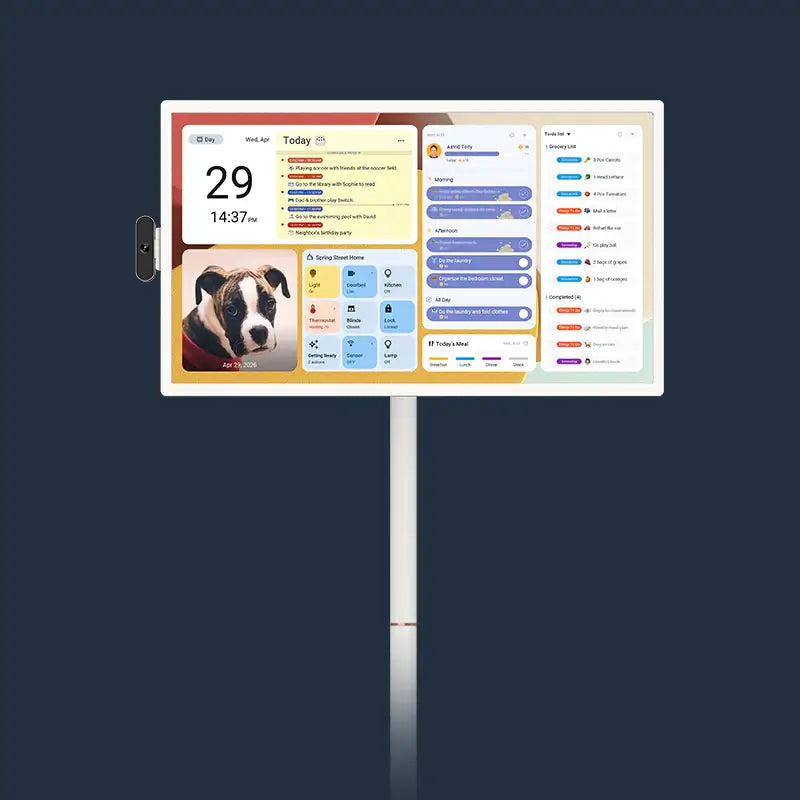
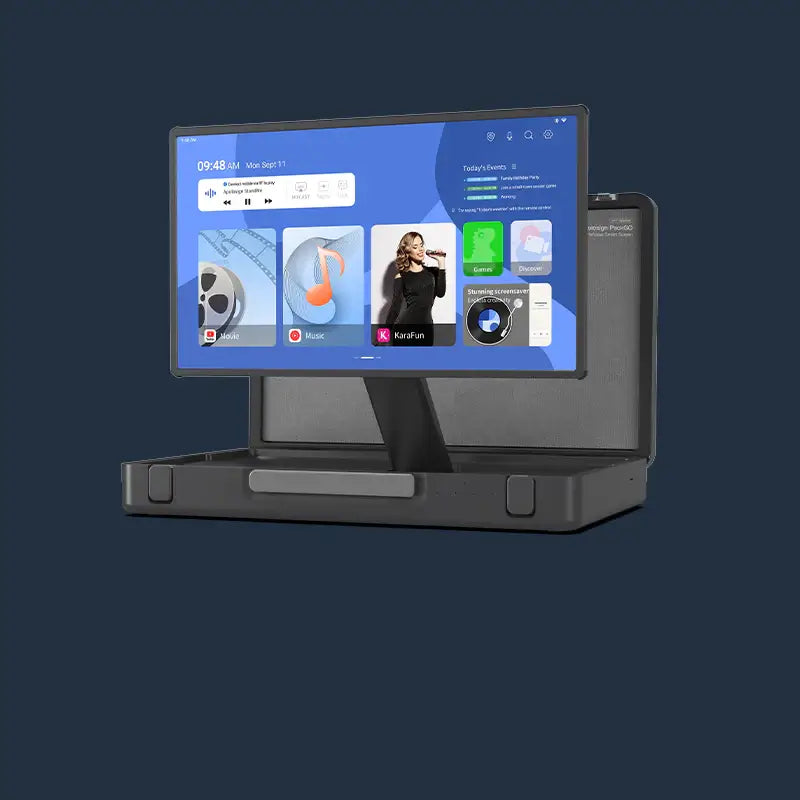
The Apolosign 15.6-inch Digital Calendar auto-syncs with Apple, Google, Outlook, and other calendars, turns routines into simple point-based chores, and lets you post reminders or countdowns on its Message Board. We built it so families can keep the weather cue, the tested departure target, and the short winter sequence in one place everyone in the house can see, rather than replacing the routine itself. If a shared, always-visible layer sounds like what your winter mornings are missing, you can view the Apolosign 15.6-inch Digital Calendar product page to see if it fits your household.
FAQs
How much extra time should we add to a winter school morning?
Start with 15 minutes as a testing allowance, not a guarantee. Subtract it from your normal departure time to get a trial target, then add more time if your slowest step, like dressing or finding gear, keeps running past that target. Trim the allowance back if it consistently goes unused.
When should we check for a snow-day or school-delay update?
Check your local forecast early enough to still adjust clothing or timing, then check your school district's official email, text, app, or website for an actual delay or closure notice. Local alert timing and methods vary by district, so rely on your district's specific channels rather than a general weather rule.
What should we prepare the night before a cold-weather school day?
Set out next-day clothes, boots, coat, hat, gloves, backpack, lunch, and any transportation-specific item like a bus pass, and give each item one assigned landing spot near the door. Pairing small items together, such as clipping gloves to a coat, keeps them from getting lost in a busy entryway.
Is a visible digital calendar worth using if we already have a phone calendar?
It is worth considering if your family maintains a digital calendar but people still miss updates because everyone checks their own phone. If your household already has one shared, visible schedule that everyone consistently checks, like a wall calendar in regular use, a screen is unlikely to add much on its own.