





If you're a parent reading this, I think you know exactly what I'm talking about.
It's 7:30 in the morning. You're rushing your child to put on shoes while your brain frantically scans: Did I pack his swim bag today? Did I sign that permission slip? Then, after drop-off, you get home and realize that email you promised to reply to last night is still sitting in your drafts. You sit on the couch, a mountain of tasks ahead, but your brain feels like mush, and all you want is ten minutes of scrolling to "reboot."
If this sounds familiar, I want to give you a virtual hug first. You are not alone.
Many parents (myself included) have these moments. It's not laziness or irresponsibility—it's that our brains, especially those with ADHD or neurodivergent traits, operate on a different system when it comes to processing time, information, and daily logistics.
This article is for you—the parent who is already trying so hard, yet always feels like you're "chasing time."

It's Not Your Fault: Understanding "Time Blindness"
Have you ever noticed that some people have an uncanny sense of time—say "five minutes" and it's exactly five minutes? But for others, "five minutes" and "half an hour" feel virtually the same? The latter is often described in psychology and ADHD research as "Time Blindness."
This really isn't because you don't care. It's a difference in Working Memory and time perception. Your brain might be better wired to process the present, the concrete, and the visual, rather than abstract future time points.
This leads to certain unspoken struggles in daily family life:
- "Memory outsourcing" fails: You try to keep all the kids' activities, school events, and appointments in your head, but your brain's "sticky note" is just too small. Information overflows, and you end up remembering "Oh, that form was due today!" at the very last minute.
- Transition wars: You tell your child, "Ten more minutes of play, then homework." Ten minutes later, you turn off the cartoon, and they explode. Your "ten minutes" and their perception of it might as well be in different time zones.
- The family CEO information silo: The entire family's schedule (your partner's meetings, the kids' activities, your own work plan) lives only in your head. You're the sole information outlet, constantly answering "Mom, what's on today?" or "Honey, what time are we picking up the kids?" This invisible "cognitive labor" is incredibly draining.
Making the "Invisible" Time "Visible"
So, here's the question: Since our brains aren't naturally wired to "remember" and "perceive" abstract time well, what can we do?
One powerful strategy repeatedly validated in clinical guidelines and by ADHD coaches is: "Externalize" the information. Stop forcing yourself to "remember." Instead, put important information where you can always see it. Use visual cues to reduce cognitive load and compensate for fragile internal memory.

3 Proven Ways to Externalize Time for Your Family:
- Create a Visual Weekly Schedule: Use a large, color-coded board in a high-traffic area (like the kitchen) to map out everyone's activities.
- Post Daily Routine Checklists: Place fixed checklists on the fridge for morning and bedtime routines to support fragile working memory.
- Use a Visual Timer for Kids: Implement visual countdowns so your child (and you) can actually "see" time passing during transitions.
The core of these methods is to move time out of your brain and onto the wall, the fridge—into a constant visual reference. It relies not on your memory, but on environmental prompts. Research on visual schedules for ADHD consistently supports this externalization approach as an effective strategy for managing executive function challenges.

How a Family Visual Hub Changed Our Daily Routine
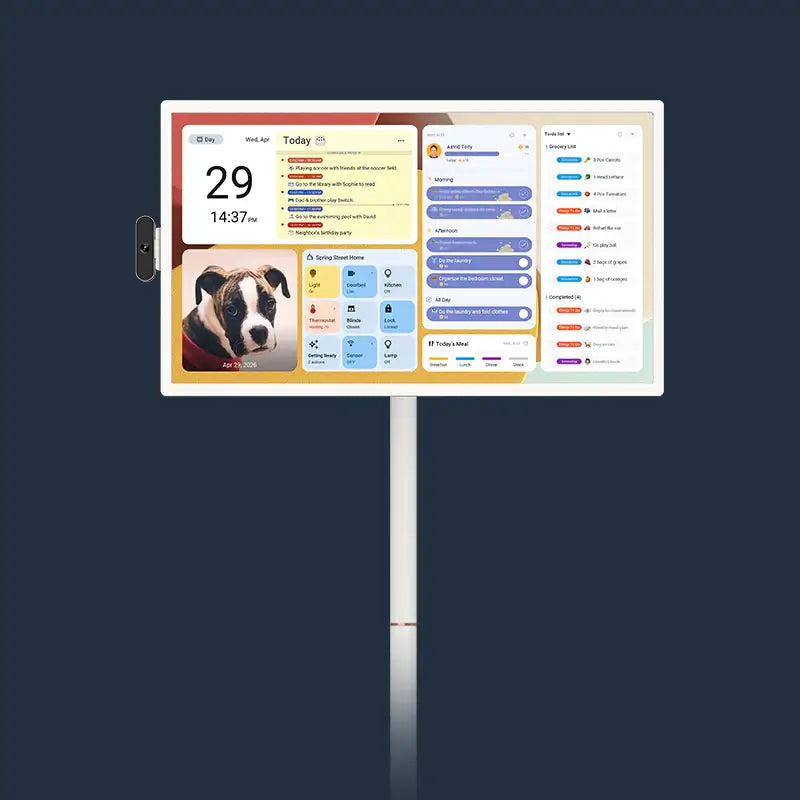
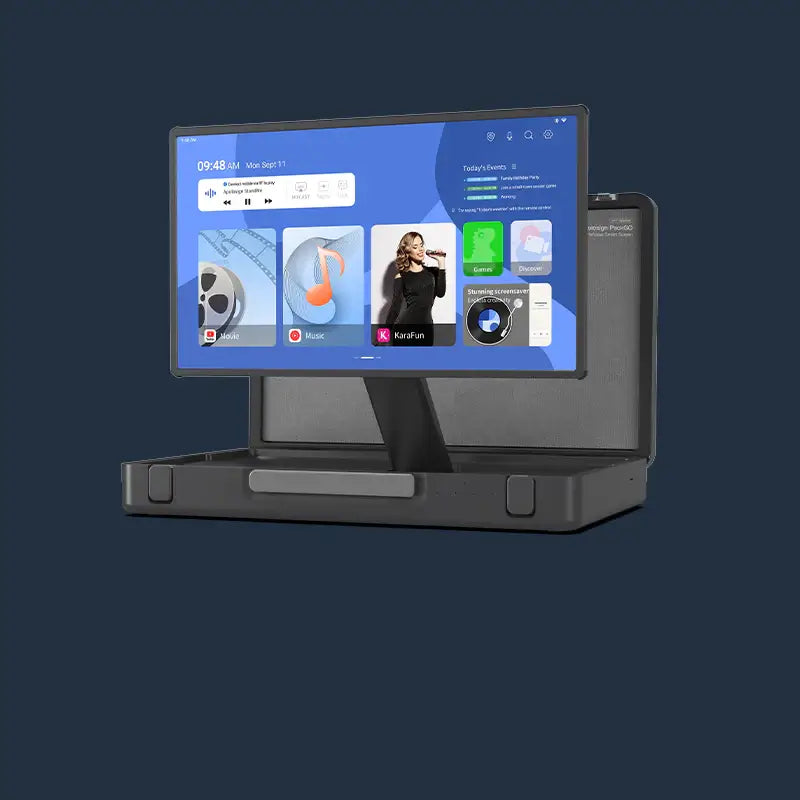
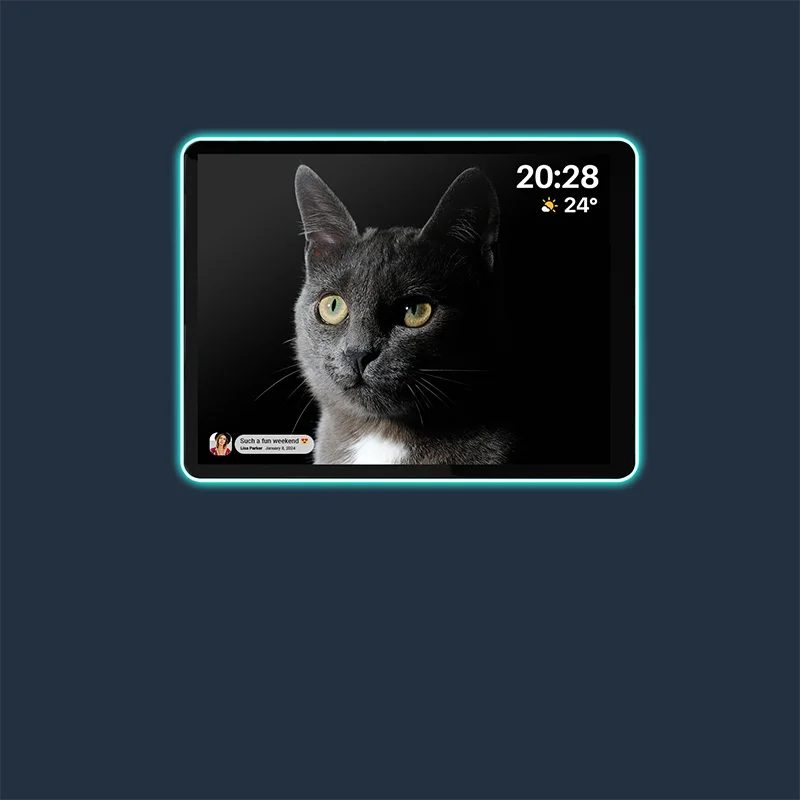
After trying whiteboards, sticky notes, and phone calendars, we eventually upgraded to the Apolosign digital calendar. It serves as an always-on, wall-mounted family organizer designed to make time instantly visible in our home's busiest shared spaces.
I didn't approach it as a "solution," just as a more structured version of what we were already trying to do. But over time, a few design choices quietly addressed problems we had been struggling with for years. If you're also exploring options, this guide on the best digital calendars for ADHD families covers what to look for in more detail.
1. Time becomes visible, not hidden in devices
The biggest limitation of phone calendars is that they are passive—you have to remember to check them.
In real life, especially during morning chaos, that rarely happens.
Apolosign sits on the wall as an always-on display in a high-traffic area like the kitchen or hallway. Instead of pulling out a phone, everyone naturally absorbs the schedule while walking past it.
Color-coded blocks make the day immediately readable:
- "Leave for school"
- "Meeting"
- "Practice time"
The effect is subtle but important: the schedule is no longer something you check, it's something you see living in the environment.
2. Turning scattered calendars into one shared visual map
Before this, our family schedule was split across multiple places—work calendars, school emails, phone reminders, and mental notes.
Apolosign syncs with Google Calendar, Apple Calendar, and Outlook, which means those fragmented systems become one unified view on the wall. Learn more about how shared family calendar sync works across different platforms.
Each person has a clear color identity:
- Blue: work meetings
- Green: kids' activities
- Orange: partner travel
Instead of constantly asking "What's happening today?", the entire household is looking at the same time map.
It doesn't eliminate coordination—but it removes repetition.
3. Tasks shift from reminders to visible structure
One feature I didn't expect to matter as much was the built-in task and points system.
We started using it for simple routines:
- Pack school bag
- Finish homework
- Practice piano
What changed wasn't the tasks themselves, but how they were experienced.
Instead of verbal reminders, tasks became visible items on the same family screen. When completed, points are updated in real time, creating immediate feedback. See how the task and points system helps children build lasting daily habits.
Over time, this shifted the dynamic from:
"Mom reminding me again"
to:
"I know what I need to do today"
For younger children especially, the combination of visibility + feedback creates a more natural sense of responsibility.
4. A calmer household rhythm, not a "perfect system"
It's important to be realistic: no tool removes the complexity of family life.
But what changed for us was the friction.
Less repeating instructions.
Less "Did you see my message?"
Less mental tracking of everyone's schedule. The system doesn't make life easier by doing things for you—it makes time easier to see, which reduces cognitive load during already busy moments.
Turn Daily Chaos Into a Clear Family Rhythm
If your family is constantly overwhelmed by scattered schedules and mental load, it may be time to shift to a more visible system. The Apolosign digital calendar turns your family schedule into a shared, always-on hub, helping you sync calendars, organize chores, and keep everyone aligned in one place. Instead of relying on memory, messages, or phone reminders, you can bring clarity into your home with Apolosign digital calendar and build a calmer, more coordinated daily routine that everyone can actually follow.
📅 Ready to Bring Peace Back to Your Morning Routine?
Say goodbye to "time blindness" and morning chaos. The Apolosign Smart Family Calendar keeps your entire household synced, organized, and on time—all on one beautiful, always-on screen.
👉 Digital Calendar | Smart Family Organizer
No monthly subscription fees. Enjoy essential family organization features with a one-time purchase.
Frequently Asked Questions (FAQ)
Q1: What age range is Apolosign suitable for?
Its design is highly adaptable to different ages. For preschoolers (ages 3--6), it mainly relies on color blocks and icons to help them understand the day's "flow" (e.g., green = outdoor play, blue = study time), without needing to read. For school-age children and teenagers, text-based schedules and the task points system become more useful. Essentially, it's a tool to help the whole family "see" time, and how your child interacts with it can be adjusted as they grow.
Q2: I'm busy. Is the setup complicated?
This was a big concern for us too. The Apolosign setup is straightforward: plug it in, pair it with the mobile app via QR code, and then link your Google, Outlook, or Apple calendar. Your existing schedules will automatically sync and appear on the wall. Day-to-day operation is essentially "update something on your phone's calendar → it updates on the wall automatically," requiring almost no extra maintenance. The task and points system is also easily set up via the app. One initial setup, and daily operation is near zero.
Q3: Does Apolosign require a monthly subscription fee?
No. Apolosign does not require any monthly or annual subscription fees for its core features. After purchasing the hardware, you can enjoy essential features such as calendar sync, multi-user sharing, and the task points system without recurring costs. It's designed as a simple, one-time purchase solution for families who want a smarter way to organize schedules without ongoing subscription fees.
You can check the full feature list and subscription details on the official product page.
Q4: How is the compatibility with different device systems?
Apolosign supports major calendar ecosystems. You can sync with Google Calendar, Apple iCal, and Microsoft Outlook Calendar. Each family member can use their own phone (iOS or Android) to manage their personal schedule via the app, and all updates sync to the wall calendar in real-time. Whether you want a shared family calendar or prefer individual management, it's very flexible.