


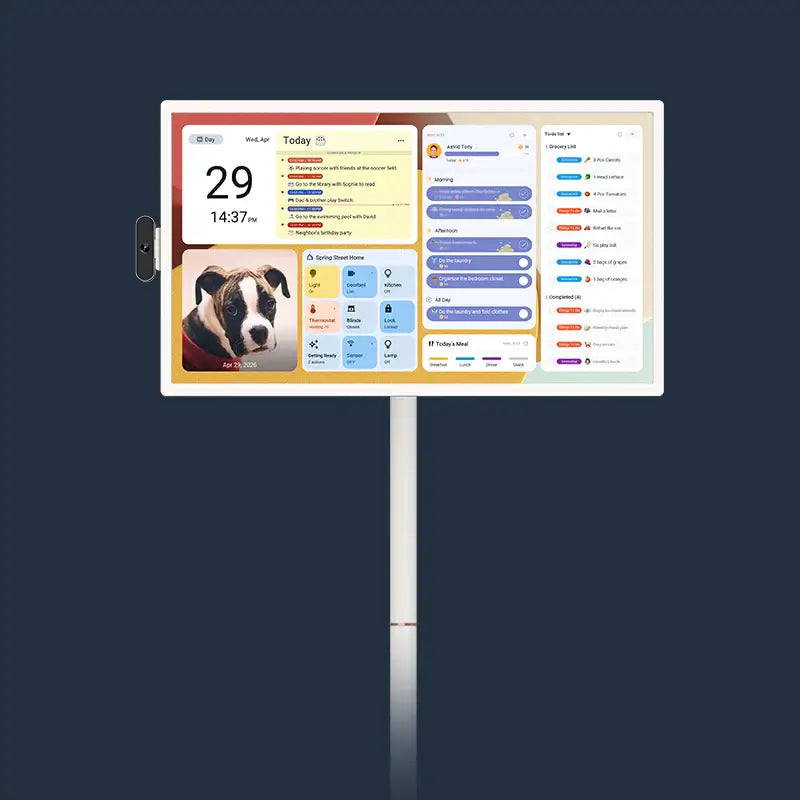
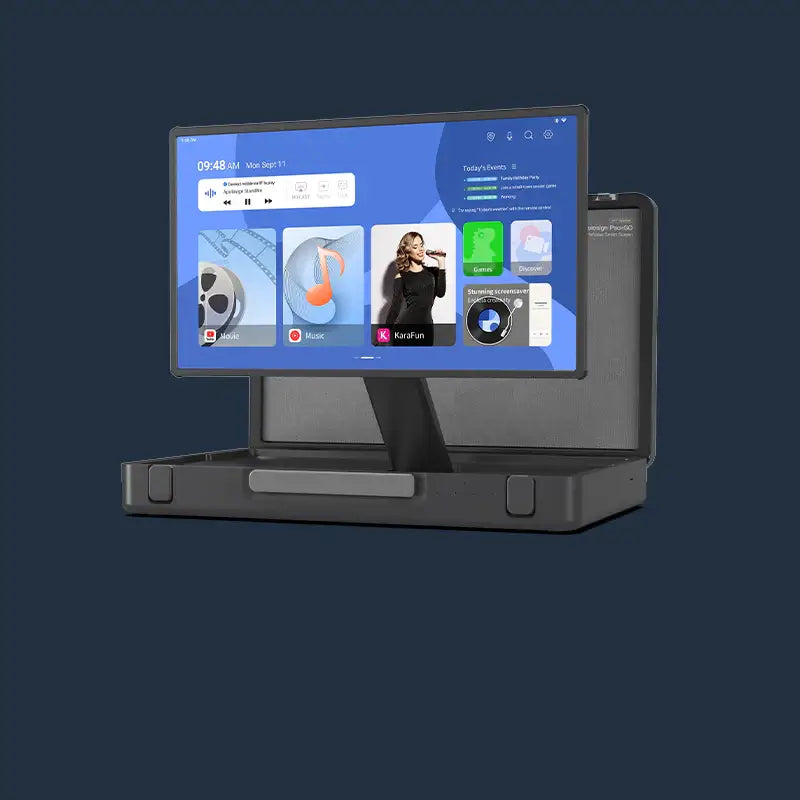
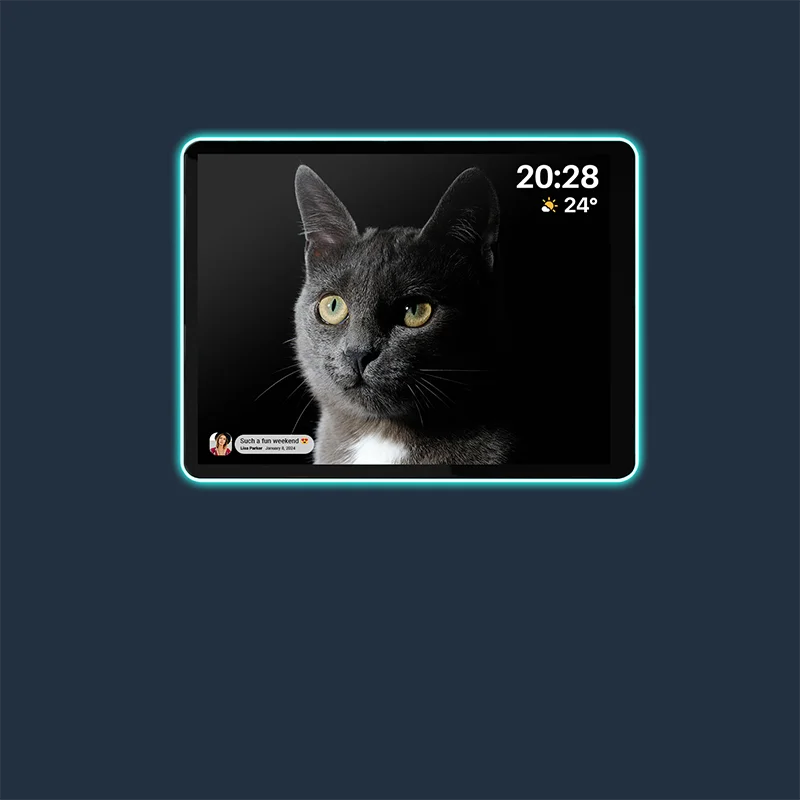


If your family adds new photos all the time and wants the display to keep changing, a digital photo frame is usually the better fit. If you would rather pick a few favorite pictures and keep them in a planned arrangement, a printed photo wall fits better. The best family photo display comes down to two things: how often you want to change the photos and where the display will go.
Neither option wins for every home. The sections below walk through each household situation and why it points one way or the other.
Choose a Digital Frame for Photos You Update Often
A digital frame makes the most sense when new photos keep coming in and you want people to actually see them. Here's what that routine looks like.
Picture a family with kids in sports, a new baby, or grandparents who text photos every weekend. The camera roll fills up fast. With prints, every new favorite means ordering a copy, finding a frame, and deciding what comes down. Most families in this spot end up with the same old photos on the wall while the new ones stay on their phones.
A digital frame fixes that problem by putting many photos in one changing display. Instead of picking a single image, you can build a slideshow, and the newest frames covered by Business Insider's guide connect to Wi-Fi so you can add photos straight from your phone. For a busy household, that means last weekend's game can be on the shelf the same day. Not every frame works the same way, though. Pick one whose photo-adding method fits the people who will use it.
Think about who will manage the photos, too. If several relatives want to send pictures, a frame that lets family share photos from their phones keeps the display fresh without one person doing all the work. Our Apolosign digital photo frame gift setup checklist covers loading photos and connecting family before you hand it off. Most phone pictures are tall or wide, so it also helps to read up on aspect ratios for phone photos to avoid awkward cropping.
Choose a Printed Photo Wall for a Curated Arrangement
A printed photo wall works best when you want a few chosen pictures to be part of how a room looks. This is a different goal from keeping up with new photos.
Imagine a family that wants wedding photos, a favorite beach day, and a portrait of the grandparents in the hallway. They don't need the display to change every week. They want it to look finished and feel like part of the home. For them, a printed wall is the better fit, because they can choose each photo, frame, and spot on purpose.
That planning is the main strength of prints. You can match frame colors to the room, keep a common thread like all black and white photos, and decide which picture should catch the eye first. A printed wall can still change. You just swap prints by hand when you decide it's time, so plan for that extra step.
Preview the layout before you drill. One family photo gallery guide suggests laying all your frames on the floor and trying different arrangements first. Then cut paper templates of each frame from kraft paper or newspaper and tape them to the wall. This lets you adjust spacing and height and see how the wall looks from where people will stand. You end up with fewer extra holes and a wall that looks planned, not crowded.

Let the Available Spot Set the Final Fit
Once you know your update routine, the space you have can confirm or change the choice. A single frame and a full gallery wall need very different spots.

Say one family has a kitchen counter, an entry table, or a bookshelf with room for one screen. They want a single focal point everyone passes by. A digital frame fits here, as long as the model suits that exact spot. Frames are not all built the same. TechRadar's testing looks at shelf, desk, and wall placement and checks each frame's footprint, size, and stand angle, because those affect how easy it is to place. Some frames can hang on a wall and switch between portrait and landscape, while others can't. Match the frame's size, orientation, and stand or mount to your spot. Plan for an outlet nearby, too, since the frame needs power.
Another family has a long hallway, a staircase, or a blank wall above the couch. They want many photos seen together as one display. A printed wall fits that space better than one small screen would. Use the paper templates from the last section on the actual wall area so you can see how much fits before you buy every frame.
Some homes do both: a printed wall for the lasting favorites and a frame on a shelf for the newest shots. If you already have a smart family calendar, our guide on using a calendar for photos compares that option with a dedicated frame.

Make the Choice Based on Your Routine
Your routine decides it. A family that adds photos often and wants one display that keeps changing will get more from a digital frame. A family that wants a few chosen pictures arranged as part of a room will be happier with a printed photo wall.
Next step: pick the exact spot. For a frame, choose a model whose size, orientation, placement, and photo-adding method match that spot and the people who will send photos. For a printed wall, tape up paper templates and live with the layout for a day or two before you hang anything.
FAQs
Can a printed photo wall be updated?
Yes. You can swap prints in existing frames or add new frames over time. It just takes more hands-on work than a digital frame, so it suits families who update on purpose rather than every week.
Do all digital frames let you add photos from a phone?
No. Many newer Wi-Fi frames do, but methods vary by model. Some use an app, while others use different transfer options. Pick the method that fits the people who will add photos.
Can I use both a digital frame and a photo wall?
Yes. Many homes keep lasting favorites on a printed wall and use a digital frame on a shelf or counter for new photos. This gives you a planned look and a changing display.
Where can I find help setting up a digital frame?
Our digital photo frame FAQs page answers common setup, upload, and sharing questions.