





A workable middle school after-school routine follows one repeatable sequence: your teen arrives home, chooses a break inside a window you set, reviews the night's assignments, works through visible homework blocks with the phone out of reach, and finishes with a short check before dinner. The break length is the student's call. The finish line, a completed plan and a record of what got done, is not.
This shift does not happen in one day. You are handing over pieces of the planning job one at a time, while the before-dinner outcome stays fixed.
Use a Middle School After School Routine With One Fixed Finish Line
The routine only works if the same five steps repeat every weekday. Once the sequence is familiar, your teen can run most of it without you standing over the process.
The Weekday Sequence to Repeat
Start with arrival: backpack and school materials go in one place, then the agreed break begins. When the break ends, your teen reviews the assignment list, picks the first task, and moves the phone out of the study area before starting. Each work block ends with a quick note on what got finished and what is still open, and that note is checked before dinner. A regular time slot for this sequence, built around your family's actual evening, helps a student finish assignments more consistently than an improvised start time each night, according to the U.S. Department of Education's guidance on a regular homework window. Older students can usually draft this schedule themselves once you confirm it is realistic.
Why This Sequence Supports Ownership
The schedule stays specific to your household, but your teen increasingly builds it instead of receiving it. You are setting the frame, not filling in each task. Over a few weeks, your job shifts from managing every step to reviewing whether the plan the student made actually held up.

Let Your Teen Choose the Break Without Moving the Finish Line
Give your teen real control over the break, but only inside a boundary you set. The boundary is the latest time homework can reasonably start and still finish before dinner.
Set the Boundary, Then Offer the Choice
Decide the latest workable start time based on dinner and anything else on the calendar that night. Inside that boundary, let your teen choose a shorter, medium, or longer break depending on how the school day went. Have the student write down the chosen break time so the decision is visible instead of assumed, which makes the next check-in a quick glance rather than a debate.
Adjust the Window When the Evening Changes
On a night with a heavy assignment load, shorten the break through a rule you agreed on ahead of time, not an argument as the break starts. If your teen keeps needing more decompression than the window allows, that is information about the schedule, not proof the student cannot handle a break choice. Move the plan earlier or trim the workload expectations instead of adding more reminders.
Turn the Evening's Assignments Into Visible Homework Blocks
Homework time changes by the night, so build blocks from the actual assignment list instead of a fixed nightly number. The table below shows the setup and what your teen should have to show for it at the end.
| Situation or input | Student's block setup | End-of-block output |
|---|---|---|
| List of tonight's assignments | Write down every task before starting any of them | A visible list instead of a mental one |
| Which task is most urgent | Order tasks by due date and difficulty | A clear first task to start with |
| How long each task will take | Estimate effort per task, including checking work | A rough block length per assignment |
| Need for a break mid-session | Add one short break inside the work window | A block that matches actual attention span |
| Finishing a task | Check the work before moving on | Confirmed complete or flagged for review |
| Running out of time | Note what is unfinished and why | A remaining-work list for the next session |
Middle schoolers typically spend somewhere in the range of 60 to 90 minutes on homework on a given weeknight, though that depends heavily on courses and teachers, and the plan should always leave room to check the work rather than just finish it, according to Understood's homework guidance. Treat that range as a planning reference, not a target every student has to hit.

Make Phone Boundaries Automatic During Study
A location rule beats a reminder every time, because it removes the decision instead of asking your teen to resist a notification in the moment. Build the rule into how the block starts, not into what happens after a text pulls focus.
Use a Physical Boundary
Charge the phone in another room before the work block begins, every weekday, in the same spot. Texting or checking social media during homework forces a student to re-read the assignment each time they return to it, which slows the work down and increases mistakes, according to Understood's advice on removing phone access during homework. Keeping the same location each day turns the rule into a habit instead of a nightly negotiation.
Make Exceptions Predictable
A genuine school task sometimes needs the phone. Agree on the process before it comes up:
- Name the specific school task before retrieving the phone.
- Use the phone only for that task, nothing else.
- Return it to its charging spot the moment the task is done and resume the block.
Building a habit like this is easier when the family's shared plan is visible somewhere everyone checks, which is one reason a family shared calendar can help set expectations before the work block even starts, and it also pairs well with a broader look at focus time routines for building distraction-free work blocks in general.

Replace Hovering With One Short Parent Check-In
Your job during the work block is to set the frame and step back, then return once at an agreed time. Constant check-ins keep you responsible for work that should belong to your teen.
The Parent Starts as a Coach
Before the block starts, ask your teen to state the order of assignments and roughly how long each will take, including any planned break. Then physically leave the study area. That visible step away signals the work is the student's job, not a shared task, which is the coaching approach recommended for middle school parents moving away from constant supervision, according to Flint Hill's homework guidance for parents.
Review Progress Without Taking Over
Return at the agreed time and ask what is complete and what remains, rather than reviewing every answer. Step in with help only if your teen is genuinely stuck or the plan clearly does not fit the night. As the student starts and records work without prompting, cut back the reminders you were giving before.

When the Routine Fails, Change One Variable at a Time
A broken routine usually points to one specific cause, not a character problem. Change that one thing for the next weekday instead of adding several new rules at once.
If Work Starts Late
Keep your teen responsible for naming the first task, even on a slow start. If the break is eating into the work window, shorten or move it using the rule you agreed on ahead of time rather than repeating prompts in the moment. Record whatever does not get finished so tonight's delay does not disappear or repeat unnoticed.
If the Workload Exceeds the Evening
Use due dates and difficulty to decide what gets done first when everything cannot fit. Keep a clear note of what remains and what the next action is, rather than forcing every assignment into an inaccurate time slot. A night with too much work is not proof your teen cannot plan; it is a scheduling problem to solve for next time.
If Reminders Keep Returning
Check whether the plan itself is visible and realistic before assuming the student needs more oversight. Hand over one more piece, starting the block on time, or recording finished work, once the current setup is working. Add a parent prompt back only when it solves a specific, identified planning gap, not as a general safety net.
Start With One Week of Shared Ownership
The simplest next step is a five-day trial, not a permanent overhaul. Run the routine for one week and judge it by what actually happened, not by how it felt on the first night.
Run a Five-Day Ownership Test
Have your teen mark or write down the chosen break and each homework block for five weekdays. Review the result once, at the end of the week, instead of checking in every afternoon. Then change exactly one part of the plan, the break window, the block order, or the phone spot, before starting the next week.
Choose an Optional Visible Scheduling Aid
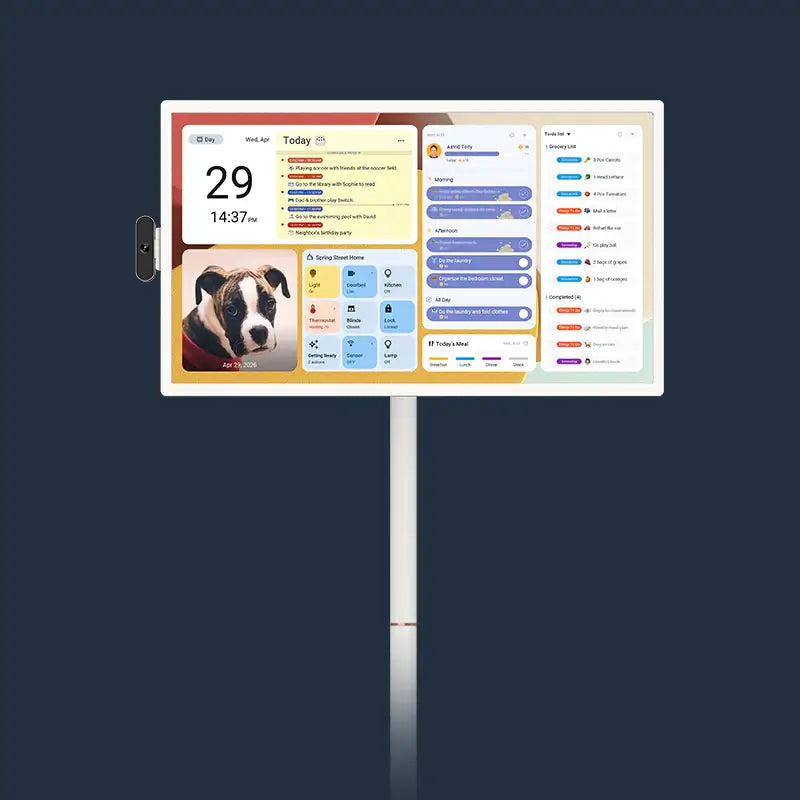
Some families find it easier to keep the agreed work window and reminders somewhere everyone in the house can see, rather than relying on memory or a single phone calendar. If that fits your household, our after-school routine guide walks through building that visible structure step by step. The tool is optional; the student's own planning habit is what actually drives the change.
FAQs
How can a student use a phone for a school task without reopening every distraction?
Agree on the process before the work block starts. The student names the specific school task out loud, uses the phone only for that task, and returns it to its usual spot the moment the task is finished. This keeps a genuine need from turning into open phone access for the rest of the block.
What should a student write down when homework is not finished before dinner?
Record what is complete, what is still open, and the next action or question for the following work session. This is a normal part of an evolving plan, not a failure to fix immediately. It also gives you a quick, factual thing to review instead of guessing what happened.
Can this routine work on nights with sports or other activities?
Yes, with adjustments. Set the latest workable start time after the activity ends, have your teen triage only the most urgent assignments for that night, and keep the same short completion record. Some assignments may not fit on a tight night, and that is a scheduling outcome to plan around rather than something the routine promises to prevent.
What should be on a middle school homework plan?
Include the chosen break, the first assignment and its rough time estimate, a planned check point, and a note on what remains unfinished. That short record is what lets you review the evening in a minute or two instead of asking about each assignment as it happens.