




For many parents, the hardest part of the school day doesn't end when the kids come home.
For families trying to create an after-school routine for kids, the challenge is often not knowing what should happen next or how to make the routine feel manageable.
The backpack lands on the floor. A snack turns into playtime. Homework gets pushed back.
“Time to start your homework.”
“Just a minute.”
“It's time to start.”
By the time homework finally begins, everyone may already be frustrated.
If this sounds familiar, your child may not simply be “lazy” or unwilling to cooperate. For many children who are still developing time-management skills, the transition from school to home can be difficult. They may know they have homework, but not know when to start, what to do first, or how to fit homework around meals, activities, breaks, and bedtime.
That's where a consistent after-school routine can help.
But creating a schedule and creating a routine your child actually wants to follow are two different things.
The goal isn't to make every minute of the afternoon productive. It's to give children a predictable structure while helping them experience small successes along the way.
Here's a simple approach families can try.

Start with a Simple After-School Routine, Not a Perfect Schedule
One common mistake parents make is trying to organize the entire afternoon at once.
For example:
- 3:30 — Get home
- 3:40 — Snack
- 4:00 — Math
- 4:30 — English
- 5:00 — Reading
- 5:30 — Clean up
- 5:45 — Shower
- 6:15 — Dinner
It may look organized on paper, but for some children, seeing so many tasks can feel overwhelming before they even begin.
Instead, start with a few predictable anchors:
Get Home → Snack & Reset → Homework → Break → Dinner → Get Ready for Tomorrow
Once your child becomes comfortable with the sequence, you can gradually add more details.
A routine works because children begin to know what comes next without having to make a new decision every few minutes.
Instead of telling your child “Go do your homework” every afternoon, homework becomes a familiar part of the after-school sequence.
Over time, the routine itself becomes a reminder.
Adjust the Routine Based on Your Child’s Age
The best after-school routine will look different depending on your child’s age and independence level.
For younger children, the routine may need to be very visual and simple, with just a few steps such as snack, homework, break, dinner, and backpack check.
For older children, the routine can include more responsibility, such as checking assignments, estimating how long homework will take, managing extracurricular activities, and preparing materials for the next day.
As children grow, the goal is to gradually shift from parent-led reminders to child-led planning. A visible family calendar can support that transition by giving children a clear place to check what comes next.
Let Kids Help Create Their After-School Routine
When a routine is created entirely by parents, children can easily feel like it is simply another set of rules they are expected to follow.
Whenever possible, give your child some ownership.
Parents can establish important boundaries and timeframes while allowing children to make small choices within them.
Try asking:
- “Would you rather do math or reading first?”
- “What kind of break helps you feel ready to work again?”
- “What would make homework time easier for you?”
This doesn't mean children need to control the entire afternoon.
Even small choices can make a routine feel less like something being imposed on them.
The best routine isn't necessarily the one that looks perfect on paper. It's the one your family can realistically repeat every day.

Break Homework and After-School Tasks Into Smaller Steps
“Finish your homework” can feel like a very big instruction.
For children who are still developing time-management and organizational skills, it can be easier to break the routine into smaller actions:
Get materials → Choose an assignment → Work → Take a break → Finish the next task → Check work → Pack the backpack
Each step gives children a clear next action.
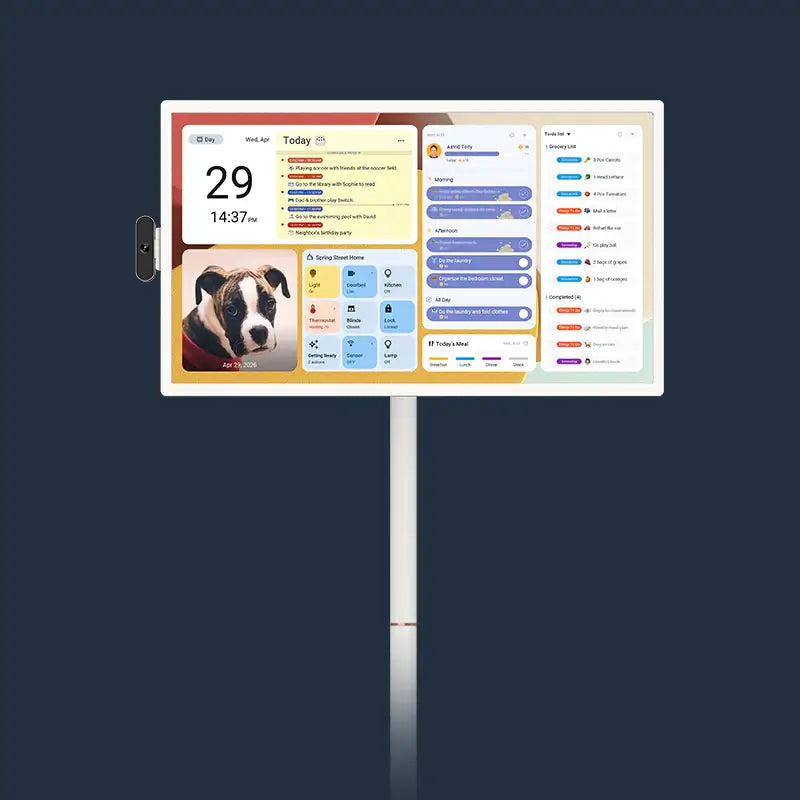
If your family uses a shared digital family calendar like Apolosign Digital Calendar, recurring tasks and after-school routines can be displayed visually, giving children a simple place to check what comes next.
The goal isn't to make a digital calendar responsible for the routine.
It's to give children a visual reference they can gradually learn to use independently.
Build Breaks Into Your Child’s After-School Schedule
A successful routine shouldn't be a nonstop list of responsibilities.
Children need time to transition from school, eat, move around, and recharge.
For example:
- 4:00 — Homework
- 4:30 — Break
- 4:45 — Homework
- 5:30 — Free Time
- 6:00 — Dinner
The exact timing will depend on your child and family schedule.
The important part is that breaks are treated as part of the routine rather than something children have to earn after reaching their limit.
A routine that includes breathing room is often easier to maintain than one that expects children to move from one task to another without stopping.
The Most Important Part: Focus on Effort, Not Just Completion
This may be the most important part of building a routine.
Parents naturally ask:
- Did you finish your homework?
- Did you pack your backpack?
- Did you complete your reading?
But children also need to know that their effort matters.
Maybe your child started homework without being reminded for the first time.
Maybe they checked the schedule independently.
Maybe they struggled with an assignment but kept trying.
These are meaningful achievements, even if the entire routine wasn't completed perfectly.
Instead of simply saying “Good job,” try something more specific:
“I noticed you checked your schedule and started your homework without me reminding you.”
That helps children understand exactly what they did well.
The goal is to create a positive connection between:
Effort → Progress → A Sense of Achievement → Confidence
Use Rewards to Help Kids Stick to Their Routine
Positive feedback can also be supported by a simple reward system.
Rewards don't have to mean buying a new toy or giving a physical prize.
They could include:
- Choosing the family movie
- Picking a weekend activity
- Earning extra time for a favorite activity
- Choosing what the family does together on the weekend
The important part is helping children see that their effort leads to positive results.
Apolosign Digital Calendar includes a Points & Rewards feature that allows parents to assign points to recurring tasks and routines.
As children complete their responsibilities, they can see their progress accumulate.
This creates a simple cycle:
Effort → Completion → Positive Feedback → Motivation
Over time, the goal isn't for children to depend on rewards forever.
Instead, rewards can help children experience the satisfaction of completing responsibilities and seeing their own progress.

Make the After-School Routine Visible with a Family Calendar
Another common challenge is that family schedules often exist only in a parent's head.
Parents know what needs to happen next.
Children may not.
Making the routine visible can change that.
Verbal reminders can work in the moment, but they often put the responsibility on parents to repeat the same instructions every day. Paper charts can help, but they may be harder to update when homework, activities, or family plans change.
A shared digital calendar gives families more flexibility because routines, reminders, activities, and changes can be updated in one place.
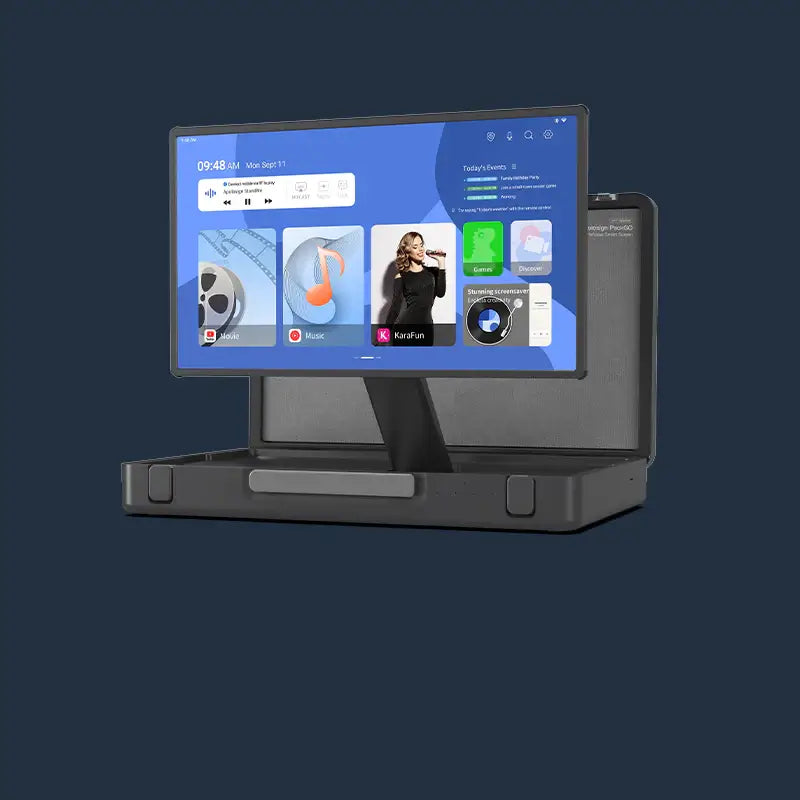
With Apolosign Digital Calendar, families can display school schedules, homework routines, recurring tasks, and family activities in one shared visual calendar. It can also sync with services such as Google Calendar, iCloud, and Outlook, helping bring existing family schedules together in one place.
For children, the habit can gradually shift from:
“Mom, what do I need to do?”
to:
“Let me check the calendar.”
That small change can become an important step toward greater independence and time-management skills.
Example After-School Routine for Kids
Here is a simple after-school schedule your family can adjust based on your child’s age, homework load, and evening activities:
- 3:30 PM — Arrive home and put away backpack
- 3:40 PM — Snack and reset time
- 4:00 PM — Check homework and choose the first task
- 4:10 PM — Homework session
- 4:40 PM — Short movement or play break
- 4:55 PM — Finish remaining homework or reading
- 5:30 PM — Free time or family activity
- 6:00 PM — Dinner
- 7:00 PM — Pack backpack and prepare for tomorrow
The exact timing does not need to be perfect. What matters most is that your child understands the order of the routine and can begin to follow it with less prompting over time.
A Simple After-School Routine to Try This Week
If you're starting from scratch, keep it simple.
1. Get Home
Put the backpack away and take a short break.
2. Snack & Reset
Give your child time to transition out of school mode.
3. Check the Routine
Look at what needs to happen that afternoon.
4. Start Homework
Choose one clear task to begin with instead of asking your child to “finish everything.”
5. Take a Break
Step away, move around, and recharge.
6. Finish the Remaining Tasks
Work through the next items one at a time.
7. Prepare for Tomorrow
Pack the backpack and check what is needed for the next school day.
8. Celebrate the Progress
Notice the effort, not just whether every item on the checklist was completed.
If the routine doesn't work perfectly at first, that's okay.
Maybe your child needs a longer break.
Maybe there are too many tasks.
Maybe they need more choices.
Adjust it.
A routine should fit your child—not the other way around.
The Goal Isn't a Perfect Schedule
Building an after-school routine is ultimately about more than getting homework finished.
It's about helping children gradually learn:
- I know what comes next.
- I can start by myself.
- I can finish something difficult.
- My effort matters.
- I can manage my own time.
That's why encouragement can be just as important as planning.
A perfectly organized schedule won't create a lasting habit if a child feels like they're constantly failing to follow it.
But when children experience small successes—and those successes are noticed—they can begin to associate routines with confidence rather than pressure.
A tool such as Apolosign Digital Calendar can provide the visual structure to support that process, with recurring routines, family scheduling, calendar synchronization, and points-based rewards.
But the most important part isn't the calendar itself.
It's helping children see that their effort leads somewhere.
Because the ultimate goal isn't to raise a child who follows a perfect schedule.
It's to help them become a child who can look at what's next and think:
“I know what I need to do. I can do this.”

Ready to Make After-School Routines Easier?
Apolosign Digital Calendar helps families create visible schedules, recurring routines, and simple rewards that children can actually follow. Bring homework, breaks, activities, and family plans together in one shared calendar—and help your child build independence one small step at a time.
Explore Apolosign Digital Calendar
Frequently Asked Questions About After-School Routines
What is a good after-school routine for kids?
A good after-school routine gives children a predictable sequence to follow after school. It may include putting away their backpack, having a snack, checking their homework, taking breaks, finishing assignments, preparing for the next day, and enjoying family time.
How long should kids rest after school before doing homework?
Every child is different, but many children benefit from a short reset period before starting homework. A snack, movement break, or quiet time can help them transition from school mode to home mode.
How can I help my child stick to an after-school routine?
Start with a simple routine, make it visible, let your child make small choices, and recognize effort along the way. Visual schedules and family calendars can also help children know what comes next without constant reminders.
Should homework come before or after playtime?
It depends on your child’s energy level and family schedule. Some children focus better after a short break, while others do better finishing homework before longer playtime. The key is to keep the order consistent so your child knows what to expect.
How can a digital calendar help with kids’ routines?
A digital calendar can make routines easier to see and follow. Families can display homework time, breaks, activities, dinner, and next-day preparation in one shared place, helping children build independence and time-management skills.