


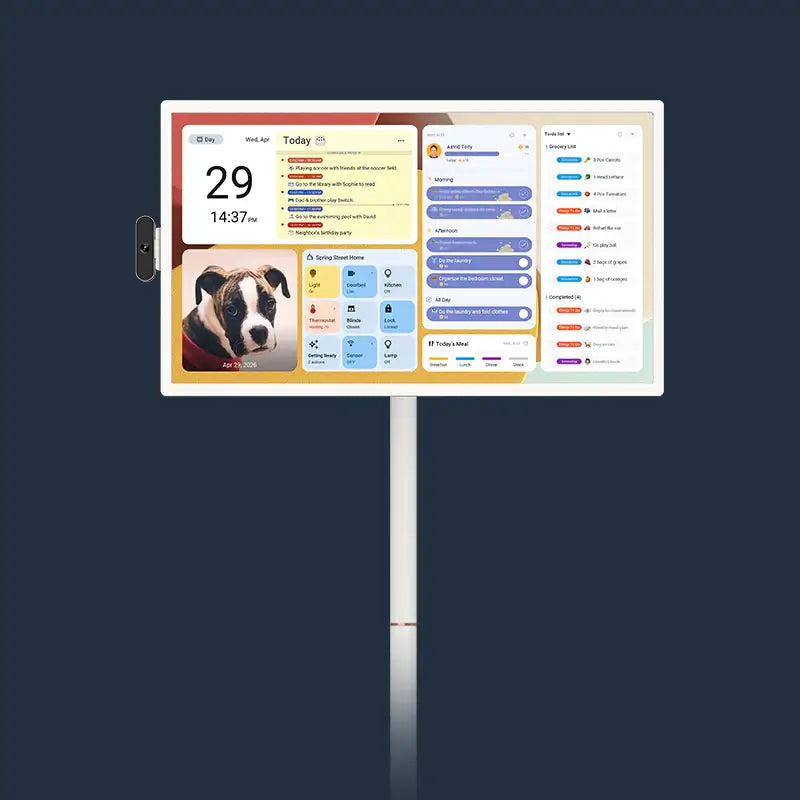
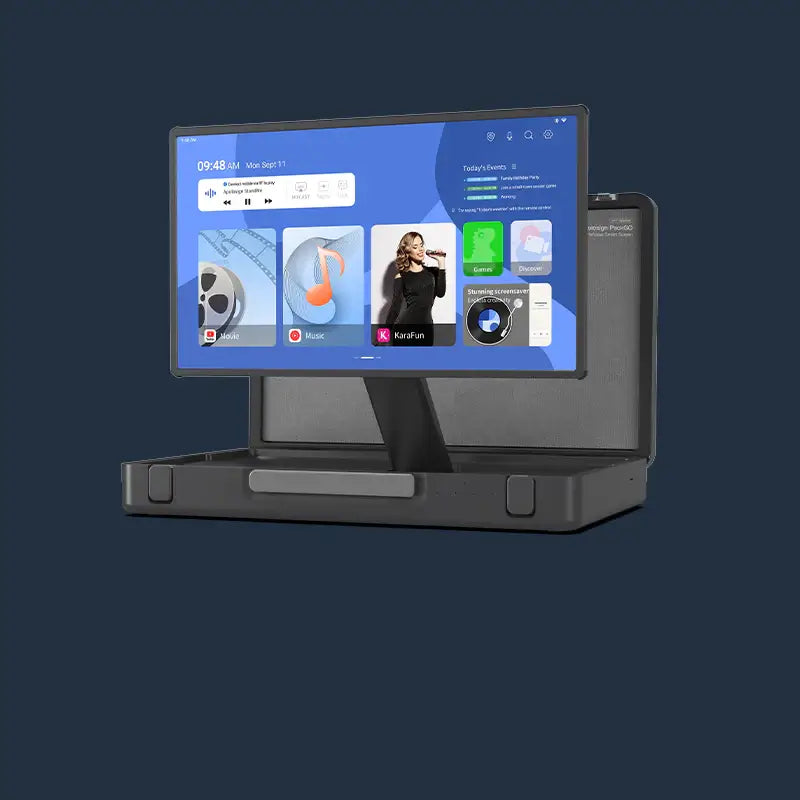


If your workout stays close to the mat, use a phone or tablet, as long as you can follow the screen from every position you use. If you work out farther from the screen or in a shared room, consider a portable TV, but only if the room has space for it during the session and a place to put it afterward. No screen type wins for everyone, so your choice comes down to three things: viewing distance, how you use the room, and storage.
Choose a Screen by Workout Distance and Room Use
Start with where you will stand, sit, or lie during the workout. Then pick a display format or dedicated Packgo Briefcase TV that naturally fits that spot.
| Screen | Better-fit workout situation | What changes the choice |
|---|---|---|
| Phone | Close mat work in a small room | Cues get hard to follow from some positions |
| Tablet | Close work with more screen nearby | Your workout moves away from the mat |
| Portable TV | Farther viewing or a shared room | No spot to stand or be stored |
Test each option from your farthest position, not from the spot where you press play. A plank at the far end of the mat or a standing move across the room is the real test. If you can follow the instructor from there, the smaller, easier screen is enough. If you can't, move one row down the table.

When Your Workout Stays Close to the Mat
Say you work out on a mat in a bedroom or small apartment. The screen can sit right beside you, so easy placement matters more than size.
A phone for the tightest setup
Pick a phone when floor space is tight and you already own one. The Pilates Anytime setup tips suggest propping the device on the floor beside or in front of your mat, on a chair, or on a stack of books. A clamp or tripod stand can also keep it in view. Then run through the moves you plan to do: on your back, on hands and knees, and standing. If you can follow each cue without moving the phone or craning your neck, you're set. When you're done, the phone goes back in your pocket and nothing is left out in a small room.
A tablet when you want more screen nearby
A tablet is the next step when the phone feels too small from the mat. Put it in the same spot and do the same run-through. If the bigger display is easier to follow when you're lying down or turned to the side, keep the tablet. It still fits on a chair or stand, and it slides into a drawer or bag after the session. If neither device is easy to follow, your workout probably reaches farther from the screen than a mat routine does. The next section covers that setup.
When Your Workout Uses a Shared Room
A larger screen makes sense when you're working out across the room or sharing the space with others. It only works if the screen has a spot to stand during the workout and a place to go afterward.
Picture a living room where you follow a standing cardio or strength video between the couch and the coffee table. Later, the family needs the room back for the evening. This setup changes two things. First, you're farther from the screen. A phone propped on the coffee table can be hard to follow once you step back to make room for your moves. Second, whatever you set up has to move or be put away when the workout ends.
Screen size needs a plan too. Home fitness retailer American Home Fitness notes that TV size depends on room layout, your viewing distance, and where your fitness equipment sits. In practice, stand where you'll exercise, look at where the screen would go, and make sure it won't block your moves, a walkway, or your equipment.
The word "portable" tells you a screen can move. It doesn't tell you how easy it is to lift or where it will fit. If you like the idea of moving a screen between rooms, walk the route first. Check the doorways, rugs, and the corner where it will wait. If the screen will spend the rest of the day in the kitchen or another room, a portable TV's other household uses can help it earn the space it takes up.
Choose a portable TV when three things are true: you can follow it from your farthest spot, it can stand clear of your workout space, and it has a place to go when you're done. If it would have to be lifted into a closet after every session, or it crowds the space you exercise in, keep a phone or tablet near your workout area instead.

Match the Model Details to Your Workout and Storage Plan
Once you've picked a screen type, the product listing tells you whether a specific model fits your room and routine. Here's what to compare, using our own 32-inch model as an example.
Compare screen size and resolution options
Screen size is measured on the diagonal. It tells you how much display you'll see from your workout spots. Resolution is the number of pixels that make up the picture: 1080p is Full HD, and 4K packs in more detail. Our 32-inch smart portable TV comes in 1080p and 4K versions, both with a 32-inch screen. Neither version guarantees you can read small on-screen text from across the room, so your farthest-position test still decides whether it works. Choose the resolution based on everything else you'll watch on it during the week. If you're weighing features beyond workouts, like audio and connections, our portable TV buying guide walks through them.
Match battery and physical dimensions to the routine
Battery life matters when there's no outlet near the spot where the screen will stand, such as a spare room with the only plug on the far wall. Our 32-inch model is rated for up to 6 hours of battery life. Treat "up to" as the best case, and charge between sessions if you work out often.
Size matters just as much. Our listing gives this model's dimensions as 18 × 32 × 151 cm. Before you order, compare the 32-inch TV dimensions with both spots: where it will stand during the workout and the corner or wall where it will wait afterward. TechRadar's review of the 32-inch model describes a rolling design and reports a boxed weight of 22 kg. That makes our Apolosign screen a better fit for a home where it can stay upright and roll between nearby rooms. It's a weaker fit for a routine where you'd lift it onto a shelf or into a closet after every workout.
Conclusion
If you work out close to the mat in a small room, a phone or tablet you prop nearby is the simpler fit that packs away easily. If you exercise across a living room or share the space, a portable TV makes sense when you can follow it from your farthest position and have a dedicated spot to park it afterward. The right home workout screens satisfy both viewing distance and storage.
Next, play a workout on a device you already own, test it from your farthest workout spot, and measure the storage area. If a larger screen passes both tests, compare our portable TV options against those room dimensions.
FAQs
Is a bigger screen always better for workout videos?
No. A bigger screen only helps when you work out far enough away that a small one is hard to follow. In a small room, a large display can get in the way of your moves and take up space between sessions. Pick the smallest screen you can follow from your farthest workout position.
Does 4K resolution make workout videos easier to follow?
Not on its own. 4K gives a more detailed picture than 1080p, but whether you can follow the cues depends on screen size, how far away you are, and the video itself. Try the screen from where you'll actually exercise. If 1080p looks clear from there, the extra detail matters more for movies and shows than for your workout.
How long can a battery-powered portable TV run during workouts?
It depends on the model's rating and how you use it. Our 32-inch smart portable TV is rated for up to 6 hours, which is a best-case figure. If you work out several times between charges, add up your weekly session time and plug the screen in before the battery runs low.
Should I buy a new screen or start with the phone I already have?
Start with the phone or tablet you already own. Run a full workout from every position you use. Upgrade only if you can't follow it from the farthest spot or you want one screen the whole household can use in a shared room. That way you'll know which size and setup actually fixes the problem before you spend money.