


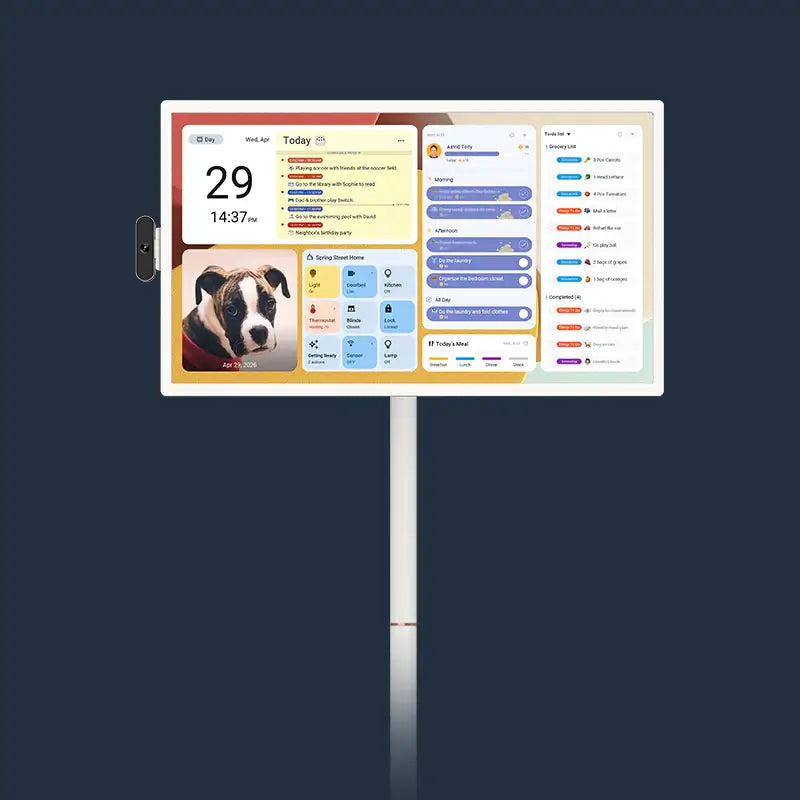
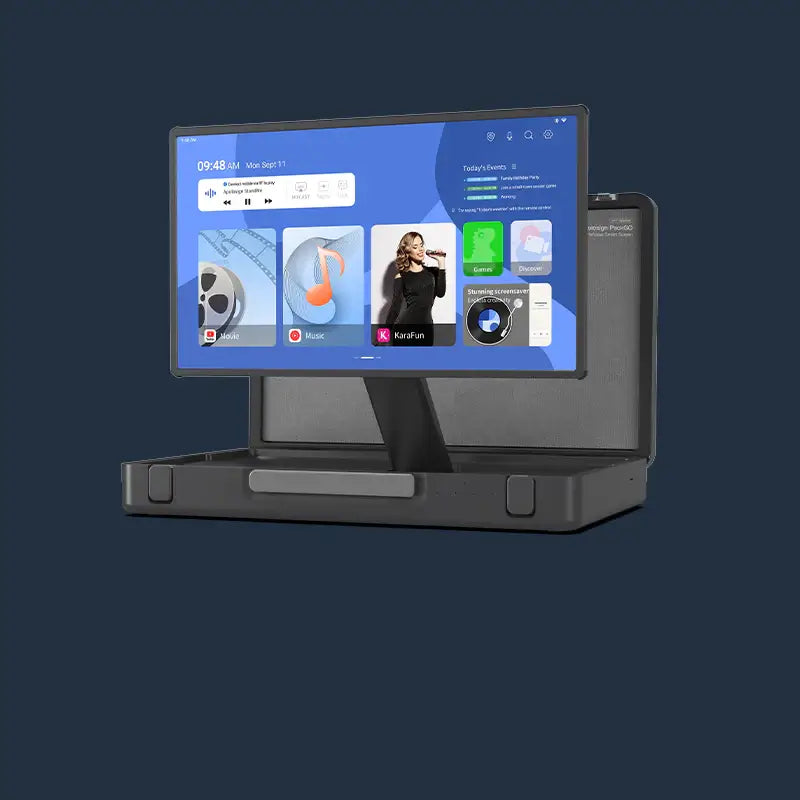



Pick the display that fits how your family actually watches. A fixed TV is the right fit when most viewing happens in one main spot. A portable TV is worth it when the screen needs to move often, and a projector works for occasional big-screen nights when the room's light and space can support it.
No single type wins for every home. The best of these family viewing options is the one that matches your most-used room and whether the screen has to follow people around the house.
Match the display to the family's viewing routine
Start with the room where your family watches most and how often the screen needs to be somewhere else. Those two facts sort most households into one of three clear paths.
One main viewing spot: a fixed TV
Picture a family that watches together almost every night in the same living room. Everyone knows where the couch is, where the screen goes, and where the remote lives. In that home, a fixed TV makes sense because the screen can stay right where the viewing happens. Nobody has to roll it in, set it up, or line up an image before the show starts. If you can name one room where most of your watching happens, and the screen rarely needs to leave it, a fixed TV is the simple choice.
A screen that moves room to room: a portable TV
Now picture a household where viewing happens in different places. A kid wants cartoons in the playroom in the morning. A parent follows a recipe video in the kitchen in the afternoon. Then the family wants a movie in a bedroom or on the patio at night. A screen mounted in one room can't serve all of those spots. A portable TV fits this family because moving the display solves a problem that comes back again and again.
Choose by what moving the screen really involves. Models differ in weight, wheels or handles, and whether they run on battery, so match those details to the routes you'll actually use. Our portable TV options include rolling and briefcase-style designs for different routines. If the kitchen is a regular stop, our guide to shared cooking screens compares when a portable TV beats a tablet for a group. For the full feature list, see how to choose a portable TV.

Occasional big-screen viewing: a projector
Think about a family that watches on a smaller screen most days but wants a really large picture for movie night or a big game. A projector can make that larger image without a giant TV panel taking over the wall all the time. It only fits if the room can support the setup, though. Light levels and room space decide whether projection works in your home, and the next section explains how to judge both.
For occasional big-screen viewing, choose a projector only when the room fits
A projector is a good pick for occasional big-screen viewing when you can control the light and place it at the right distance from a wall or screen. If either one fails, the big-picture idea usually turns into a dim or awkward setup.
Room light affects the projected image
Plan projector nights for times when you can darken the room. In its testing, RTINGS found that ambient light degrades projector contrast and brightness significantly. The TV in the same comparison was unaffected by that lighting change. So if your family mostly watches in the afternoon, with sun coming through the windows, or with the lights on while kids play, a projector may disappoint. If your big-screen nights happen after dark or in a room with good shades, projection becomes much more practical.
Room depth and width shape projector placement
Measure before you buy. A TV's screen size is fixed, but a projector's image size depends on where the projector sits, how deep the room is, and how wide the wall or screen is. A shallow room may not let the projector sit far enough back for the image size you want. A narrow wall can limit the picture too. Write down your room depth and usable wall width, then try those numbers in the RTINGS projector throw distance calculator. You'll see right away whether your target image size fits the room.
Pick the room first, then the screen
Your routine decides the display category, and your space determines whether a projector is realistic. A family that watches in one living room every night is well served by a fixed TV, whereas a household that wants a giant picture only now and then should add a projector only if the room can go dark and fits the required throw distance.
Meanwhile, a family whose viewing shifts between the kitchen, bedroom, and patio gets more from a screen that moves, such as an Apolosign portable smart TV.

For your next step, track where your family watches for one normal week. Note the room, the time of day, and whether anyone wished the screen were somewhere else. That short log will point you to the right one of your family viewing options.
FAQs
Can a family use a projector during the day?
It's possible, but expect a weaker picture if daylight or room lights reach the screen. RTINGS showed that a projector's image looks washed out in a brighter room, while the TV it tested held up under the same change. If daytime viewing is common in your home, a TV is usually the safer main screen.
How can we tell if moving the screen really matters for us?
Look for repeat moments, not one-off wishes. If someone keeps carrying a tablet to the kitchen, watching on a phone in a bedroom, or skipping shows because the TV is in the wrong room, movement is solving a real problem. If the screen would stay put almost all week, portability adds little value. Our comparison of a portable TV vs. a tablet can help if a tablet is your current workaround.
Does it ever make sense to own more than one display type?
Yes, when your household has two different routines. For example, one family might keep a fixed TV in the living room for nightly shows and use a portable screen for weekend cooking or backyard movies. Another might add a projector just for a dark basement movie night. Buy a second type only when it serves a routine the first screen can't.