


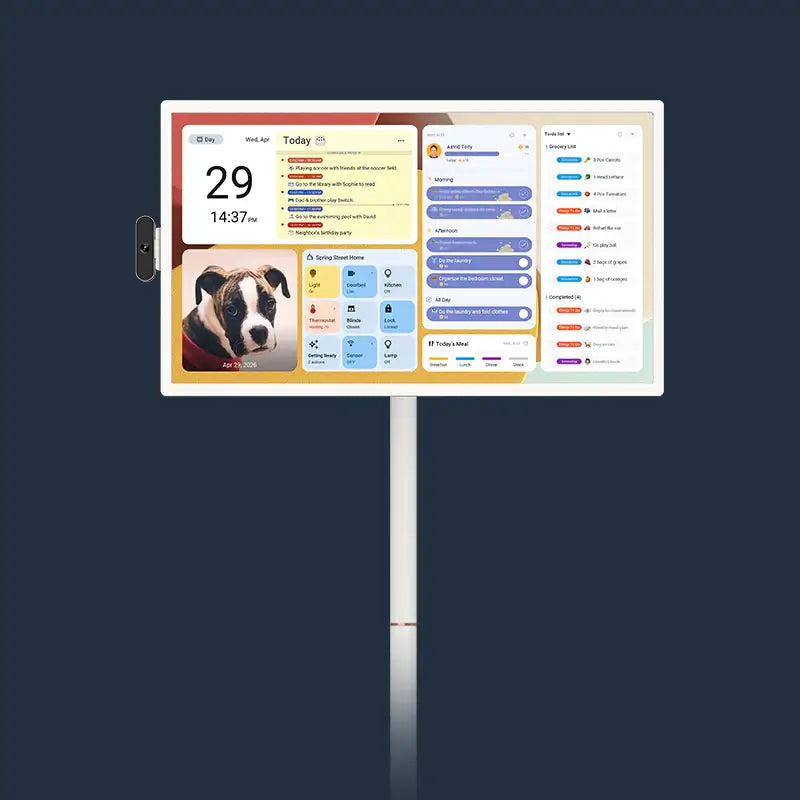



To make a busy family calendar easy to read at a glance, give the strongest visual cue to plans where someone has to act next, like a handoff, a decision, or a deadline. Fixed plans with no extra step get regular treatment, and routines fade into the background.
Your eye then lands on what needs attention instead of sorting through a dozen entries that all look equally urgent.
This is a practical rule of thumb, not a magic fix. A scannable family calendar also needs short entries, a spot where people actually look, and a clear habit for changes.
Give the next coordination need the clearest cue
Rank each entry by what someone has to do next, not by how big the event sounds. A booked dentist visit with the usual driver matters, but it doesn't need to shout.
Here is a simple three-level way to sort entries. Treat it as a starting point you can adjust, not a fixed code.
| Visual emphasis | Use it for | Illustrative example |
|---|---|---|
| Strongest | Handoffs, decisions, or timely actions | Grandpa picks up Maya at 3:15 instead of the usual parent |
| Regular | Fixed plans with no extra step right now | Weekly piano lesson, same driver as always |
| Quieter | Predictable routines and reference details | Trash night, school lunch menu |

Choose one way to show the top tier and save it for that tier only. Bold text, a bright color, or a symbol can all work, as long as it always means "someone needs to act." If the same bright red also marks birthdays and holidays, the cue stops telling anyone anything.
Once the right entries stand out, the words inside them have to do the rest of the work.
Write entries so the next step is clear
Write each entry so anyone in the house can act on it without asking a follow-up question. A quick pattern works well: who it's for, what it is, when it happens, where it is if that matters, and who handles the next step.
An illustrative example: "Leo: soccer practice, 5:30 p.m., Field 3 at Riverside Park. Dad picks up." In one line, a reader knows which kid, what time, where to drive, and who is responsible. Without the last part, two adults might each assume the other one has it.
Not every entry needs every detail. Skip the location for something at home or at a place everyone knows. Leave out the pickup person when nothing changes from the usual routine. Add a detail when it changes what someone needs to do.
Keep the wording plain for everyone who reads the calendar. A shorthand like "PU" or a nickname for a coach may make sense to you but slow down a partner, a sitter, or a grandparent. If you do use abbreviations, keep the list small and the same every week.
With clear cues and clear wording in place, a crowded day is the real test.
Put the cues to work on a packed weekday
Picture an illustrative Wednesday. School lets out at 3:00. One parent has a 4:00 work meeting. A child has swim practice at 4:30. Library books are due. And today, a neighbor is doing school pickup instead of the usual parent.
The neighbor pickup gets the strongest cue. It's the one plan where a different person has to show up at a specific time, and a miss leaves a child waiting at school. The entry might read "Ava: pickup at 3:00 by Ms. Lee (neighbor)," marked in your top-tier style.
Swim practice stays at regular emphasis. It's fixed, and the driver hasn't changed. The library books stay quiet, maybe as a small note, because missing them costs a late fee, not a stranded kid. The work meeting can live on that parent's own calendar unless it affects who drives.
When someone glances at the day, the pickup change jumps out first. The rest of the schedule is still there, just not competing for attention.
Even a well-marked calendar only helps if people see it, so the next choice is where it lives.
Choose a view your family actually checks
The best view is the one your household already looks at when making plans. If everyone opens a shared phone calendar and notices changes, you likely don't need anything more.
Arkansas Cooperative Extension's calendar tips suggest a smartphone calendar for families with older children and note that a shared online calendar lets everyone get alerts at the same time. The same tips describe a paper calendar as a good fit for families with younger children and a backup for any family, posted where everyone can see it easily.
The signal to add a home view is simple: plans get missed because nobody opened the app. Maybe a teen ignores notifications, or a grandparent helping with pickups doesn't use the shared account. In that case, a paper calendar on the fridge or a digital wall calendar by the door can fill the gap. If you're unsure which side your family falls on, this guide on when phone apps aren't enough walks through the warning signs.
Treat any home display as a window into the same schedule, not a second calendar to maintain. If you go digital with something like our Apolosign digital calendars, set it up to show the calendar your family already shares. Our walkthrough on syncing calendars to a wall display covers how that connection works for common calendar accounts.
A visible calendar still goes stale fast if changes don't reach it, especially across two homes.
Make shared-calendar changes clear across homes
Use one simple rule: whoever hears about a change updates the shared calendar and tells the people it affects. That keeps one current version of the plan, no matter who got the news.
Consider a busy two-home setup. One co-parent gets a text that Friday's practice moved to 6:00 p.m. at a different field. The other parent is doing pickup that night. The parent who got the text edits the shared entry, gives it the strongest cue, adds the new location, and sends a quick message: "Friday practice moved to 6 at Lincoln Field, updated on the calendar." The other parent sees both the alert and the updated entry and knows exactly where to go.

Keep one shared online calendar as the schedule for both homes. A display or paper copy in either house is just a local view of it. Avoid keeping separate calendars for each home, since two copies can drift apart after a single missed edit. A display or app won't fix a change that nobody entered, so the human step still matters.
Most families don't need a formal editor. If changes keep slipping, name one default person to enter updates and one backup for when they're busy. For a fuller handoff routine, see this co-parenting schedule sync routine. And if updates fade after the first few weeks, a short weekly calendar reset habit can help keep things current.
If everyone in your home already checks a shared phone calendar, the fastest win is better cues and clearer entries. Start with this week's handoffs. If plans still get missed because nobody sees them, add a visible home view of that same calendar, then agree on who updates it when plans change. When you are ready to give the whole house a shared view, explore our digital family calendars to find a display size that fits your wall.
FAQs
How many colors or symbols should a family calendar use?
Fewer is usually easier to read. Three emphasis levels plus a color per person is plenty for most households. Each new cue is one more thing to remember, and once there are too many, people stop noticing any of them.
Should color mark the person or the urgency?
Pick one job for color and stick to it. Many families use color for each person, then show urgency another way, like bold text or a star. Mixing both jobs into one color system makes it hard to tell whether red means "Dad" or "act now."
What if someone in the family can't easily tell colors apart?
Don't rely on color alone for the top tier. Add a symbol, a word like "PICKUP," or bold text so the cue still works for someone with color vision differences. It also helps when the calendar is printed in black and white or viewed in bright sunlight.
When should an entry drop back to a quieter cue?
Lower its emphasis once the action is handled. After the new pickup person confirms or a form gets signed, the entry can go back to regular or quiet. That keeps the strongest cue for things that still need someone to act, so your scannable family calendar stays easy to trust.